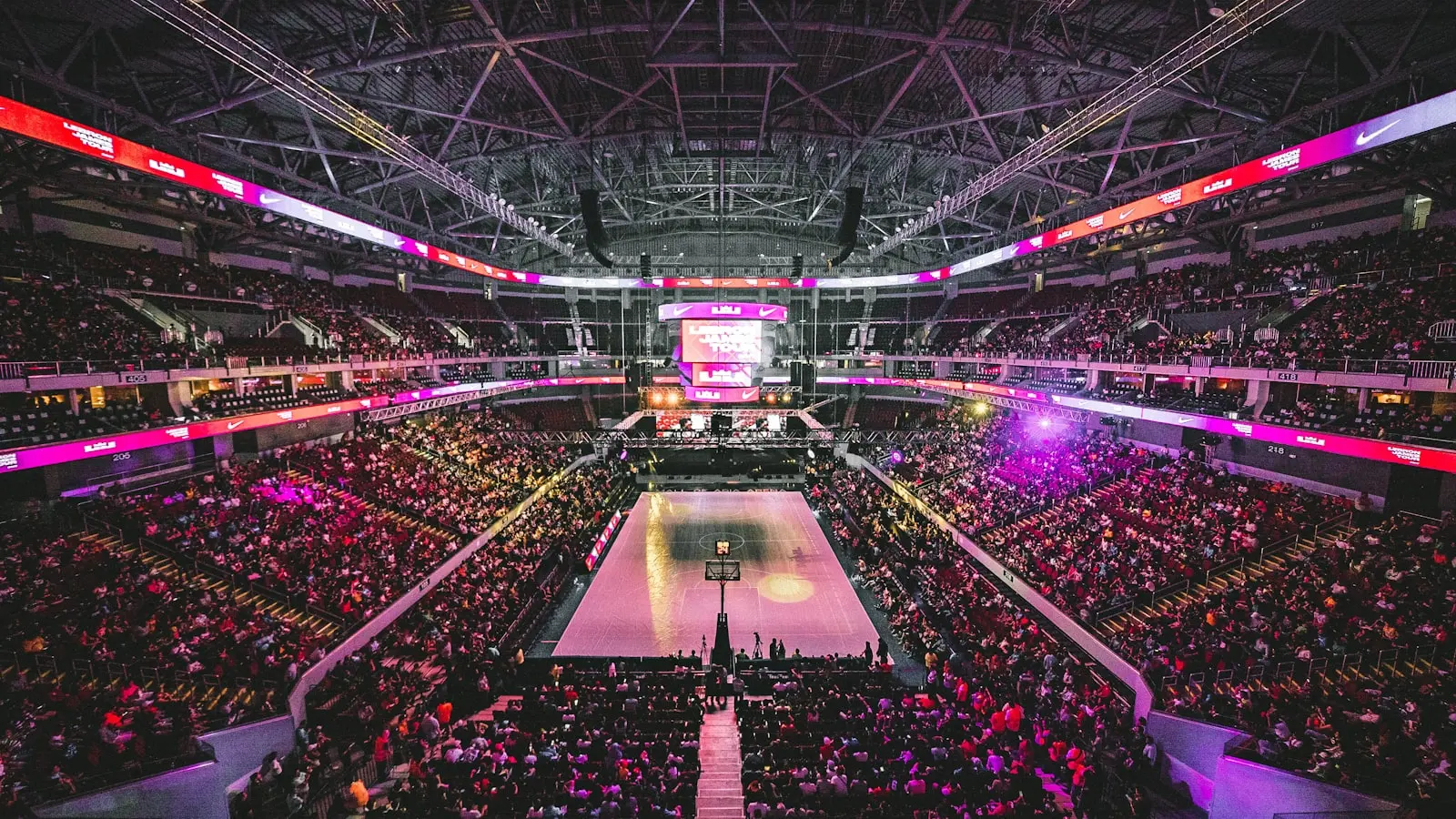
When the final buzzer sounds on an NBA Finals Game 7, the countdown to the next season begins within hours. Front offices draft, free agents sign, and training camps open roughly four months later. Compare that to the gap between seasons of The Crown — nearly two years between Season 5 and Season 6, with a production shutdown for Queen Elizabeth II’s death. The structural difference is not merely a question of patience; it reflects a fundamental divergence in how these industries manufacture content.
The Production Machinery Divide
Sports events are live. No script, no CGI overhaul, no reshoot window. Cameras capture what happens, and post-production is limited to replay angles and graphics. A single NBA regular-season game requires about 12 hours of crew time—prep, broadcast, and wrap. A single episode of The Witcher, by contrast, required over a month of principal photography and six months of visual effects work. The gap between Season 2 and Season 3 ran 20 months. In that span, an NFL team can complete two entire draft-to-Super Bowl cycles and still have time for a preseason.
The root cause is structural. TV production is a manufacturing process with dependencies: writing, casting, filming, VFX, music, distribution. Each step introduces delays. Sports production is a capture process; the raw material is generated in real time and can be packaged immediately. Analysts at Deloitte note that live sports have a near-zero post-production lag for the broadcast product, while premium TV shows spend 60-70% of their total production budget on post-production. The economics compound: a show that takes longer to make incurs higher holding costs for talent, sets, and infrastructure.
The Economics of Time
Streaming services deliberately delay seasons, a luxury sports leagues do not have. The reason is pure behavioral economics. A gap of 12-18 months between seasons creates anticipation, drives re-subscriptions, and allows marketing campaigns to build momentum. For sports leagues, that model is inverted. The NBA’s revenue depends on live gate, local TV rights, and merchandise tied to a fixed annual calendar. Missing a season means collapsing a multi-billion-dollar ecosystem. As a result, the NBA finals-to-opening night gap is exactly 4 months and 12 days—set by collective bargaining, not creative choice.
Data from Ampere Analysis shows the average gap between seasons for top Netflix originals in 2023 was 16.2 months. Materialize that: 16.2 months is long enough for a baseball team to play 324 regular-season games. For a broadcast network like NBC, a sitcom with 22 episodes per season might have only 9 months between season premieres—still double the gap of an MLB offseason. The difference is that streaming platforms do not need to feed a linear schedule. They optimize for engagement windows, not calendar slots. This flexibility is a structural advantage, not a flaw. (Is this really about quality? Partly. But it is mostly about cash flow timing.)
Why Streaming Built a Different Clock
The shift from broadcast to streaming reshaped the expected pace of content delivery. Broadcast networks operated on a September-May schedule because of advertiser demand and sweeps periods. Streaming platforms have no such constraint. They can release a season and then pause for 18 months, using the gap to funnel subscribers toward other shows. This is a deliberate inventory management strategy—a way to avoid cannibalizing their own content. Sports leagues, by contrast, cannot hold inventory. A game that is not played today is lost revenue forever. The economics of perishability force annual cycles.
Another factor: actor and crew availability. TV series depend on key talent who may be contracted to multiple projects. The Crown was famously delayed by the death of Queen Elizabeth II and the need to rework storylines. Sports leagues have revolving rosters; if a star player leaves, the next athlete steps in. The continuity of a sports season is built on interchangeable parts, not a single cast. An NBA player’s average career lasts 4.5 years, meaning teams cycle talent faster than any TV series cycles characters. That turnover is a feature, not a bug—it accelerates production cycles.
The Fan Expectation Gap
Fans of sports expect annual delivery. A team that fails to field a competitive roster is met with outrage, but the league itself always returns. TV fans have been conditioned to accept longer waits. A Reddit thread on r/television highlighted The Crown and The Witcher as examples where two-year gaps are normalized. The psychological contract differs: a sports fan buys a season ticket expecting 41 home games; a streaming subscriber pays for access to a library, not for a guaranteed output schedule. The former is a promise of consistent live events, the latter a promise of occasional premium drops.
This difference has real financial implications. The NFL generates over $18 billion annually from broadcast rights, almost entirely from live games that must air each year. Netflix spends roughly $17 billion on content per year, but that content can be spread across a calendar with no penalty for gaps. The revenue model does not punish a two-year hiatus for Stranger Things because subscriber retention depends on the overall value of the catalog, not the release frequency of any single show. Sports leagues cannot afford that luxury because their entire value proposition is the immediacy of the live event.
Conclusion
The gap between sports seasons and TV series seasons is not a mystery. It is a direct reflection of production methodology, economic incentives, and audience expectations. The live event structure forces a tight annual cycle, while the manufacturing model of television allows—and often encourages—delays. The scoreboard may not lie, but in this case, the scoreboard is a calendar. Sports leagues win on speed, but TV series win on flexibility. Both are optimized for their respective business models, and neither is likely to change.
The next time a fan complains about a two-year wait for The Witcher, they should remember that in that same span, a basketball team could draft, develop, trade, and win a championship. The production lines are simply different. And the numbers—on budgets, timelines, and revenue—rarely do.