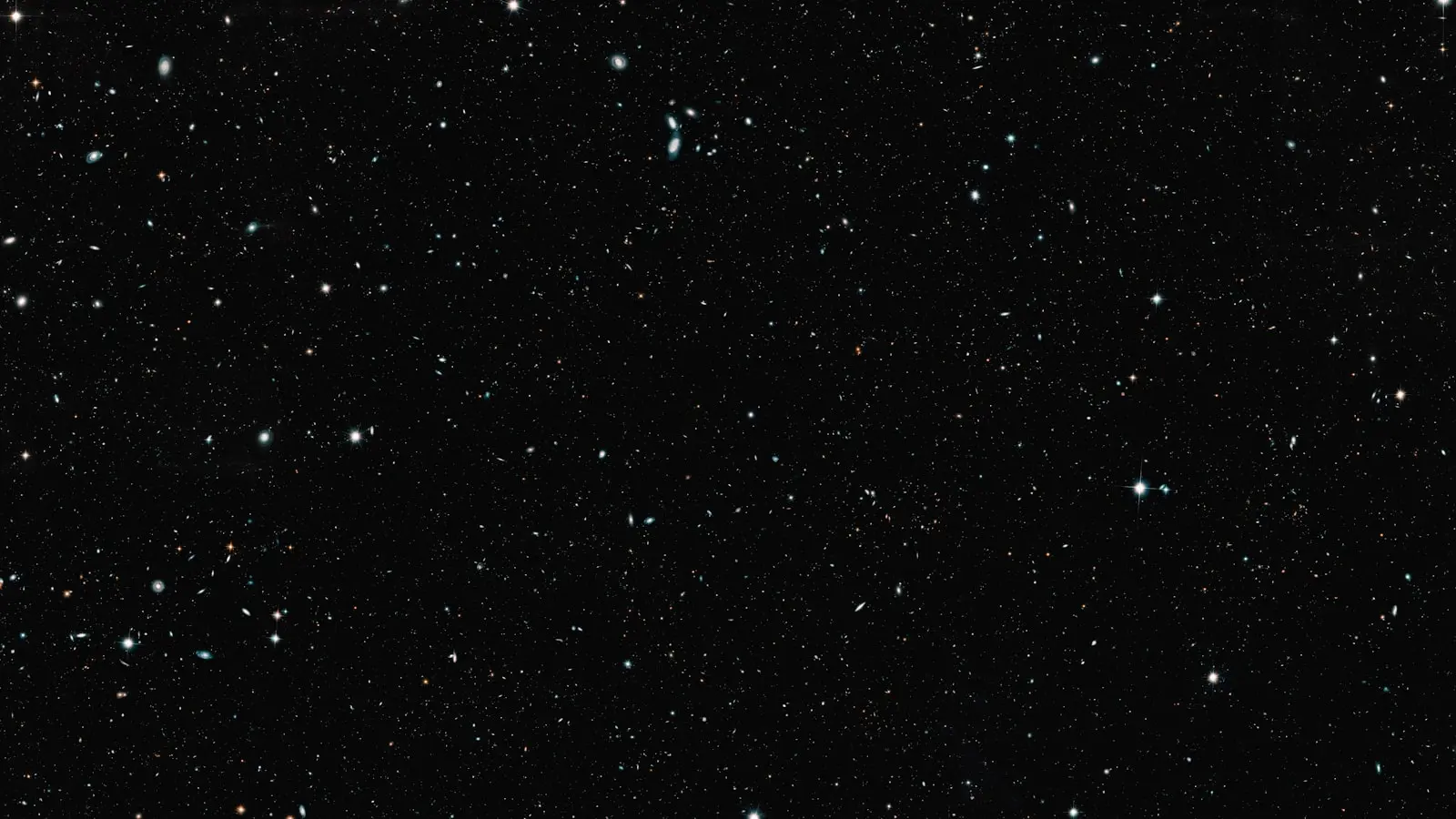
The Illusion of Cosmic Vibrancy
When the Space Telescope Science Institute releases a new dataset from the James Webb Space Telescope, the global reaction follows a predictable arc. Giant molecular clouds glow in luminescent oranges. Deep space galaxies shimmer in sapphire blues. Yet, beneath the aesthetic brilliance lies a stark physical reality. The images are completely false-color composites. Human eyes positioned exactly where the ten-billion-dollar observatory orbits would see absolutely nothing.
The Webb telescope captures photons entirely outside the visible spectrum. It operates almost exclusively in near-infrared and mid-infrared wavelengths. Raw data arrives on Earth not as a vibrant tapestry, but as a dense spreadsheet of numerical values representing photon impacts on a detector array. Astronomers process these invisible data sets by assigning visible colors—typically red, green, and blue—to specific infrared wavelengths.
This translation triggers philosophical debates among space enthusiasts regarding what constitutes a genuine image. Some express disappointment that the cosmos does not actually look like a neon painting. Experts counter that the translation remains essential for visual comprehension. Without false color, the data remains locked in binary code. The visual representation makes the invisible universe legible.
The Mechanics of Invisible Light
To understand the processing pipeline, one must understand the hardware. The observatory functions as a specialized photon bucket designed to capture heat radiation. Instruments like the Near-Infrared Camera and the Mid-Infrared Instrument require extreme cooling systems. The mid-infrared sensors operate at a temperature just above absolute zero. If the instrument warmed even slightly, its own thermal radiation would blind the sensors. The telescope would simply record its own heat.
When light from a distant nebula strikes the beryllium mirrors, it passes through specific narrowband filters. A filter might only allow wavelengths of exactly 3.3 micrometers to pass through to the detector. The resulting image is essentially a grayscale map showing the intensity of light at that exact wavelength. Brighter pixels indicate more photons. Darker pixels indicate fewer.
At the data centers in Baltimore, analysts sit before dual-monitor arrays translating this grayscale static into comprehensive maps. They overlay multiple black-and-white images taken through different filters. To make sense of the combined data, they apply a system known as chromatic ordering.
Chromatic ordering maintains the physical relationship of the light, merely shifted up the electromagnetic spectrum into human visibility. The shortest infrared wavelengths captured by the telescope map to blue. The medium wavelengths map to green. The longest wavelengths map to red. (This is not artistic license, but mathematical necessity.) By keeping the wavelengths in their natural physical order, astronomers preserve the underlying structural logic of the astronomical object.
Chemical Fingerprinting in the Dark
The application of false color serves a strictly analytical purpose. Different chemical elements emit and absorb light at highly specific wavelengths. By targeting these emission lines with specialized filters, astronomers isolate the exact location of specific gases within a nebula.
Consider a stellar nursery located thousands of light-years away. If astronomers isolate the infrared signature of ionized sulfur, they will assign that specific image layer to red. If they isolate ionized hydrogen, they assign it to green. Ionized oxygen receives blue. When combined, the resulting composite image does not just show a colorful cloud. It provides a highly detailed map of elemental distribution.
A researcher looking at the composite can instantly determine where oxygen dominates the outer layers of a dying star or where dense pockets of hydrogen collapse to form new solar systems. The colors act as a chemical barcode. The aesthetic beauty is merely a byproduct of rigorous spectral analysis.
Piercing the Cosmic Dust Veil
Capturing infrared light is not a stylistic choice. It operates as a strict mechanical requirement for observing the modern universe. Visible light scatters easily. When visible light waves hit dense clouds of cosmic dust, they bounce off, rendering the interior of the cloud opaque.
Infrared wavelengths travel differently. Because they possess longer wavelengths, they slide past microscopic dust particles without scattering. (Think of ground-penetrating radar slicing through topsoil.) This allows the James Webb Space Telescope to peer directly into the heart of stellar nurseries that completely blocked the view of earlier observatories like the Hubble Space Telescope. Hubble captured the visible surface of the dust clouds. Webb captures the stars igniting inside them.
Without mapping these penetrating infrared wavelengths into visible colors, humanity would remain blind to the internal mechanics of star formation. The translation process lifts the veil.
The Cosmological Redshift Imperative
Beyond peering through dust, infrared capability answers the ultimate cosmological requirement. Astronomers built the observatory to look backward in time to the earliest galaxies formed after the Big Bang.
Space stretches. As the universe expands, it pulls the fabric of spacetime apart. When an early galaxy emitted intense ultraviolet and visible light thirteen billion years ago, those light waves began a long journey toward Earth. Because the universe expanded continuously during that thirteen-billion-year transit, the physical light waves stretched out. What began as short, tight ultraviolet waves lengthened into long, loose infrared waves by the time they reached our solar system.
This phenomenon is known as cosmological redshift. You cannot study the dawn of time using visible light. The light from the early universe no longer exists in the visible spectrum. The observatory sits in orbit waiting to catch these stretched, ancient photons.
The Philosophical Definition of Reality
When observers look at a deep field image and ask if the colors are authentic, the question fundamentally misinterprets the nature of biological vision. The human eye detects only a microscopic fraction of the total electromagnetic spectrum. We evolved to see the specific wavelengths of light emitted most strongly by our local sun and filtered through our specific nitrogen-oxygen atmosphere.
(Frankly, human eyes are remarkably limited instruments.)
If human eyes could see microwave radiation, the night sky would glow continuously with the cosmic microwave background. If we could see x-rays, black hole accretion disks would dominate the heavens. The visible spectrum holds no objective superiority over infrared, ultraviolet, or radio waves. They are all simply propagating electromagnetic fields.
The false colors used in modern astronomical imaging are not a deception. They represent a functional translation device. Like translating a highly technical engineering manual from one language to another, mapping infrared data to visible colors changes the presentation without altering the underlying truth.
The vibrant reds, greens, and blues assigned to distant cosmic structures reveal precise chemical compositions, thermal dynamics, and historical expansions. The physical universe does not care about human aesthetics or our narrow biological sensors. The universe operates in total darkness, radiating information across the entire spectrum. Through rigorous data processing and chromatic ordering, science simply forces the invisible cosmos to show its hand.