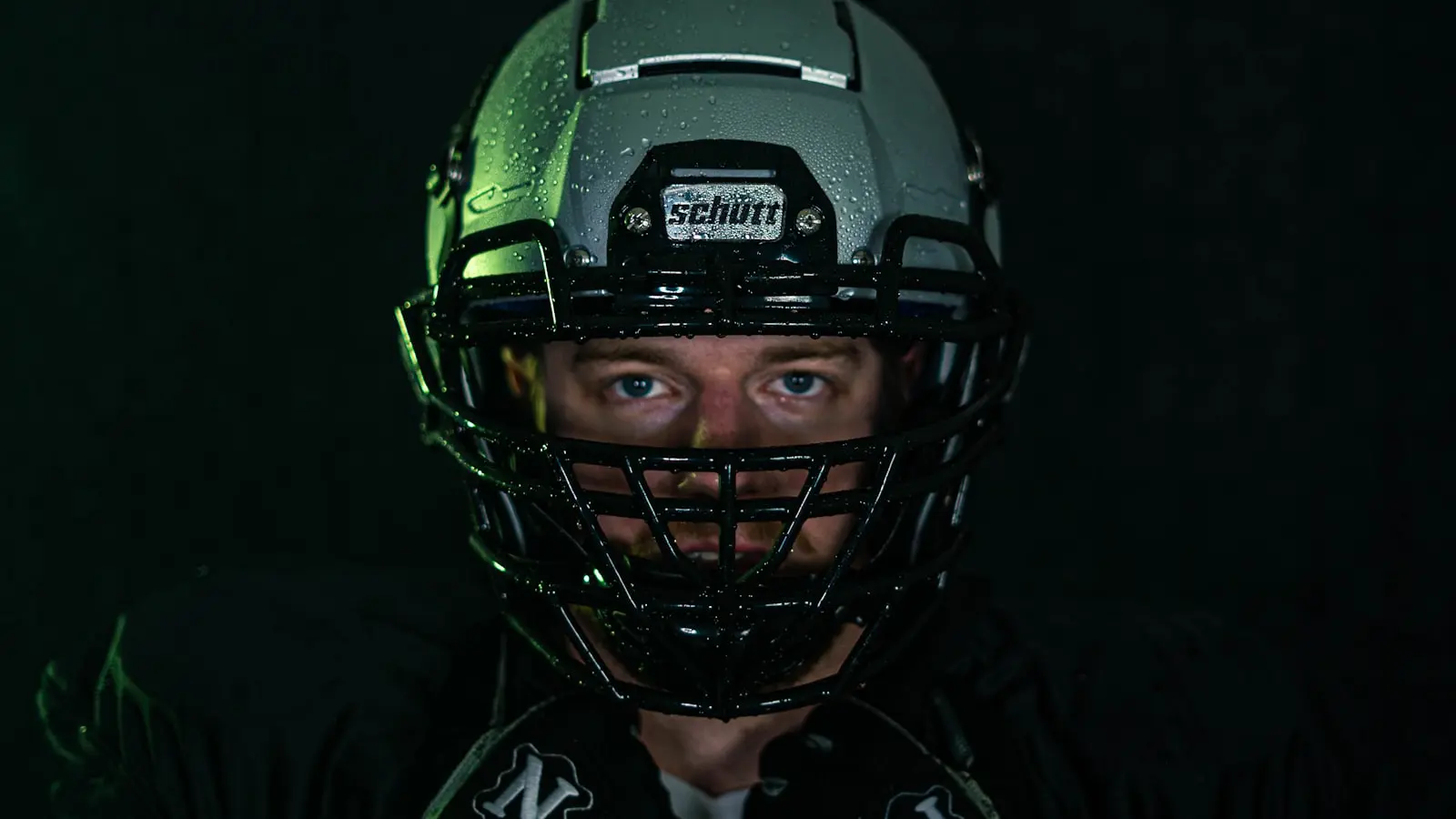
If you have seen a small device inside an NFL quarterback’s helmet, you might assume it is a microphone. It is actually a speaker for receiving play calls from the sideline coach. The system is one-way: the coach talks, the quarterback listens. This article explains the technology, its history, and the rules that govern it.
Key Takeaways
- The device in the helmet is a speaker, not a microphone. The quarterback can only receive audio, not transmit.
- Only one offensive player (typically the quarterback) and one defensive player (usually a linebacker or safety) have the speaker, identified by a green dot on the back of the helmet.
- The communication cuts off when the play clock reaches 15 seconds, preventing last-second coaching adjustments.
- The NFL introduced the radio helmet system in 1994, replacing hand signals and messenger players.
How the Helmet Communication System Actually Works
The flat, circular speaker sits near the earhole inside the helmet. It receives a radio signal from a sideline transmitter operated by the offensive coordinator or head coach. The coach speaks into a headset, and the audio is sent to a receiver sewn into the quarterback’s shoulder pads or helmet padding, then projected directly into the ear.
Because the system is one-way, the quarterback cannot reply through the helmet. He communicates back using hand gestures, head signals, or by running to the sideline during timeouts. Some teams also provide a separate handheld radio for use between plays, but that is not part of the helmet equipment. The common term “NFL quarterback helmet microphone” is technically incorrect—it is a speaker.
The audio is engineered to cut through crowd noise. Coaches speak clearly and often deliver the play call twice. The quarterback then repeats the call to the huddle. This system eliminates the need for messenger players or complex hand signals, speeding up the game tempo.
Which NFL Players Get a Helmet Speaker?
Only one offensive and one defensive player per team are allowed the helmet speaker. On offense, it is almost always the quarterback. On defense, it is typically the middle linebacker or safety—the player responsible for aligning the defense and calling adjustments. These players are identified by a green dot on the back of their helmet, a league-mandated indicator for officials and opponents.
This rule limits live coaching to one player per side, preserving competitive balance. If every player had a speaker, defenses could shift instantly to any offensive motion, and offenses could adjust blocking schemes on the fly. By restricting the speaker, the NFL maintains a balance between strategy and execution.
If the designated player leaves the game due to injury, equipment staff can swap the receiver to another player, who also wears a green dot. Teams cannot have more than one active speaker per side at any time.
When Does the Speaker Cut Off?
NFL rules require the communication system to be disabled when the play clock reaches 15 seconds, or when the ball is snapped, whichever occurs first. This prevents coaches from calling audibles or adjustments too close to the snap. Once the speaker goes silent, the quarterback must rely on the call already received and his own pre-snap reads.
The 15-second cutoff is strictly enforced. If a coach continues transmitting after the cutoff, the team can be penalized with a timeout or delay-of-game penalty. Coaches typically finish their call well before the 15-second mark. The same rule applies to the defensive player with the green dot.
This cutoff also exists at the NCAA FBS level, which uses the same system. Lower levels of football, such as high school or smaller college divisions, do not use helmet speakers, so play-calling there relies on sideline signals or messenger players.
A Brief History of In-Helmet Communication
Before 1994, NFL quarterbacks received plays via sideline hand signals, messenger guards (players who shuttled plays from the sideline), or large placards held up on the sideline. These methods were slow and vulnerable to being stolen by opposing coaches. The NFL needed a more efficient and secure system.
The league introduced the radio helmet system in 1994 after a multi-year trial. Initially, only the quarterback had a speaker. The defensive player option was added later, in the 2000s, to give defenses a similar advantage. The technology was adapted from existing two-way radio equipment used in other sports and military applications.
Early systems were bulky and occasionally unreliable, with static and interference. Over time, the speakers became smaller and more durable. Today, the system is seamless and rarely fails. The “NFL quarterback helmet microphone”—again, a speaker—is standard equipment for every starting quarterback.
College football’s Football Bowl Subdivision adopted the same system in the 2010s, copying the NFL model, including the green dot rule and the 15-second cutoff. Lower college divisions and high schools still use traditional methods, though some programs experiment with aftermarket systems for practice.
Common Misconceptions About the QB’s Helmet Radio
A frequent confusion is that the quarterback has a two-way radio. In reality, he cannot speak back through the helmet—only receive. That is why quarterbacks use hand gestures or talk to teammates after the call; they have no way to ask the coach a question via the speaker.
Another misconception is that the speaker is always active. It is active only between plays. Once the play clock hits 15 seconds, the audio cuts off. The system is also disabled if the quarterback is near the sideline or if the coach releases the transmit button. Coaches control when they speak.
Some fans worry the system gives the offense an unfair advantage, but the rules are balanced. Both teams get exactly one player with a speaker. The same technology is available to both sides, and the 15-second cutoff prevents real-time adjustments during the play.
There has never been a documented cheating scandal involving the helmet speaker in the NFL. The league regularly inspects equipment and monitors radio frequencies to ensure compliance. Teams that attempt to bypass the rules face fines or suspension of equipment privileges.
Frequently Asked Questions
Does the quarterback have a microphone or a speaker in their helmet? They have a speaker that receives audio from the sideline. There is no microphone for two-way conversation. The term “NFL quarterback helmet microphone” is common but technically incorrect; it is a speaker.
Can the quarterback talk back to the coach through the helmet? No. The system is one-way. Quarterbacks communicate with coaches via hand signals, sideline visits during timeouts, or a separate handheld radio used between plays.
Does the helmet speaker give the quarterback an unfair advantage? No, because both teams have the same allowance—one offensive and one defensive player—and the communication cuts off before the snap. The system is strictly regulated and does not allow last-second adjustments.