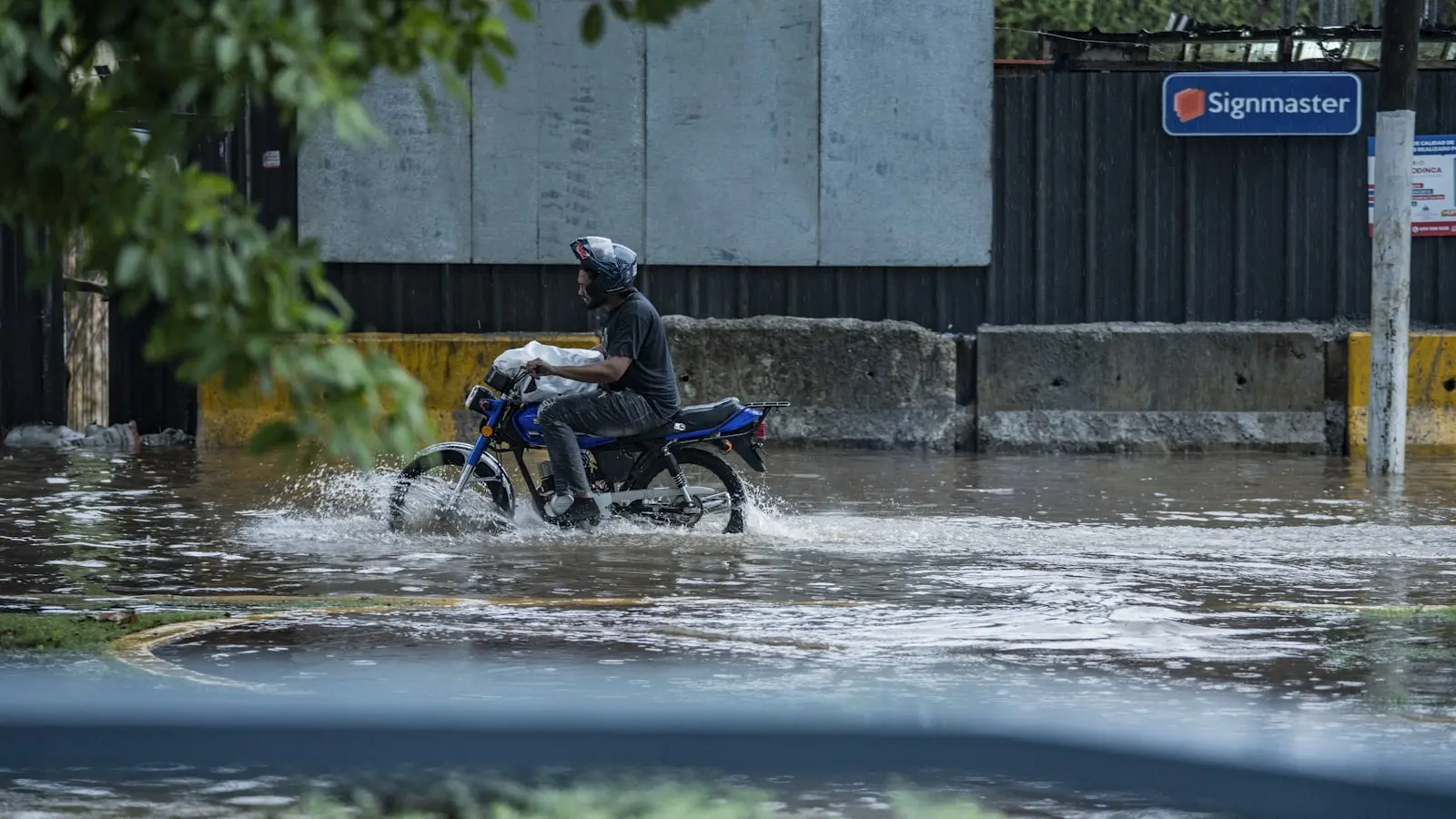
The stabilization of global weather patterns is a relic of the twentieth century. Data released by the Climate Research Institute in February 2026 confirms that the erratic shifts observed in local climates are no longer anomalies, but the result of a fundamental reconfiguration of atmospheric physics. Across the globe, the frequency of extreme meteorological events has jumped by approximately 22% compared to the 1960-1980 baseline. (The statistics are stark.)
At the center of this transition is the Clausius-Clapeyron relation. For every 1 degree Celsius of warming, the atmosphere gains the capacity to retain roughly 7% more water vapor. This is not merely a theoretical calculation. It translates into a physical reality where the sky behaves like a giant, pressurized sponge, soaking up more moisture until it reaches a saturation point that triggers hyper-intense precipitation. When the release happens, it does so with greater force than historical infrastructure was engineered to handle.
The Physics Of The Stuck Jet Stream
Beyond the moisture capacity, the geographic distribution of weather is failing. Scientists identify polar amplification—the disproportionate warming of the Arctic relative to the equator—as the primary culprit for weakening the jet stream. When this high-altitude air current loses its momentum, it begins to meander. These meanders cause weather systems to become "stuck." An area that might have experienced a three-day heatwave in the 1970s can now find itself trapped under a stationary high-pressure ridge for weeks. Similarly, drought cycles are no longer brief respites but persistent conditions that drain reservoirs and degrade agricultural yields. (It is a logistical nightmare for city planners.)
Why Historical Data Is Now A Liability
Civil engineering has traditionally relied on historical weather data to design bridges, storm drains, and power grids. This reliance is now a liability. Because the climate is shifting, the ‘one-in-one-hundred-year flood’ is occurring with alarming regularity, turning what was once a statistical outlier into a recurring cost. Policymakers who ignore this data are effectively banking on a climate that no longer exists.
| Meteorological Impact | Mechanism | Direct Consequence |
|---|---|---|
| Extreme Precipitation | Higher moisture retention | Flash flooding and infrastructure failure |
| Prolonged Heatwaves | Jet stream stalling | Grid strain and health hazards |
| Persistent Drought | Atmospheric blocking | Agricultural loss and water scarcity |
Moving Toward Adaptive Resilience
The latest synthesis reports from the Intergovernmental Panel on Climate Change (IPCC) characterize the link between anthropogenic greenhouse gas concentrations and current weather intensity as ‘unequivocal.’ This is not a point of debate in the scientific community; it is a diagnostic result. The focus now shifts toward adaptation. Infrastructure cannot simply be rebuilt to the same specifications as before. It must be retrofitted to withstand higher thermal loads and massive water displacement volumes.
Whether through smarter urban planning, improved soil management, or the decentralization of energy grids, the priority is clear. We are living through an era of heightened atmospheric volatility. Discovery has provided the evidence, and now, the implementation of resilient technology is the only viable path forward. (The window for preparation is closing rapidly.)