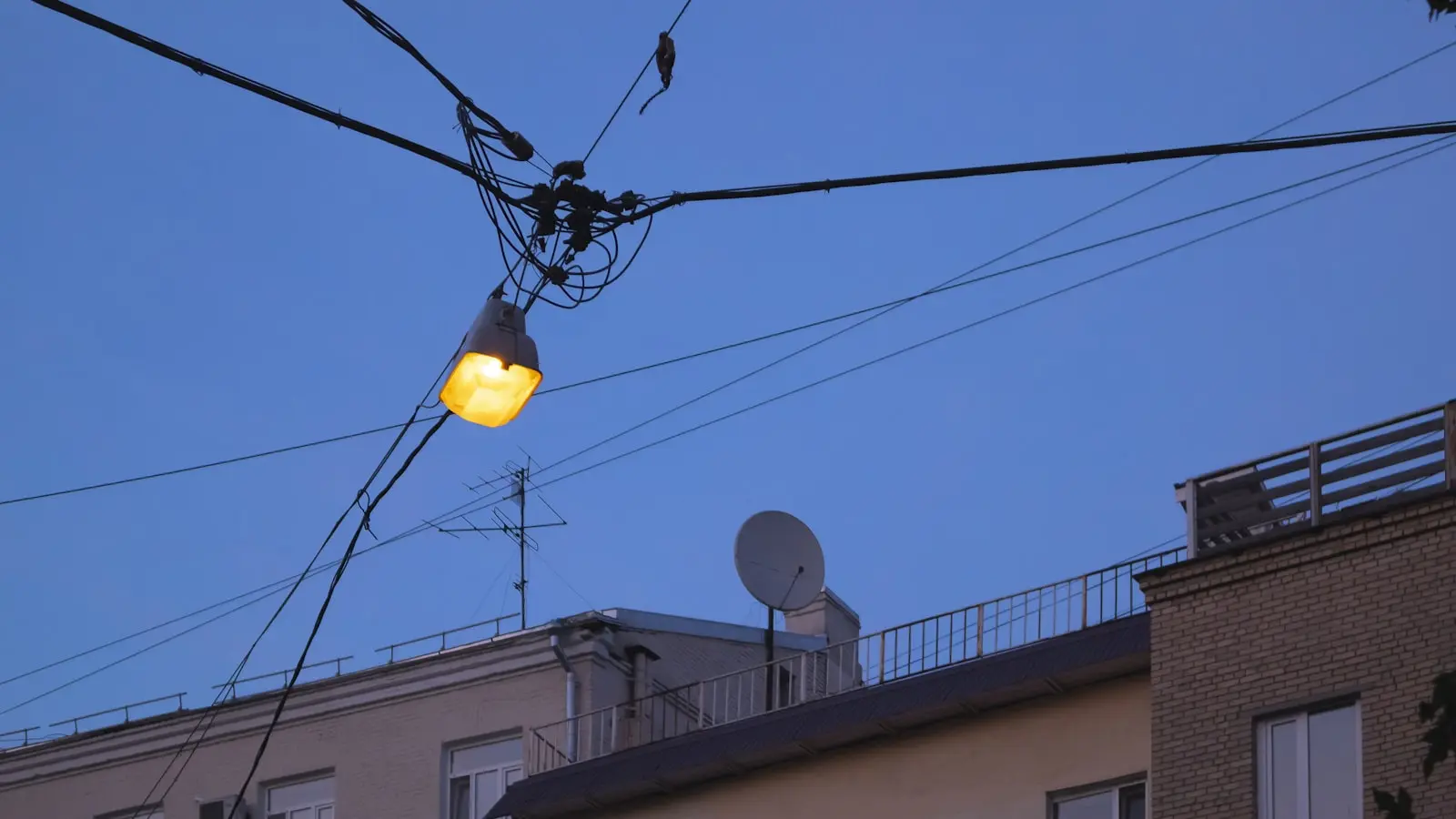
The dawn chorus no longer waits for dawn. Across major metropolitan areas, artificial nighttime lighting shatters the circadian rhythms of urban bird populations, forcing them to forage and vocalize hours before the sun breaches the horizon. Recent findings documented in the Journal of Ornithology reveal that constant exposure to streetlamps and residential lighting tricks avian neurological systems into perceiving extended daylight hours. This chronic biological confusion strips urban birds of vital recovery periods. Mortality rates climb.
Avian metabolic systems rely on precise hormonal triggers. When artificial light suppresses melatonin production, immune function deteriorates rapidly. Birds attempt to breed prematurely during harsh weather systems, misjudging the arrival of spring based on artificial light cues rather than actual climatic conditions. The rapid global replacement of older lighting infrastructure with high-intensity LED streetlights accelerates this ecological disruption. These newer diodes emit a blue-rich light spectrum that perfectly mimics natural dawn, activating biological responses far more aggressively than the amber glow of previous decades.
Consider a residential neighborhood at midnight. Security floodlights wash driveways in harsh white illumination, scattering sharp shadows across manicured lawns. Inside, residents scroll through community forums, frequently typing out complaints about mockingbirds or robins singing at 2:00 AM. They remain completely unaware that the motion-sensing halogens and permanent porch lights bolted to their own exterior walls serve as the exact biological trigger keeping the wildlife awake. (Irony rarely registers at two in the morning).
The Economics of Erasing the Night
Municipalities did not set out to engineer an ecological crisis. City councils adopted light-emitting diodes to slash energy expenditures and reduce carbon emissions. LEDs consume a fraction of the wattage required by high-pressure sodium bulbs and last decades longer without replacement. The economic argument remains bulletproof. Yet, this infrastructure overhaul ignored biological realities.
The global transition to solid-state lighting generated massive cost arbitrage for city managers facing strained municipal budgets. Switching 100,000 streetlights to LED can save a mid-sized city millions of dollars annually in electricity and maintenance. However, this fiscal efficiency transfers the cost directly onto the local ecosystem.
To understand the scale of the shift, observe the spectral differences between municipal lighting technologies:
- High-Pressure Sodium (HPS): Emits heavily in the yellow and red spectrums (around 2100 Kelvin). Less disruptive to nocturnal biology.
- Standard LEDs: Heavily spikes in the 400-500 nanometer wavelength range (often 4000K to 5000K). This high-energy blue light directly and immediately suppresses melatonin production.
- Filtered LEDs: Warmer color temperatures (2700K or lower) that mitigate some, but not all, circadian disruption.
The widespread deployment of 4000K LEDs flooded urban canopies with daylight-mimicking radiation. The spectral composition matters precisely because avian biology uses light composition as an environmental clock.
Deep-Brain Photoreception and Biological Time
Birds perceive light differently than mammals. While humans rely primarily on retinal photoreceptors to interpret the visual world, birds possess specialized deep-brain photoreceptors. These receptors detect light penetrating directly through their skulls, regulating seasonal reproduction, molting, and daily behaviors based on day length. When a city permanently banishes darkness, these internal biological clocks lose synchronization with the physical rotation of the Earth.
Sleep deprivation operates ruthlessly within an avian frame. A bird requires uninterrupted roosting to repair cellular damage incurred during high-energy flight and foraging. Without darkness, metabolic recovery stalls. The pineal gland halts melatonin synthesis. Cortisol levels elevate. Pathogens exploit weakened immune defenses. (Evolution never planned for a sun that never sets).
The disruption extends beyond exhausted individuals into population-level failures. Spring breeding requires precise timing. Birds must lay eggs so that nestlings hatch exactly when caterpillars and other protein-dense insects peak in abundance. Biologists term this synchronization a phenological match.
Light pollution forces a phenological mismatch. Artificial light signals an early spring, pushing birds to nest weeks ahead of historical averages. When the eggs hatch, the requisite insect populations have not yet emerged from winter dormancy. Entire clutches starve. Furthermore, altered behavior alters predation risk. Singing in the middle of the night broadcasts a bird’s location to nocturnal predators like owls and feral cats, creatures heavily adapted to hunting under the cover of darkness. The artificial illumination provides an unearned tactical advantage to the predator.
Skyglow and the Dissolving Boundary
The physics of light dictate that photons travel until they strike a surface. In an urban environment, billions of stray photons scatter into the atmosphere, reflecting off atmospheric moisture and particulate matter to create skyglow. This dome of ambient light envelops cities, extending the zone of biological disruption miles beyond the municipal borders.
Rural areas bordering urban sprawl measure distinct declines in localized bird populations. Migratory birds, which rely on stellar mapping to navigate thousands of miles across continents, become trapped in these domes of light. They circle skyscrapers indefinitely until they drop from sheer metabolic exhaustion. The boundary between human territory and wildlife habitat dissolves under a canopy of scattered light. (Light pollution respects no zoning laws).
Reclaiming the Infrastructure of Darkness
Environmental scientists currently lobby urban planners to implement dark sky initiatives. The goal involves reclaiming darkness as a critical ecological resource rather than treating it as an urban defect. Proposals focus on altering municipal lighting codes rather than banning illumination outright. The data proves that human safety and ecological stability do not have to exist as a zero-sum game.
Key mitigation strategies currently under legislative review include:
- Full Cut-Off Shielding: Designing light fixtures that cast illumination exclusively downward, trapping light spill and preventing it from radiating upward into the canopy where birds roost.
- Color Temperature Shifting: Mandating streetlamps with warmer color temperatures, capping emissions below 3000 Kelvin to strip out the highly disruptive blue wavelengths.
- Adaptive Lighting Grids: Utilizing motion sensors, networked dimmers, and timers on municipal pathways and commercial properties, allowing areas to plunge into darkness when human activity drops to zero.
Retrofitting entire metropolitan grids demands capital. City managers predictably resist ripping out functioning LED fixtures installed just five years ago. Consequently, the burden shifts toward future infrastructure projects. Every new commercial development, highway expansion, or suburban subdivision represents an opportunity to encode biological reality into the architectural blueprints.
The integration of technology into the built environment always carries unseen costs. Replacing inefficient lighting systems solved an economic equation while generating a massive biological deficit. Resolving this tension requires treating the dark night sky not as a void to be filled, but as a fundamental habitat requiring immediate conservation. Evidence dictates that urban ecosystems depend entirely on the rhythm of Earth’s rotation. Erasing the night carries a terminal price.