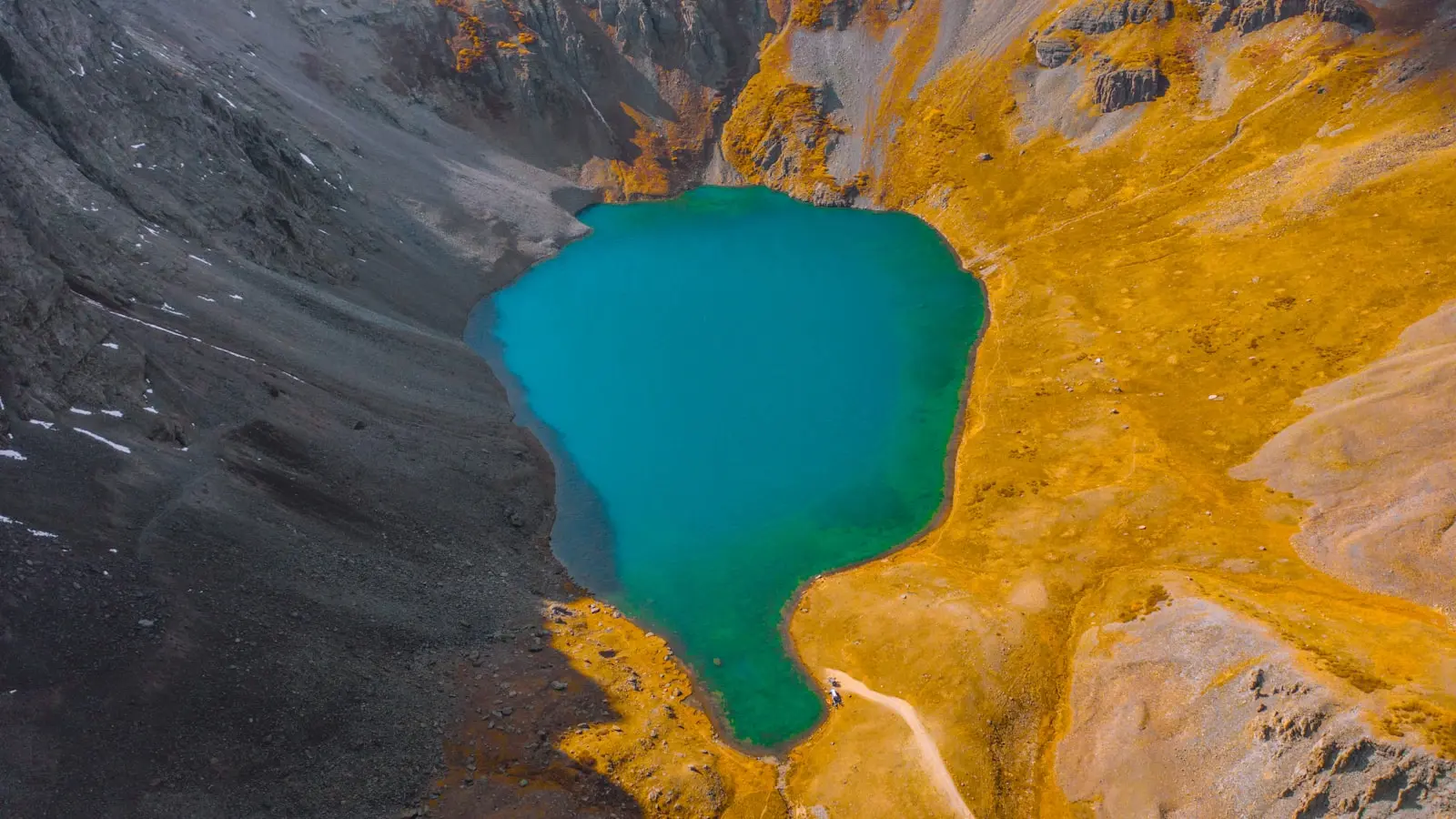
Many alpine lakes appear blue because water, particles, and depth change the light that reaches your eyes. Clear deep-blue water and cloudy turquoise water can result from different processes, and neither look proves that a lake is glacier-fed, chemically clean, or safe to drink.
Relatively clear, deep water absorbs more red, orange, and yellow light over distance, leaving a greater proportion of blue light visible. In glacier-fed lakes, extremely fine mineral sediment can scatter light and produce a vivid, milky turquoise color. Both effects can occur in mountain landscapes, but color alone is not a certificate of purity.
Key Takeaways
- Blue lake water is mainly an optical effect shaped by depth, water clarity, particles, and light conditions.
- Clear deep blue and milky turquoise usually indicate different conditions: the latter is often linked to suspended glacial sediment.
- A vivid color does not prove a lake is glacier-fed, unpolluted, cold, or safe to drink.
- Algae, dissolved organic matter, runoff, lakebed color, and weather can all change a lake’s appearance.
- Warming, glacier retreat, storms, and watershed changes can alter lake color over seasons and decades.
Blue Water Begins With Light, Not One Alpine Ingredient
The answer to why alpine lakes are blue starts with sunlight. As light enters water, some wavelengths are absorbed, some are scattered by particles, and some are reflected from the lakebed or surface.
Relatively pure water absorbs red, orange, and yellow portions of visible light more readily than blue light as the path through the water gets longer. In a sufficiently deep lake, the light returning to a viewer can therefore appear predominantly blue. This is why a deep, clear mountain lake can look intensely blue even without an active glacier upstream.
Depth is important because shallow water gives light less distance to travel. Near shore, water may appear pale, greenish, or brownish because the bottom remains visible or because light reflects from rocks, sand, sediment, or aquatic plants. Farther offshore, where the bottom is no longer visually important, the same lake may look darker blue.
What a visitor sees is also affected by conditions above the water. Sun angle, cloud cover, wind-driven ripples, viewing angle, and camera processing can change the apparent shade. A lake that looks cobalt blue in direct sunlight may look gray, dark green, or nearly black beneath clouds.
In short, clear blue lake science is about interacting conditions rather than one special alpine ingredient. Water itself, depth, suspended particles, dissolved compounds, algae, the lakebed, and the sky all help determine the color that reaches the eye.
Clear Blue Versus Turquoise in Glacier-Fed Lakes
A distinctive glacial lake color often comes from glacial flour, also called rock flour. It is an extremely fine mixture of mineral particles created when moving glacier ice grinds and crushes bedrock.
Meltwater can carry this material from a glacier into streams and lakes. Because the particles are so small, they may remain suspended for a long time instead of settling rapidly to the bottom. That suspended sediment changes how light travels through the water.
Glacial flour can scatter light and create the milky blue, blue-green, or turquoise appearance associated with many glacier-fed lakes. The surface may look luminous from above while the water itself is less transparent beneath the surface. Bright turquoise is therefore not the same as high lake water clarity.
Two common appearances help show the difference:
- Clear, deep blue water often occurs where a lake has enough depth and relatively low amounts of suspended sediment, algae, and strongly colored dissolved material.
- Milky turquoise water often occurs where glacial meltwater delivers fine mineral particles that remain suspended and scatter light.
These are useful patterns, not fixed categories. A lake can be partly glacier-fed and still look dark or clear depending on sediment supply, weather, basin shape, depth, and time of year. Likewise, a non-glacial lake can appear bright blue if it is deep, clear, and low in color-changing material.
More glacial flour does not automatically mean a lake is bluer, healthier, or more pristine. It may intensify a turquoise surface color while reducing the distance a person can see into the water. Sediment delivery can also shift with snowmelt, glacier melt, rainfall, and stream flow, changing a lake’s shade from season to season.
What Else Controls Lake Water Clarity and Color?
Glaciers are only one source of particles. Sediment can also enter mountain lakes through rainfall, stream erosion, landslides, disturbed soils, road runoff, and wildfire-affected slopes. A storm may make a lake cloudier for days or weeks without necessarily changing its long-term ecological condition.
Dissolved organic matter is another major influence. Organic compounds washed from vegetation and soils can tint water yellow, amber, tea-colored, or brown. Because these compounds are dissolved rather than suspended, a lake may look strongly colored without appearing muddy.
Algae and other aquatic microorganisms can shift water toward green, blue-green, brown, or other hues. Their abundance depends on light, temperature, nutrient supply, mixing, seasonal ice cover, and incoming water. Cold, nutrient-poor alpine lakes may support relatively little algae, but cold conditions do not eliminate biological growth or guarantee a particular color.
The lakebed matters most in shallow areas. Pale rock, sand, and sediment can make water look brighter or more turquoise near shore. Dark bedrock, deep water, valley shadows, or dense shoreline vegetation can make it look darker. This is why one mountain lake may display several colors from different viewpoints.
Pollution also requires careful interpretation. Some contaminants can affect color or cloudiness, but many harmful substances are invisible. Clear water can still contain dissolved chemicals, nutrients, pathogens, or other contaminants that cannot be identified by sight. Conversely, cloudy water may be caused largely by natural mineral sediment.
Mountain lake ecology reflects the whole watershed, not just the lake surface. Geology affects available minerals; vegetation and soils influence dissolved organic material; streams deliver water and sediment; weather controls runoff and mixing; and seasonal ice cover changes light and biological activity. Lake color is one visible result of these connected processes.
Does Clear Blue Water Mean the Lake Is Clean, Cold, or Safe to Drink?
No. A clear blue mountain lake may be cold, remote, and visually striking, but appearance cannot establish whether untreated water is safe to drink.
Three ideas are often confused. Visual clarity describes how much light passes through water and how far objects can be seen below the surface. Chemical and ecological condition includes nutrients, dissolved compounds, sediment, and biological processes. Microbiological safety concerns whether disease-causing organisms may be present. These factors can overlap, but they are not interchangeable.
A lake can look exceptionally clear and still receive contamination from wildlife, livestock, other visitors, runoff, upstream camps or settlements, or sanitation failures. Pathogens and many dissolved contaminants may not create visible color, odor, or surface film. Cold water and high elevation do not reliably prevent contamination.
The practical conclusion is simple: do not use beauty or clarity as a drinking-water test. Follow local land-manager or public-health advisories. If untreated surface water must be used, choose and correctly operate a treatment method appropriate for the likely hazards and water conditions.
Treatment methods are not interchangeable. Some primarily address microorganisms, while others may not remove dissolved chemicals or fine particles. Cloudy water can also reduce the effectiveness of certain systems. The right approach depends on the source, local guidance, equipment specifications, and correct use.
Why Lake Colors Can Change Over Time
Lake color is dynamic. Short-term changes can follow storms, spring snowmelt, summer glacier melt, strong winds, or seasonal changes in algae. A lake may become cloudier when streams deliver sediment, then clear as particles settle or inflows decline.
Longer-term watershed changes can also affect glacial lake color and mountain lake ecology. Glacier retreat may alter the amount, timing, and route of meltwater reaching a lake. Warming can influence ice cover, water temperature, mixing patterns, and biological activity. Changes in rainfall, vegetation, erosion, wildfire, or development can modify sediment, nutrient, and dissolved-organic inputs.
There is no universal direction of change. As a glacier’s connection to a lake weakens, one lake may receive less glacial flour and become clearer. Another may receive more sediment during unstable periods or altered runoff. In some watersheds, warmer conditions or changing nutrients may support more algal growth; elsewhere, geology and hydrology may be more important.
The durable takeaway is that vivid blue is evidence of light interacting with water and materials in the watershed. It can offer clues about depth, suspended sediment, or low colored dissolved material, but it cannot by itself verify purity, ecosystem health, glacier origin, or drinkability.
FAQs
Why are alpine lakes blue even when there is no glacier nearby?
A glacier is not required. Deep, relatively clear water can appear blue because water absorbs more red and yellow light over distance, leaving proportionally more blue light visible. Low levels of algae, sediment, and dissolved organic material can help preserve that appearance.
Why do some glacier-fed lakes look turquoise and cloudy rather than clear?
Glacier meltwater can carry glacial flour, which is very fine mineral sediment ground from bedrock by moving ice. These particles remain suspended and scatter light, creating a bright, milky turquoise appearance while reducing underwater visibility.
Can you drink water from a clear blue mountain lake?
Do not assume it is safe based on appearance. Clear water can still contain pathogens or invisible contaminants. Follow local advisories and use a treatment method suited to the source and conditions when drinking untreated surface water is necessary.