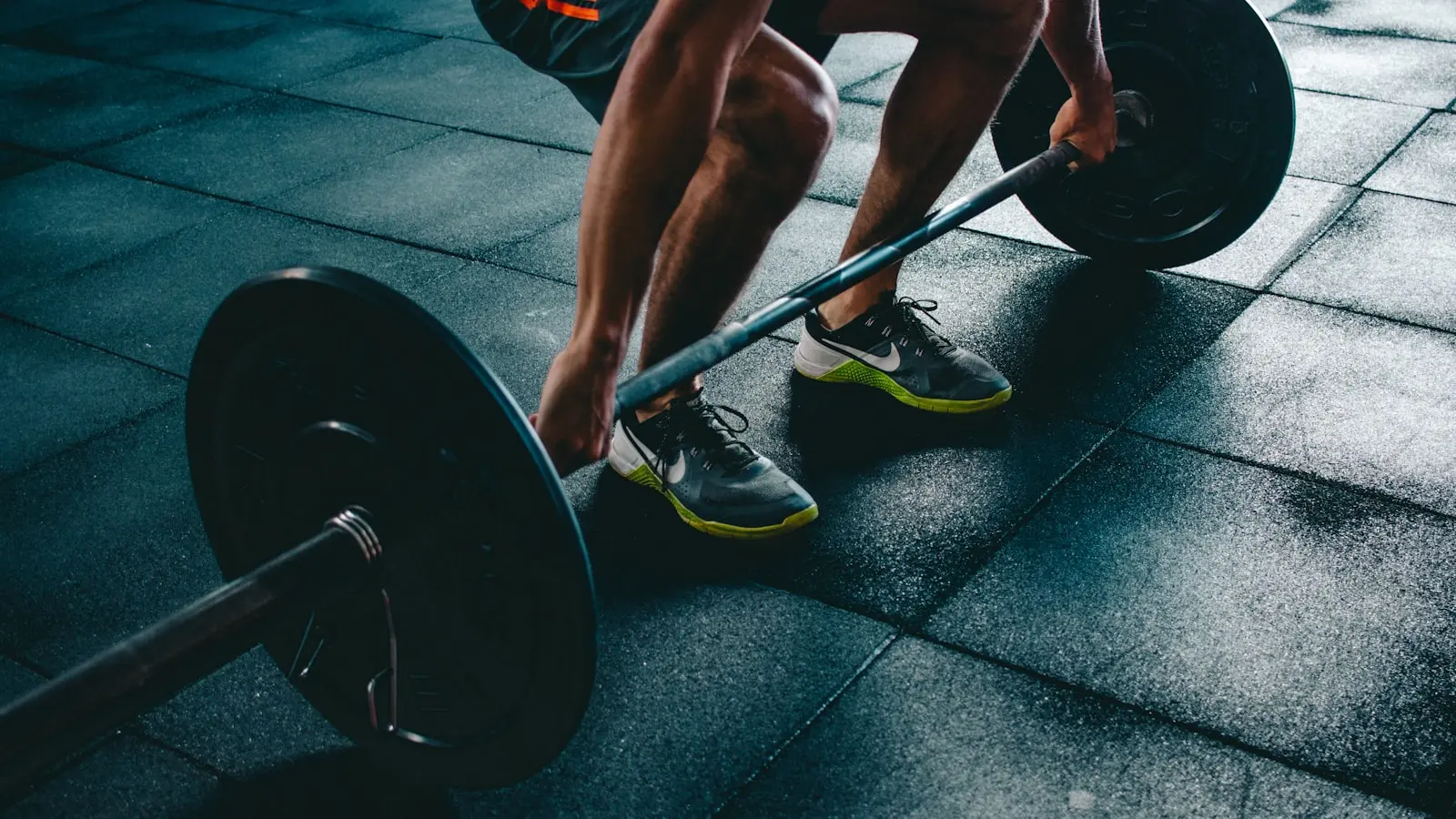
You can restart strength training safely without testing what you used to lift. Begin with less volume, less effort, and less exercise novelty than you think you need, then progress only when work, sleep, walking, and other daily activities remain manageable.
Key Takeaways
- Start with two nonconsecutive full-body sessions and only one or two working sets per movement.
- Leave roughly two to four repetitions in reserve instead of training to failure or chasing former numbers.
- Keep exercises stable and familiar, and avoid deliberately slow negatives or unfamiliar deep ranges early on.
- Progress one variable at a time only when soreness is mild and normal daily function is unaffected.
- Seek urgent care for dark urine, markedly reduced urination, severe swelling or weakness, chest symptoms, fainting, or other acute symptoms.
Why the first workout back can cause disproportionate soreness
Delayed-onset muscle soreness, or DOMS, is the aching, tenderness, and stiffness that can develop after unfamiliar or more demanding exercise. It often becomes more noticeable later that day or the following day rather than during the workout itself.
After a layoff, your body has had less recent exposure to training stress. A session that once felt routine can produce more soreness because your tolerance for total sets, unfamiliar exercises, longer ranges of motion, and the lowering phase of a lift has declined.
The lowering phase is called the eccentric portion. A normal, controlled descent in a squat is appropriate, but long slow negatives, high-repetition lowering work, or a sudden return to deep unfamiliar positions can make DOMS after exercise more likely.
Soreness is not a dependable scorecard for workout quality. A productive beginner lifting comeback should leave you able to work, sleep, use stairs, and return for the next scheduled session. Severe soreness that changes how you walk or makes basic tasks difficult usually means the training dose exceeded your current tolerance.
Use five levers to restart strength training safely
Keep total volume deliberately low. Volume is largely the number of challenging sets you perform. Instead of recreating an old split routine on day one, use a small number of full-body movements and limited working sets. One or two sets per exercise can be enough to restart the habit and rebuild tolerance.
Choose familiar, forgiving movements. Stable machines, supported exercises, bodyweight variations, and light dumbbell movements are often easier to control. Practical options include a squat to a box or bench, leg press, glute bridge, supported row, chest press, incline push-up, light hip hinge, and a simple loaded carry.
Leave repetitions in reserve. Repetitions in reserve, often shortened to RIR, means ending a set while several technically sound repetitions still feel possible. In the first two weeks, stop with roughly two to four reps in reserve rather than pushing to failure.
For example, if you believe you could perform 12 clean repetitions, stop around 8 to 10. This effort cap reduces the temptation to turn a return-to-gym program into a test. Avoid maximum-lift attempts, forced repetitions, drop sets, and finishers during this early phase.
Control range of motion and eccentric loading. Use a comfortable range of motion and a steady, ordinary lowering phase. There is little value in forcing unfamiliar depth or deliberately slowing every negative before your mobility, coordination, and tolerance have returned.
Progress one variable at a time. Add a few repetitions, a small amount of load, one set for one exercise, or a modest amount of range of motion. Do not increase weight, sets, and effort in the same week. A conservative start can feel too easy, especially for former lifters, but repeatable sessions are what make strength training progression possible.
Follow a low-soreness two-week return-to-gym program
Use loads that allow consistent technique and leave about two to four repetitions in reserve. Rest long enough between sets that your form does not deteriorate simply because you are out of breath. Stop or modify a movement that causes sharp, worsening, or distinctly abnormal pain.
Week 1: Two nonconsecutive full-body sessions
Perform two sessions with at least one rest day between them. Choose four or five movements that cover basic patterns:
- Knee-dominant lower body: squat to a box, leg press, or a supported split-squat variation.
- Hip or glute-focused movement: glute bridge, hip thrust, or a light hinge variation you already know.
- Push: chest press machine, light dumbbell press, or incline push-up.
- Pull: seated row, supported dumbbell row, or cable row.
- Optional trunk or carry: suitcase carry, farmer carry, or a simple anti-rotation core exercise.
Do one working set of each movement if you are new to lifting, returning after a long break, or unsure how you will respond. If the exercises are familiar and you have remained generally active, one or two working sets per movement may be manageable.
Use a moderate repetition range, such as roughly 6 to 12 controlled repetitions, without straining for the final rep. Warm up with lighter practice sets as needed, but do not turn the warm-up into a fatiguing workout.
Keep week 1 deliberately plain. Skip high-volume circuits, demanding conditioning, burnout work, deep unfamiliar stretches under load, and added finishers.
Week 2: Two or three nonconsecutive full-body sessions
Repeat the same movement patterns rather than replacing every exercise. Familiarity makes your response easier to judge and gives you a clearer baseline for progression.
If week 1 caused only mild soreness and daily life remained normal, make one modest change. You could add one working set to one or two exercises, add a few repetitions at the same load, or use a slightly heavier load while keeping repetitions and effort similar.
Keep the same two-to-four-RIR effort cap. Do not add volume and intensity at the same time. A third session in week 2 can work for some people, but it is optional. Add it only if the first two sessions feel manageable and you are not trying to compensate for missed training with a sudden workload increase.
Use a decision check after every session
Mild stiffness that improves with ordinary walking and movement usually supports repeating the workout or making a small progression next time. Moderate soreness may mean repeating the same dose until it feels easier.
Reduce the next session if soreness changes your gait, limits routine tasks, disrupts sleep, or continues to intensify. Lower the number of sets, reduce the load, shorten the range of motion, or use a simpler exercise variation.
Pain during a movement, loss of normal function, or concerning whole-body symptoms should end self-directed progression. Seek appropriate medical guidance rather than assuming the symptoms are ordinary DOMS.
Recover in ways that support the next session—not a miracle cure
Recovery basics are not glamorous, but they support readiness for the next session. Prioritize regular sleep, sufficient overall food intake, protein-containing meals, hydration suited to your activity and environment, and light daily movement.
Easy walking, gentle mobility work, and a gradual warm-up may make stiffness feel more manageable. They do not erase the stress of an excessive workout or make an aggressive return program harmless. If a session caused severe soreness, the main correction is usually a smaller training dose next time.
Massage devices, cold exposure, supplements, and similar tools may feel helpful or comforting for some people, but none should be treated as a guaranteed cure for DOMS. They also should not justify repeating a workout that was clearly too difficult.
Be cautious with pain relievers after training. Reducing discomfort can make it easier to overlook worsening symptoms or return to loading too soon. If you need medication to handle routine tasks after a session, reassess the workout and consider speaking with a clinician when appropriate.
The most reliable way to avoid workout soreness that disrupts your week is to adjust your next session based on your last response. Consistency matters more than an aggressive recovery ritual.
Know when soreness is not normal and when to get help
Typical DOMS is usually tenderness and stiffness in recently trained muscles that becomes manageable over time. Severe swelling, pronounced weakness, severe or persistent pain, worsening symptoms, or inability to use a limb normally warrants prompt medical assessment.
Seek immediate medical care for dark or cola-colored urine after strenuous exercise, markedly reduced urination, severe muscle pain or swelling, or significant weakness. These may be warning signs of exertional rhabdomyolysis, a serious condition that requires medical evaluation rather than self-diagnosis or home treatment.
Chest pain, shortness of breath, fainting, confusion, or other acute symptoms also require urgent medical attention. Do not assume symptoms affecting breathing, circulation, consciousness, or urination are part of a normal lifting comeback.
A generic return-to-gym program is not a substitute for individualized care. Seek guidance from a qualified clinician or rehabilitation professional before restarting resistance training after surgery, a significant illness, a recent injury, pregnancy-related changes, or when you have a known heart, metabolic, neurological, or musculoskeletal condition that could affect exercise decisions.
FAQ
How sore is too sore after returning to strength training?
Soreness is too much when it substantially interferes with normal life, including walking normally, climbing stairs, working, sleeping, or using the trained body part. Mild stiffness can happen after unfamiliar exercise, but severe, worsening, or function-limiting symptoms call for reducing your next session and seeking medical advice when symptoms are concerning.
Should I lift again if I still have DOMS after exercise?
You may be able to train if soreness is mild, movement is normal, and you can use good technique. Consider training different muscle groups, repeating a lighter session, or taking another recovery day if soreness meaningfully limits motion or coordination. Do not train through sharp pain or symptoms that worsen as you move.
How quickly can I increase weight or add sets in a beginner lifting comeback?
Increase gradually after a session feels manageable and does not disrupt daily function. Change one variable at a time: add a few repetitions, make a small load increase, or add a set to selected movements. If soreness or fatigue rises sharply after a progression, return to the last manageable training dose before trying again.