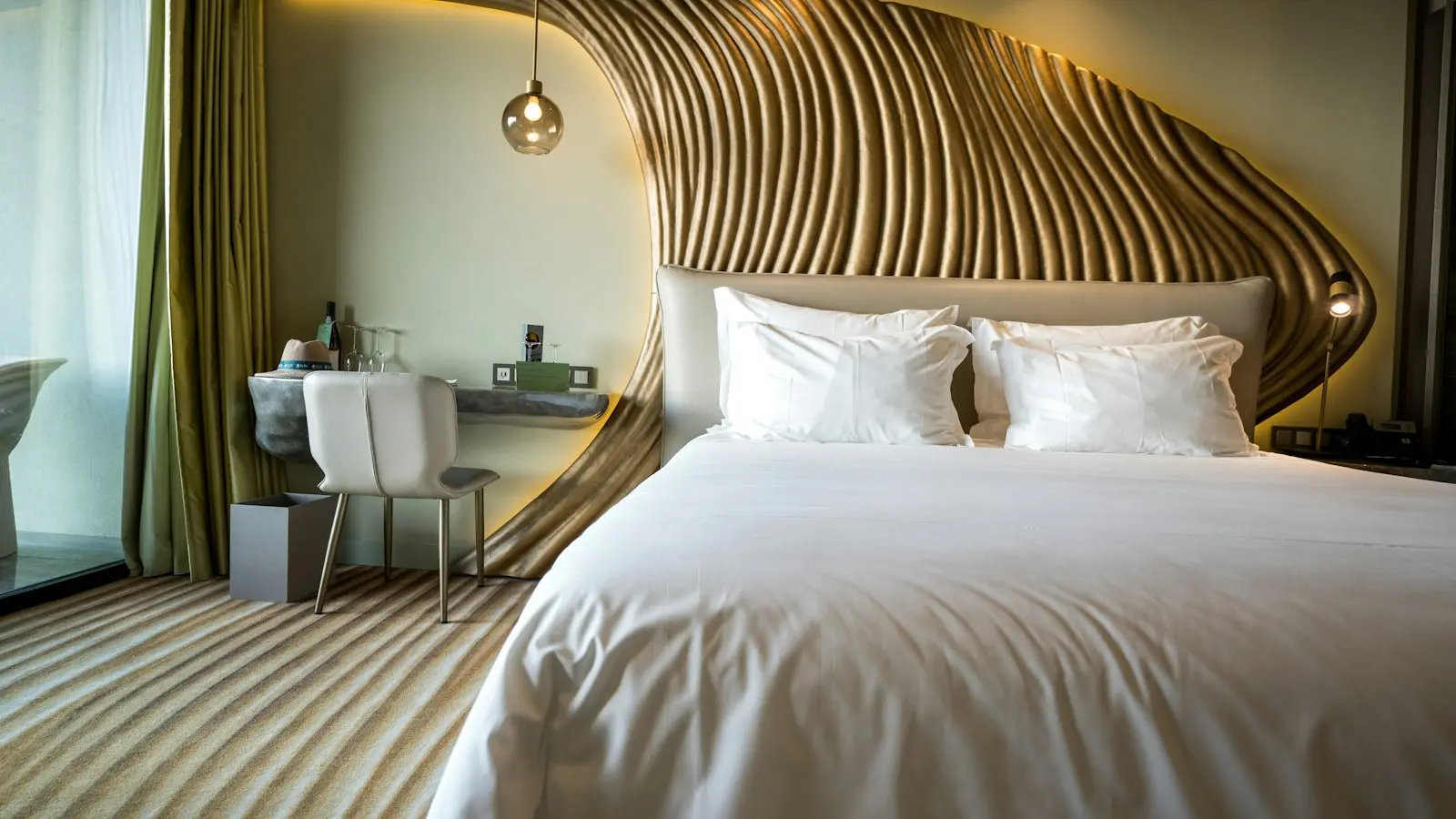
Travel can disrupt sleep even when you feel calm, safe, and genuinely excited about the trip. Sleep depends not only on mood, but also on your body clock, light exposure, daily timing, physical comfort, and familiar routines.
A hotel room, early flight, late dinner, unfamiliar noise, or a few drinks can change sleep for a night or several nights. This does not necessarily mean you are anxious, unhappy, or developing a sleep disorder. In many cases, travel sleep disruption is a short-term response to changed surroundings and schedules.
Key Takeaways
- Travel can affect sleep without emotional stress or anxiety.
- Light, noise, temperature, bedding, and unfamiliar surroundings may make a new room harder to sleep in.
- Jet lag requires crossing time zones, but domestic trips can also cause travel fatigue and sleep routine changes.
- A consistent local wake time, appropriate light exposure, and a comfortable room can help you adjust.
- Seek medical advice if sleep problems persist after returning home, repeatedly impair daily functioning, or occur with concerning symptoms.
Why relaxation does not guarantee normal sleep
Feeling relaxed and sleeping normally are related, but they are not the same process. Your brain also uses environmental and behavioral signals to decide when to stay alert and when to settle into sleep. Travel can alter those signals even when the experience feels emotionally positive.
An unfamiliar room may produce subtle alertness. You may notice traffic, footsteps, plumbing, air-conditioning cycles, unfamiliar smells, or the position of the door and windows. You might not feel afraid, but your brain may monitor these changes more closely than it would at home. This is one reason the first night in a new environment can differ from later nights, although the effect is not universal and does not guarantee rapid adjustment.
Domestic travel can cause the same problem. You do not need to cross a time zone to experience new-environment sleep, a different mattress, a changed schedule, or travel fatigue. A weekend in a nearby city can affect sleep after an early departure, a late return, or an unusually busy day.
Returning home may not restore your usual sleep immediately either. You may have accumulated sleep loss, shifted your wake time, used more caffeine, taken naps, or continued a later social schedule. Your familiar bedroom helps, but your internal timing may still need to settle.
How the room and surroundings can interfere with sleep
Light is one of the strongest cues for the body clock. A bright hotel sign, hallway light under the door, glowing alarm clock, phone use, or earlier sunrise can make it harder to feel sleepy or can trigger an earlier awakening. Evening light may delay sleep for some people, while morning light can promote earlier alertness; the effect depends on timing and individual sensitivity.
Noise can be equally disruptive when it is unfamiliar or intermittent. Traffic, elevators, neighbors, doors closing, heating systems, and street activity may repeatedly draw attention, even if each sound is brief. Very quiet surroundings can also feel unfamiliar to someone accustomed to continuous background noise.
Physical conditions matter as well. Differences in mattress firmness, pillow height, bedding, ventilation, humidity, or room temperature can produce discomfort that is easy to underestimate. There is no single room temperature or bedding setup that works for everyone, so testing the environment is more useful than pursuing a supposedly perfect setting.
Before bed, make a few practical adjustments:
- Darken the room with curtains, an eye mask, or by covering unnecessary lights.
- Keep phones and bright screens away from the bed when possible.
- Adjust heating or cooling to a comfortable level and use familiar sleepwear or bedding if helpful.
- Consider earplugs or steady background sound for disruptive noise, provided you can still hear necessary alarms, emergency signals, or medical devices.
- Ask whether the room can be changed if persistent noise, light, or temperature problems cannot be managed.
These steps do not guarantee perfect sleep. They simply remove common obstacles while your brain becomes familiar with the setting.
How timing changes create travel fatigue and sleep disruption
Jet lag is a specific form of travel sleep disruption that follows rapid travel across time zones. It occurs when your internal body clock remains aligned with your previous location while the local environment expects a different sleep and activity schedule. You may feel sleepy during the local day, alert at night, or wake earlier than intended.
Other travel problems do not require time-zone changes. Travel fatigue can begin before departure if you wake unusually early, sleep less because of packing or anticipation, or spend a long period in transit. A late arrival can push bedtime later than usual, while an early departure can shorten the previous night. Sitting for long periods, navigating unfamiliar transport, and maintaining attention can also leave you tired without making it easy to sleep at the desired time.
Your body clock responds to more than the clock on the wall. Light and darkness, wake time, meals, physical activity, and social contact all provide timing information. On a trip, these signals may conflict. For example, you may eat dinner at a local time but experience it as much earlier or later biologically. You may sleep in after a poor night, then find it difficult to fall asleep at the next bedtime.
Naps can help some travelers manage severe tiredness, but a long or late nap may reduce sleep pressure at night. Similarly, trying to compensate by staying in bed much later can make it harder to return to a routine. For a short trip, preserving a reasonably consistent wake time may be more useful than attempting to redesign your entire schedule. After major time-zone changes, light timing becomes more important and may require individualized guidance based on travel direction, destination, and health history.
Everyday holiday habits that can delay or fragment sleep
Vacation insomnia is often not caused by one dramatic problem. Instead, several small changes may accumulate: coffee later in the afternoon, an alcoholic drink with dinner, a large meal close to bedtime, more screen use, or an unusually intense day of sightseeing.
Caffeine can remain active for several hours, although sensitivity varies. If you are already sleeping poorly, moving coffee, tea, energy drinks, or other caffeinated products earlier may be a useful experiment. Alcohol may make you feel sleepy initially, but it can still be associated with lighter or more fragmented sleep later in the night. It is not a reliable sleep treatment.
Large or late meals can cause discomfort or reflux for some people, while dehydration, heat, or increased alcohol intake may contribute to nighttime waking. Exercise often supports sleep, but a very late, intense workout may feel stimulating for some travelers. Long walks and sightseeing can also produce physical fatigue without overcoming a shifted body clock.
The goal is not to reproduce every detail of your home routine. Travel is partly about flexibility, and a rigid schedule can create unnecessary pressure. Instead, choose a few high-value anchors: a reasonably consistent wake time, appropriate daylight exposure, a cutoff for caffeine, and a short wind-down routine. These habits usually offer more practical value than chasing a perfect bedtime or relying on unproven claims about “resetting” the body clock.
A practical first-night plan for better sleep after travel
Start with the next morning rather than trying to force sleep at night. Set a reasonable local wake time, taking into account how much sleep you have lost and whether you need to drive, swim, hike, operate equipment, or perform another safety-sensitive activity. Do not treat exhaustion as a reason to ignore safety.
Get outdoor light at an appropriate time for the destination schedule. Morning light and evening light can affect the body clock differently, and the best timing depends on whether you traveled east or west, how many time zones you crossed, and your intended schedule. For substantial time-zone changes, individualized advice is preferable to a universal light plan.
Prepare the room before you feel sleepy:
- Close curtains and reduce unnecessary light.
- Set the temperature and ventilation to a comfortable level.
- Place the phone away from the bed or enable settings that reduce stimulation.
- Arrange earplugs, background sound, or familiar comfort items if you use them safely.
- Keep caffeine, alcohol, heavy meals, and highly stimulating activities away from bedtime when they have affected your sleep before.
Use a brief wind-down routine that resembles home: washing, reading quietly, gentle stretching, or another low-light activity. If you cannot sleep, avoid repeatedly checking the clock. A quiet activity in dim light can be preferable to lying awake while becoming increasingly frustrated; return to bed when you feel sleepy.
A compact first-night checklist is:
- What time will I wake locally?
- When will I get outdoor light?
- Is the room dark, quiet, and comfortable for me?
- When was my last caffeine or alcoholic drink?
- Was my meal large or unusually late?
- Have I changed activity levels or taken a late nap?
- Am I rested enough for tomorrow’s activities, including driving?
When vacation insomnia needs professional attention
One poor night, or several irregular nights during a trip, does not by itself establish insomnia or another sleep disorder. Short-term changes often improve as the room, schedule, and daily cues become more familiar.
Consider speaking with a healthcare professional if sleep problems continue after you return home, repeatedly interfere with work or daily functioning, or occur during many trips. Medical advice is especially important with loud snoring, gasping or choking during sleep, severe daytime sleepiness, unusual nighttime behaviors, significant mood changes, or concern that a medicine, substance, or health condition is affecting sleep.
Do not drive or perform hazardous tasks when severely sleepy. People who are pregnant, have significant medical conditions, take complex medication regimens, or repeatedly struggle with travel-related sleep may need individualized guidance before using melatonin, sedating medicines, antihistamines, herbal products, or other sleep aids. Their safety and timing are not universal and can depend on interactions, health history, destination, and the reason for the sleep problem.
FAQ
Can you have travel sleep disruption without feeling stressed?
Yes. Travel sleep disruption can result from light, noise, temperature, unfamiliar bedding, changed meal and activity times, early departures, or a shifted body clock. Emotional anxiety is only one possible contributor.
How long does it usually take to sleep normally after travel?
There is no single recovery period. A domestic trip may settle after a small number of routine nights, while crossing several time zones can require more adjustment. Recovery also depends on sleep lost before and during travel, the direction and distance of travel, and how consistently you resume local timing.
What is the difference between jet lag and vacation insomnia?
Jet lag specifically involves a mismatch between your internal body clock and the local time after crossing time zones. Vacation insomnia is a less precise everyday term for difficulty sleeping during a trip. It may involve environmental changes, habits, fatigue, or jet lag, but it does not automatically mean a diagnosed insomnia disorder.
Travel does not have to feel stressful to affect sleep. By treating light, timing, room conditions, and holiday habits as separate factors, you can often identify practical changes without assuming that poor sleep says anything negative about the trip or your emotional state.