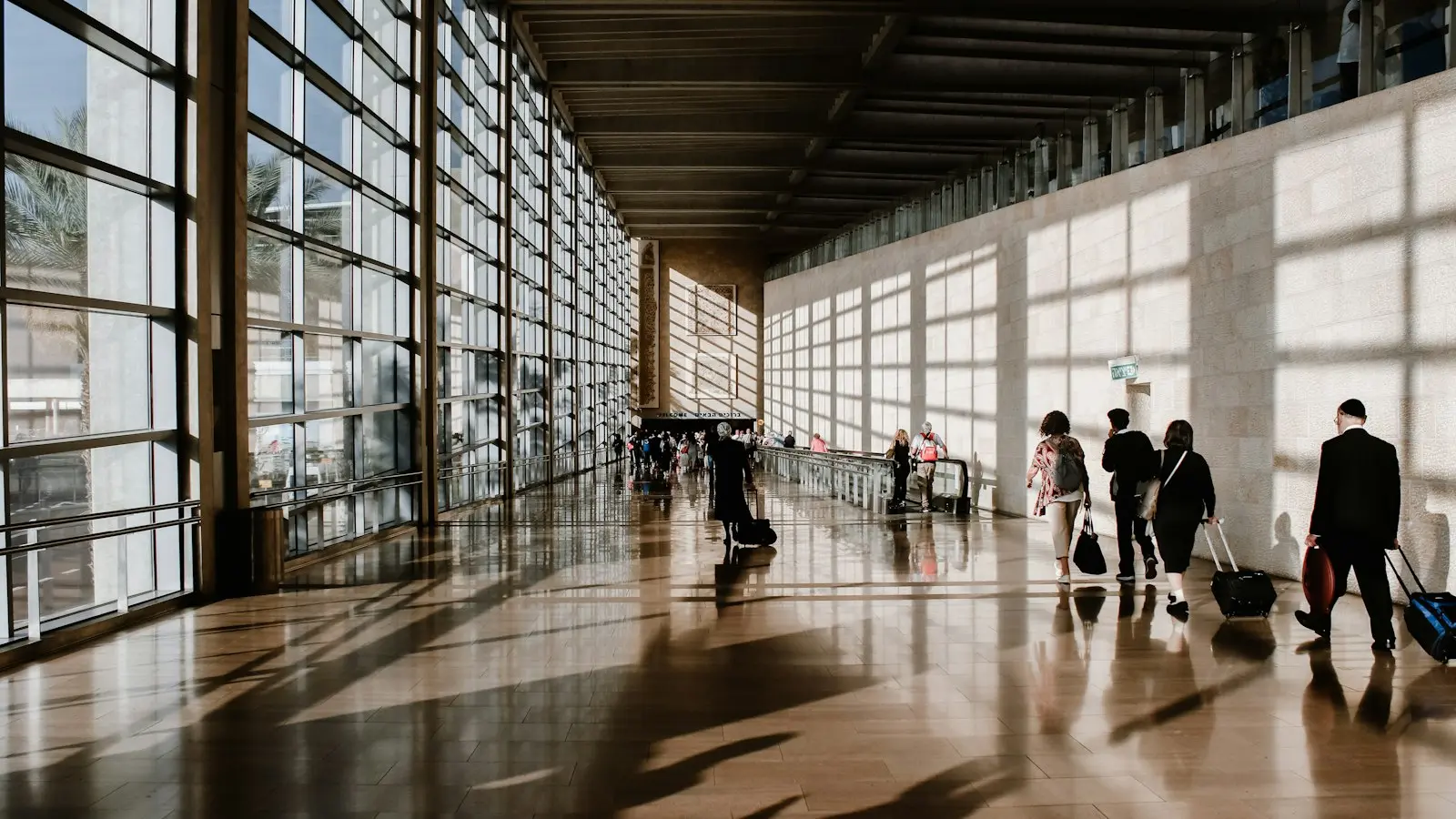
Jet lag training recovery is not about forcing yourself through a normal workout. It is about separating ordinary travel fatigue from symptoms that make exercise unsafe, then rebuilding activity while your sleep and body clock adjust.
After a long flight, the best first step is usually fluids, food, local-time orientation, and gentle movement—not maximal lifting, intervals, technical practice, or competition. Poor sleep, dehydration, unfamiliar heat, and prolonged sitting can all reduce coordination and make a familiar session feel harder than expected.
Key Takeaways
- Screen for dizziness, faintness, confusion, fever, chest pain, unusual shortness of breath, vomiting, and severe dehydration before exercising.
- Start with walking and gentle mobility; add easy aerobic work only when you are alert, steady, hydrated, and symptom-free.
- Use local sleep and meal timing, appropriately timed light, and cautious caffeine use to support adjustment without forcing sleep deprivation.
- Return to intensity, volume, technical work, and competition gradually, especially after crossing multiple time zones or arriving in heat or altitude.
- Persistent, worsening, or unusual symptoms need medical assessment rather than a harder workout.
Recovery time varies. The number of time zones crossed, direction of travel, sleep opportunity, health, climate, altitude, and your training demands all matter. Use the plan below as a flexible decision process rather than a fixed promise about how many days jet lag will last.
1. Decide Whether You Are Ready to Train After a Long Flight
Jet lag involves a mismatch between your internal body clock and the local schedule. Travel fatigue adds other stresses, such as sitting for hours, disrupted meals, poor-quality sleep, airport walking, dehydration, and carrying luggage. Heat, humidity, altitude, infection, or an unusually demanding itinerary can add further strain.
These factors may affect reaction time, coordination, decision-making, perceived effort, mood, and recovery. You may feel motivated but still be less precise or less able to judge intensity. That distinction matters most for heavy lifting, fast running, cycling in traffic, swimming alone, contact sports, and other activities where a small error has consequences.
Before exercising, ask yourself:
- Am I alert enough to move safely and follow instructions?
- Can I drink and keep fluids down?
- Do I feel steady when standing and walking?
- Am I free of dizziness, faintness, confusion, fever, chest pain, unusual shortness of breath, and persistent vomiting?
- Am I dealing with heat, altitude, major sleep loss, or symptoms that feel worse than ordinary tiredness?
If the answers are reassuring, gentle movement may be reasonable. If sleep loss is substantial or you feel unsteady, choose rest or an easy walk rather than a demanding workout. Concerning symptoms should not be explained away as jet lag; seek appropriate medical advice, and use urgent care for severe or sudden symptoms.
2. Follow a First-24-Hours Jet Lag Workout Plan
Immediately after arrival, make safe transport and basic recovery the priority. Drink regularly, eat a familiar meal if tolerated, shower or change clothes, and give yourself time to assess how you feel in the destination environment. Do not use the first session to test whether your fitness has disappeared.
A practical first-day progression looks like this:
| How you feel | Appropriate activity | What to avoid |
|---|---|---|
| Dizzy, faint, confused, feverish, vomiting, unusually short of breath, or severely dehydrated | Rest and seek medical guidance; urgent help may be needed for severe symptoms | All strenuous exercise |
| Very sleepy, poorly coordinated, or significantly travel-fatigued but without alarming symptoms | Easy walking, gentle mobility, and normal daily movement | Maximal lifting, intervals, technical drills, long sessions |
| Alert, steady, hydrated, and symptom-free | Short, easy aerobic work at conversational effort, followed by recovery | Treating an easy session as proof you are ready for intensity |
| Well rested and adapted to local conditions | Gradual return to planned low-intensity training | Jumping immediately to full volume and intensity |
Walking and mobility are often more useful than a hard workout when the main problem is stiffness and travel fatigue rather than loss of conditioning. A relaxed walk can restore normal movement after prolonged sitting without creating much additional stress. Gentle ankle, hip, thoracic, and shoulder mobility may also help you feel less restricted, but it should not be forced if you are light-headed or unwell.
Easy aerobic exercise is reasonable only when you are alert, hydrated, steady on your feet, and free of concerning symptoms. Keep the effort clearly below hard training: you should be able to speak in complete sentences, and you should stop if dizziness, nausea, worsening fatigue, palpitations, or coordination problems appear.
For at least the early recovery period, postpone maximal strength work, sprint intervals, long endurance sessions, complex skills, contact training, and competition unless a qualified clinician or performance professional has assessed your readiness. Sleep deprivation can make both effort perception and technique less reliable.
3. Use Light, Sleep Timing, and Daily Routines to Adjust
The goal of sleep adjustment during travel is to give your body consistent cues for the destination schedule without creating more sleep loss. Wake, eat, move, and go to bed according to local time as much as is practical, but do not force a dangerous level of wakefulness simply to reset faster.
Light is one of the strongest environmental signals for the body clock. However, its useful timing depends on whether you traveled east or west, how many time zones you crossed, the season, your destination schedule, and whether you need to shift sleep earlier or later. Morning light is not universally correct, and neither is evening light.
Outdoor daylight at an appropriate local time can support adjustment, but a deliberate light-exposure plan can shift your body clock in the wrong direction if timing is guessed. If your itinerary is complex, you are competing soon, or you are considering a light-therapy device, individualized advice from a qualified clinician or sleep professional may be worthwhile.
If you need a nap, keep it purposeful and relatively short so it does not make local nighttime sleep more difficult. Avoid using prolonged sleep deprivation as an adaptation strategy. Feeling temporarily more awake after pushing through may conceal impaired reaction time rather than demonstrate recovery.
Caffeine can improve alertness for a while, but it can also delay sleep and mask fatigue. Use it cautiously and avoid late-day intake when you are trying to sleep at the destination’s nighttime. Sleep trackers and jet-lag apps can help you notice patterns, but they are optional tools, not guarantees of faster adjustment or accurate measures of readiness.
4. Support Travel Recovery With Fluids, Food, and Environment
Replace fluids regularly, but do not assume one fixed intake is right for every traveler. Thirst, urine concentration, climate, sweat loss, exercise duration, access to fluids, and medical conditions all affect what you need. In hot or humid locations, a walk that feels easy may still produce more fluid loss than expected.
If you have been vomiting, have significant diarrhea, cannot keep fluids down, or have signs of severe dehydration, exercise is not appropriate. Seek medical guidance rather than trying to correct the problem with a workout or an untested supplement.
Alcohol is best limited or avoided during early travel recovery. It can worsen sleep quality and contribute to dehydration, even if it makes you feel sleepy initially. It should not be used as a sleep aid.
Choose familiar, balanced meals that include carbohydrate, protein, and other nutrient-dense foods. Carbohydrate can support normal training fuel needs, while protein contributes to ordinary tissue repair and satiety. There is no need to follow a dramatic detox or restrictive travel diet.
Large, heavy meals close to intended bedtime may disturb sleep for some people, so adjust portion size and timing to your own response. At the same time, avoid rigid meal rules if you are hungry, managing diabetes, or following a medically prescribed nutrition plan.
Account for environmental stress. Heat and humidity raise cardiovascular and fluid demands; altitude can affect exercise tolerance and sleep; extensive sightseeing can turn a supposedly easy day into a long endurance effort. A cool, dark, quiet room and enough time in bed can support recovery better than adding another recovery gadget.
5. Return to Normal Training Without Hiding Warning Signs
Return in stages rather than restoring every training variable at once:
- Gentle movement and mobility.
- Short, easy aerobic work when alert and symptom-free.
- Normal low-intensity training.
- Moderate training and longer sessions.
- High intensity, heavy strength work, technical practice, and competition-specific demands.
When possible, increase only one major demand at a time—such as duration, intensity, or complexity. Monitor sleep, mood, soreness, coordination, unusual breathlessness, resting symptoms, and perceived effort. If a familiar pace feels unexpectedly hard, treat that as useful information and reduce the session.
A missed or shortened workout is usually less costly than an injury or illness caused by training while impaired. This is particularly important when crossing many time zones, arriving in a hot climate, competing soon after arrival, or traveling with limited opportunities to sleep.
If competition cannot be delayed, share your travel itinerary and symptoms with a coach, team clinician, or sports-medicine professional. The plan may need to emphasize tactical simplicity, an extended warm-up, closer monitoring, reduced training load, and realistic performance expectations. Do not assume that strong motivation removes the effects of sleep disruption and circadian misalignment.
Stop exercising and seek urgent medical help for chest pain, fainting, confusion, severe or unusual shortness of breath, severe dehydration, persistent vomiting, or other acute concerning symptoms. Fever or symptoms suggesting infection deserve medical assessment rather than being labeled ordinary jet lag. Persistent or worsening impairment also warrants professional advice.
Frequently Asked Questions
Can I exercise after a long flight if I feel tired but otherwise well?
Usually, start conservatively. If you are alert, steady, hydrated, and free of concerning symptoms, walking, mobility, or short easy aerobic exercise may be reasonable. Delay demanding or technical training if sleep loss and coordination are clearly impaired.
Is walking or a light workout better than resting when I have jet lag?
It depends on your symptoms. Walking and gentle mobility can help with stiffness when you feel well enough to move, but rest is preferable when you are dizzy, severely sleep-deprived, dehydrated, ill, or unable to exercise safely. A light workout is not automatically safe simply because it is shorter.
How should I adjust training if I need to compete soon after crossing time zones?
Use a more conservative plan and involve qualified sports-medicine or coaching support. Prioritize sleep opportunity, local schedule adjustment, hydration, and low-risk movement. Avoid trying to compensate for lost preparation with maximal sessions immediately before competition, especially if alertness or coordination remains poor.