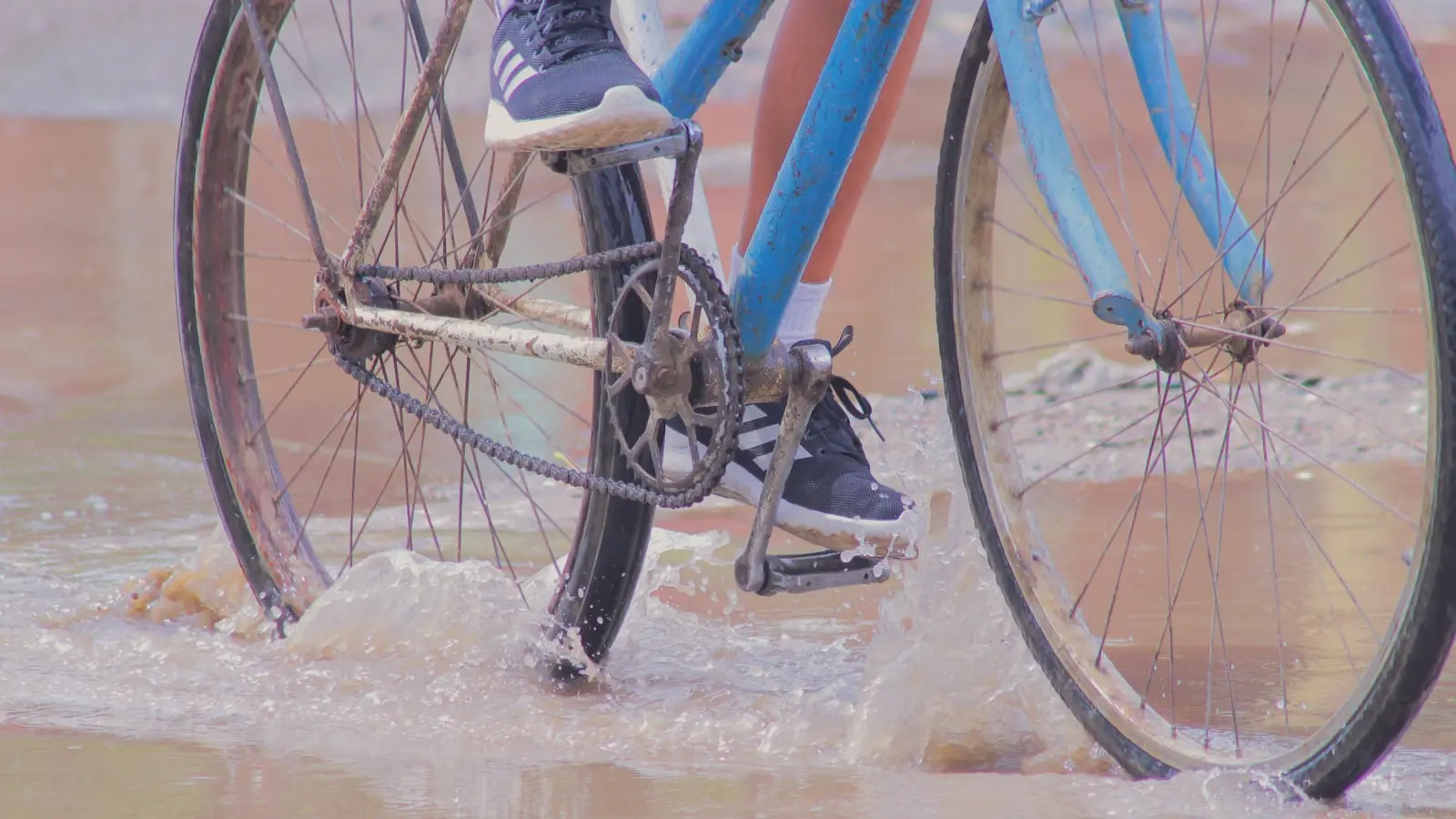
Historic European city centers like Brussels offer aesthetic charm but present a significant mechanical challenge for the casual commuter. When rain hits, the iconic cobblestones transform from a scenic backdrop into a high-friction hazard. The transition from asphalt to uneven, slick stone changes the physical relationship between tire and road, requiring a recalibrated approach to bike handling. (It is rarely a graceful experience for the unprepared.)
The physics of the contact patch
Traditional urban cycling relies on high-pressure tires for efficiency on smooth surfaces. However, on pavé, rigid rubber becomes a liability. Analysts suggest dropping tire pressure by 10 to 15 PSI to facilitate a larger contact patch. This adjustment allows the rubber to deform, effectively turning the tire into a micro-suspension system that absorbs vertical impacts rather than deflecting off them. Without this deformation, the bike essentially skips across the surface, losing its grip with every bounce.
Technical handling protocols
Maintaining traction requires a departure from standard riding posture. The following tactical adjustments mitigate the risk of a front-wheel washout:
- Weight Distribution: Keep your center of gravity slightly shifted back. Excessive weight on the front end increases the likelihood of a lateral slide when the wheel encounters an uneven stone edge.
- Handlebar Discipline: Maintain a loose, relaxed grip. Stiff arms transmit vibrations directly into the frame, causing the bike to react erratically. Allow the front end to find its own line.
- Momentum Maintenance: Treat the pedals as a balancing tool. Keeping the chain under tension with a slightly harder gear reduces “chain slap” and prevents the bike from bouncing unpredictably during power strokes.
Strategic cornering and braking
If the data on professional spring classics like the Tour of Flanders teaches us anything, it is that braking is an invitation to disaster on wet stones. Abrupt changes in velocity force the rubber to shear against the rock, leading to immediate traction loss. Riders must instead scrub speed well before the entrance of a turn, executing the corner with a neutral, constant pace. Sudden inputs are the primary cause of cycling casualties in these environments. (The physics of friction is unforgiving.)
Managing urban chaos
Urban cycling forums highlight a frequent error: the tendency to tense up when the road surface turns rough. This anxiety-driven reflex is the opposite of the required technique. Momentum, paired with a calculated cadence, creates a gyroscopic stability that keeps the bike upright. When navigating cities like Brussels, riders who fight the road rarely win. Those who allow the bicycle to dance beneath them, letting the tires track the irregular landscape, maintain a much higher probability of reaching their destination upright. The cobblestones aren’t moving, but the rider’s decision-making process dictates the outcome of every segment. Keep the pressure low, the gears tight, and the inputs smooth.