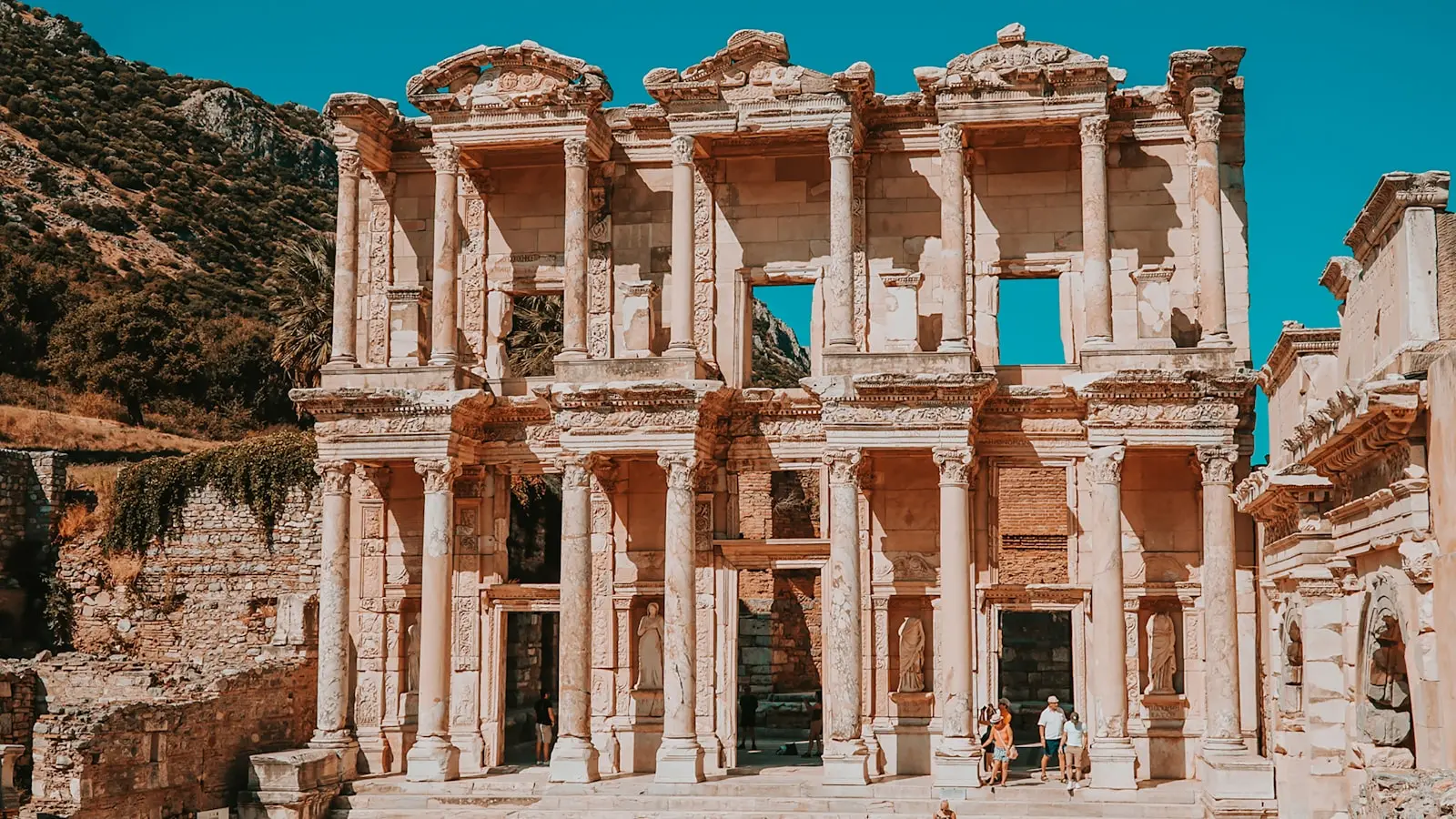
Turkey holds some of the world’s best-preserved ancient ruins, spanning Greek, Roman, Hittite, and Byzantine civilizations. For first-time visitors, narrowing down the options can be daunting. This guide ranks the must-see sites by wow factor, historical significance, and practical accessibility, with specific advice on beating crowds, saving money, and planning an efficient route.
Key Takeaways
- Start with Ephesus for the most complete Roman city experience, but arrive early to avoid cruise crowds.
- Aphrodisias offers solitude with equally impressive ruins – a hidden gem with fewer visitors.
- Cappadocia’s underground cities are self-guided; no tour required, but a guide adds context.
- The Museum Pass Turkey pays for itself after three major sites and skips ticket lines.
- Cluster sites geographically – Ephesus, Pamukkale, and Aphrodisias form a logical Western Turkey loop.
Ephesus – The Crown Jewel (and how to beat the crowds)
Ephesus is the most famous ancient ruin in Turkey, and for good reason. The Library of Celsus, the Grand Theatre, and the marble streets give a vivid sense of Roman urban life. The Terrace Houses, with their frescoes and mosaics, are an extra highlight worth the separate ticket.
The site spans roughly 2 km on marble paths with limited shade. The best time to visit is early morning or late afternoon, especially between April and October. Cruise ship crowds arrive from Kusadasi around 10 a.m., so arriving at opening (usually 8 a.m.) gives you at least two hours of relative quiet.
A guided tour can add context, but an audio guide or a good guidebook works nearly as well for most visitors. The Museum Pass Turkey includes Ephesus, which saves both money and time at the ticket booth. Stay in Selçuk (walking distance) or Kusadasi (15 minutes by dolmuş). Combine Ephesus with the House of the Virgin Mary or the hill town of Şirince for a full day.
Aphrodisias – The Tranquil Masterpiece
If Ephesus feels too crowded, Aphrodisias offers a near-empty experience with equally impressive ruins. The stadium is among the best preserved in the ancient world, seating 30,000. The Sebasteion reliefs, Temple of Aphrodite, and the on-site museum are outstanding.
Aphrodisias is less visited because it’s slightly off the main tourist trail, about a 2-hour drive from İzmir or Kusadasi. The site is flat and easy to walk, with some shaded areas. Plan for a half-day visit. Arrive at opening to enjoy near solitude. There is no need for a guide; signage is clear. The Museum Pass Turkey covers Aphrodisias.
Getting there by car is easiest, but guided day trips from İzmir or Kusadasi are available. The nearest town is Geyre, with limited lodging; most visitors come from Pamukkale or Selçuk as part of a loop.
Cappadocia’s Underground Cities – Derinkuyu and Kaymaklı
Cappadocia’s underground cities are not typical ruins but are essential for anyone interested in ancient engineering. Derinkuyu descends eight levels deep, with ventilation shafts, chapels, and living quarters. Kaymaklı is shallower and less claustrophobic.
No guide is required for either site – you can explore Derinkuyu on your own with a flashlight. However, a guided tour adds historical context about how Hittite and early Christian communities lived underground. The passages are narrow and low; comfortable shoes and a small bag are recommended. Those with claustrophobia may prefer Kaymaklı.
Nearby, the Göreme Open Air Museum (a separate entrance fee) offers cave churches with frescoes. Cluster your day with Uçhisar Castle or the Ihlara Valley for a full Cappadocia cultural experience. The Museum Pass Turkey includes both Derinkuyu and Göreme Open Air Museum.
Hierapolis and Pamukkale – Cotton Castles and Roman Baths
Pamukkale’s white travertine terraces are a natural wonder, and the adjacent Roman city of Hierapolis adds an archaeological layer. Walk the terraces barefoot (slippery when wet), then explore the theatre, necropolis, and the Antique Pool where you can swim among fallen columns for an extra fee.
The site covers about 3 km of walking, with little shade on the travertines, so bring water, a hat, and sunscreen. Dawn is the best time to avoid heat and crowds. Pamukkale town has budget hotels just a few minutes’ walk from the south gate.
The Museum Pass Turkey covers Hierapolis but not the Antique Pool. Entrance to the travertine terraces is separate and often included with the Hierapolis ticket. Check current policy on site.
Pergamon, Troy, and Other Remarkable Ruins
Pergamon’s acropolis sits on a steep hill above Bergama. Highlights include the steepest ancient theatre, the Temple of Trajan, and the Asklepion medical center. A cable car runs from the base. Allow 2–3 hours. The Museum Pass Turkey includes Pergamon.
Troy is smaller and less visually impressive, famous more for its mythological role than surviving structures. The wooden horse replica is a photo stop. Allow 1–2 hours. Many visitors find it underwhelming; combine with Assos or Alexandria Troas for a fuller day.
Side and Aspendos, near Antalya, feature well-preserved Roman theatres still used for performances. Side is right on the coast, so you can combine with a beach visit. Aspendos requires a short drive inland. Both are included in the Museum Pass Turkey.
Mount Nemrut is remote, requiring an early departure from Adıyaman or Kahta to catch sunrise at 2,200 meters altitude. The giant stone heads are spectacular, but the journey is a long detour. It’s best for travelers with extra time and a passion for off-the-beaten-path sites.
How to Plan Your Ancient Ruins Itinerary
Group sites geographically to reduce travel time:
- Western loop: Ephesus (Selçuk), Aphrodisias (near Pamukkale), Hierapolis/Pamukkale, and Laodicea – can be done in 3–4 days.
- Northwest: Pergamon (Bergama) and Troy (Çanakkale) – 2 days.
- Central: Cappadocia – at least 2 days for underground cities and Göreme.
- South: Side, Aspendos, and Termessos near Antalya – 1–2 days.
A sample 7-day route: Start in İzmir, visit Ephesus (Day 1), drive to Aphrodisias and Pamukkale (Day 2), fly to Kayseri for Cappadocia (Days 3–4), then fly to Antalya for Side and Aspendos (Days 5–6), and finally head to Bergama for Pergamon (Day 7) before flying out of İzmir or Istanbul.
The Museum Pass Turkey offers flexibility. Buy the 5-day or 15-day pass at major airports or museum ticket offices. It covers most listed sites and allows you to skip ticket lines. Compare costs based on your planned visits – the pass usually pays for itself after three major sites.
Guided tours are worth it for Cappadocia’s underground cities and for Mount Nemrut due to the historical context and logistics. For Ephesus and Aphrodisias, a well-researched guidebook or app suffices.
Packing essentials: sturdy walking shoes, sun hat, sunscreen, refillable water bottle, and a light jacket for Mount Nemrut or early mornings. Many sites have limited shade; start early.
Frequently Asked Questions
Which ancient ruin in Turkey is the most impressive for first-time visitors? Ephesus takes the top spot because of its scale, preservation, and iconic Library of Celsus. It offers the most complete ancient city experience.
How much time should I budget for Ephesus vs. Aphrodisias? Ephesus needs 2–3 hours minimum, 4 if you add the Terrace Houses. Aphrodisias can be seen in 2–2.5 hours, including the museum.
Can I visit Cappadocia’s underground cities without a tour guide? Yes. Derinkuyu and Kaymaklı are self-guided with clear routes and informational signs. A guide adds context but is not required.
Is the Museum Pass Turkey worth it? If you plan to visit three or more major sites (Ephesus, Hierapolis, Pergamon, Aphrodisias), the pass quickly pays for itself and saves queuing time. Check current prices and coverage before your trip.
What is the best time of year to visit these ruins? Spring (April–May) and autumn (September–October) offer mild weather and fewer crowds. Summer can be very hot and busy, especially at Ephesus and Pamukkale.