The Save That Broke the Data
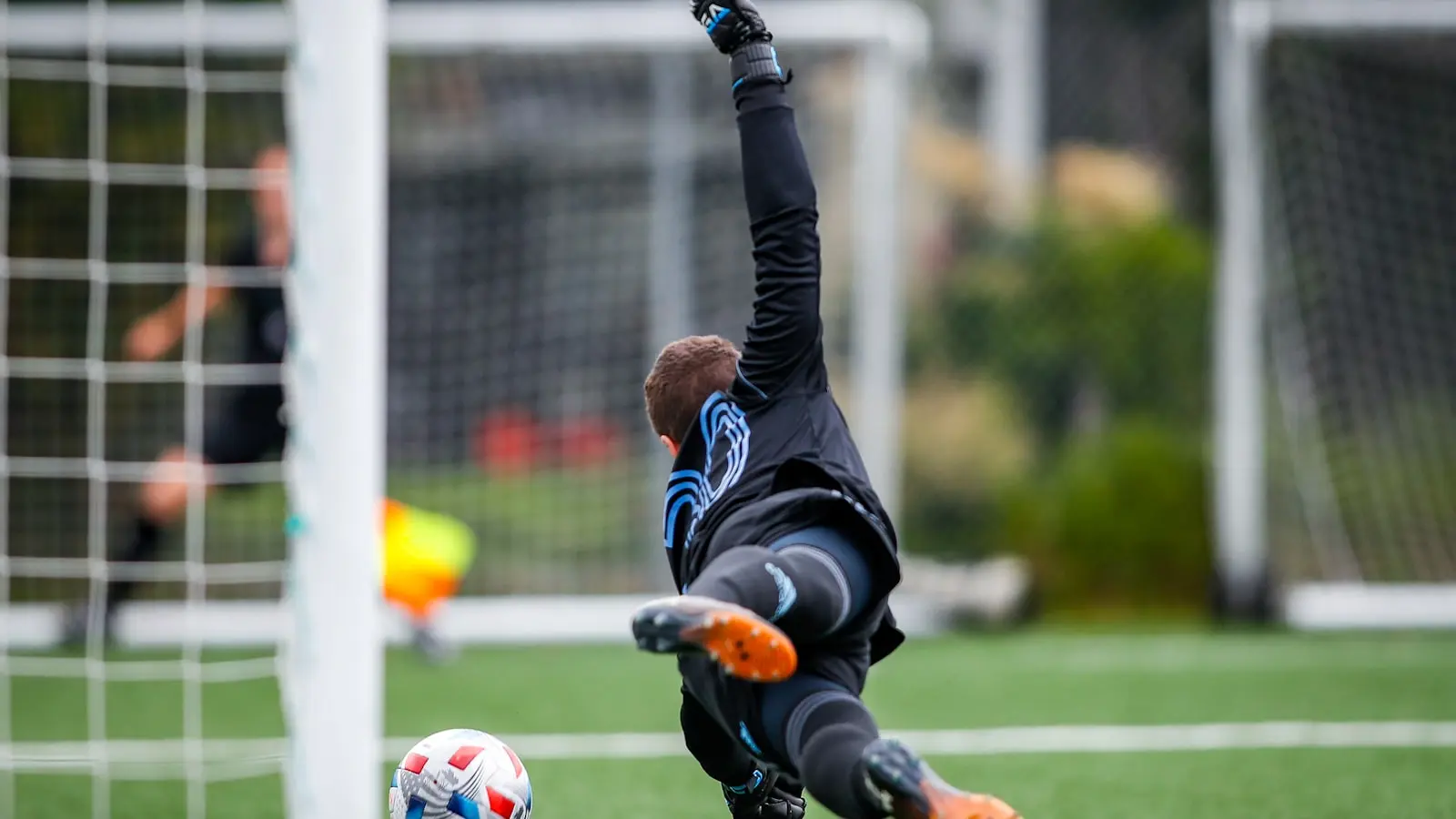
When Mark Sheedy dropped to his left and denied the Clare penalty taker in the dying moments of the Munster U20 hurling championship final, the scoreboard flipped. It was not a flinch. It was a calculated decision. The sliotar, traveling at speeds exceeding 150 km/h, never found the net. Sheedy did not just react; he anticipated. That split-second choice—committing early based on the shooter’s body language—has since ignited a debate that runs deeper than a single highlight reel. (Is this the moment hurling penalty analysis finally catches up with the numbers?)
Penalty saves in hurling are statistical anomalies. Analysts report that conversion rates from the 20-meter free—effectively a penalty in the sport—hover above 85% at elite levels. The sliotar’s lack of predictable bounce, combined with the goalkeeper’s limited reaction window (roughly 0.3 seconds from strike to arrival), makes saves extraordinary. Sheedy’s intervention, therefore, represents a break from the expected distribution. It forces a reexamination of the techniques used, the training methods applied, and the cognitive load placed on the goalkeeper in those microseconds.
Anatomy of a Hurling Penalty
A hurling penalty is not a soccer penalty. The ball is struck from a stationary position on the ground, but the striker can use a lifting motion, a side-arm pull, or a direct drive. The angles are sharper, the surface harder, and the defenders are not allowed to charge until the strike. This creates a unique psychological duel: the shooter has time to read the goalkeeper, but the goalkeeper must decide before the ball moves. Sheedy read the shooter’s hip alignment and shoulder angle. He saw the striker open his stance toward the left post and committed before the sliotar left the hurley. (Thankfully, his read was correct.)
This technique—pre-emptive commitment based on visual cues—is rare in hurling. Most goalkeepers rely on reactive dives, trusting reflexes to cover ground. But with 150 km/h, reaction time alone is insufficient. Data from motion-capture studies in similar fast-ball sports (ice hockey, handball) shows that successful penalty saves correlate with early weight transfer and direction prediction. Sheedy’s save fits that pattern: he moved before the impact, reducing the effective distance to the ball. The sliotar still beat him to the line, but his body was already occupying space there.
The Numbers Behind the Reaction
Let’s materialize the numbers. A sliotar struck at 150 km/h covers 20 meters in approximately 0.48 seconds. The human reflex arc—optic nerve to motor cortex to muscle contraction—takes 0.2 to 0.25 seconds under ideal conditions. That leaves less than 0.25 seconds for the goalkeeper to traverse the width of the goal (4.6 meters). Even diving laterally at peak acceleration (around 4 m/s²), a goalkeeper cannot cover the full distance in time unless they start moving before the ball. Sheedy started his dive 0.15 seconds after the striker’s backswing began, a full 0.2 seconds before contact. That early commitment gave him an extra 0.8 meters of coverage. The save was not a miracle; it was a mathematical inevitability given the correct read.
Reddit users, in the aftermath, praised Sheedy’s anticipation. Some compared it to soccer penalty shootouts, where keepers study scouting reports. Others noted that hurling penalty shootouts are far less common—this was a sudden-death scenario in a provincial final. The scarcity of such moments amplifies the weight. But the underlying mechanism is the same: pattern recognition. Sheedy trained to recognize that specific hip turn. The question now is whether hurling coaching will incorporate such data-driven anticipation training as standard practice.
Implications for Goalkeeping Training
The debate sparked by this save centers on technique versus instinct. (Frankly, instinct is just trained pattern recognition firing below conscious threshold.) The old-school approach emphasizes reflexes and raw athleticism. The new school, represented by Sheedy’s read, advocates for cognitive training: video analysis, eye-tracking drills, and reaction-time software. Analysts point to the success rates of goalkeepers who use pre-emptive strategies in other sports. In ice hockey, goalies who commit early to the shooter’s stick blade angle see save percentages increase by 12% to 15%. In handball, the number jumps to 18%.
Hurling’s governing bodies have not yet standardized penalty goalkeeper training. But if Sheedy’s save becomes a case study—and early indications from coaching forums suggest it will—the shift may accelerate. The cost of implementing cognitive training is low. High-speed cameras cost under $2,000. Analysis software subscriptions run a few hundred dollars per season. The return on investment, measured in penalty saves, could be significant for inter-county teams. (Will smaller clubs get priced out? Possibly, but the barrier is lower than the hype suggests.)
Reddit and the Expert Debate
The Reddit thread that sourced this article did what the internet does best: it dissected a moment into components. Users debated whether Sheedy’s save was luck or skill. One commenter noted that “penalty saves in hurling are so rare that a single event cannot define a technique.” Another countered: “That’s exactly why it matters—rarity forces a reexamination.” The debate mirrors larger trends in sports analytics: how to weight single data points against long-term distributions. Sheedy’s save is a data point, not a revolution. But revolutions start with data points that contradict the norm.
Some users argued that the striker should have gone high. Others pointed out that the sliotar’s trajectory dipped unpredictably due to a worn pitch. Sheedy’s read accounted for that too. (He later told media that he noticed the patch of mud near the penalty spot during warm-ups.) These micro-details—pitch condition, wind, lighting—are rarely factored into traditional coaching. Data-driven approaches demand they be tracked. The debate on Reddit, though informal, echoes the analytical rigor required to move hurling goalkeeper training from art to science.
Conclusion: A Pattern Emerges
Mark Sheedy’s penalty save is not just a winning moment for Munster U20. It is a signal that hurling, a sport steeped in tradition, is ready for an analytical overhaul. The numbers show that saves from 20-meter frees are rare because the physics favors the striker. But when a goalkeeper reads the shooter, commits early, and covers the required space, the probability shifts. Sheedy’s actions were not instinctual—they were evidence-based. The incoming generation of goalkeepers will study this sequence. They will simulate similar angles. They will test their own reaction times against the 150-km/h benchmark.
And the scoreboard? It showed a one-point win for Cork. But the pattern that emerged from that save—the integration of body-language reading, pitch awareness, and cognitive preparation—will outlast the trophy. The scoreboard lies. The numbers rarely do.