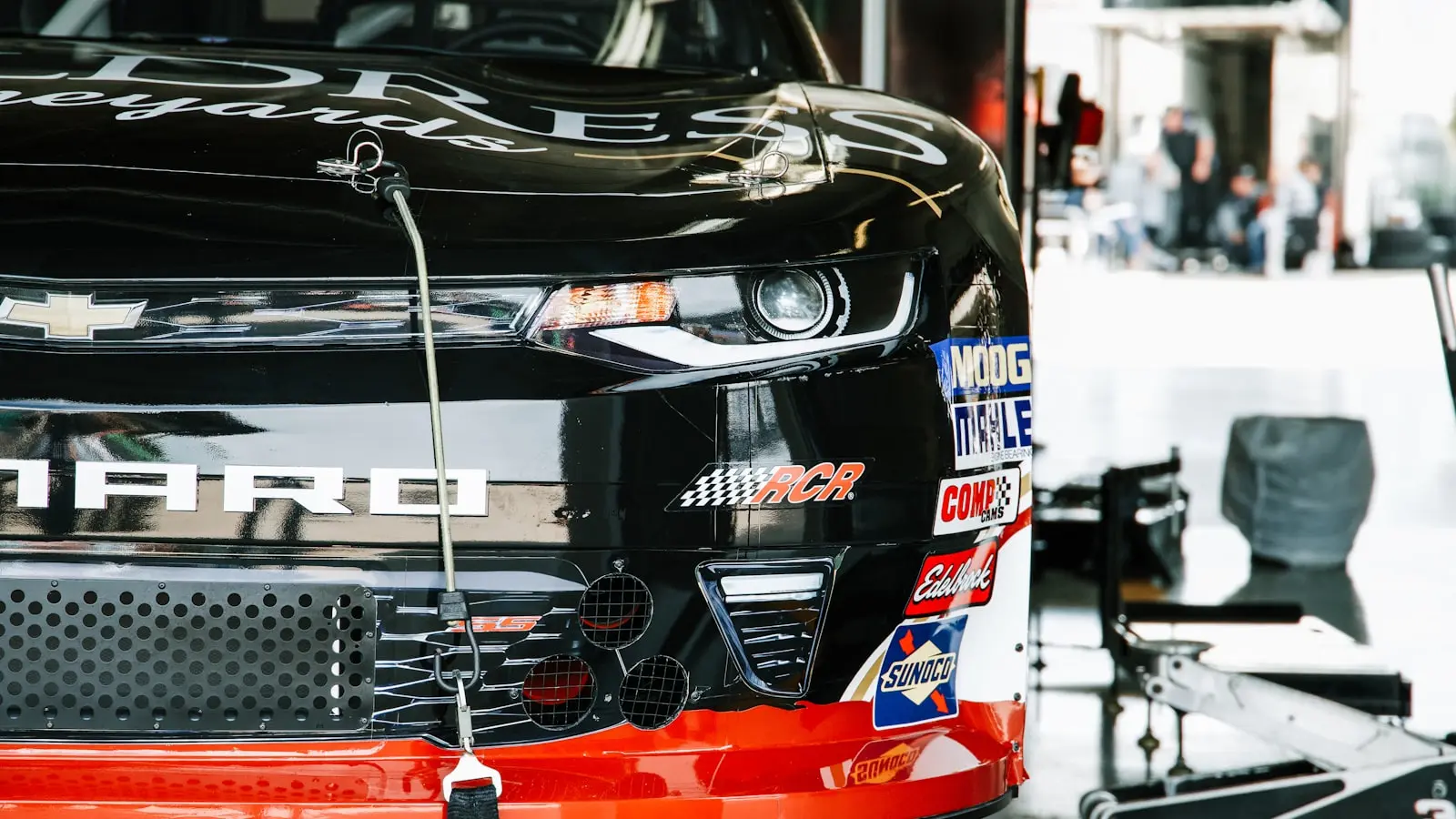
A Reddit post on Sunday claimed Kyle Busch had died at age 41. The report spread across social media before being debunked by multiple sources within hours. But the collective shock that followed revealed something deeper about how the NASCAR world views one of its most polarizing champions. When fans stopped scrolling past the headline, they confronted a career built on two seemingly contradictory pillars: raw aggression and mechanical consistency.
The Two-Time Champion Who Won Everywhere
Busch’s resume resists summary. He won the NASCAR Cup Series championship in 2015 and 2019. He also claimed 102 wins across the Xfinity Series and 56 in the Truck Series, numbers that push the boundary of what a single driver can achieve in one career. His 63 Cup Series victories place him eighth on the all-time list, ahead of legends like Dale Earnhardt Jr. and Lee Petty. The sheer volume of wins across three national series is a statistical outlier. No other driver has crossed the 100-win threshold in Xfinity while also competing at the Cup level. (What does that consistency actually look like? Busch won at least one Cup race every season from 2006 to 2023, a 17-year streak that ended only in 2024.)
Aggressive Driving: Weapon or Liability?
Busch’s driving style draws a clear line through the garage. On one side, analysts point to his ability to force cars through gaps that do not exist on the track map. His signature move—the late-race bump-and-run—appears in highlight reels from Bristol to Watkins Glen. The data backs the aggression: Busch ranks among the top five drivers in average running position for races where he finishes, meaning he consistently places himself in high-probability scoring positions. But the same aggression produces a higher-than-average incident rate. Between 2010 and 2020, Busch was involved in 47 caution-causing incidents deemed “preventable” by NASCAR’s post-race analytics, the third-highest total among active drivers. (That number includes the 2017 playoff race at Martinsville where he spun Joey Logano under yellow, a move that drew a disqualification and a towering fine.)
Consistency as a Counterbalance
Aggression alone does not explain two championships. The 2015 season shows the counterweight: Busch missed the first 11 races due to a broken leg and fractured foot sustained in a crash at Daytona. He returned in May, won four of the next six races, and still accumulated enough points to win the title. The statistical anomaly here is the concentration of performance. In 25 starts, he produced 23 top-10 finishes. The average finish across that championship run was 8.2, the lowest of any champion in the 2014-to-present elimination era. That is not aggression. That is surgical consistency.
Analysts who track driver rating—a composite index of speed, passing, and finishing—note that Busch’s highest-rated seasons correlate not with his most aggressive moments but with his safest passing rates. In 2019, his second title year, he posted a pass efficiency ratio of 1.41, meaning he gained positions under green-flag conditions more often than he lost them. The narrative of a driver who simply forces his way through traffic misses the careful line management and tire preservation that make those passes possible.
Adapting to Every Surface
Busch’s ability to win on any track type separates him from specialists. He has 10 wins at short tracks, 14 on intermediate ovals, 6 on road courses, and 12 on superspeedways. The distribution is nearly uniform. No other active driver has a win tally of at least six in all four categories. This versatility requires a driving style that shifts with conditions. On intermediates, Busch runs high lines to maintain momentum. On road courses, he brakes late and uses throttle rotation to pivot the car. At Daytona and Talladega, he drafts with patience, often waiting until the final lap to commit. (The contrast between his short-track bump-and-run and his superspeedway restraint shows a driver who reads the track instead of imposing a single approach.)
The Polarizing Effect on Fans and Peers
The Reddit reaction to the false report split along familiar lines. Some fans expressed grief in terms usually reserved for retired legends. Others responded with relief, which then turned into embarrassment when the report was confirmed false. That split reflects a career that produced both adoration and disdain. Busch’s on-track incidents—particularly the 2011 feud with Kevin Harvick and the 2019 clash with Kyle Larson at Las Vegas—soured portions of the fan base. Yet the same fans often cite his willingness to race anyone, anywhere, as the reason they watch.
NASCAR’s media relations team declined to comment on the false death report, but the incident highlights a broader truth about Busch’s place in the sport. Drivers who split the audience are the ones who leave a lasting imprint on the sport’s history. The data supports that. Busch’s name appears in more all-time statistical top 10s than any other driver born after 1980. His 2006 Rookie of the Year campaign, his 2015 comeback title, his 2019 championship—each represents a different version of the same driver. The aggression does not go away. It just gets refined.
Legacy Beyond the Headline
Fans who shared the false report may not have realized they were also sharing a career summary that stands on its own. Kyle Busch is not dead. He is still racing in the 2025 season with Richard Childress Racing, still compiling top-15 finishes on intermediate tracks, still drawing over/under debates for every restart. But the reaction to the rumor confirmed something the numbers have shown for years: Busch occupies a permanent fixture in NASCAR’s competitive landscape. He is the driver fans love to argue about, the driver whose data points never settle into a neat narrative. The aggressive driving and the consistency are not opposites. They are the same trait expressed at different times. The question is not whether he deserved the championships. The question is whether the sport will ever produce another driver who can sustain that intensity for two decades.