The Fantasy Premium and the Athletic Reality
The surge in historical European martial arts participation maps directly onto the broadcast metrics of prime-time fantasy television. Millions watch choreographed broadsword swings on screen and subsequently seek out local clubs expecting a theatrical experience. They find something entirely different. True historical combat operates as a highly technical, high-consequence sport anchored strictly in the surviving combat manuals of the fourteenth to seventeenth centuries. The transition from couch to piste requires abandoning aesthetic expectations to study kinetic efficiency, distance management, and precise angular momentum. The scoreboard measures survivability. Television measures drama.
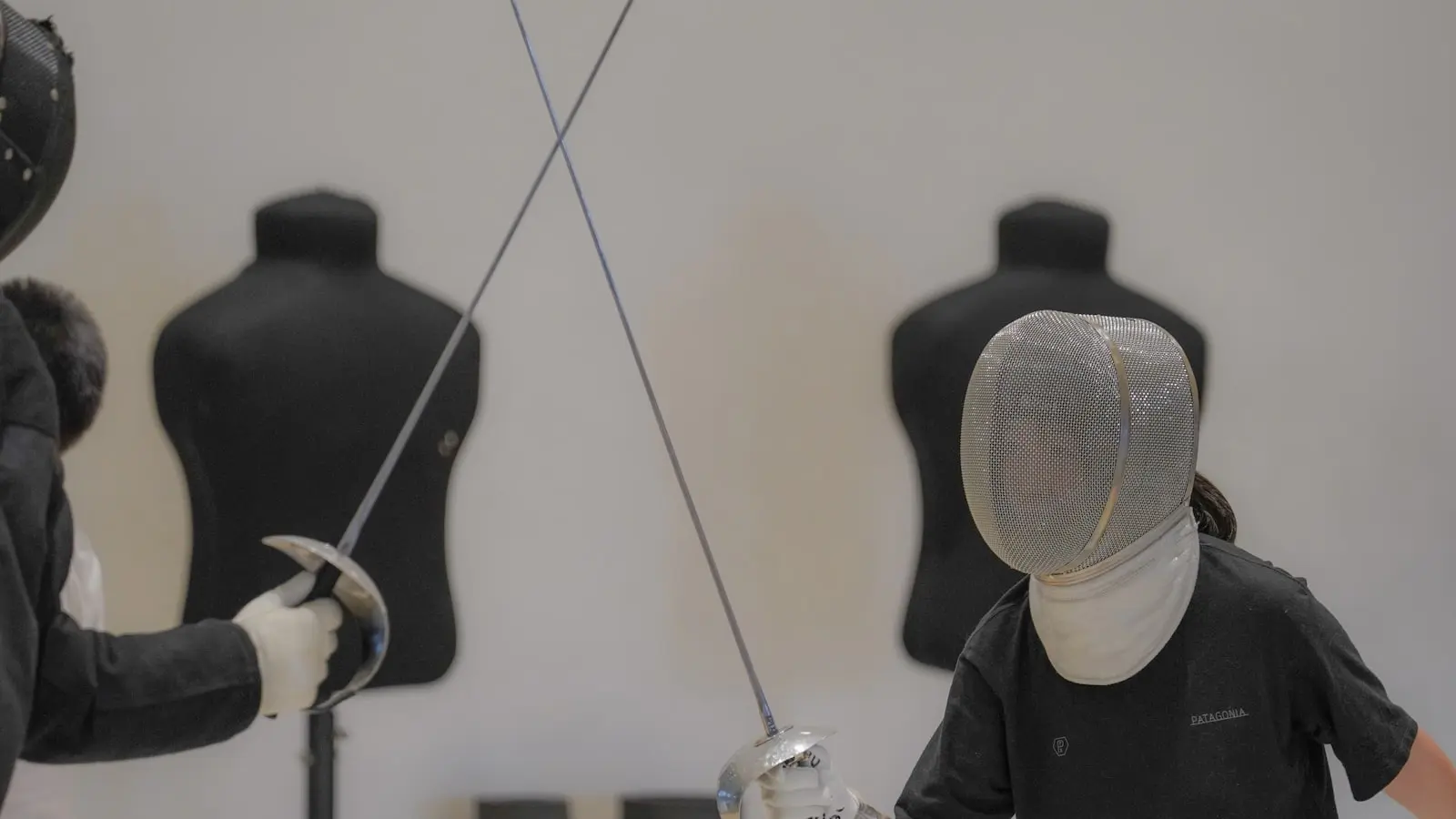
When heavy canvas jackets absorb the impact of synthetic nylon practice blades in a humid gymnasium, the auditory feedback strips away all cinematic illusion. There are no sparks. There are no dramatic pauses. There is only the rapid calculation of distance and leverage. Beginners entering this ecosystem face an immediate filter. Those who refuse to discard their television-informed habits wash out. Those who stay learn to read the data of physical combat.
Equipment Economics and the Nylon Mandate
Eager novices frequently arrive at certified training centers carrying unvetted, mass-market steel replicas. Instructors universally mandate these items remain in the car. The immediate acquisition of steel weapons represents a fundamental misallocation of beginner capital. Proper entry into the sport demands synthetic nylon practice swords and basic fencing masks. (This prevents both severe injury and the development of fatal structural habits).
Nylon allows for high-velocity kinetic feedback without the terminal consequences of uncalibrated steel-on-steel impact. A three-pound steel lever accelerating at forty miles per hour generates enough kinetic energy to shatter an unprotected collarbone. Novices lack the braking mechanisms required to halt that momentum mid-swing. Nylon bows upon impact, dissipating the energy safely. This material substitution buys the beginner hundreds of hours of safe repetition.
The financial metrics support this progression. A reliable synthetic trainer and a modern three-weapon fencing mask require a fraction of the capital needed for a tournament-grade steel sword. Capital preservation in the first six months dictates that funds flow toward basic safety gear, not offensive weaponry.
The Geometry of Footwork and Distance
A fight is not won by the hands. It is won by the feet. Basic longsword footwork establishes the foundation of all offensive and defensive metrics. Combat functions as a dynamic problem of distance management, defined in tactical analysis as the measure. If an athlete steps inside the measure without controlling the opponent’s weapon, hit probability drops to a statistical coin flip. Tactical superiority relies on entering the engagement zone exclusively when structural dominance is achieved.
Footwork drills isolate the kinetic chain. Power generates from the floor, travels up through the hips, and terminates at the blade. Force generation fails completely if the stance collapses. Analysts evaluating tournament footage do not look at the final strike. They analyze the footwork executed two seconds prior. The competitor who establishes an angle of advantage outside the direct line of attack dictates the subsequent exchange. They control the spatial data. The opponent merely reacts to it.
Edge Alignment and Structural Mechanics
The geometry of the blade dictates the physics of the cut. Theatrical combat utilizes the flat of the blade to generate loud, dramatic impacts that protect the actors. Historical combat requires mathematically precise edge alignment. If the true edge does not track perfectly with the vector of the swing, the blade flexes upon impact, dissipating kinetic energy harmlessly.
Beginners spend weeks striking stationary targets purely to program muscle memory for this alignment. The mechanics do not forgive sloppiness. (Physics does not care about your intentions). Parrying techniques require identical precision. Defending an incoming strike means catching the opposing force on the strong section of the blade near the crossguard while redirecting the momentum. A static block transfers the shockwave directly into the wrists. A structural parry deflects the kinetic energy and opens a counter-attack vector.
The Manuscript as an Algorithmic Flowchart
Modern competitors do not study historical manuals out of academic nostalgia. They study them because the biomechanics still work. HEMA athletes approach the treatises of masters like Johannes Liechtenauer or Fiore dei Liberi as algorithmic flowcharts. In modern competition, an exchange lasts an average of three seconds from the initiation of measure to the referee calling a halt. The human brain cannot consciously process and react to a strike traveling at those speeds within that timeframe.
Performance relies entirely on pattern recognition. Each guard position represents a specific tactical sector. The high guard acts as an immediate kinetic threat, trading defensive coverage for maximum potential energy. The low guard invites an attack, intentionally surrendering the initiative to exploit the opponent’s overextension. Transitioning between these nodes must occur seamlessly. A pause between guards is a dropped frame. A dropped frame results in a hit.
If the opponent attacks the upper left quadrant, the prescribed algorithm dictates a response that covers that sector while simultaneously presenting a reciprocal threat. It is binary logic executed under severe cardiovascular distress. The bind serves as the primary data transfer point. When two blades cross, visual data becomes obsolete. Tacticians rely on pressure feedback. If the opponent applies heavy pressure, the algorithm dictates yielding and rotating the strike to the opposite side. If the pressure is light, the response is to drive straight through the center line. This tactile data transfer happens in milliseconds. Beginners lack the sensory calibration to read this pressure. They panic. They muscle the blade. They expose their vital targets. The data always punishes panic.
Injury Economics and the Competitor Lifespan
Veteran practitioners track injury data rigorously. Conversations across competitive platforms point to a singular failure point for novices. Treating the sport like television choreography results in catastrophic hand and joint injuries. The human hand contains twenty-seven bones, all highly vulnerable to blunt force trauma when manipulating a lever against a resisting opponent.
Novices frequently hyperextend their elbows. Because they rely on the upper body to generate force rather than the kinetic chain of the legs, they swing through the target without structural support. The elbow joint absorbs the excess velocity. Tendons inflame. Ligaments stretch. This mechanical failure removes the beginner from the club for six weeks. Chronic repetition ends their involvement entirely.
Specialized padded gauntlets are mandatory for full-contact sparring. Instructors restrict full-contact engagements until the novice demonstrates subconscious adherence to distance and defensive protocols. (No one spars on day one). Protective gear represents a high initial investment, but the cost of reconstructive finger surgery zeroes out the athlete’s training budget permanently.
Competitive longevity requires defensive discipline. The athletes who consistently reach the podium are not the fastest or the strongest. They are the most efficient. They parry using skeletal structure rather than muscular force. They manage distance to force their opponents into statistically disadvantageous attacks. They view the combat space as a grid of probabilities.
Beginning the sport safely requires internalizing this truth. The sword is simply a tool to manipulate geometry. Success comes to those who respect the physics, trust the historical algorithms, and protect their joints. Everything else is just noise.