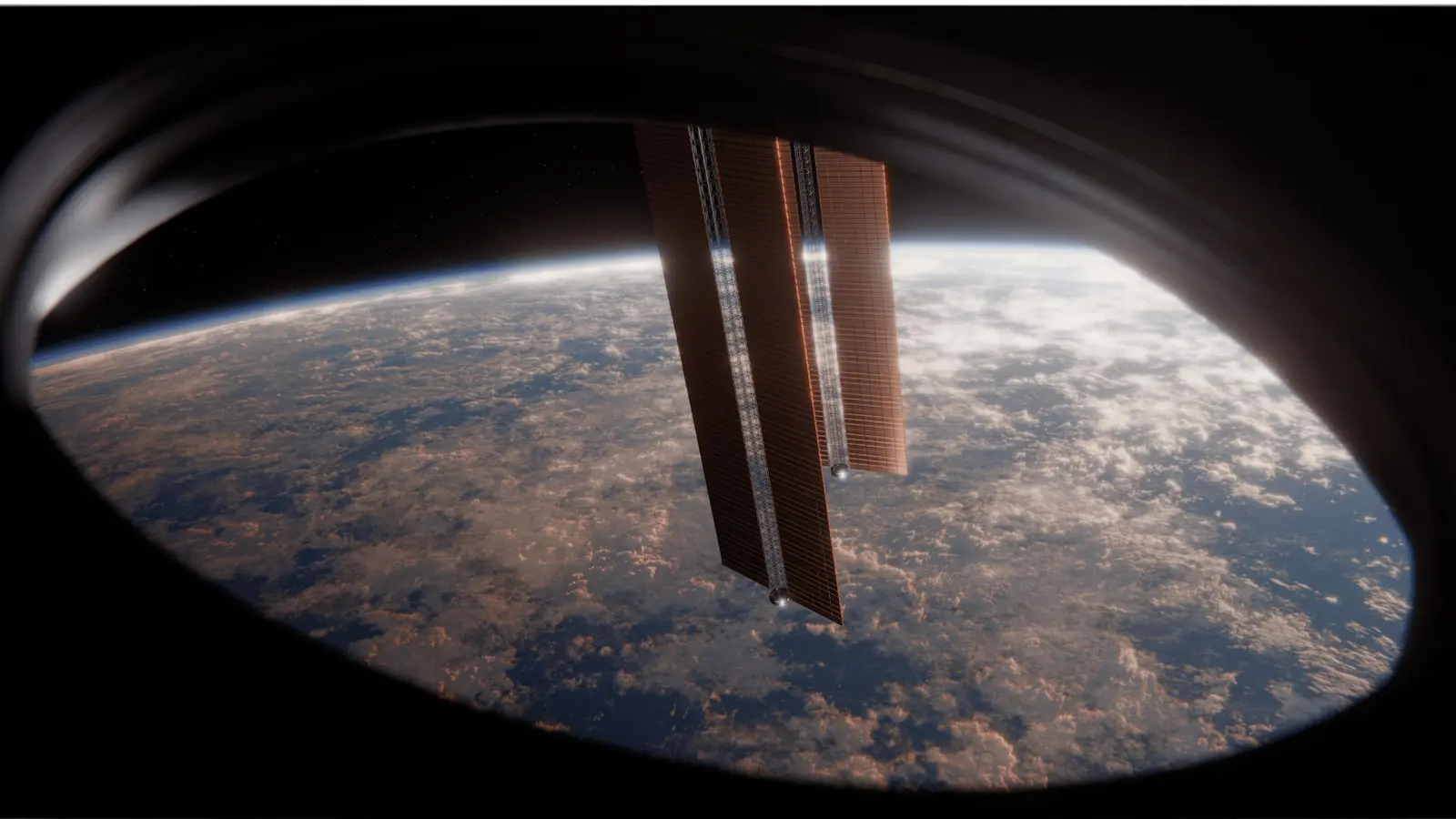
The aerospace sector undergoes a structural overhaul driven by the convergence of reusable launch architecture and deep-space autonomous navigation. Engineers at the Jet Propulsion Laboratory and commercial aerospace firms standardize technologies that drastically reduce the cost-per-kilogram to low Earth orbit. This cost collapse fuels a broader timeline. Industry roadmaps now target a permanent human and robotic presence in low Earth orbit and lunar operational zones by 2035. The math works.
Recent integration of ion propulsion systems and additive manufacturing for core rocket components enables mission profiles previously discarded due to budget constraints. Instead of machining complex engine baffles from solid metal blocks, automated factories print them layer by layer. This methodology cuts production time from months to days. Capital flows follow production efficiency. Private aerospace companies successfully recovering and flying orbital-class boosters unlock vast venture and institutional funding. (Investors finally see a path to liquidity).
Space exploration operated for decades under a strict government monopoly. State agencies absorbed all financial risk. If a rocket exploded, taxpayers absorbed the shock. That model fractured over the last fifteen years. The ecosystem transitioned into a commercial-public partnership structure. Governments buy transport services. Private corporations own the vehicles. When engineers watch a fifteen-story charred cylinder reignite its engines and drop precisely onto a drone ship rocking in the Atlantic Ocean, the era of disposable rocketry officially ends. Expendability is obsolete.
Venture capital avoids pure research. Markets demand returns. The commercial-public partnership solved this friction by separating infrastructure development from scientific payload design. Space agencies issue fixed-price contracts for payload delivery. Commercial firms compete to offer the lowest price per kilogram. This forces private engineers to ruthlessly optimize assembly lines. Factories replace bespoke aerospace technicians with automated welding robots and continuous composite extrusion machines. The cost of failure drops. When a test vehicle explodes on the launch pad today, the company simply rolls out the next prototype a week later. Speed replaces perfection.
The Economics of Additive Manufacturing and Reusability
The reduction in orbit delivery costs directly correlates with the ability to reuse the first stage of a launch vehicle. Historically, access to space required building a multi-million dollar machine, filling it with highly refined propellant, and throwing the hardware into the ocean after three minutes of flight. To replicate this business model in commercial aviation, airlines would need to scrap a commercial jetliner after a single flight from New York to London. (The economic absurdity is obvious).
Aerospace manufacturers currently leverage additive manufacturing to print complex combustion chambers and engine bells. 3D printing handles exotic alloys that resist the extreme thermal stress of orbital reentry. Technicians recover the booster, inspect the printed components, refurbish the thermal protection systems, and return the vehicle to the launch pad within weeks. The capital investment previously trapped in single-use experimental development redirects toward payload complexity. The supply chain constraints evaporate when rockets become turnaround vessels rather than bespoke monuments. Satellites grow heavier. Probes carry deeper instrument suites.
Ion Propulsion Mechanisms
Getting off the Earth requires explosive force. Navigating deep space requires precision and endurance. Chemical propulsion relies on igniting fuel and oxidizer to produce massive thrust for brief durations. It works for fighting gravity, but it demands massive tanks. Once a spacecraft breaks the gravity well of Earth, chemical propulsion becomes a liability. The tyranny of the rocket equation forces engineers to carry fuel just to push the unburned fuel.
Ion propulsion dismantles this limitation. Instead of fire, ion thrusters use electrical energy to accelerate ions of a noble gas like xenon. Solar arrays or small nuclear reactors generate this electricity. The thruster ejects these ions at extremely high velocities. The physical force generated equates to the weight of a sheet of paper resting on a human hand. (Hardly cinematic). Yet, in the frictionless vacuum of space, this steady, continuous pressure builds over months. A probe driven by ion thrusters eventually achieves velocities far exceeding chemical rockets. It utilizes a fraction of the propellant mass. This mass savings translates directly into more scientific instruments onboard. Engineers swap fuel weight for sensor capability.
Solving the Light-Speed Delay
Astrophysicists and mission planners point to deep-space autonomous navigation as the fundamental mechanism unlocking the outer solar system. Reusable rockets lower the entry fee. Ion drives provide the mileage. Autonomy provides the brain.
Consider the physics of communication. Radio waves travel at the speed of light. When Mars reaches its maximum distance from Earth, a transmission takes roughly 22 minutes to cross the void. If a rover operating in a Martian crater detects a sudden cliff edge, the camera sends the image. It arrives at mission control 22 minutes later. An engineer hits the brakes. The command takes another 22 minutes to return. By the time the rover receives the instruction to stop, 44 minutes have passed. The hardware is already destroyed.
Autonomous navigation severs the reliance on real-time commands from ground control. Spacecraft now carry onboard terrain-relative navigation systems. Cameras map the approaching surface, compare the imagery against pre-loaded orbital maps, and calculate trajectory deviations in milliseconds. The software makes independent decisions. If a landing ellipse contains hazardous boulders, the landing craft diverts its thrusters to find a flat plane. (Houston becomes an observer rather than a driver).
This operational independence expands planetary science. Probes exploring the moons of Jupiter or Saturn face communication delays stretching into hours. Plunging a submersible through the ice crust of Europa requires real-time hazard avoidance. Navigating the methane lakes of Titan demands atmospheric adaptation. A pre-programmed sequence fails the moment unpredictable environmental variables enter the equation. Machine vision and localized decision-making engines allow these probes to explore vast, dynamic environments without waiting for permission.
The Mars Sample Retrieval Architecture
These three pillars converge on a specific timeline. Industry consortiums and international space agencies align their roadmaps toward a permanent human and robotic presence beyond Earth orbit by 2035. The immediate proving ground remains the lunar surface. Long-term lunar exploration demands heavy cargo delivery. Autonomous landers must touch down precisely next to pre-positioned solar arrays and habitat modules. Reusable launch vehicles will cycle between Earth and lunar orbit, establishing a logistical supply chain.
The ultimate test of these combined systems centers on Mars sample retrieval. The mission architecture requires landing an autonomous vehicle on the Martian surface. That vehicle must locate geological samples cached by previous rovers, load them into a small ascent vehicle, and launch back into Martian orbit. An autonomous return orbiter, powered by an ion propulsion drive, must then rendezvous with the sample container, capture it, and begin the long transit back to Earth.
No human hand touches the controls during the critical phases of this operation. The spacecraft executes orbital mechanics, atmospheric entry, rendezvous, and docking entirely through onboard computation. Algorithms manage the thrust profiles. Sensors manage the approach vectors. If the commercial-public partnership model sustains its current capital influx, the engineering solutions required for this mission migrate into standard industrial practices. The frontier compresses. Discovery expands possibility.