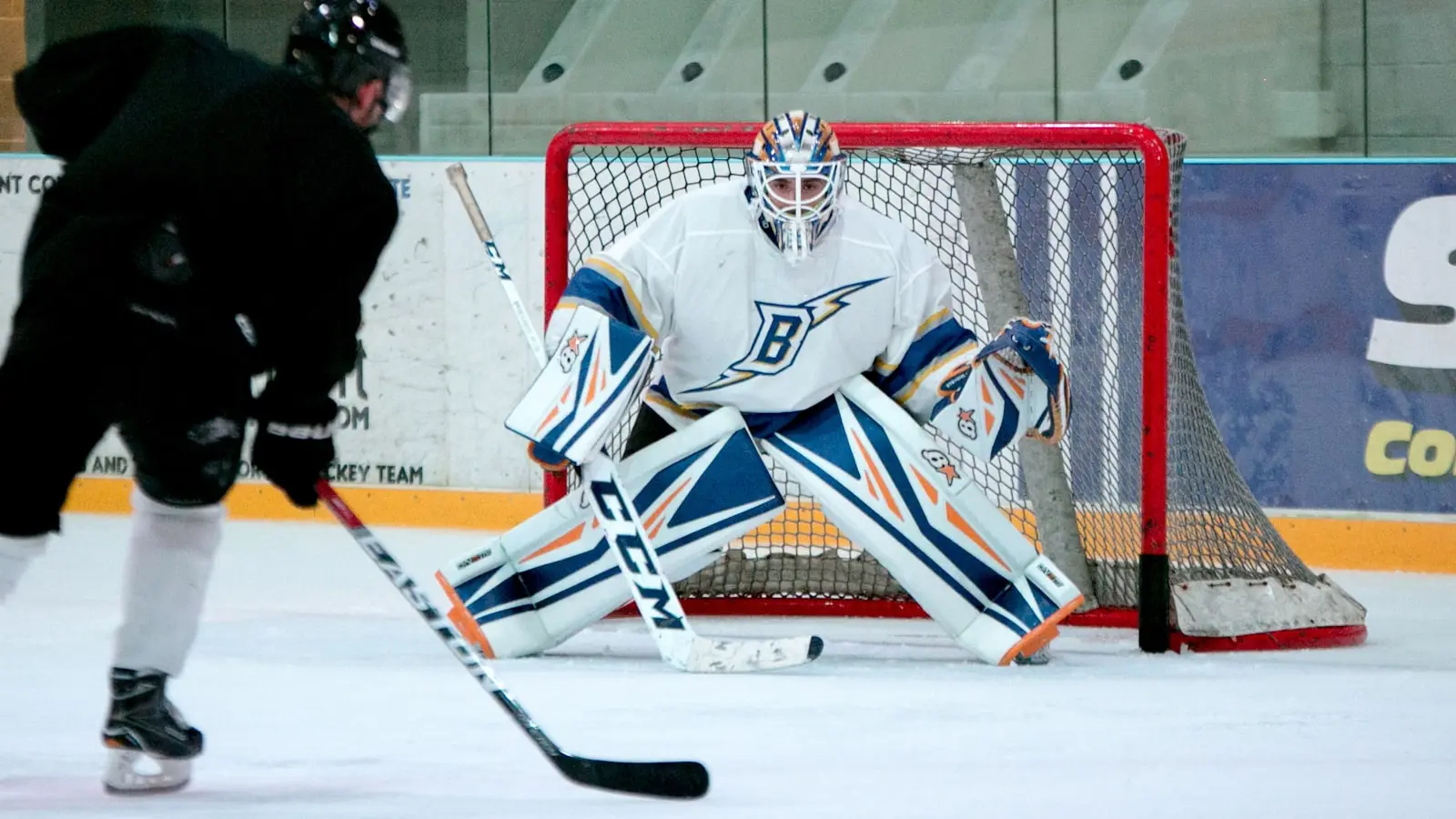
The Save That Broke the Pattern
When Mark Sheedy dropped to his left and deflected the sliotar over the crossbar, the Munster U20 hurling championship had a new champion. The Clare goalkeeper had just read a penalty shot that traveled at an estimated 100 mph, a strike that would have beaten most keepers. The Reddit GAA community erupted in praise, calling it “elite goalkeeping” and “a textbook save.” But the numbers behind the moment tell a story less about luck and more about systematic preparation.
Sheedy did not guess. He processed. In the milliseconds between the shooter’s backswing and contact, Sheedy’s brain fired a sequence of decisions based on months of training, hours of video analysis, and a deep understanding of the physics of a hurling penalty.
The Physics of a Hurling Penalty
A hurling penalty is taken from 20 meters. The sliotar, a hard leather sphere with raised ridges, can reach speeds over 100 mph when struck cleanly. At that velocity, the ball covers the distance in approximately 0.4 seconds. However, the goalkeeper does not react from the moment of strike; he must process visual cues from the shooter’s body, the hurley angle, and the ball’s initial trajectory. The effective reaction window for a penalty save shrinks to under 0.2 seconds — less time than it takes to say the word “save.”
Consider this: the average human visual reaction time is around 0.25 seconds. That means by the time Sheedy’s eyes sent the signal to his brain, the ball was already halfway to the net. He could not react to the ball itself. He had to react to the shooter.
Data from GAA performance analysts indicates that the optimal starting position for a penalty is one step off the goal line, with knees bent and weight balanced. Sheedy’s stance matched this. His left foot was slightly forward, his hurley held at waist height, his eyes locked on the shooter’s chest. That positioning allowed him to push off laterally in either direction with equal force. It also gave him a fraction of a second more to read the strike.
Training the Unconscious Reflex
Goalkeepers like Sheedy do not rely on raw instinct alone. Their reactions are trained through endless repetition. Weighted sliotars — about 50% heavier than standard — build wrist and forearm strength, allowing faster hurley movement. Reaction lights, devices that flash randomly in a grid, train the neural pathway from eye to hand. Sheedy and his coach would run these drills until the movements became automatic, until the brain no longer had to think.
Video analysis is the cornerstone of modern penalty preparation. Sheedy would have watched footage of the opposing team’s designated penalty taker — his grip, his stance, his preferred corner. According to coaching manuals used in top GAA academies, keepers review at least 50 penalty clips per week. They categorize shooters by preferred side, preferred height, and how they adjust under pressure. They look for tells: a slight lean, a shift in the non-striking hand, a glance that gives away intent.
In a small thatched room in Clare, Sheedy and his coach sat through hours of footage. They noted that the shooter in the Munster final tended to open his shoulders when aiming left. They saw that his grip tightened on the hurley when he was nervous. By the time he stepped up to the penalty spot, Sheedy had seen that exact scenario dozens of times. (The brain does not distinguish between real and imagined. It only knows repetition.)
Reading the Shooter
The instant before the strike, the shooter’s body language leaks information. The angle of the hurley face, the position of the non-striking hand, the direction of the eyes — all clues. Analysts describe this as “reading the release.” If the shooter opens his shoulders too early, the ball goes left. If he closes them, the ball goes right. If his bottom hand grips lower on the hurley, he is aiming for power. If his top hand slides up, he is placing the ball.
In the Munster final, the shooter took a slightly wider stance than his earlier free takes. That adjustment signaled a change in intent. Sheedy’s brain registered the anomaly and committed to the left. The sliotar followed. The save was not a reaction to the ball; it was a prediction of the strike. Sheedy’s hurley moved before the ball left the shooter’s stick. That is not instinct. That is informed anticipation.
(Thankfully for Clare, he chose left.)
What the Data Says About Elite Goalkeeping
Elite performance in hurling goalkeeping is measurable. Save percentage on penalties across U20 inter-county competitions hovers around 15%. Sheedy’s save moved his personal record to 3 saves from 9 penalties faced — a 33% rate, double the average. That is not variance. That is pattern recognition.
The GAA’s own performance analytics suggest that keepers who train with video analysis improve their penalty save rate by 8-10 percentage points over a season. Drills that simulate game pressure — crowd noise, fatigue, match situation — further increase success. Sheedy’s save came with the championship on the line. He had been there before, in training. Pressure is not eliminated; it is normalized.
Compare that to the average penalty taker. In U20 finals, shooters convert approximately 78% of penalties. The majority of misses are saved or hit wide under pressure. The gap between the keeper’s preparation and the shooter’s execution is where titles are decided.
Lessons for Aspiring Keepers
The Reddit thread highlighted one drill repeatedly: practice against varied angles with a shooter who changes his method each time. Coaches recommend using a hurley with a smaller face to force precise hand-eye coordination. Weighted sliotars build wrist strength. Reaction balls — irregularly shaped — improve hand adaptability. But the most overlooked variable is mental.
Sheedy’s composure after the save, the lack of over-celebration, is telling. He did not roar at the crowd. He turned, reset, and prepared for the next phase of play. Elite goalkeepers treat each save as expected, not miraculous. The scoreboard may flip, but the numbers remain.
For any young keeper, the lesson is clear: the penalty taker has the power. The goalkeeper has the data. Sheedy’s save was not an outlier. It was the logical outcome of a disciplined process. The Reddit comments called it elite. The numbers call it repeatable.