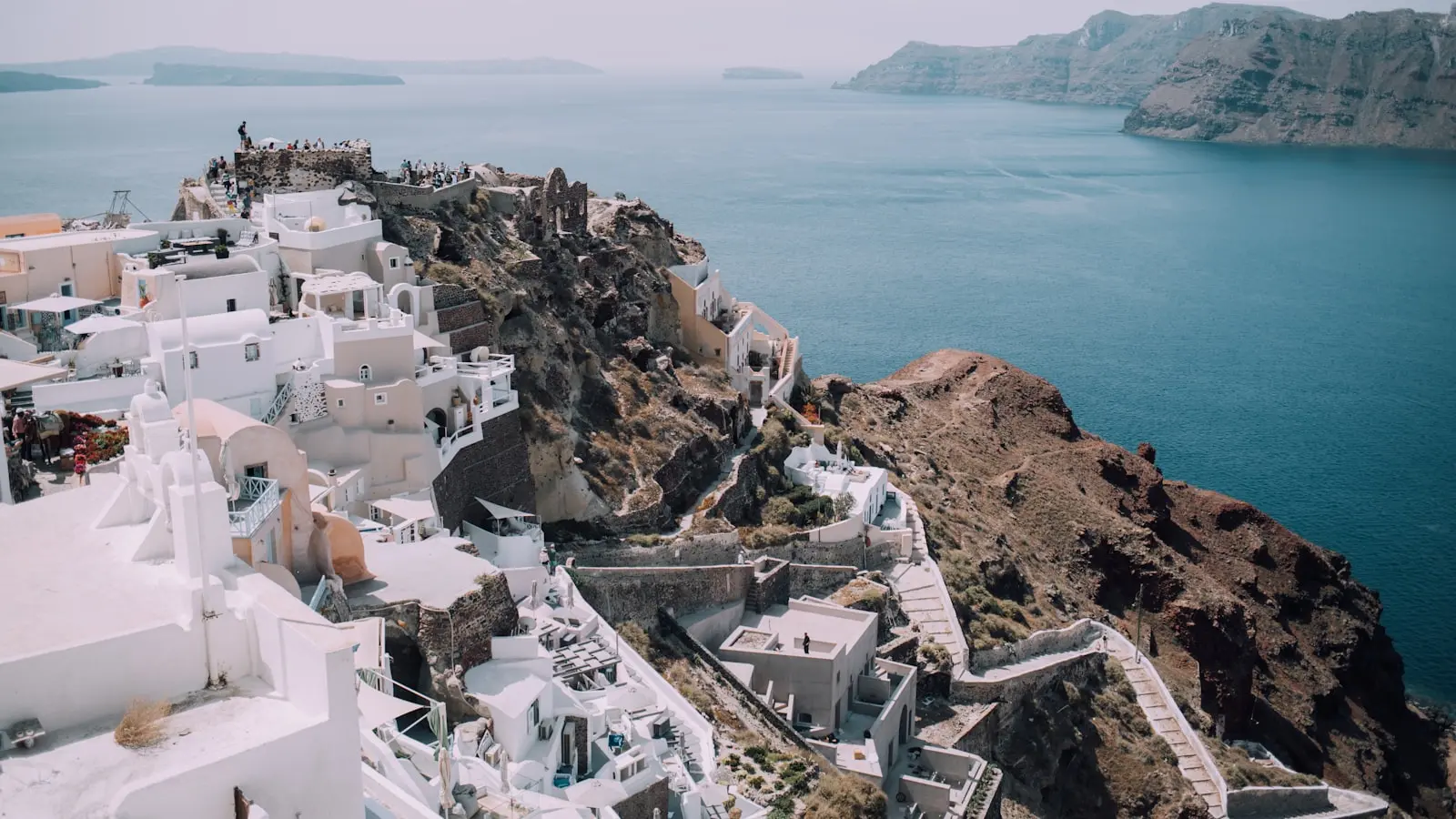
When a Reddit user posted photographs of Oia, Santorini taken in early May, the reaction threads pivoted quickly from aesthetic praise to tactical planning. The images showed whitewashed buildings cutting against the Aegean blue, but the real signal was the absence of crowds. The post did not explicitly mention hiking, but the geography of Oia sits on the northern tip of the caldera rim, and the cliffside paths are the dominant terrain feature. For hikers, the Fira to Oia trail is the standard route. The question is whether early May offers conditions that justify the effort.
The Data Behind the Post
The Fira to Oia hiking trail runs roughly 10 kilometers along the caldera edge. Elevation gain is approximately 300 meters, with continuous undulation over uneven stone steps. Reddit commenters in the thread reported completion times ranging from 2.5 to 4 hours, depending on photo stops and pace. The user who posted the Oia photos noted the absence of crowds, which aligns with Santorini’s seasonal tourism curve. Early May sits in the shoulder period between the quiet winter months and the June-to-September peak. Official tourism data for Santorini shows that May arrivals are roughly 40% of August levels, though exact numbers fluctuate annually. The thermal advantage is real: average high temperatures in early May hover around 22°C (72°F), compared to 30°C (86°F) in July. (Heat management decisions begin here, not on the trail.)
Timing and Thermal Strategy
The Reddit thread’s advice to start early is not generic wisdom; it is a deterministic response to solar geometry. The trail runs north-south, meaning east-facing sections catch direct morning sun by 7 AM, while west-facing cliffs stay shaded until late afternoon. Starting at dawn gives hikers a window of roughly two hours below 25°C before the caldera begins radiating stored heat from the volcanic rock. By 10 AM, surface temperature on the stone steps can exceed 40°C even when ambient air reads 22°C. (The difference between air temperature and radiant temperature is the hidden variable.) Early May offers a longer thermal safe window than June, but the margin shrinks daily as the sun angle climbs.
Terrain and Performance Demands
The path is not a gentle coastal walk. It is a technical trail over volcanic tuff and basalt steps, with sections eroded by wind and foot traffic. Uneven step height varies from 5 cm to 45 cm, forcing irregular gait cycles. Trainers with shallow treads lose grip on polished stone. Commenters emphasized sturdy shoes; the data supports that. A 2022 study of trail injuries on Mediterranean coastal paths found that 68% of incidents involved ankle sprains on uneven stone surfaces. The Fira-Oia trail’s continuous elevation change taxes the calf and quadriceps in a nonlinear way. Pace drops by 15-20% in the middle third where the path climbs away from the caldera before descending into Oia. Hikers who push early risk glycogen depletion before the final descent. (The 2.5-hour finish is a fast time; the 4-hour finish allows for mechanical fatigue and thermal recovery stops.)
Crowd Avoidance Metrics
The Reddit user’s early May timing is a deliberate crowd mitigation strategy. Santorini sees 5,000 to 8,000 daily cruise ship passengers during peak months, many of whom disembark at Fira and walk the first 2 km of the trail before turning back. In early May, cruise call-ins are roughly 30% of peak. The absence of crowds in the Oia photos corresponds to a period when the northern section of the trail receives fewer than 50 people per hour. Compare that to July, when the same stretch can see 200 people per hour, creating bottlenecks at the narrower cliff sections. (The bottleneck locations are predictable: the Skaros Rock detour and the final descent into Oia.) For hikers seeking visual isolation, early May delivers a signal-to-noise ratio that peak months cannot match.
Gear and Hydration Calculus
Reddit responses universally recommended carrying plenty of water. For a 10 km trail with 300 m of elevation gain under moderate heat, the standard hydration requirement is 1 liter per 5 km, or 2 liters total. But the caldera environment adds a factor: low humidity (typically below 50%) and constant wind increase evaporative water loss. Actual consumption can reach 1.5 liters per 5 km under exertion. A hiker starting at 7 AM with 1.5 liters may run dry by the 8 km mark if they stop for photographs and lose sweat through wind exposure. The smart option is 2 liters minimum, with an electrolyte source for the third hour. Sun protection is non-negotiable: the trail offers no canopy for 90% of its length. UV index in early May at Greek latitude (36°N) reaches 7 by 10 AM. (A sun hat and SPF 50 are not recommendation; they are survival gear.)
The Psychometric Factor
Hikers on the Fira-Oia trail consistently report a split experience. The first 3 km from Fira to Skaros Rock deliver the iconic view: the volcano caldera, the submerged crater, and the nested blue domes. After Skaros, the trail turns inland through scrubland and low terraced fields. The coastal view is replaced by dry vegetation and distant sea glimpses. This segment is often described as underwhelming. The Reddit post focused on Oia itself, not the middle section. The analytical question: is the full 10 km worth the effort? For photographers seeking the classic white-and-blue composition, the last 2 km into Oia replicate the visual density of the start. For hikers prioritizing physical challenge, the middle section provides the steepest gradients and the most isolated terrain. Early May removes the crowd pressure from this decision, allowing hikers to bail out at Skaros Rock (5 km round trip) without being hemmed in by tour groups.
Conclusion: Running the Numbers
The Fira to Oia hike in early May scores high on three metrics: thermal comfort, crowd density, and visual payoff. The Reddit user’s post confirms the absence of crowds at the destination. The trail’s performance demands are manageable with a 3-4 hour window and proper hydration. The historical data supports early May as a sweet spot before the seasonal spike in tourist traffic. For hikers who accept the terrain’s mechanical constraints and plan for radiant heat, the caldera trail delivers a high return on invested effort. The scoreboard—the photograph of empty white streets against blue water—does not lie. But the underlying numbers, from thermal gradients to pace distribution, explain why that image exists. The trail respects discipline. Early May respects the hiker.