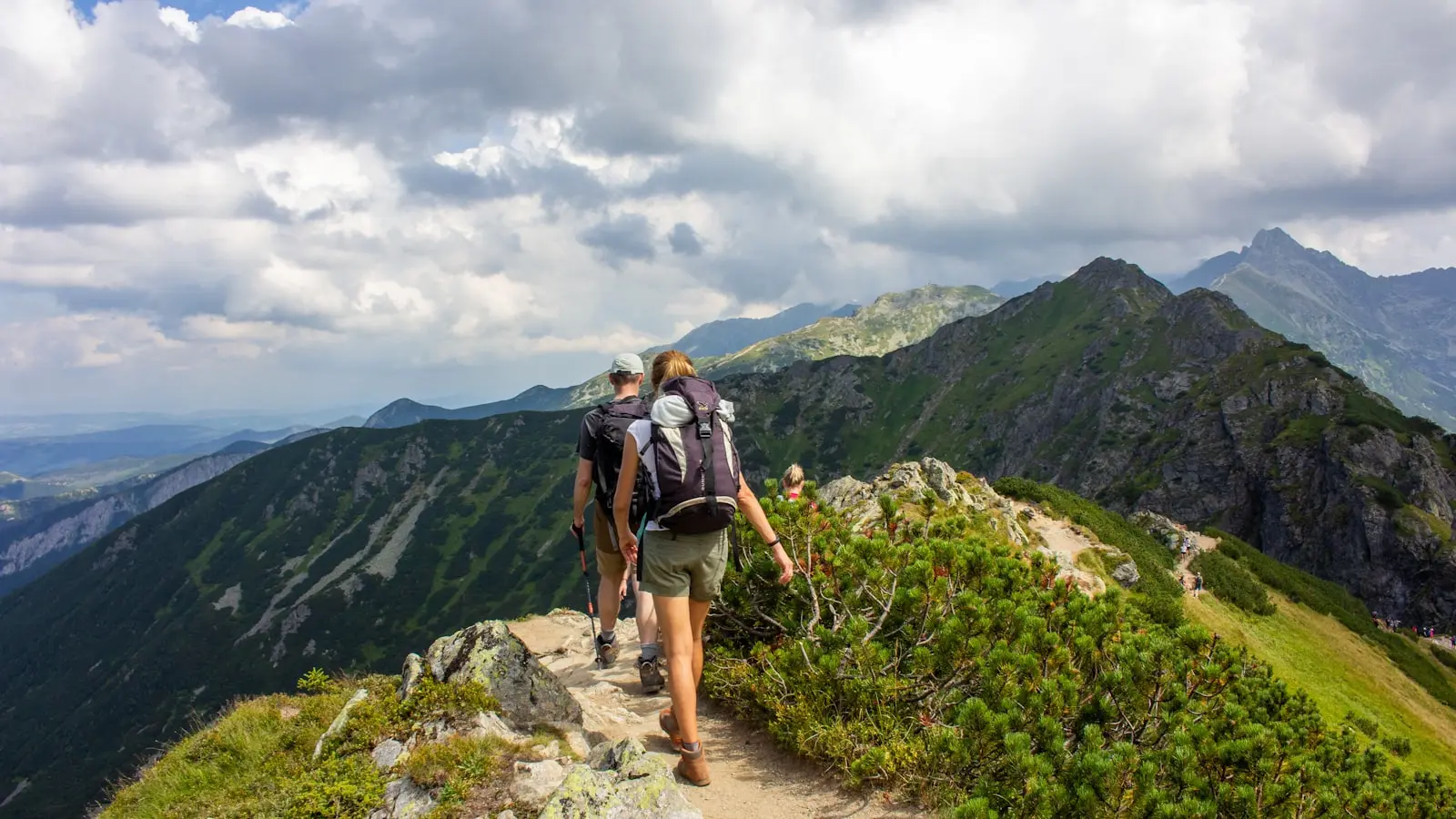
The Reddit thread crackles with a specific anxiety. A traveler asks about physical conditioning for a day hike to the Seven Lakes in Tajikistan’s Fann Mountains. Replies stack quickly. Most are not encouragement. They are warnings dressed as advice. The core question is not whether you can walk. It is whether your cardiovascular system can sustain output for eight hours over shifting altitudes.
The Numbers Behind the Trail
Altitudes on the Seven Lakes route span from 1,600 to 2,200 meters. That vertical range, roughly 600 meters of net gain (and repeated loss), is not extreme by alpine standards. But it is deceptive. The gradient is uneven. Sections climb steeply over scree and talus. The trail surface alternates between packed dirt, loose rock, and occasional snow patches (depending on the month). Analysts note that the cumulative elevation change—accounting for undulations—can exceed 900 meters of total ascent over the day.
Reddit users who have completed the hike report average times of 6–8 hours for a round trip covering roughly 14 kilometers. That pace (less than 2 km/h) sounds slow. It is not. The terrain forces a stop-start rhythm. Each lake requires a detour or a scramble. The body never settles into a steady cadence. Sustained effort at variable intensity is the real challenge.
(For context, a flat 14 km walk takes about 2.5 hours at a brisk pace. The Seven Lakes route takes three times that. The difference is not scenery. It is physiology.)
Reddit’s Collective Wisdom on Training
Experienced hikers on the thread converge on three training priorities: incline work, cardiovascular base, and stabilization strength.
Incline Training: The steep sections demand leg strength and aerobic capacity. Users recommend treadmill sessions at 10–15% grade, or stair climbing with a loaded pack (8–12 kg). One commenter, claiming 15 years of Central Asian trekking, suggests three sessions per week for six weeks prior. No data confirms this exact protocol, but the pattern is clear: the body must adapt to sustained climbing under load.
Cardiovascular Base: Several replies stress the need for a VO2 max baseline. The thread links to a study on altitude performance—at 2,000 meters, oxygen saturation drops roughly 5% relative to sea level. For an unfit individual, that translates to a 20% increase in heart rate for the same effort. (Is this measurable? Yes. A simple test: if your resting heart rate exceeds 70 bpm, or if you cannot sustain 30 minutes of brisk walking without pause, the hike will demand recovery breaks every 15 minutes.)
Stabilization Strength: Uneven terrain recruits ankle and core stabilizers. Reddit users warn against ankle sprains. One poster describes rolling an ankle on a loose rock at 1,900 meters—a three-hour evacuation nightmare. The advice: single-leg balance drills and eccentric calf raises. No gym? Walk on a grassy slope with a weighted vest.
Acclimatization: The Missing Variable
The thread includes a sub-conversation about arriving from sea level. The airport in Dushanbe sits at 800 meters. The trailhead near the village of Murgab (or the starting point at the first lake) is around 1,600 meters. That leaves no time for true acclimatization. The maximum altitude of 2,200 meters is not high enough to trigger acute mountain sickness in most people, but the rapid ascent can cause headache, nausea, and reduced performance.
Reddit users advise spending one night at 1,600 meters before attempting the full day. Some suggest carrying acetazolamide (Diamox) for altitude symptoms, though most agree it is unnecessary below 3,000 meters. The real risk is cumulative fatigue: a hiker who flies from sea level, sleeps poorly, and starts the hike at 7 AM is functionally operating at a 15–20% deficit by midday.
(One commenter dryly notes: “Jet lag is not an injury, but it imitates one.”)
Gear and Timing: The Data-Driven Choices
Beyond fitness, the Reddit consensus highlights two critical decisions: footwear and start time.
Footwear: Trail runners are inadequate. The loose rock and potential for ankle torsion demand boots with ankle support and stiff soles. Several users specify that soles should be Vibram or similar—the grip is not optional. (One recalled watching a hiker in sneakers slide 10 meters down a gully. Lucky: no broken bones. Unlucky: the rest of the hike was a crawl.)
Trekking Poles: Not mandatory, but strongly recommended. Poles reduce the load on knee joints during descents by 25–30%, according to a 2019 biomechanics study cited in the thread. On the Seven Lakes, descents are steep and long. Poles shift the work to the upper body, preserving leg strength for the next climb.
Start Time: The thread is unanimous: start no later than 6 AM. Afternoon temperatures in the Fann Mountains can exceed 30°C in summer. Heat impairs performance—reduced endurance, increased heart rate, dehydration risk. Starting early also avoids afternoon thunderstorms (common in July and August). One user reports being caught in a lightning storm at 2,000 meters. The escape route was a 45-minute scramble to a shepherd’s hut. Not a good story. A near-miss.
Translating Reddit’s Advice into a Training Plan
Analysts could synthesize the thread’s implicit recommendations into a structured 8-week program. But the community does not provide one. Instead, it offers heuristics. For example: “If you can’t do 20 step-ups on a 50 cm box without stopping, you are not ready.” Another: “Walk 10 km with a 10 kg pack at 5 km/h on flat ground. If you finish with a heart rate below 130 bpm, you have a base.”
These are rough proxies. They are not medical advice. (And the thread itself contains a disclaimer: “Consult a doctor, not Reddit.”) But they reflect a pattern: the best predictor of trail success is sustained submaximal aerobic output.
The Human Scale of the Effort
Convert the trail data into relatable terms. The 600-meter altitude gain is equivalent to climbing a 200-story building. The 14 km distance, over rough ground, is the same as walking from Manhattan’s Battery Park to Harlem—but on a trail that requires stepping over boulders every few meters. The total caloric burn, for a 70 kg person, is roughly 1,200–1,500 kcal. That is a full day’s energy expenditure for a sedentary person.
Reddit users do not mention caloric numbers. They mention exhaustion. The word “bonk” appears repeatedly. The bonk—hitting the wall—is glycogen depletion. The solution is not just training; it is eating. The thread recommends carrying 500–800 kcal of snacks that are low in fiber and high in simple sugars. (Gels, bars, even candy.) Water is less discussed but vital: 2–3 liters for the day, more if temperatures spike.
Conclusion: The Numbers Don’t Lie, But the Trail Does
The Reddit discussion is not a scientific paper. It is a crowd-sourced risk assessment. The physical conditioning required for the Seven Lakes day hike is real and specific: a cardiovascular base capable of sustaining 60–75% of maximum heart rate for 6–8 hours, with intermittent high-intensity bursts. The terrain does not forgive poor preparation. The altitude does not care about enthusiasm.
(One final comment from the thread: “The mountains will always be there. Your knees won’t.”)
For the hiker who trains with inclined loads, stabilizes their core, and respects the clock, the Seven Lakes are a stunning reward. For the one who arrives unprepared, the lakes become a lesson in humility. The data from Reddit is clear: the difference is not luck. It is fitness.