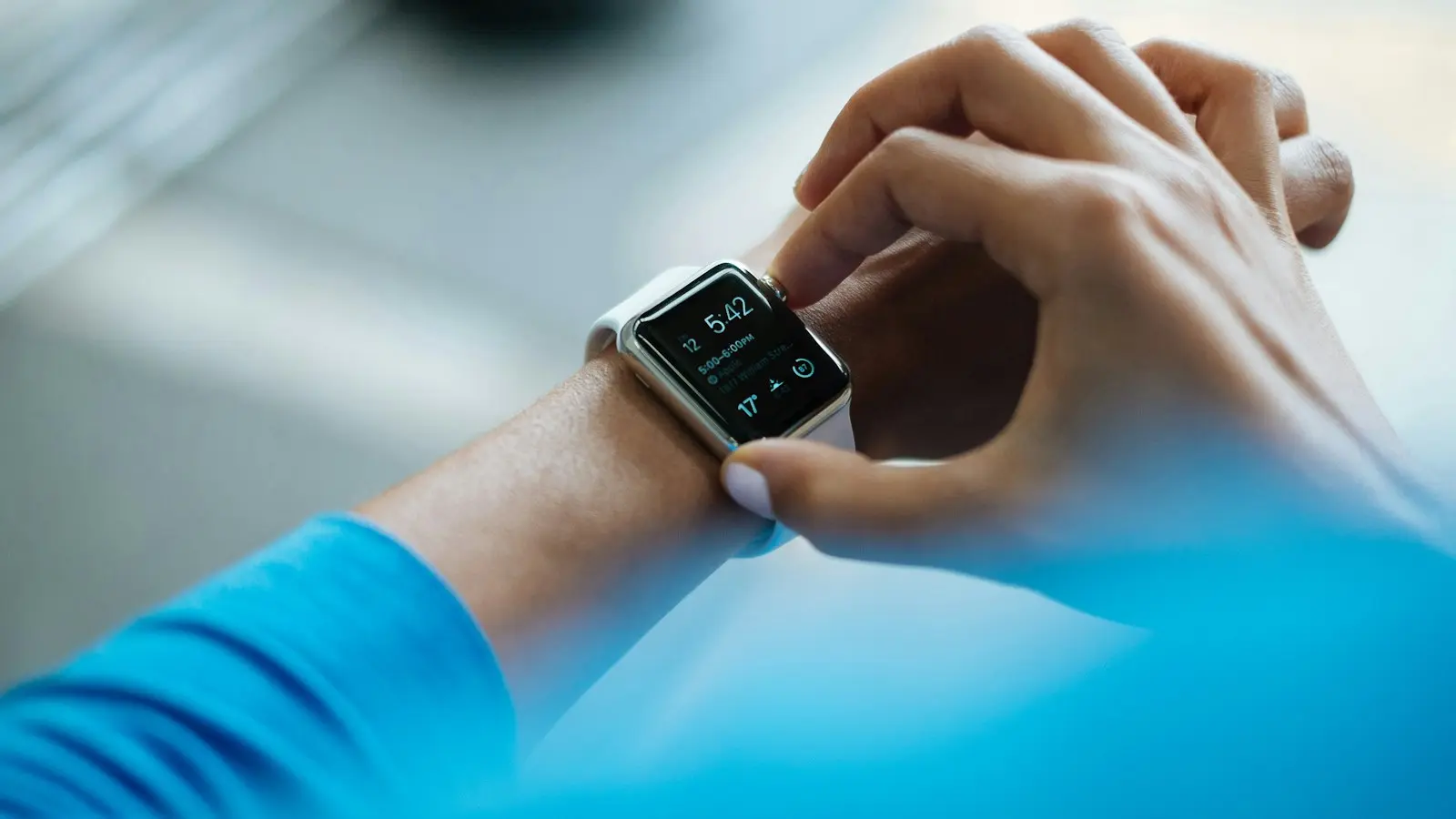
A sleep tracker can help show when you sleep, how consistently you sleep, and how your routine changes. It is less reliable at explaining exactly what happens inside your brain during sleep. In practical terms, sleep tracker accuracy is usually more useful for broad trends than for interpreting one night of light, deep, or REM sleep.
A reassuring score also cannot rule out a sleep disorder or another cause of tiredness. If fatigue persists, worsens, or affects safety, your symptoms matter more than the number on a watch or phone.
Key takeaways
- Sleep trackers are generally more useful for spotting patterns in timing, movement, and sleep opportunity than for identifying exact sleep stages.
- Deep-sleep, REM, and brief-awakening estimates are inferences, not clinical measurements.
- Compare several nights with your daytime alertness instead of treating one score as a diagnosis or nightly grade.
- Persistent fatigue, loud snoring, breathing pauses, or dangerous daytime sleepiness deserve medical attention regardless of the device score.
- Stop or simplify tracking if it increases anxiety, compulsive checking, or pressure to achieve perfect sleep data.
What sleep trackers can measure with some confidence
Most consumer sleep trackers use a combination of sensors and algorithms. Depending on the device, these may include movement, heart rate, skin contact, and signals related to breathing or blood oxygen. The device then estimates when you went to bed, when you woke up, how long you were in bed, and how often you appeared to move.
These are not all direct measurements of sleep. A watch does not usually detect sleep by observing brain waves. Instead, it looks for patterns associated with sleep and wakefulness. A period of stillness may be classified as sleep, while movement or changes in heart rate may be interpreted as wakefulness.
This distinction is important. A tracker may be reasonably helpful for identifying a later bedtime, a shorter sleep opportunity, or a consistently irregular schedule. It is making a more complicated inference when it labels a period as light, deep, or REM sleep.
A sleep score usually combines several inputs, such as estimated sleep duration, timing, regularity, awakenings, and sleep stages. The formula is not universal. Two devices can record the same night and produce different scores because they use different sensors, algorithms, definitions, and scoring priorities.
That is why “accuracy” is not one simple property. The useful question is: accurate for what? A device may provide a helpful estimate of bedtime trends while being much less dependable for brief awakenings or exact sleep-stage timing. Consumer tracking is also different from polysomnography, a clinical sleep study that uses medical-grade measurements, including brain activity, to assess sleep.
The central answer is therefore limited but useful: trackers can reveal patterns that support better questions, but they cannot fully explain why you feel tired.
Why sleep-stage estimates and sleep scores can feel wrong
Detecting whether someone is probably asleep may be easier than separating light, deep, and REM sleep. Those stages are defined by physiological changes that consumer wearables generally infer indirectly. Quiet wakefulness can be mistaken for sleep, and brief awakenings may not be detected.
This helps explain why fitness-watch sleep stages can disagree with your experience. You may remember lying awake for 20 minutes, while the device records that period as sleep because your body was still. Conversely, a restless period may be classified as wakefulness even if you do not remember being awake.
Several factors can affect the estimate. Device placement, loose skin contact, movement during the night, individual physiology, and gaps caused by charging can all change the available data. Different brands may process similar signals differently, and software updates can alter how a device classifies sleep without changing your actual sleep.
Estimated deep sleep deserves particular caution. Deep sleep naturally varies, and a tracker may show a large change from one night to the next because of normal variation, an incomplete recording, or a change in classification. A low deep-sleep reading is not, by itself, evidence of a medical problem. It is also not a reliable way to confirm that a night was restorative.
The device and your experience are answering different questions. The device is estimating patterns from sensor data. Your daytime alertness, concentration, mood, and physical functioning reflect the combined effect of sleep and many other factors. Both signals can be informative, but neither should automatically overrule the other.
This is one reason sleep data can feel wrong even when time in bed looks adequate. Time in bed is an opportunity for sleep, not a guarantee of continuous or restorative sleep. You might have fragmented sleep, an inconsistent schedule, stress, illness, medication effects, alcohol-related disruption, or another source of fatigue that a consumer tracker cannot identify reliably.
How to interpret sleep data without overreacting
The best way to use a tracker is to examine repeated patterns rather than single-night scores. A single unusual reading may reflect a late meal, travel, a loose band, a missed charging period, or an algorithmic error. It should not drive a major health decision.
Try using this four-part framework:
-
What did the device measure? Look at estimated bedtime, wake time, time in bed, movement, and any recorded heart-rate or respiratory trend. Treat these as observations with limitations, not perfect measurements.
-
What did it infer? Separate relatively simple estimates, such as sleep timing, from less certain conclusions about stages, awakenings, or readiness. Ask whether the result depends heavily on an algorithmic category.
-
How did you feel? Note alertness, concentration, mood, energy, and any unintended daytime sleepiness. A sleep score is not a substitute for daytime functioning.
-
Did a low-risk change help? Test one change at a time, such as keeping a steadier wake time, reducing late caffeine, or making the bedroom more comfortable. Look for a repeated association rather than assuming that one better score proves the change worked.
You might review two or three weeks of data instead of checking every morning for a perfect result. Look for consistent shifts: bedtime moving later, less time available for sleep, a schedule that changes substantially between workdays and days off, or fatigue that follows several disrupted nights.
A tracker is more useful when it answers a practical question. For example, you might ask whether late caffeine is associated with longer periods awake, or whether a regular wake time corresponds with better daytime alertness. It is less useful when it creates a nightly contest over deep sleep or turns normal variation into a perceived failure.
Adequate time in bed should not be treated as proof that sleep is restorative. Nor should a poor score be treated as proof that something is medically wrong. Trends can guide a conversation and support behavior awareness, but they do not establish a diagnosis.
When tiredness matters more than the device score
Persistent fatigue deserves attention in context. Relevant factors may include your usual sleep duration, schedule, stress, mood, medications, alcohol or caffeine use, work shifts, pain, illness, and changes in weight or general health. A wearable cannot reliably sort through all of these possibilities.
Consider speaking with a clinician if tiredness continues, is worsening, or interferes with daily life. Evaluation is especially important when there is loud habitual snoring, witnessed breathing pauses, gasping or choking during sleep, frequent insomnia, morning headaches, uncomfortable or restless legs, or repeated unintended sleep during the day.
Safety changes the threshold for action. If sleepiness affects driving, operating equipment, work performance, or the ability to care for yourself or someone else, do not use a reassuring sleep score as permission to ignore it. Avoid driving when you feel dangerously sleepy and seek appropriate medical guidance.
A tracker should not be used to confirm or rule out sleep apnea, insomnia, narcolepsy, or another sleep disorder. A normal-looking score cannot exclude a problem, and an abnormal score cannot identify its cause. Clinical assessment may involve a detailed history, examination, and, when appropriate, formal sleep testing.
If you seek care, bring a short sleep-and-symptom log. Record approximate bed and wake times, naps, caffeine and alcohol timing, notable awakenings, daytime sleepiness, and symptoms such as snoring or gasping. The device data can be included as supporting context, but it should not be the only evidence.
Privacy, charging, and other trade-offs of sleep tracking
Continuous tracking has practical costs. Most devices need regular charging, and removing them overnight can create gaps. If missing nights occur unpredictably, the resulting averages may give a misleading impression of your routine. Charging time should be considered when comparing products or interpreting apparent changes.
Privacy is another trade-off. Before enabling sleep features, check what information the device and app collect, which permissions are optional, where data is processed or stored, whether it is shared with other services, and how deletion or export works. These details vary by platform and can change with software updates, so general assumptions about one company should not be applied to every device.
Also consider the emotional cost. Some people find tracking reassuring or motivating. Others begin checking repeatedly, worrying about every low score, or staying mentally focused on achieving a particular amount of deep sleep. That pressure can make bedtime less restful and may increase anxiety about normal variation.
More data is not automatically better data. A device with additional sensors may provide more measurements, but extra measurements can also create more opportunities for confusing or uncertain interpretations. Battery life, comfort, privacy controls, and the ability to use the device without constant notifications may matter as much as feature count.
A low-stress way to use a sleep tracker
Start with one practical question, such as whether a consistent wake time is associated with better daytime alertness. Wear and charge the device consistently enough to identify a pattern, but accept that occasional missing or questionable readings are normal.
Review the data at a planned interval rather than whenever you feel worried. Focus first on sleep opportunity, timing, schedule consistency, and daytime function. Treat sleep-stage estimates as approximate context, not as a nightly grade or a medical result.
Change one low-risk habit at a time and observe the pattern for long enough to judge it fairly. Do not use tracking to justify extreme sleep restriction, unproven treatments, or changes to prescribed medication. A tracker can support awareness, but it does not treat a condition.
Reduce or stop tracking if you repeatedly check the app, feel distressed by ordinary fluctuations, change your behavior mainly to improve the score, or sleep worse because you are monitoring sleep. You can keep a simple paper log instead, or track only bedtime, wake time, and how you feel during the day.
The most useful rule is simple: use a sleep tracker as a pattern and behavior tool, not as a diagnostic instrument. When numbers and persistent symptoms disagree, investigate the symptoms rather than assuming the device is right.
Frequently asked questions
How accurate are sleep trackers at measuring sleep stages?
They can provide a broad estimate, but light, deep, and REM sleep are inferred from sensor signals rather than directly measured brain activity. Accuracy varies with the device, fit, individual physiology, missing data, and the algorithm. Stage estimates should not be treated as clinically exact.
Why does my sleep data say I slept well when I still feel tired?
The tracker may have recorded sufficient time in bed while missing fragmented sleep, quiet wakefulness, or another cause of fatigue. Stress, illness, medications, alcohol, work schedules, and sleep disorders can also affect how you feel without being identified by the score.
Should I stop using a sleep tracker if the numbers make me anxious?
Yes, reducing or stopping tracking is sensible if it causes repeated checking, worry, or pressure to achieve a perfect score. A simpler sleep log focused on timing and daytime function may provide useful information with less emotional burden.