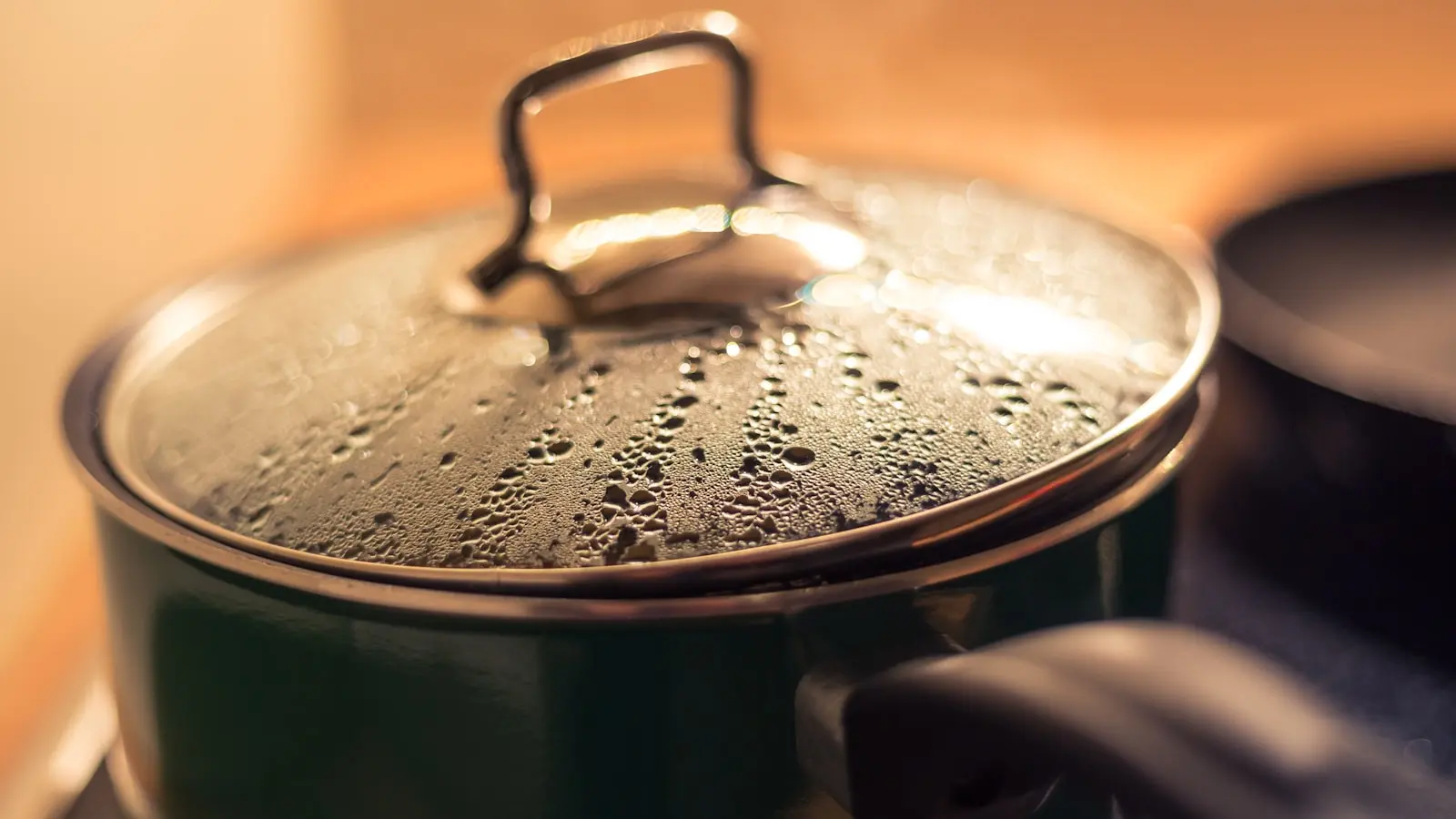
Heat hard tap water to a rolling boil, wait for it to cool, and pour it through a standard paper coffee filter. Researchers publishing in the February 2024 issue of Environmental Science & Technology Letters demonstrate this exact sequence traps and removes up to 90 percent of harmful nano- and microplastics suspended in drinking water. The finding bypasses complex filtration technology in favor of fundamental environmental chemistry. Calcium carbonate naturally present in hard water crystallizes under thermal stress, physically encapsulating microscopic polystyrene, polyethylene, and polypropylene particles. Once cooled, these mineral structures precipitate out as a visible chalky residue easily caught by simple paper barriers. (A rare practical victory). The data confirms a highly accessible solution to a pervasive modern crisis.
The Mechanics of Mineral Encapsulation
When industrial engineers watch mineral scales destroy expensive commercial boilers, they see a costly operational failure. Chemists look at that exact same scaling process and identify a targeted physical trap. The mechanism relies entirely on thermal dynamics interacting with dissolved minerals.
Hard water carries high concentrations of calcium and magnesium ions. When subjected to temperatures exceeding 100 degrees Celsius, the solubility of calcium carbonate inversely drops. Heat forces the dissolved minerals out of the liquid solution, compelling them to form solid crystalline structures. As these microscopic crystals assemble, they require nucleation sites. A nucleation site is a physical imperfection or suspended particle in the fluid where the mineral lattice can initially anchor and grow.
Microplastics serve as ideal nucleation sites. The forming calcium carbonate essentially swallows the microscopic plastic fragments. The plastic becomes the internal core of a microscopic chalk pearl. Gravity then takes over the physical equation. The once-buoyant synthetic polymers suddenly carry a heavy mineral anchor. They sink to the bottom of the vessel.
Researchers discovered that pouring this cooled, precipitated mixture through a standard paper coffee filter strips the mineralized plastic from the water entirely. The technique does not destroy the plastic. It alters the physical state of the contaminant, making it large enough and heavy enough to remove using basic household items. (Simple chemistry outperforming expensive hardware). The process physically separates the threat from the consumable liquid.
The Geographic Lottery of Water Hardness
The efficiency of this purification method depends heavily on local geology. The thermal trigger requires raw material to function. Without sufficient dissolved calcium, the heat has nothing to crystallize.
Municipal water profiles vary drastically based on their geographic source. Regions drawing water from deep limestone aquifers inherently possess high water hardness. In these mineral-rich zones, boiling effectively strips out the vast majority of suspended nanoplastics. The calcium carbonate concentration provides more than enough building material to cage the synthetic debris. Laboratory tests confirm that highly hard water yields the 90 percent removal rate.
Conversely, homes drawing from glacier runoff, surface lakes, or heavily processed municipal systems often possess soft water profiles. Soft water lacks the essential mineral load. When researchers tested the boiling method in soft water environments, the removal efficacy plummeted. Boiling achieves little beyond thermal sterilization in these specific areas. The plastics remain suspended, unaffected by the heat, and easily slip right through the pores of a paper filter.
Citizens attempting this biohacking strategy must first verify their local municipal water data. Test strips or utility reports provide immediate answers. If the water lacks hardness, everyday citizens must look toward other filtration methods to protect their health. Geology dictates efficacy.
The Anatomy of Invisible Pollutants
To understand the scale of the threat, one must examine the specific materials invading the global water supply. Environmental degradation pushes millions of tons of plastic waste into watersheds annually. Ultraviolet radiation, mechanical friction, and chemical weathering shred this debris down to the nanometer scale.
These particles fall primarily into three categories widely used in global consumer goods:
- Polystyrene: Originally manufactured for foam cups, packing peanuts, and insulation. It shatters into rigid, microscopic shards that easily suspend in fluid dynamics.
- Polyethylene: The most common plastic in the world, utilized heavily in grocery bags and packaging films. Its flexible molecular chains break down into ubiquitous micro-threads.
- Polypropylene: Found in bottle caps, food containers, and synthetic fabrics. It exhibits high heat resistance, meaning the boiling water alone does not melt it, but rather relies entirely on the calcium encapsulation to remove it.
These polymers slip past traditional municipal water treatment facilities. Sand filtration and chemical treatments at city plants target biological pathogens and larger organic debris. They fail to catch synthetic materials measuring mere nanometers across. The plastics flow directly into residential kitchen faucets.
Biological Penetration and Chemical Payloads
The urgency behind affordable filtration stems from an escalating biological crisis. Synthetic polymers no longer exist solely in oceanic gyres or landfill strata. They permeate human biological systems at a cellular level.
Over the past decade, analytical chemistry has refined its ability to detect these foreign materials inside the human body. Researchers consistently locate synthetic polymer fragments embedded deep within cardiovascular tissue. They track them coursing through human bloodstreams. Pathology reports identify microplastics crossing the placental barrier, introducing synthetic debris directly to fetal environments.
The long-term physiological impact of housing microscopic plastic fragments inside vital organs remains under intense scientific investigation. However, the presence of these materials triggers localized inflammatory responses. The body recognizes a foreign invader but possesses no biological mechanism to break down the resilient carbon bonds of synthetic polymers. The particles sit in the tissue. They accumulate.
Furthermore, plastics carry chemical payloads. Synthetic polymers absorb heavy metals and persistent organic pollutants from the environment. They also contain manufacturing additives like bisphenol A and phthalates, known endocrine disruptors. When lodged in human tissue, these particles act as microscopic delivery systems for toxins, leaching chemicals directly into the bloodstream. Public anxiety surrounding this biological toll drives immense consumer demand for immediate, actionable solutions.
The Economics of Clean Drinking Water
Filtering synthetic polymers traditionally demands significant capital. The standard modern defense against microplastics involves reverse osmosis systems.
Reverse osmosis forces water through semipermeable membranes under intense pressure, separating the microscopic contaminants from the clean liquid. These hardware setups retail for hundreds of dollars. They require professional installation under kitchen sinks. They demand regular, expensive filter replacements. Furthermore, they generate significant wastewater, often flushing three gallons down the drain to produce one single gallon of purified water.
Reverse osmosis represents an economic barrier. It secures clean water only for those who possess disposable income and homeownership. Renters and low-income households remain exposed to the escalating chemical threat.
The February 2024 findings fundamentally disrupt this economic model. A standard paper coffee filter costs fractions of a penny. Boiling water requires basic domestic infrastructure accessible to nearly the entire population. The cost arbitrage here shifts purification capability from affluent homeowners directly to any citizen with a stove.
Environmental analysis networks circulated the study aggressively precisely because it democratizes health protection. It provides a highly practical, low-cost biohacking strategy. The scientific community rarely delivers solutions that everyday citizens can utilize immediately without purchasing specialized equipment.
“Discovery expands possibility.” The revelation that something as simple as boiling tap water can mitigate a modern ecological disaster highlights the power of applied environmental chemistry. It offers a crucial, localized defense mechanism while the broader global economy struggles to halt plastic pollution at its industrial source.