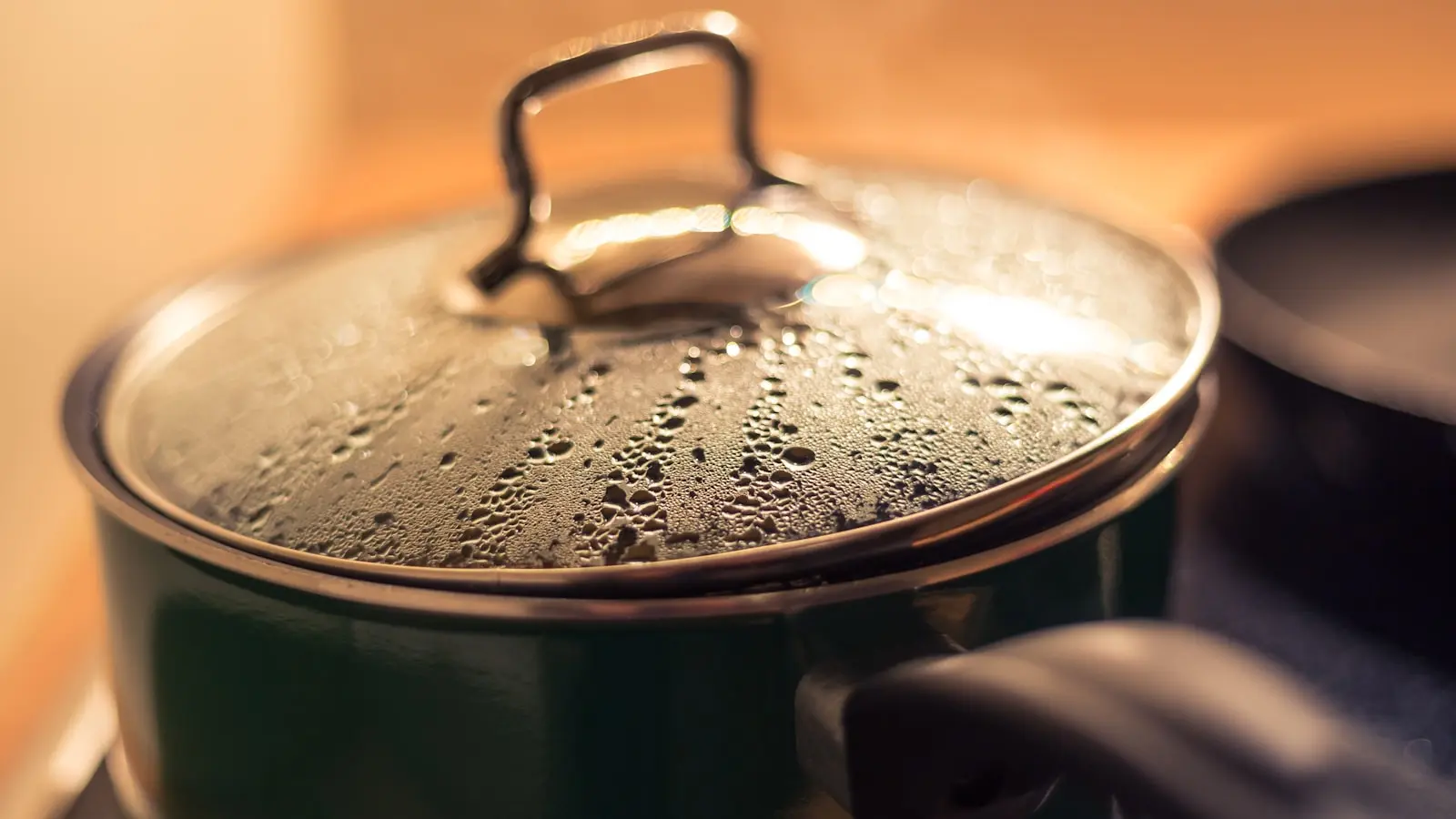
A kettle clicks off. Inside, microscopic fragments of tire tread, synthetic fleece, and degraded packaging float among dissolved minerals. According to research published in the February 2024 issue of Environmental Science & Technology Letters, boiling hard tap water traps up to 90 percent of harmful nano- and microplastics. The mechanism relies on calcium carbonate, the exact compound responsible for the annoying chalky buildup on plumbing fixtures. When water temperature rises, these naturally occurring minerals transition from a dissolved state into solid crystalline structures. As they form, they physically encapsulate suspended plastic particles. Let the liquid cool, pour it through a standard paper coffee filter, and the synthetic debris separates from the drinking supply.
The math changes immediately. Decades of complex filtration engineering bypasses the reverse osmosis market entirely, arriving instead at the intersection of basic thermodynamics and a five-cent paper filter.
The Cellular Intrusion of Synthetic Polymers
The global water supply carries a heavy synthetic load. Municipal treatment facilities operate on macro-filtration principles, utilizing sand beds, settlement tanks, and chemical flocculation to remove biological pathogens and large particulates. They fail utterly against nanoscale polymers. Polystyrene from packing foam, polyethylene from grocery bags, and polypropylene from bottle caps degrade under ultraviolet light and mechanical friction until they measure in micrometers. They slip through the municipal grate. They travel through copper and PVC piping directly into residential faucets.
Analysts trace these polymers into human bloodstreams, deep lung tissue, and placental boundaries. (The biological invasion remains largely unmapped, though the initial findings warrant immediate defensive strategies.) The public response traditionally involves purchasing costly under-sink filtration hardware. When an apartment dweller stares at a 500-dollar reverse osmosis system, the financial barrier to biological safety seems insurmountable. By demonstrating that raw thermal energy and naturally occurring minerals can isolate these pollutants, researchers effectively dismantled the cost barrier to cellular health.
The Chemistry of Encapsulation
The efficacy of this purification method hinges entirely on water hardness. High mineral content defines hard water, primarily measured by the presence of calcium and magnesium ions.
Calcium carbonate ($CaCO_3$) exhibits a rare chemical property called inverse solubility. While most substances dissolve more readily as water heats up, calcium carbonate does the opposite. As tap water approaches a rolling boil (100 degrees Celsius), the calcium carbonate drops out of solution. It must solidify. To form a crystal, the mineral requires a nucleation site—a physical surface upon which to build.
Microplastics provide an ideal scaffolding. The jagged, microscopic edges of degraded polyethylene and polystyrene act as magnetic anchors for the precipitating minerals. The calcium carbonate crystallizes around the plastic, forming a heavy, chalky shell. (Nature effectively walls off the synthetic invader.) Because the melting points of these common plastics range from 120 to 160 degrees Celsius, they do not melt in boiling water. They maintain their physical integrity, allowing the calcium to trap them completely.
The Filtration Step
Boiling alone does not remove the plastic; it merely changes its physical state. A consumer who boils water and immediately drinks it will simply ingest microplastics encased in chalk. The breakthrough relies on the secondary phase: physical separation.
Before boiling, nanoplastics measure smaller than one micrometer. They pass effortlessly through standard kitchen filters, which typically boast a pore size of 10 to 20 micrometers. However, once encapsulated by calcium carbonate, the resulting mineral complexes grow significantly larger.
This size augmentation bridges the mechanical gap. The plastic-mineral structures precipitate to the bottom of the vessel as the water cools. Pouring this cooled water through a standard paper coffee filter catches the enlarged chalky complexes. The synthetic debris remains trapped in the paper. The water flowing into the carafe emerges largely devoid of polymer contamination.
The Geographic Disparity of Hard Water
Because the encapsulation mechanism requires calcium carbonate, the process discriminates by geography. The study reveals a stark contrast in effectiveness based on regional water chemistry.
- High Hardness (Above 300 mg/L of $CaCO_3$): Researchers recorded up to 90 percent removal of free-floating nano- and microplastics. The abundance of dissolved minerals ensures that nearly every plastic particle serves as a nucleation site.
- Moderate Hardness (150 - 300 mg/L): The encapsulation rate remains robust, typically catching between 70 and 80 percent of synthetic debris.
- Soft Water (Below 60 mg/L): The mechanism collapses. In regions where water routes through non-mineralized aquifers or undergoes heavy municipal softening, boiling yields barely a 25 percent removal rate. There is simply not enough calcium carbonate to build shells around the vast numbers of plastic particulates.
If a municipality transitions to soft water infrastructure, residents lose this localized precipitation advantage. Those living in naturally soft water regions cannot rely on thermal encapsulation. They remain tethered to mechanical filtration markets.
Real-World Application and Biohacking Momentum
The scientific community and decentralized environmental networks reacted rapidly to the publication. Environmental subreddits and biohacking forums seized the data, celebrating the findings as a low-cost, decentralized defense mechanism against corporate pollution. Science transitions from institutional laboratories to residential kitchen counters.
The practical execution requires zero specialized equipment:
- Draw cold tap water into a stainless steel or glass boiling vessel.
- Bring the water to a full rolling boil for at least five minutes to maximize mineral precipitation.
- Allow the water to cool, giving the heavy calcium-plastic complexes time to settle at the bottom.
- Pour the water slowly through a standard unbleached paper coffee filter into a clean glass pitcher.
The resulting water carries a fraction of its original synthetic load.
Economic and Environmental Implications
The commercial water filtration industry operates on a model of planned obsolescence and consumable replacement. Carbon blocks clog. Reverse osmosis membranes foul. Consumers subscribe to continuous replacement cycles to maintain water purity.
This research subverts that economic model. By identifying a purification mechanism that utilizes existing household infrastructure (a stove) and cheap consumables (coffee filters), the study democratizes clean water access. (Filtration companies will likely ignore this development, as it offers zero avenues for monetization.)
Furthermore, the environmental footprint of this method warrants examination. While reverse osmosis systems waste up to three gallons of water for every one gallon purified, thermal encapsulation operates with zero water waste. The only loss occurs through minor steam evaporation during the boiling phase. However, the energy cost of boiling water daily must be weighed against the manufacturing and shipping footprints of commercial plastic filter cartridges.
Discovery expands possibility. As the sheer scale of microplastic pollution becomes terrifyingly clear, complex technological solutions often dominate the discourse. Yet, the physics of mineral nucleation provide a primitive, highly effective defense. When engineers watch intricate filtration grids fail against nanoscale polymers, the elegance of boiling water becomes undeniably apparent. Heat the water. Trap the plastic. Filter the chalk. Progress is occasionally measured by how effectively we can apply the simplest laws of chemistry to the modern failures of industry.