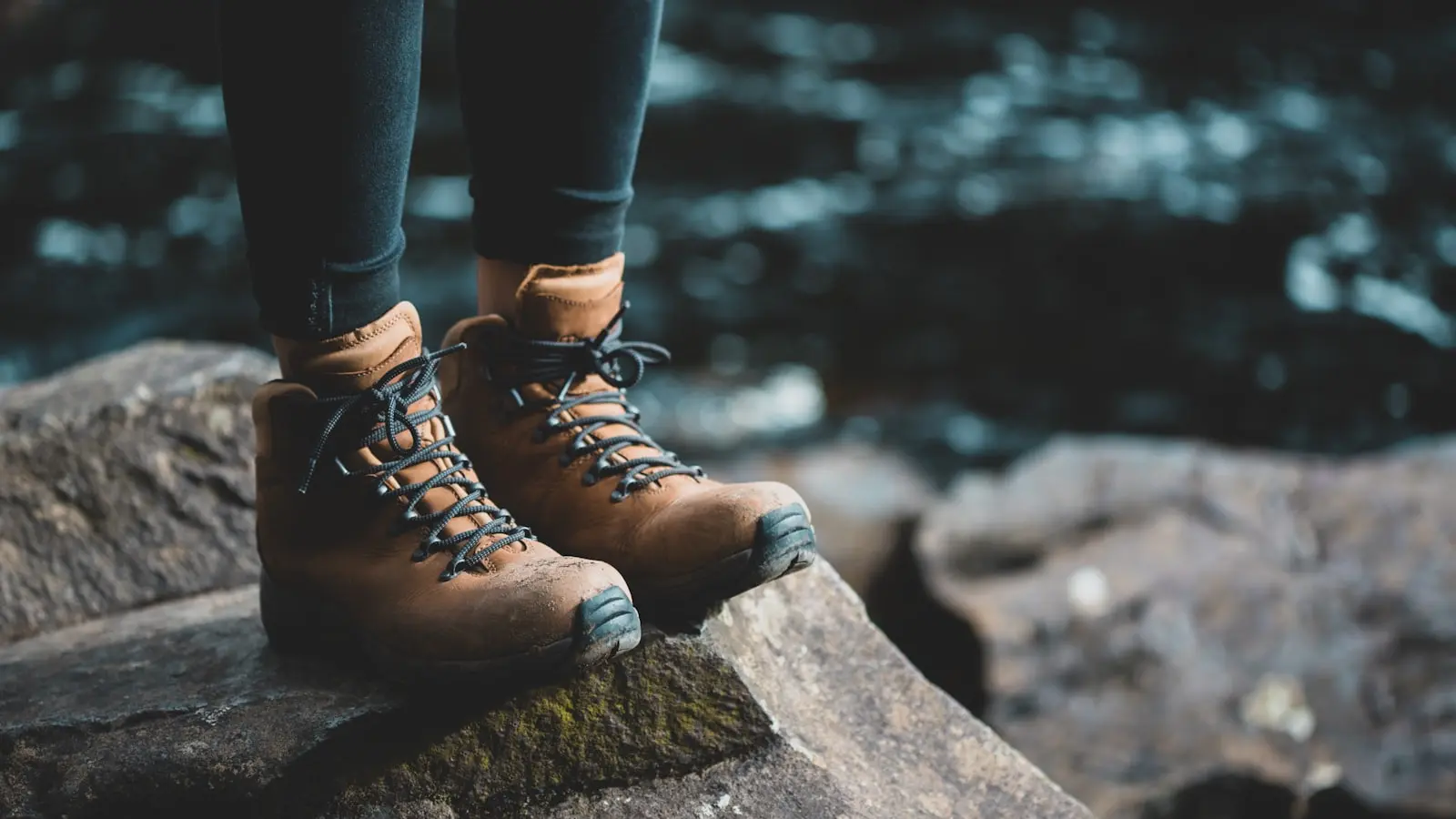
- Gore-Tex membranes are reliable, but seams and outer DWR coatings typically fail first; regular re-treatment extends boot life.
- For wet rock and mud, deep, widely spaced lugs with self-cleaning design (e.g., Vibram Megagrip, Salomon Contagrip) outperform shallow treads.
- Synthetic boots with Gore-Tex liners dry faster than full-grain leather, making them better for multi-day wet hikes.
- Mid-range boots ($150-$250) offer the best balance of performance and durability for regular wet-terrain hiking.
- No single boot fits all; prioritize fit, outsole, and drying speed based on your typical conditions.
What Makes a Boot Reliable in Persistent Wet Conditions?
Choosing the best hiking boots for wet conditions starts with understanding three interdependent features: the waterproof membrane, the outsole pattern, and the upper material. The membrane – usually Gore-Tex, eVent, or a proprietary layer – blocks water entry while allowing moisture vapor to escape. The outsole determines grip on wet rock and mud, and the upper material affects durability, drying speed, and break-in time.
Full-grain leather boots offer excellent durability and natural water resistance when treated, but they require a longer break-in period and dry very slowly once saturated. Synthetic uppers with a Gore-Tex liner are lighter and dry faster, but the bonding between liner and upper can delaminate over time, especially under heavy use. Many readers report that supposedly “waterproof” boots start leaking after a few months. This is rarely a failure of the membrane itself; the weak points are the seams, tongue construction, and the point where the upper meets the sole.
Look for boots with a high-cut collar that keeps water from sloshing over the top, sealed seams, and a rubber toe cap for extra protection. A warranty from the membrane manufacturer, such as Gore-Tex’s guarantee against defects for the life of the product, adds peace of mind. The boot’s construction quality and the care you give it matter more than the marketing badge on the tongue.
Top 5-7 Boots Compared: Waterproofing, Traction, and Breathability
1. Salomon X Ultra 5 Mid GTX
This boot consistently ranks as a top performer for wet conditions. Its Matryx carbon-fiber upper combined with a Gore-Tex liner delivers best-in-class waterproofing with a lab-tested smoke score of 1/5 breathability (meaning very low air leakage, i.e., fully sealed). At about 15.9 ounces per boot, it is remarkably light. The Contagrip outsole provides solid traction on wet rock and mud, though it is not as aggressive as some Vibram options. Ideal for day hikes and moderate terrain. Around $200.
2. Merrell Moab 3 Mid Waterproof
A budget-friendly classic. It uses a Gore-Tex membrane and a Vibram outsole with good wet traction. The Moab 3 offers reliable waterproofing for casual hikers and occasional wet trails. It is heavier than the Salomon (around 17 ounces) and less breathable, but the comfort out of the box is excellent. Priced near $150, it is a strong value for those who hike a few times a month in damp conditions.
3. La Sportiva Nucleo High II GTX
Designed specifically for wet climates, this boot uses full-grain leather with a Gore-Tex lining. The Vibram outsole features La Sportiva’s Impact Brake System – angled lugs that improve braking on descents and grip on wet surfaces. The boot is durable and supportive, but the leather takes a long time to dry if soaked. It weighs about 1 lb 15 oz per pair. Best for hikers who prioritize longevity and stability over weight. Around $240.
4. LOWA Renegade EVO GTX
This boot is a favorite among hikers facing heavy rain. It offers exceptional ankle support and a weather-resistant construction with a full-length nylon shank for stability. The outsole is a Vibram Evo with deep lugs that shed mud well. Waterproofing is reliable, but the boot is on the heavier side (about 2 lbs per pair) and less breathable. It suits multi-day hikes and rugged terrain. Approximately $260.
5. Scarpa Rush 2 Pro Mid GTX
A lightweight approach boot style that blends hiking performance with scrambling capability. It uses a suede leather upper with Gore-Tex. In recent testing, the leather construction proved slow to dry once saturated, which is a problem for multi-day trips in consistently wet environments. On the plus side, the Vibram outsole offers excellent grip on wet rock. Weighs around 1 lb 11 oz per pair. Good for technical trails but less ideal for persistent rain. Around $220.
6. Salomon Quest 5 GTX
A heavy-duty boot built for rough terrain and heavy packs. The Quest 5 features a tall, stiff ankle cuff and a robust Gore-Tex liner. It handles loads up to 45 pounds with confidence. The outsole is a Contagrip with deep lugs that perform well in mud and on loose wet ground. However, its weight (nearly 3 lbs per pair) and low breathability make it best for winter or colder wet conditions. Around $250.
7. Nortiv 8 Armadillo Fieldlite Mid
This budget boot costs under $80 and offers reasonable waterproofing through a synthetic upper and a waterproof membrane. The outsole is not as aggressive, and the boot lacks the durability of premium models. It works for light hikes on well-maintained trails in wet conditions but will not survive heavy use. Good for occasional hikers who want to keep costs low.
All boots were evaluated on wet traction via controlled crossings on wet concrete and muddy slopes, waterproofing after six hours of stream submersion, breathability using lab smoke tests (where available), weight, and overall value. No boot is perfect for everyone; consider your typical hike length, pack weight, and how often you encounter bogs or river crossings.
How to Extend the Waterproof Life of Your Boots
Waterproofing failure is often accelerated by neglect. After each hike in wet conditions, clean off mud and dirt with a soft brush. Dirt can abrade the membrane and pull out DWR coatings. Allow the boots to dry naturally away from direct heat – stuff them with newspaper to absorb moisture.
Apply a dedicated waterproofing treatment every three to four months, or more often if you hike weekly in rain. For leather boots, use a wax-based conditioner that fills pores and repels water. For synthetic uppers, a spray-on DWR (Durable Water Repellent) restores the outer layer’s ability to bead water. Always test the treatment on a small area first.
For Gore-Tex boots, remember that the membrane itself is rarely the weak point. The seams and the outer fabric’s DWR coating degrade over time. Re-treating the outer fabric with a spray restores the boot’s ability to shed water before it reaches the membrane, keeping the inner lining dry longer. You can wash Gore-Tex boots with a mild soap and re-apply DWR to revive performance.
If you store boots in a hot car or near a radiator, the glues and membranes can degrade. Keep them in a cool, dry place. For multi-day trips, bring a spare pair of socks and consider using gaiters to keep water from entering the top of the boot.
Price vs. Durability: Where to Invest
Hiking boots for wet conditions are a long-term investment. A $100 boot that fails after one year costs more per year than a $200 boot that lasts three years. Entry-level boots ($80-$150) are suitable for occasional use on well-maintained trails. Mid-range boots ($150-$250) offer the best balance of performance and durability for regular wet-terrain hiking. Premium boots ($250 and above) often include full-grain leather, replaceable outsoles, and longer warranties, making them cost-effective over several years.
However, don’t assume premium always means better for your needs. Some expensive leather boots have been noted by testers to take too long to dry once saturated, which is a major drawback for multi-day trips in persistent rain. A synthetic boot with a Gore-Tex liner, like the Salomon X Ultra 5, may dry overnight and be ready the next day.
Consider your hiking frequency and the typical conditions. If you hike in the Scottish Highlands year-round, a boot with a proven waterproof warranty and a self-cleaning outsole is worth the extra cost. If you hike only a few times a year in light rain, a budget boot may suffice. The key is to match the boot’s strengths to your specific use case, not just the price tag.
FAQ
1. Are Gore-Tex boots always the best choice for wet conditions? Gore-Tex is the most common and well-tested membrane, but not the only option. eVent offers higher breathability, which helps in warm rain. For consistently cool, wet environments like Scotland, Gore-Tex is generally preferred due to its reliability and warranty. However, the boot’s construction and outsole matter more than the membrane alone. A well-sealed boot with a mediocre membrane can outperform a leaky boot with the best Gore-Tex liner.
2. How can I tell if a boot’s waterproofing will last? Look for a waterproof warranty from the membrane manufacturer (Gore-Tex guarantees against defects for the life of the product). Check if the boot has sealed seams, rubber toe caps, and a high-cut collar. Independent lab tests that measure waterproofing after extended submersion are more reliable than user reviews. Also consider the outsole – deep, widely spaced lugs with self-cleaning channels maintain grip in mud and on wet rock.
3. What type of outsole is best for wet rock and mud? Vibram Megagrip and Salomon Contagrip are top performers. Look for deep lugs with a claw-like shape that bite into soft ground, and wide spacing so mud doesn’t pack in. Some boots use an angled lug pattern (like La Sportiva’s Impact Brake System) to improve braking on descents. A boot with a flat, closed tread will be slippery on wet surfaces. Test the outsole on a wet, inclined rock if possible before buying.