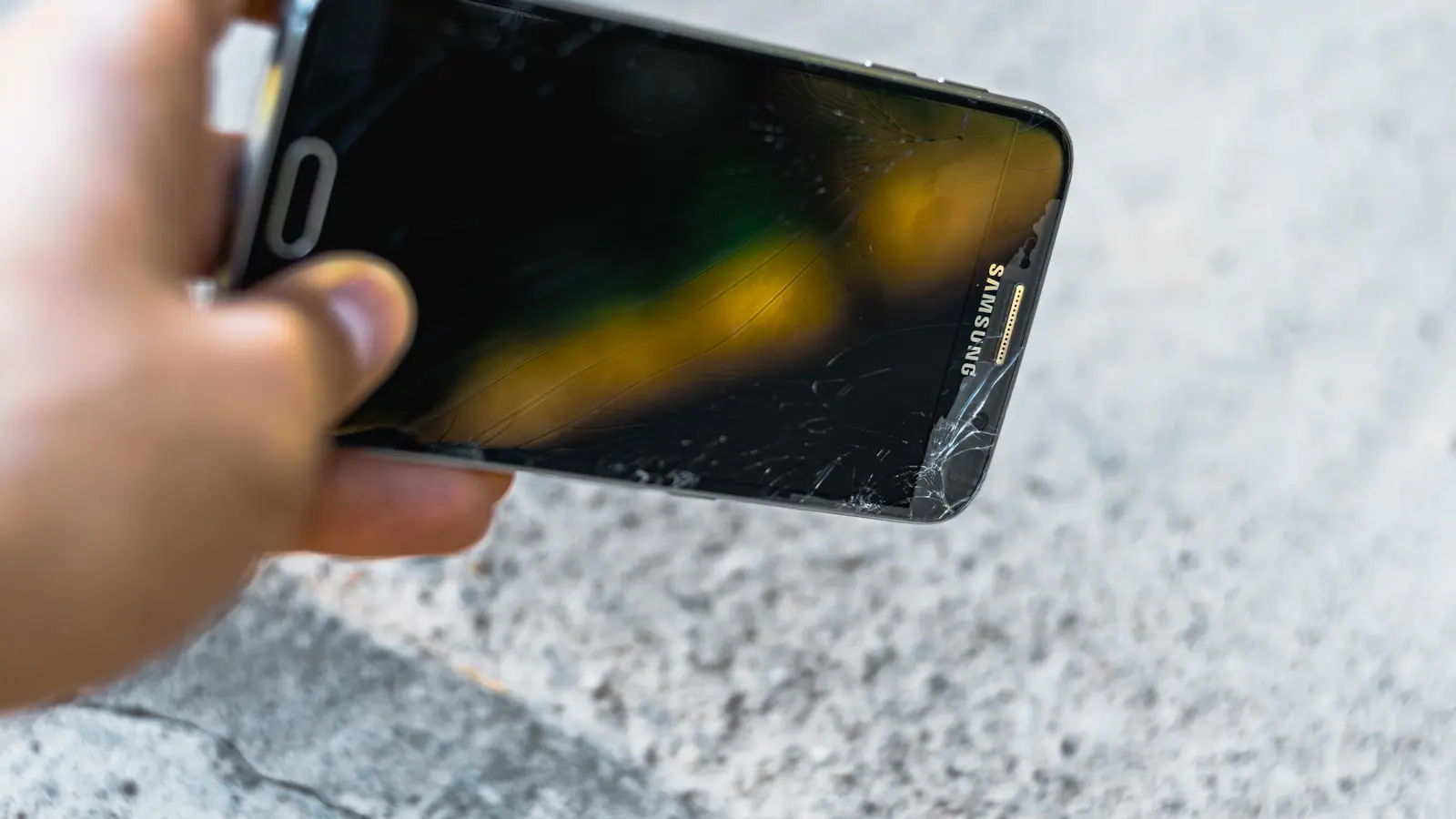
A flagship device built to endure twenty hours of mixed usage suddenly throttles and powers down before noon. Hardware specifications fail under the specific load parameters of international travel. When navigating foreign infrastructure, smartphones consume up to 40 percent more energy simply attempting to maintain basic network connectivity. This rapid depletion stems from continuous cell tower polling, maximized display luminance under direct sunlight, and relentless background location requests. Users who rarely glance at a battery indicator at home suddenly find themselves tethered to dense lithium-ion power banks.
When engineers test battery endurance in controlled environments, they utilize stable Wi-Fi connections and fixed cellular towers. International travel shatters this optimal testing paradigm. Picture a tourist attempting to map a route through the historical center of Brussels during peak afternoon sun. The device processes mapping vectors while simultaneously jumping between unfamiliar European carrier bands. Heat builds against the logic board. The battery percentage drops single digits every few minutes. The device ultimately fails. (Physics always wins). Understanding the technical failure points requires analyzing the intersection of radio frequency hardware, thermal dynamics, and background processing.
The Radio Frequency Reality and Baseband Strain
The modern smartphone utilizes a dedicated baseband processor to handle all radio functions. On a localized home network, the device understands the topology. It connects to an optimal tower, establishes a stable handshake, and rests in an idle state. During international roaming, this efficiency collapses entirely. The modem enters a continuous high-energy search state.
The device queries unfamiliar frequencies, attempts handshakes with secondary partner networks, and frequently drops connections when signal strength wavers behind thick masonry buildings or underground transit systems. Every failed handshake forces the modem to increase transmission power to reach distant antennas. This constant radio frequency transmission operates as a massive thermal and electrical load. (Engineers call this network hunting). When a device actively seeks a signal instead of maintaining one, the power draw spikes exponentially.
Roaming protocols introduce severe latency. Data packets must route from the foreign carrier network back through the home carrier’s domestic gateways before reaching the wider internet. This routing delay forces the baseband processor to keep the radio active for longer durations simply to complete basic data transfers. The radio never sleeps. It continuously draws current from the battery cell.
Display Luminance and Thermal Throttling
Cellular searching accounts for the hidden electrical drain, but display output creates the most visible power deficit. Modern Organic Light-Emitting Diode panels reach peak brightness levels exceeding two thousand nits. This specification reads well on retail packaging. In practice, pushing two thousand nits of sustained brightness to combat direct sunlight requires immense electrical current.
Travelers rely heavily on navigation applications outdoors. The ambient light sensor registers maximum solar exposure and drives the display panel to its physical hardware limit. Battery chemistry degrades rapidly under this specific, sustained discharge rate. Furthermore, generating this much light generates equivalent thermal output. The internal chassis traps the heat.
The operating system detects the internal temperature spike and initiates thermal throttling protocols. The central processing unit reduces clock speeds to prevent catastrophic physical damage to the silicon. The interface stutters. The battery drains even faster as the system struggles to render map vectors with severely reduced processing power. Displaying white map backgrounds on an OLED screen forces every single pixel to draw maximum power. (Dark mode is not merely an aesthetic choice, it is a hardware optimization tactic).
Satellite Polling and the Location Data Deficit
Location services compound the cellular and display loads. Under normal circumstances, a user opens a map application, confirms a route, and closes the software. While traveling, navigation remains active continuously. The Global Positioning System receiver stays powered on, actively triangulating coordinates from multiple low-earth orbit satellites.
Smartphones typically utilize Assisted GPS. This technology leverages nearby cell tower data and Wi-Fi networks to secure a faster satellite lock. When roaming on a weak or unfamiliar cellular network, Assisted GPS frequently fails. The device must rely entirely on the raw satellite signal to determine location. Achieving a cold lock on GPS satellites without cellular assistance takes significantly longer and requires sustained power delivery to the location module.
Simultaneously, background applications relentlessly request location hooks. Currency converters, translation tools, ride-sharing platforms, and travel guides constantly poll the operating system for accurate coordinate data. Each location request wakes the primary processor from its idle, low-power state. A processor that never sleeps consumes steady voltage. The operating system attempts to batch these requests to conserve energy, but active foreground navigation overrides these optimization protocols entirely. The device remains locked in a high-power state.
Computational Photography and Memory Bandwidth
Travel inherently demands increased camera utilization. The image signal processor ranks among the most power-hungry components within a modern system-on-chip architecture. Capturing fifty photographs in a single hour engages multiple critical hardware pathways simultaneously.
Activating the camera engages the imaging sensor, the image signal processor, the neural processing unit for computational photography enhancements, and the storage controller to write the finalized files to NAND flash memory. Recording high-definition video accelerates this consumption exponentially. The system must encode massive data streams in real-time, utilizing intense memory bandwidth.
Modern computational photography relies on capturing multiple frames instantly and stitching them together to expand dynamic range and reduce noise. This requires the neural engine to perform trillions of operations per second. This continuous engagement of multiple high-performance silicon pathways bypasses the low-power efficiency cores entirely. The hardware runs hot. Voltage levels plummet.
Technical Mitigation Strategies
Purchasing a heavier power bank treats the symptom rather than addressing the underlying hardware mechanics. Users must manipulate software settings to control aggressive hardware behavior directly.
First, eliminate the network hunting mechanism entirely. Download regional maps directly to the local storage before leaving a stable, domestic Wi-Fi connection. Localized map data forces the navigation application to process routes offline. The baseband processor no longer needs to pull heavy map vectors over a weak roaming connection. The radio frequency load drops immediately.
Second, constrain the radio hardware. Disable 5G networks in the cellular settings. Restrict the modem to 4G LTE exclusively. The peak data speeds decrease, but connection stability increases dramatically. Global LTE network penetration remains significantly denser than emerging 5G infrastructure. Forcing the modem to ignore sparse millimeter-wave or mid-band 5G frequencies prevents the hardware from running continuous high-energy searches.
Third, engage low-power modes preemptively rather than reactively. Operating systems utilize low-power modes to aggressively throttle background activity, reduce display refresh rates, and limit peak processor clock speeds. Most users wait until the battery reaches twenty percent before engaging this protective feature. (This is a fundamental tactical error). Engaging low-power mode at one hundred percent capacity alters the electrical discharge curve for the entire day. It prevents background applications from establishing continuous network connections and polling GPS data in the first place.
Smartphone specifications advertise optimal laboratory conditions. International travel represents a worst-case scenario for mobile computing architectures. High ambient light, constant network instability, continuous satellite tracking, and heavy computational photography create a perfect storm of electrical consumption. Understanding the interaction between radio frequency hardware, display luminance, and background processing allows users to properly optimize their devices. Relying solely on advertised battery metrics leads to dead screens on foreign streets. True device endurance requires proactive, technical system management.