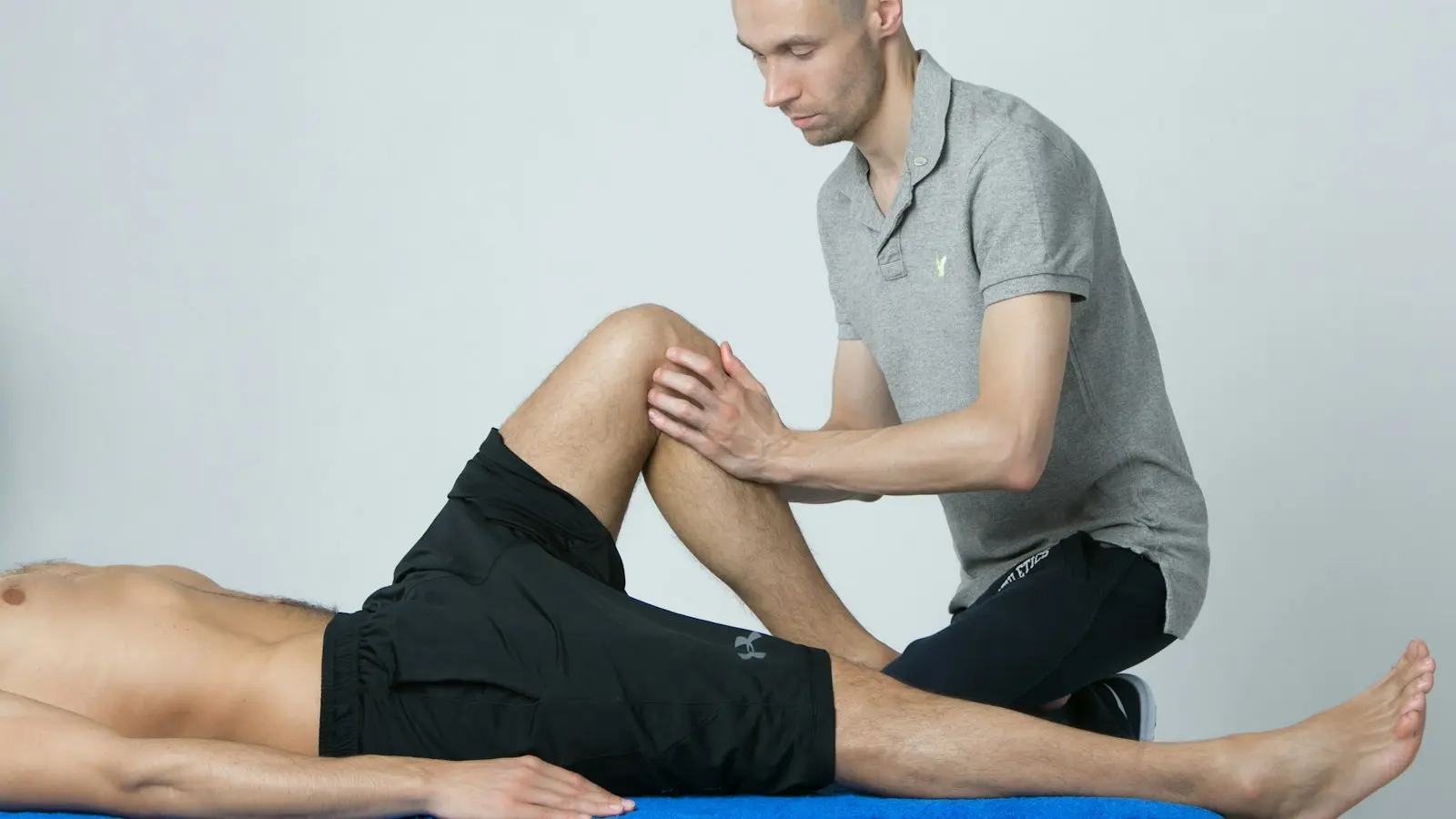
Recurring sports injuries rarely have one simple cause. They usually reflect a mismatch between what an athlete is asking the body to do and what the injured tissue, muscles, joints, and nervous system can currently tolerate. Pain may settle during rest, while strength, coordination, mobility, confidence, and sport-specific capacity remain below the level required for full training.
That is why an ankle sprain can return during a cutting drill, a hamstring strain can reappear during sprinting, or tendon pain can flare when normal practice resumes. The problem is not always a permanently weak body part. More often, recurrence reflects incomplete rehabilitation, a rapid increase in workload, altered movement, inadequate recovery, or a return-to-sport decision based on symptoms alone.
Key Takeaways
- Pain relief does not necessarily mean that an injury is ready for full training or competition.
- Recurrence usually reflects several interacting factors, including rehabilitation, training load, movement demands, recovery, and environment.
- Return to sport should progress from daily activity to modified training, full practice, and competition rather than happen all at once.
- Strength, mobility, balance, power, coordination, confidence, and sport-specific tolerance all help show whether recovery is advancing.
- Repeated or worsening symptoms, instability, neurological changes, significant swelling, deformity, or difficulty bearing weight warrant professional assessment.
Why an Injury Can Feel Better Before It Is Ready
Rest can reduce irritation and pain without fully restoring function. An athlete may walk normally, sleep comfortably, or complete daily tasks while still lacking the strength, range of motion, balance, power, or coordination needed for competition.
This distinction matters because sport creates forces that ordinary life does not. Running, jumping, decelerating, landing, changing direction, and absorbing contact can expose limitations that remain hidden during a period of low activity. A knee may feel fine on a short walk but become painful after repeated jumps. A hamstring may tolerate easy jogging but fail under maximal acceleration.
Pain is important information, but it is not a complete recovery test. Symptoms can decrease because inflammation or sensitivity has settled while tissue capacity is still developing. Conversely, some discomfort during a controlled rehabilitation program does not automatically mean that damage is worsening. The meaning of symptoms depends on the injury, the activity, the response later that day, and how the athlete feels the following morning.
Returning directly from rest to full practice creates another common problem. The athlete moves from a low-demand state to repeated high-speed or high-force actions before the body has had time to rebuild tolerance. Recovery also varies according to injury type, severity, tissue involved, treatment, general health, and previous injury history. A calendar date alone cannot prove readiness.
The Most Common Causes of Recurring Sports Injuries
The causes of recurring sports injuries are usually interconnected rather than isolated. An athlete might have reduced ankle control after a sprain, increase training quickly before a tournament, and then compensate by changing how they land. Each factor can amplify the others.
Incomplete rehabilitation is one of the clearest possibilities. Rehabilitation may stop once pain falls, even though the athlete still has limited motion, reduced strength, poor balance, lower power, or difficulty controlling movement under fatigue. The missing stage is often not another period of complete rest, but progressive exposure to the demands of the sport.
Sudden training-load changes can also expose an unfinished recovery. Volume, intensity, frequency, sprinting, jumping, hills, playing surface, footwear, travel, and competition density can all change the demand placed on the body. A player who feels ready during a light week may struggle when several full practices and matches are compressed together.
Technique and movement strategy may contribute without being the sole cause. An athlete returning from an ankle injury may avoid loading that side and place more stress elsewhere. A runner with recurring hamstring symptoms may need assessment of sprint exposure, fatigue, trunk and hip control, and acceleration mechanics rather than a single stretch. Movement patterns should be evaluated in the context of the sport, not judged from one isolated posture or exercise.
Recovery capacity matters as well. Poor sleep, inadequate fueling, limited recovery time, illness, academic or work stress, and a schedule with little flexibility can affect how an athlete responds to training. These factors do not prove why an injury occurred, and they should not be used to blame the athlete. They are part of the practical system that determines whether the body can adapt to its workload.
Equipment, footwear, surface, weather, and playing conditions may influence risk for some athletes. They are rarely complete explanations by themselves, however. Replacing shoes or using a brace may be useful in a particular situation, but no product can substitute for appropriate rehabilitation and load progression.
Acute Injury, Overuse Problem, and Chronic Athletic Pain Are Not the Same
An acute injury usually follows a distinct event, such as an ankle rolling during a landing or a hamstring being strained during a sprint. The immediate priorities may include assessing severity, controlling symptoms, restoring movement, and gradually rebuilding strength and sport-specific function.
An overuse problem often develops gradually when repeated loading exceeds the body’s current ability to recover and adapt. Tendon pain and bone stress injuries can fit this broad pattern, although they are not interchangeable. Their loading plans, warning signs, imaging decisions, and return-to-sport restrictions can differ substantially.
Chronic athletic pain describes a persistent or repeatedly aggravated problem, not a single diagnosis. It may reflect continuing overload, altered movement, inadequate recovery, an unresolved injury, or an initial diagnosis that needs reconsideration. Repeated pain in the same location deserves more than a cycle of stopping until symptoms fade and then immediately resuming the old program.
Complete rest and continued activity both have trade-offs. Rest can calm symptoms, but an unnecessarily long period of inactivity may reduce conditioning and strength. Continuing through worsening symptoms may maintain fitness in the short term but aggravate some injuries. The appropriate balance depends on the injury and should be guided by examination and response to a structured plan.
Prompt assessment is particularly important when pain is worsening, swelling is significant or persistent, the joint feels unstable, there is numbness or altered sensation, the area looks deformed, weight-bearing is difficult, or symptoms escalate rather than settle with appropriate modification. These signs do not identify a diagnosis on their own, but they make self-directed return less appropriate.
How Rehabilitation and Training Load Reduce Recurrence Risk
Effective sports injury rehabilitation is usually progressive. The sequence may begin with comfortable daily movement and basic tolerance, then advance to strength, balance, power, coordination, and sport-specific tasks. The exact order and exercises vary by injury, but the general aim is to prepare the body for the demands it will actually face.
For an ankle sprain, that may involve restoring motion, lower-leg strength, balance, landing control, and cutting ability. For a hamstring strain, progression may include controlled running, faster running, acceleration, and eventually high-speed efforts. Tendon rehabilitation often requires carefully managed loading rather than repeated cycles of total rest. Bone stress injuries may require more cautious impact progression and clinical oversight.
Load management means matching current demands to current capacity and increasing exposure gradually. It is not necessarily a rigid formula or a promise that every week should look the same. A qualified clinician or athletic professional may adjust training according to symptoms, performance, fatigue, the injury’s stage, and the athlete’s competition schedule.
Useful monitoring questions include:
- How did symptoms respond during the session?
- Did pain or stiffness increase later that day?
- How did the area feel the next morning?
- Did technique deteriorate as fatigue rose?
- Could the athlete complete the task with normal control and confidence?
- Is the next session being planned from evidence of tolerance or simply from urgency?
Sport-specific rehabilitation should include the actions that caused difficulty or are central to performance. Depending on the sport, that could mean deceleration, landing, cutting, sprinting, throwing, repeated jumping, contact, or changes in direction. Passing a low-level exercise does not automatically demonstrate readiness for a chaotic competition environment.
Exercises should be individualized, especially after a significant injury or repeated recurrence. A program that helped one athlete may be inappropriate for another because the diagnosis, strength profile, schedule, access to equipment, and response to loading are different.
Return-to-Sport Milestones and Questions to Ask Before Competing
Return to sport is better understood as a progression than as a single clearance moment. An athlete may move from normal daily activity to modified training, then full practice, and finally competition. Each stage can require a different level of tolerance.
Potential return-to-sport criteria may include acceptable and stable symptoms, restored or near-restored range of motion, strength and power appropriate to the injury, controlled balance and movement, successful sport-specific drills, and confidence in the injured area. The athlete should also tolerate progressively harder sessions without a concerning response during activity, later that day, or the following morning.
These are principles, not universal pass-or-fail rules. A strength comparison or functional test that is relevant after one injury may be less useful for another. A clinician should decide which tests fit the diagnosis, the athlete’s sport, and the risks of returning too soon.
Before progressing, athletes can ask a physiotherapist, athletic trainer, physician, or coach:
- What capacity or finding is most likely contributing to the recurrence?
- Which tests or tasks show that I can safely progress?
- What training load is appropriate this week?
- How should running, jumping, cutting, contact, or competition exposure increase?
- Which symptoms mean I should stop, modify the session, or seek reassessment?
- Do I need imaging, formal physical therapy, specialist review, or another evaluation?
- What is the plan if symptoms return after a harder session?
Reassessment is especially sensible after repeated episodes, unexplained pain, persistent swelling, instability, weakness, altered sensation, or failure to improve with an appropriate plan. Imaging is not automatically required for every recurring injury, but it may be considered when examination findings, the mechanism, symptom duration, recurrence pattern, or warning signs raise concern. The decision should come from a qualified professional rather than from recurrence alone.
FAQ: Recurring Sports Injuries
Why do injuries recur when the pain has gone away?
Pain relief can occur before strength, coordination, tissue tolerance, and sport-specific capacity are restored. An athlete may therefore feel normal during daily life but struggle with sprinting, jumping, cutting, or repeated practice. Symptoms should be considered alongside function and the injury’s response to progressively harder activity.
How can athletes prevent a repeat sports injury?
The most useful approach is usually individualized and includes progressive rehabilitation, gradual increases in training load, review of technique and movement control, adequate recovery, and sport-specific return-to-sport testing. Equipment or bracing may have a role in some cases, but no single stretch, exercise, shoe, or product prevents every recurrence.
When should a recurring sports injury be evaluated by a professional?
Seek assessment for repeated episodes, persistent or worsening symptoms, swelling, instability, weakness, neurological symptoms, inability to bear weight, or uncertainty about the diagnosis or readiness to compete. Prompt care is more important when there is deformity, severe functional loss, or rapidly increasing pain.
The central lesson is that preventing a repeat sports injury is not simply a matter of resting longer or strengthening one body part. It requires rebuilding capacity, testing that capacity against the demands of the sport, managing workload, and recognizing when the current plan is not working. That system-based approach is more useful—and less blaming—than treating recurrence as evidence that an athlete failed to stretch or has a permanently damaged body part.