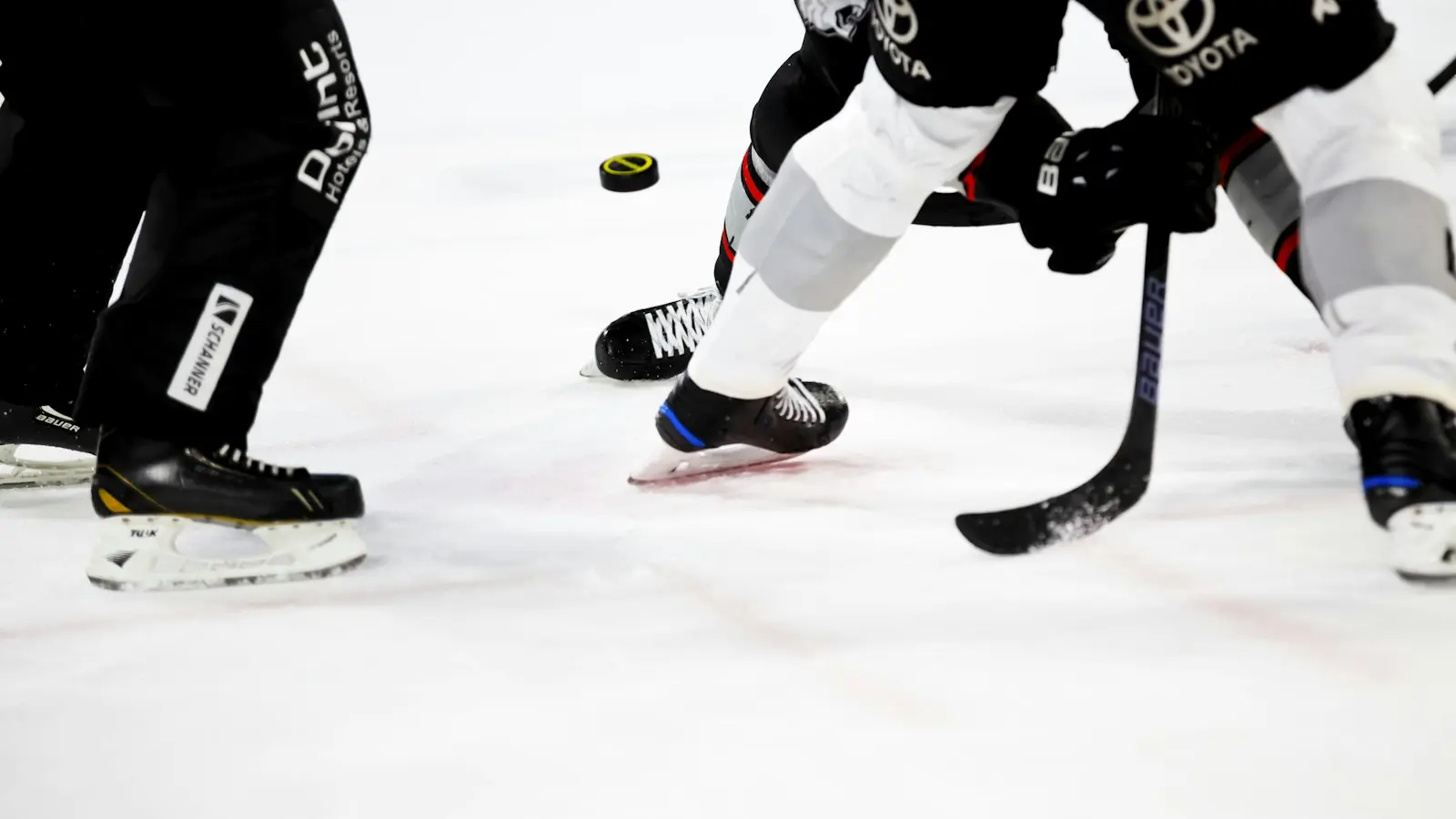
A team erased a four-goal deficit with only 2:40 remaining in regulation, creating one of the most extreme late comebacks in NHL history. The sequence illustrates how quickly a seemingly secure game state can change when every possession becomes unusually valuable.
The broader answer is clearer: one extraordinary comeback should not make teams abandon established NHL late lead strategy. A four-goal lead with a few minutes left is normally an overwhelmingly strong position. But a collapse can still expose how empty-net pressure, penalties, faceoffs, fatigue, failed exits, goaltending workload and finishing variance interact when every possession becomes unusually valuable.
Key Takeaways
- A late four-goal lead is normally an exceptionally strong game state; one collapse does not show that such leads are routinely unsafe.
- An extra attacker creates sustained pressure, but failed clears, defensive-zone faceoffs, penalties and fatigue determine whether that pressure becomes goals.
- A defensive shell protects the slot, yet excessive passivity can allow screens, rebounds, lateral passes and repeated offensive-zone possessions.
- The best late-lead plan is conditional: protect the middle, support the puck, choose the safest available exit and attack selectively when the risk is low.
What a Four-Goal Lead Usually Means—and Why the Exception Matters
A late four-goal lead is not merely a comfortable advantage. It changes the opponent’s available choices. The trailing team must attack quickly, accept defensive risk and usually remove its goaltender, while the leading team can focus on denying the middle of the ice and forcing low-quality decisions.
That does not make the outcome mathematically guaranteed. Hockey produces relatively few scoring events, and a deflection, rebound or special-teams sequence can change the game quickly. Still, the normal expectation is that a team in this position wins by a wide margin of probability. An extreme collapse is therefore evidence of an unusual sequence, not proof that four-goal leads are routinely unsafe.
Three questions should be separated when reviewing such a result. First, how rare was the comeback historically? Second, what specific game-state details allowed it to happen? Third, does the sequence reveal a repeatable tactical weakness or a combination of errors and low-probability events?
That distinction matters because the final score alone cannot identify the cause. A team may have made preventable mistakes, faced a series of excellent finishes, suffered from penalties and fatigue, or encountered several of those conditions at once. Reconstructing each goal, faceoff, line change, clearance attempt and goaltender decision is more useful than assigning blame to a general concept such as “playing not to lose.”
How Empty-Net Pressure Changes NHL Late Lead Strategy
Pulling the goaltender creates the most obvious structural change. The trailing team adds an attacker, giving it another passing option and a better chance to keep the puck in the offensive zone. That can produce more screens, rebounds, deflections and lateral passes, particularly when the defending team cannot establish a clean outlet.
The leading team then faces a trade-off. It can clear the puck and surrender possession, or it can attempt to retain the puck and perhaps score into the empty net. Neither option is automatically correct.
A high, safe clearance may be preferable when the defensive unit is under immediate pressure, the puck is near the wall and no controlled passing lane exists. The goal is not necessarily to create offense; it is to move the puck beyond the opponent’s immediate recovery range and allow the team to reset. A short chip or bank play can serve the same purpose when a full-length clear is unavailable.
A controlled exit is more valuable when the defense has time, support from a low forward and a clear passing option. A team that wins possession and exits with control can force the opponent to retreat, use valuable seconds and potentially create an empty-net chance without making a desperate play.
The danger is the failed middle ground. A soft clear can be intercepted at the blue line. A hurried pass through the slot can become a turnover. A forward who races too far up ice can leave the defense without a short outlet. An attempted icing can also produce a defensive-zone faceoff, allowing the opponent to attack again without having to rebuild its possession.
Empty-net strategy therefore depends on more than the score. Time remaining, the location of the puck, the opponent’s pressure, personnel, fatigue, faceoff status and the quality of the next pass all matter. The right decision is often the one that reduces the chance of an immediate second possession, not simply the one that sends the puck the farthest.
Why Defensive Shells Can Still Produce High-Danger Chances
A defensive shell is designed to protect the most dangerous area: the slot and the space directly around the net. Defenders typically stay inside the scoring lanes, block passing routes and make it difficult for attackers to move laterally through the middle.
That structure can work. It can also become counterproductive if players collapse so deeply that they stop challenging puck carriers or lose the ability to support an exit. The opponent may then have time to move the puck from side to side, wait for a screen or attack a rebound while defenders remain stationary.
The usual breakdown is sequential rather than singular. A defender loses a puck battle or misses an assignment. The first clearance is hurried or fails to travel far enough. The attacking team recovers the puck and begins another cycle. A shot then arrives through traffic, forcing the goaltender to locate the puck late. If a rebound falls into an unprotected area, the original mistake has become a high-danger chance.
This is why shot volume alone can be misleading. A shell may concede several perimeter attempts while still protecting the net effectively. Conversely, a team can allow relatively few shots but give up repeated screens, rebounds or cross-ice passes that are difficult for the goaltender to handle.
The distinction between tactical failure and variance is also important. A missed coverage assignment or an avoidable turnover is potentially preventable. A puck that changes direction off a stick, a screened shot that finds a narrow opening or an unusually efficient run of finishing may be less repeatable. A credible review should identify which category each goal belongs to rather than treating every goal as proof of poor coaching.
Fatigue makes the structure harder to execute. Long shifts reduce the speed of defensive routes, weaken gap control and make communication less precise. Tired players may reach with their sticks instead of moving their feet, lose inside position or make a clearance without first checking whether a teammate is available for support.
The Situational Factors That Can Turn a Safe Lead Into a Collapse
Penalties are the clearest accelerator. A minor penalty can give the trailing team a settled power-play possession, additional puck movement and more time to create screens or one-timer opportunities. The effect depends on when the penalty occurs, which players are available, where the ensuing faceoff takes place and whether the defending team can clear early in the kill.
Faceoffs matter even at five-on-five and become especially important after an icing or stoppage. A clean defensive-zone win can produce an immediate exit. A lost draw, a tie-up that goes to the opponent or a failure to retrieve the puck can extend pressure before the defending team has established its structure.
Line changes introduce another risk. A tired unit may be unable to complete a safe change, while a poorly timed change can create a temporary mismatch or leave a defenseman defending without support. Teams protecting a lead may shorten the bench, but that can increase fatigue for the players trusted with the final minutes.
Goaltender workload is not simply a count of shots. Screens, rebounds, lateral movement and repeated attempts from the same possession all increase the difficulty of the sequence. One dangerous shot after a clean defensive reset is a different problem from three attempts arriving after failed clears and lost coverage.
Psychology can influence the game, but it should not substitute for evidence. A leading team may become more risk-averse, while the trailing team gains urgency and starts attacking every loose puck. That change in behavior is plausible, yet the actual sequence must show whether passivity, communication or decision-making contributed to the goals.
The most useful review begins with the game state: the score after each goal, the time remaining, whether the goaltender was pulled, the penalty situation, faceoff location, possession changes and the personnel on the ice. Only then can observers decide whether the collapse was mainly tactical, technical, situational or random.
Should Coaches Defend Conservatively or Keep Attacking?
Conservative protection prioritizes the slot, net-front coverage, blocked lanes and safe clears. Its advantage is clarity: players know which areas cannot be surrendered, and the team reduces the chance of an uncontested pass through the middle. Its risk is excessive passivity, which can leave the puck carrier unchallenged and make every clearance more difficult.
Active protection pressures the puck, supports the first pass and retains possession when the opportunity is clean. It does not mean chasing an empty-net goal at any cost. Its aim is to prevent the opponent from establishing a long offensive-zone sequence. The risk is that an aggressive forecheck or risky pass can create the exact turnover the leading team is trying to avoid.
The most durable approach is conditional. A team should generally ask:
- How much time remains, and what is the score margin?
- Has the opponent pulled its goaltender, and does it already control the puck?
- Is the puck near the defensive-zone faceoff circle, the corner or the blue line?
- Is there a clean outlet, or would a controlled chip be safer?
- Which players are on the ice, and how fatigued are they?
- Is the team killing a penalty or defending at even strength?
- Is the team winning first contacts and protecting the slot?
- Would an attacking play force the opponent to retreat, or merely create a turnover?
A safe clearance is preferable when pressure is immediate and the team lacks support. Maintaining possession is preferable when the puck carrier has time, passing options and a nearby teammate. An empty-net attempt is attractive when the lane is open and the play carries limited turnover risk, but it should not become an obligation that overrides basic puck management.
This is the central lesson for NHL late lead strategy: structure and offense are not opposites. The best protection often combines a compact defensive shape with an intelligent exit. Teams do not have to choose between collapsing around the goaltender and attacking recklessly.
An exceptional four-goal NHL comeback should prompt a detailed review of decisions, execution, special teams and fatigue. It should not, by itself, overturn the broader logic of protecting a large late lead. To justify a strategic change, teams would need repeated evidence that a particular approach consistently creates worse chances than its alternatives across comparable scorelines, personnel groups and game states.
FAQ: NHL Late Lead Strategy
How should an NHL team protect a four-goal lead late in a game?
It should protect the middle, communicate clearly, manage rebounds and use the safest available exit. That may mean a high clear, a short chip, a controlled pass or selective possession, depending on pressure and personnel. Avoiding penalties, unnecessary icing and turnovers near the defensive blue line is as important as forming a compact shell.
Is pulling the goalie the main reason a four-goal NHL comeback can happen?
The extra attacker is a major force multiplier because it improves passing options and offensive-zone possession. It is not the entire explanation. Time remaining, penalties, faceoffs, failed clears, defensive mistakes, rebounds, goaltending and unusually efficient finishing can determine whether that extra attacker produces one goal or several.
Does one historic comeback prove that NHL teams should stop playing conservatively?
No. It shows that even an extremely strong game state can unravel under unusual conditions. It does not establish that passive defense is always wrong or that aggressive attacking is always safer. The correct response is to examine the sequence and compare it with broader evidence rather than redesigning late-game management around one outlier.