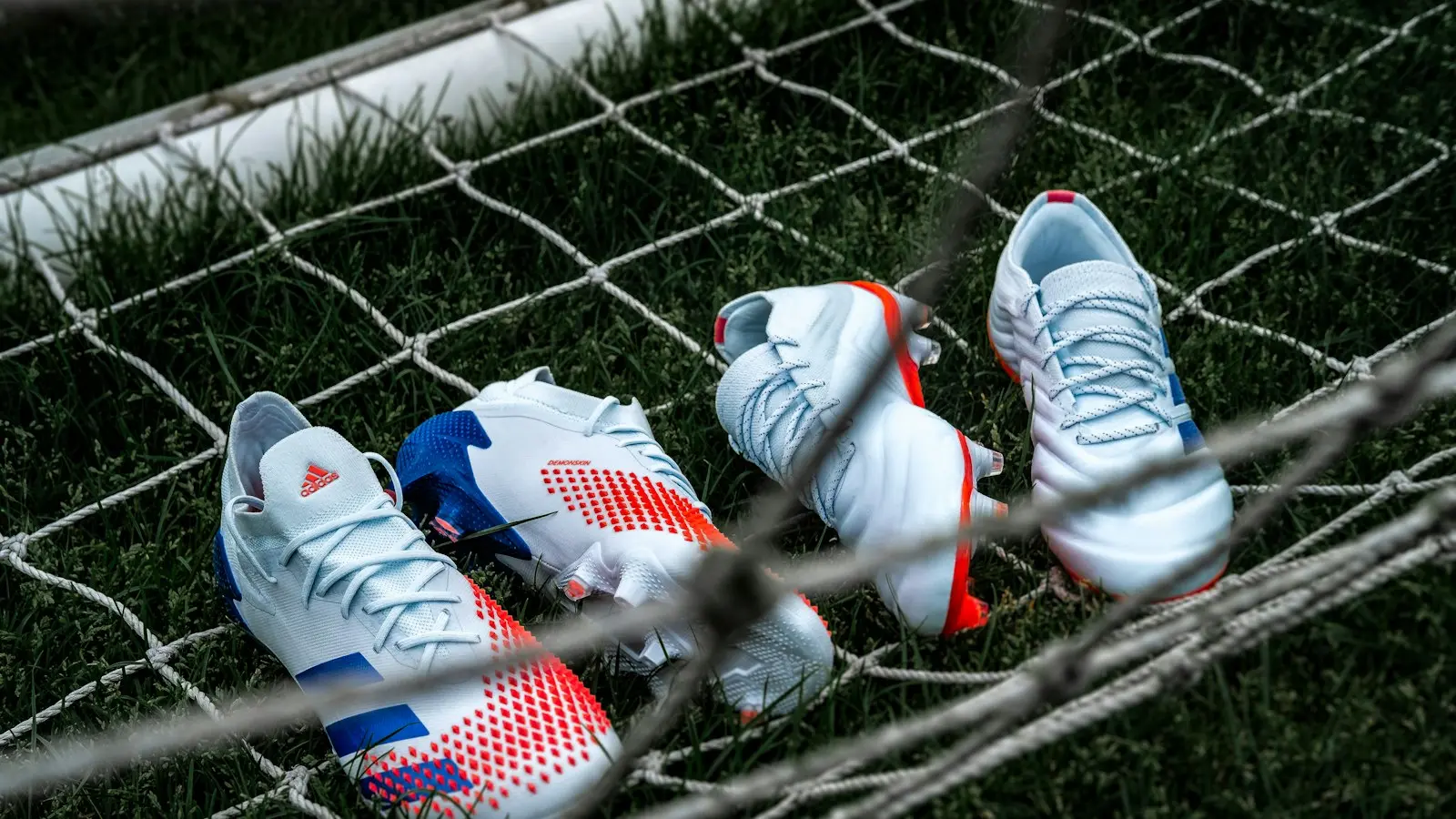
The best football boots for artificial turf are the ones that match the specific pitch, fit securely, and provide enough traction without feeling overly aggressive. For many beginners, an artificial-ground (AG) model is a sensible starting point when the manufacturer approves it for the facility’s surface. However, multi-ground (MG), turf (TF), or, in some cases, firm-ground (FG) boots may be more suitable in different conditions.
The key is not to choose from the abbreviation alone. AG, FG, MG, and TF labels are not perfectly standardized across brands or product generations, so check the exact model’s guidance before buying.
Key Takeaways
- Identify whether you will play on long-pile artificial grass or short-pile turf before choosing a soleplate.
- AG boots are often designed for artificial grass, but the exact stud pattern and manufacturer recommendation matter more than the label.
- MG boots can be a practical compromise for mixed surfaces, while TF shoes are generally intended for short-pile turf.
- Prioritize secure fit, natural foot release, and comfortable traction; no boot can guarantee injury prevention.
- Check return terms, clean and inspect the boots regularly, and replace them when the outsole or upper no longer provides reliable support.
1. Identify the Artificial Surface Before Choosing Boots
“Artificial turf” can describe several different playing surfaces. A modern full-size artificial-grass pitch may have relatively long synthetic fibres, rubber or sand infill, and a surface designed to resemble natural grass. An older or heavily used synthetic pitch may feel firmer, flatter, or more abrasive. Short-pile turf has much shorter fibres and can feel closer to a dense carpet than a grass-like football field.
These differences affect how the soleplate interacts with the surface, how pressure is distributed under the foot, and how easily the foot releases during rotation. A boot that feels planted and comfortable on one artificial pitch may feel too aggressive, too slippery, or insufficiently supportive on another.
Before buying, ask the facility or club:
- Is the pitch long-pile artificial grass or short-pile turf?
- Does it use rubber, sand, or another type of infill?
- Does it become particularly firm or slippery in certain weather?
- Does the facility recommend AG, MG, FG, or TF footwear?
- Do players use different footwear for training and matches?
Weather and maintenance matter as well. Rain can change traction, while dry conditions may make some pitches feel harder or more abrasive. Compacted infill, worn areas, and poor drainage can also change the way the soleplate performs. A facility’s recommendation is useful context, but the exact boot design still needs to be checked.
2. FG, AG, MG, and TF Soleplates Explained
The following comparison is a starting framework rather than a universal rule. Stud shape, spacing, length, flexibility, and material can vary substantially between brands and models.
| Soleplate | Typical surface | Traction feel | Comfort and durability considerations | What to verify |
|---|---|---|---|---|
| AG | Artificial grass, often longer-pile synthetic pitches | Usually distributes contact across multiple shorter or rounded studs | May spread pressure more evenly, but comfort depends on the model and pitch | Confirm approval for the facility’s surface and infill |
| MG | More than one ground type | A compromise between different traction demands | Convenient for mixed surfaces, though not always ideal on any one pitch | Check the specific surfaces listed by the manufacturer |
| FG | Firm natural grass, with some models also approved for selected artificial surfaces | Often more direct and pronounced | May feel harsh on firm synthetic surfaces if the geometry is unsuitable | Read the exact manufacturer guidance rather than relying on the label |
| TF | Short-pile turf and small-sided synthetic surfaces | Many small rubber lugs provide broad, shallow contact | Often comfortable on short turf but may lack the traction or support needed on longer grass | Match the shoe to pile length, pitch size, and movement demands |
AG boots are often designed with more numerous, shorter, or rounded studs than traditional FG boots. This can distribute contact across an artificial surface, but it is not a guarantee of suitability. Some AG models use different geometries, and the practical feel depends on stud height, spacing, outsole flexibility, and pitch firmness.
MG boots may suit a beginner who regularly moves between natural grass and artificial pitches. Their main advantage is versatility, not automatic superiority. A compromise soleplate may feel acceptable across several surfaces while remaining less comfortable than a specialist design on the player’s most frequently used pitch.
FG boots require particular care. Some manufacturers approve specific FG models for certain artificial surfaces, while others limit them to natural grass. The outsole geometry matters more than the letters printed on the box. If the manufacturer does not clearly support the intended use, choose a model with explicit artificial-ground guidance or ask a knowledgeable retailer for clarification.
TF shoes are different from boots designed for longer artificial grass. Their many small rubber lugs can work well on short-pile turf, training centres, and small-sided pitches, but they may not provide the same traction, support, or movement response on a full-size artificial-grass field. Do not select them simply because the pitch is synthetic.
3. Balance Traction, Comfort, and Injury Risk
Traction is a trade-off. Too little grip can make acceleration and changes of direction feel uncertain. A player may shorten their steps, avoid turning decisively, or compensate with awkward movement because the boot does not feel planted.
Too much grip can also be uncomfortable. If the soleplate holds firmly while the body continues to rotate, the player may feel twisting pressure through the foot or lower limb. Stud pressure can be noticeable when a surface is hard, and an aggressive pattern may make walking, stopping, or pivoting feel harsh.
That does not make one soleplate universally safe or unsafe. Comfort and injury risk can be influenced by surface firmness, footwear geometry, technique, fatigue, previous injury, body size, and individual movement patterns. Footwear can affect traction and comfort, but it cannot guarantee injury prevention.
Use the first sessions as a practical test. Notice whether the foot releases naturally during turns, whether you repeatedly slip, or whether the boot feels stuck during changes of direction. Stop using the boots if they cause persistent pain, numbness, unusual pressure, repeated blisters, or difficulty releasing the foot from the surface. Recurring pain or injury should be assessed by an appropriate healthcare professional rather than addressed by repeatedly changing boots.
4. Check Fit, Cushioning, and Break-In Requirements
A suitable soleplate cannot compensate for a poor fit. Start with heel security: the heel should stay seated during acceleration without excessive tightening or rubbing. The midfoot should feel held in place without being compressed to the point of numbness or pressure.
There should be enough room for the toes to lie naturally and move slightly, without the foot sliding forward when braking. Avoid choosing a smaller size simply to imitate the close fit used by professional players. Foot shape varies, and a narrow speed boot may be unsuitable for someone with a wider forefoot.
Check the fit while wearing the socks used for football. Orthotics, thicker socks, and different lacing systems can change the available space. Try both boots, stand, walk, and make controlled turns. Look for heel lift, side pressure, toe contact with the front, or material folding over the top of the foot.
Low-profile boots may provide a close, direct feel, while more cushioned designs may be more comfortable for players who train for several hours on firm synthetic surfaces. Neither style is automatically best for beginners. The priority is stable, pain-free movement and a fit that remains comfortable throughout the session.
Break boots in gradually. Wear them for short, controlled sessions before using them in a full match. Check for hot spots, rubbing, blisters, numbness, and pressure after each session. A short break-in period does not prove that a boot fits correctly, and pain should not be treated as something to push through.
Review the return policy before wearing new boots outdoors. Some retailers require an indoor try-on, clean soles, or no stud marks for a return. Conditions vary, so confirm them before testing the boots on an artificial pitch.
5. Match the Choice to Budget, Durability, and Use
Price does not determine surface compatibility. Entry-level boots can be a practical choice if the soleplate is appropriate and the fit is good. More expensive models may use lighter materials or include additional construction and comfort features, but premium styling does not make an unsuitable outsole suitable for artificial grass.
Playing frequency should influence the decision. Someone playing once a month may reasonably prioritize fit and versatility. A player training several times each week on artificial grass may benefit from a purpose-appropriate AG design or another model explicitly approved for that surface. Frequent use also makes outsole durability, upper protection, and replacement cost more important than copying an elite player’s footwear.
After playing, remove loose rubber or sand from the upper and outsole. Let the boots dry naturally in a ventilated place rather than using intense heat, which can affect adhesives and materials. Do not leave infill packed around the studs, as it can change how the soleplate contacts the surface.
Inspect the outsole regularly for cracks, detached studs, excessive wear, or deformation. Check the upper for separation, torn stitching, and areas where the foot no longer feels supported. Replacement is worth considering when the boot’s structure or traction has changed noticeably, not only when the upper looks untidy.
For a beginner, the most reliable buying process is straightforward: identify the pitch, check the exact manufacturer recommendation, compare AG, MG, FG, and TF designs for that surface, then prioritize fit and comfort over branding. If a boot is marketed for several surfaces, read the detailed conditions rather than treating “multi-ground” as proof that it will feel equally good everywhere.
FAQ: Football Boots for Artificial Turf
Are FG boots suitable for artificial turf?
Sometimes, but there is no universal answer. Suitability depends on the exact FG soleplate, the artificial pitch, and the manufacturer’s current guidance. Check the stud geometry and intended surfaces before use. If the manufacturer lists only natural grass, choose a model with clearer artificial-ground approval instead of assuming it will be suitable.
Are AG boots better than MG boots for artificial grass?
AG boots are generally designed with artificial grass as a primary use, while MG boots are intended as a compromise across more than one surface. AG may be the more direct choice for a player who nearly always uses the same type of artificial pitch. MG can be useful for someone who changes between surfaces, but the exact feel and recommendation must be checked model by model.
Can I wear turf shoes on a full-size artificial-grass football pitch?
TF footwear is usually associated with short-pile turf and small-sided synthetic surfaces. On longer artificial grass, it may not provide the traction, support, or movement feel you want. Ask the facility about pile length and confirm that the shoe provides secure acceleration and turning without excessive slipping.
What should a beginner choose if the facility gives no clear advice?
Ask staff to identify the surface or take a photo of the pitch, then consult the manufacturer’s product information for the exact model. A football retailer familiar with artificial surfaces may also help compare outsole designs. Avoid making the decision solely from the letters AG, MG, FG, or TF.