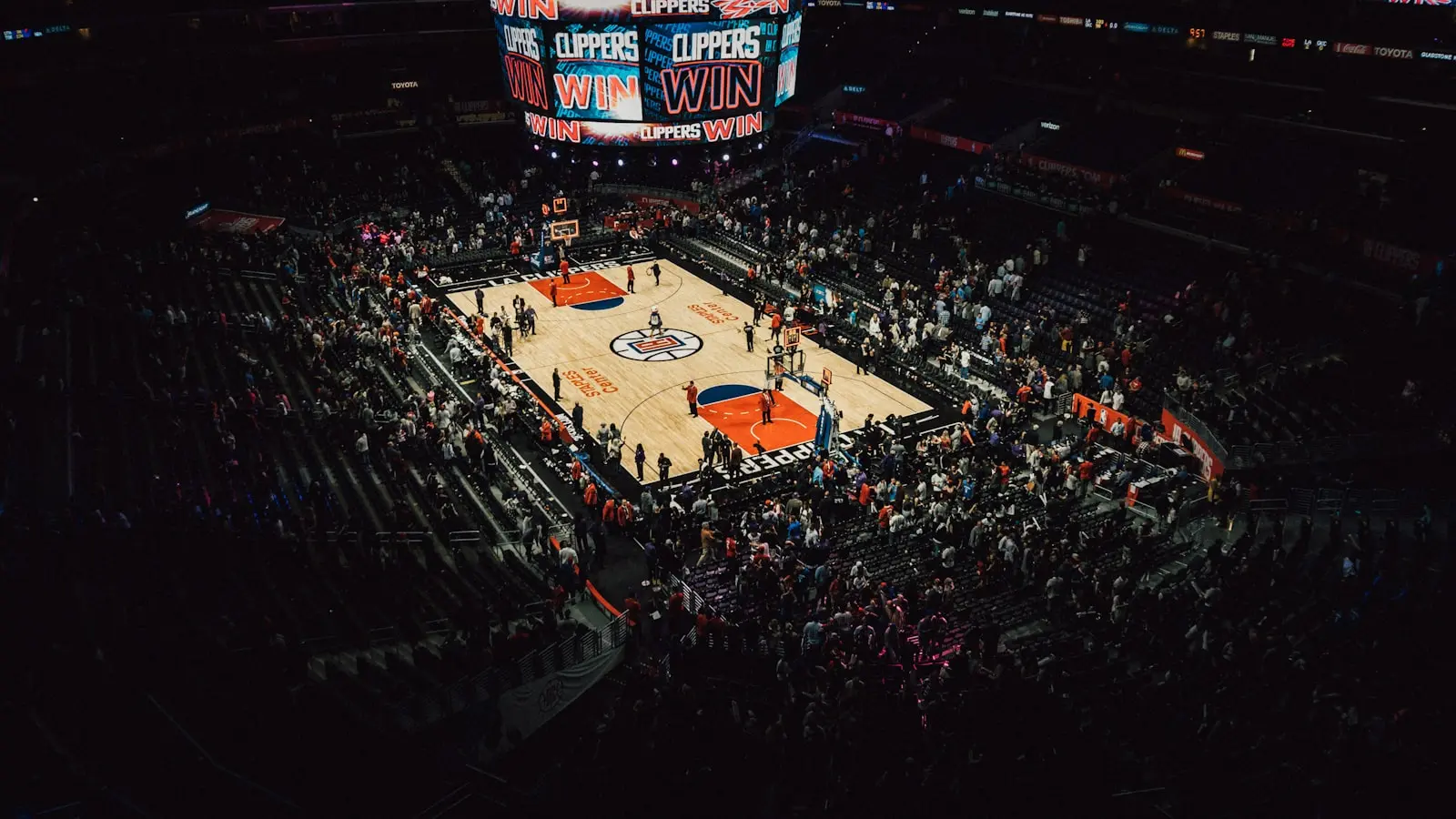
Every postseason, the same question surfaces: Why do NBA players shoot worse in the playoffs? The short answer is a combination of tighter defense, accumulated fatigue, stricter officiating, and small sample sizes. The so-called “choke” narrative is usually overblown.
Key Takeaways:
- League-wide true shooting percentage drops 2–2.3 points in the playoffs, driven by defense and fatigue, not just pressure.
- Playoff defenses scheme more intensely, reducing shot quality and forcing contested looks.
- Star players’ increased minutes and cumulative fatigue degrade shooting mechanics, especially late in series.
- Officiating changes allow more physicality, lowering free-throw rates and altering shot diets.
- The “choke” label is often misleading; individual declines are usually tactical or sample-size related.
The Statistical Reality: How Big Is the Drop?
League-wide data confirms that shooting efficiency falls in the playoffs. True shooting percentage typically drops by about 2 to 2.3 percentage points compared to the regular season. Scoring declines by roughly 8 points per team per game, and offensive rating falls by more than 4 points per 100 possessions. These are the largest postseason efficiency gaps on record in recent decades.
Sample size matters enormously. A player may shoot poorly over a 7-game series, but that does not necessarily reflect a long-term weakness. One bad game can distort a whole playoff run. Conversely, a player who gets hot for four games can look like a playoff superstar. The decline is real on average, but individual variation is high, and some players actually improve.
Defensive Intensity: More Schemes, Less Space
Playoff defenses are fundamentally different from regular-season defenses. Teams have multiple days to prepare specific game plans that target an opponent’s weaknesses. They switch more, trap more, and pack the paint. Offenses become predictable as series progress; a team that saw the same action in Game 1 will have an answer by Game 4.
Shot quality drops measurably. Internal tracking data shows that the average shot quality in the playoffs declines by roughly 1 percentage point compared to the regular season. That means defenders are closer, release windows are narrower, and more shots come from contested positions. Increased switching and drop coverage reduce open looks at the rim and on the perimeter. Offenses are forced into tougher shots or late-clock heaves.
Fatigue: Minutes, Pace, and Cumulative Load
Star players often push 40-plus minutes per game in the postseason. The intensity of each possession is higher than a typical Tuesday night in January. While playoff games are rarely on back-to-back nights, the cumulative fatigue across a series can degrade shooting mechanics. Late in games and especially in Game 7s, legs get heavy and form suffers.
Fewer offensive rebounds in the playoffs also shift the game toward half-court possessions. Teams crash the offensive glass less, meaning fewer putbacks and more possessions that end with a contested jumper after a 20-second grind. This physical toll is one of the most underrated drivers of the NBA playoff shooting decline.
Officiating: Freedom of Movement and Free Throws
Playoff officiating historically allows more physical contact. The “freedom of movement” emphasis that exists during the regular season often relaxes in the postseason. Shooters get bumped off their lines without whistles. This affects not only field goal attempts but also free-throw rates, which typically fall by about 2% in the playoffs. Fewer trips to the line mean fewer easy points and less rhythm shooting.
Changes in how fouls are called also alter shot selection. Drivers who rely on initiating contact to draw fouls find those calls harder to come by. That can force them into lower-percentage jumpers or contested finishes. The overall effect is a shift toward tougher shots and fewer catch-and-shoot opportunities from advantageous positions.
Psychological Factors: Pressure, Variance, and the “Choke” Myth
It is tempting to label every playoff shooting slump as a choke, but the evidence does not support a universal mental breakdown. Sports psychology research indicates that pressure can affect decision-making, but the effect is secondary to tactical adjustments and physical fatigue. Small sample sizes mean that a 3-for-15 night can happen to any shooter, even in the regular season – but in the playoffs, that game is magnified.
Some players actually elevate their performance under pressure. The data shows that individuals with versatile scoring arsenals – those who can score from mid-range, post up, move off the ball, and shoot off the dribble – are less vulnerable to defensive scheming. The notion that playoff shooting decline is purely mental ignores the reality that defenses are simply better in the postseason.
Case Studies: Who Rises and Who Falls?
Joel Embiid’s playoff numbers have consistently dipped relative to his regular-season production. This is not a case of choking but rather a consequence of facing heavier double-teams and more physical frontcourt defense. His scoring and efficiency drop by measurable margins, which aligns with the added defensive attention.
James Harden’s struggles in Game 7s offer a clear example of a specific tactical cause. Data shows that his three-shot foul rate falls by about 32% in those decisive games. When that weapon is taken away, his three-point percentage naturally drops. He adapts by facilitating, but his scoring efficiency declines.
On the other hand, Nikola Jokić and Stephen Curry tend to maintain or even improve their efficiency in the playoffs. Jokić’s size, passing, and ability to score from anywhere make him difficult to scheme against. Curry’s off-ball movement and quick release force defenses into impossible choices. Their skill sets are more resistant to playoff tactics, proving that the decline is not inevitable.
Frequently Asked Questions
1. Is the playoff shooting decline mostly due to better defense or mental pressure? The evidence points primarily to defense and fatigue. Mental pressure plays a role, but it is often overstated – the core causes are tactical adjustments and physical demands.
2. Why do some star players shoot better in the playoffs? Players with versatile scoring arsenals (e.g., mid-range, post, off-ball movement) are harder to contain. Additionally, some adjust their shot selection to higher-value attempts, and favorable matchups can boost efficiency.
3. How reliable are playoff shooting stats for evaluating a player’s performance? Due to small sample sizes (often 4–28 games), playoff shooting percentages are noisy. A few bad games can skew a player’s entire postseason numbers. It’s important to look at shot quality, role, and defensive schemes rather than raw percentages alone.