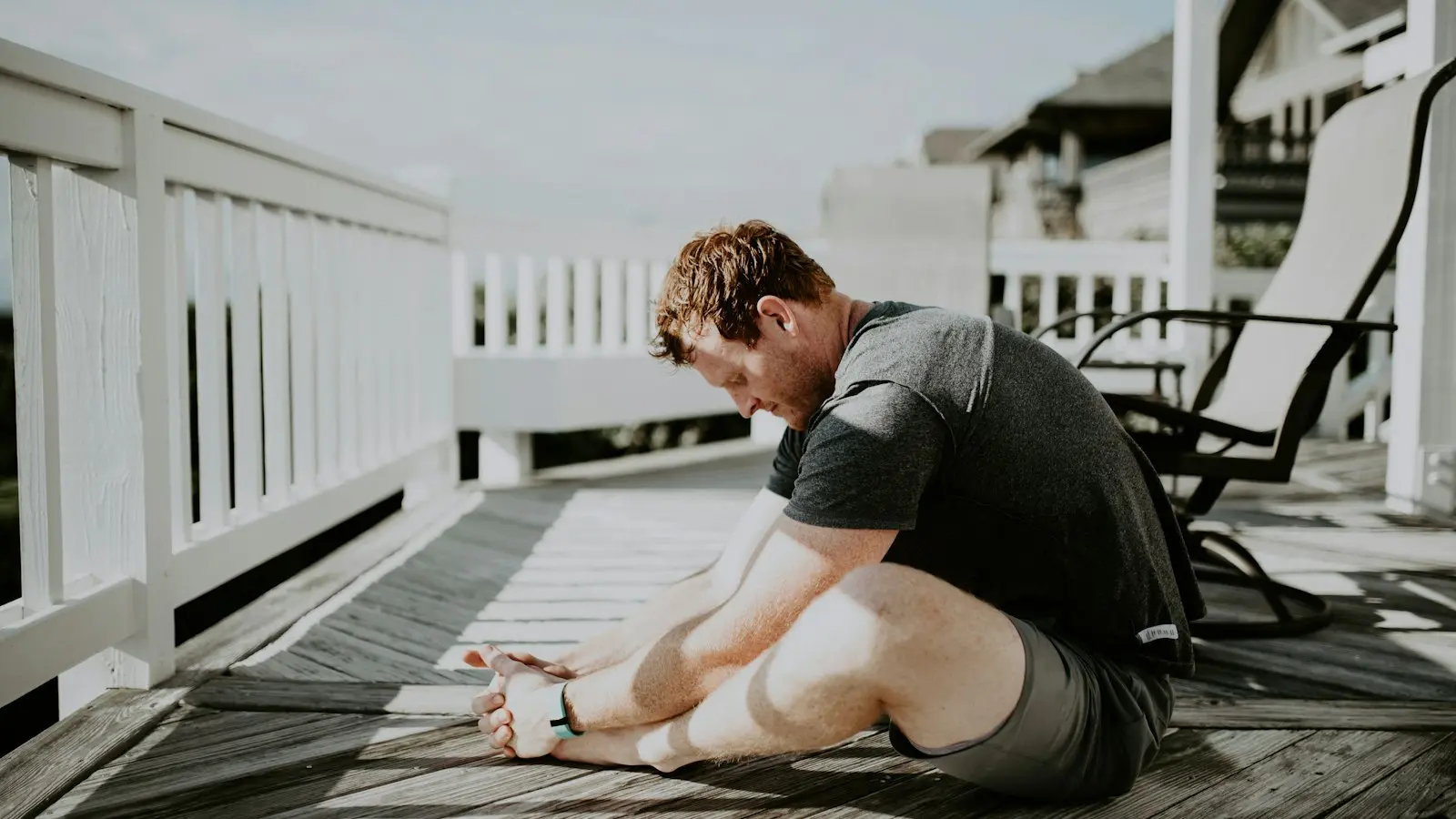
The best approach to training after travel is usually neither a full restart nor an immediate return to maximum intensity. Treat the first week as a load-management problem: assess what you actually did while away, check sleep and illness symptoms, then rebuild one training variable at a time.
A month of travel can mean complete rest, thousands of steps each day, occasional hotel workouts, long periods of sitting, disrupted sleep, heat exposure, dehydration, or a recent stomach or respiratory illness. Those experiences create very different starting points. This is general education, not individualized medical advice; athletes with significant symptoms, medical conditions, or an important competition approaching should consult a qualified clinician or sports-medicine professional.
Key Takeaways
- Base your return on what happened during the trip, not simply on how many days you missed structured training.
- Check sleep, hydration, food intake, soreness, illness symptoms, and your response to an easy warm-up before adding intensity.
- Use the first several sessions to restore movement, technique, and tolerance; progress one major training variable at a time.
- Heat, jet lag, dehydration, long sitting, and recent illness can make normal workloads feel harder even when fitness loss is modest.
- Stop and seek medical assessment for chest symptoms, fainting, unusual breathlessness, fever, worsening illness, severe dizziness, or persistent pain.
Assess What Changed During the Month Away
Start with a simple comparison between your normal training and the month that has just ended. Do not judge the situation only by the number of days spent away from a gym, pool, track, or field.
If you stopped structured exercise completely, some conditioning and sport-specific tolerance may have declined. However, a traveler who walked for several hours most days may have maintained meaningful general activity while losing exposure to fast running, heavy lifting, repeated accelerations, or sustained hard efforts.
The opposite can also occur. A month of airports, trains, buses, and car journeys may involve little formal exercise but substantial sitting, poor sleep, irregular meals, alcohol, and dehydration. In that case, the main problem on the first day home may be stiffness and travel fatigue rather than a major loss of fitness.
Separate the likely changes into categories:
- Aerobic conditioning: Longer breaks from sustained training can make familiar paces feel harder, although the size and speed of change vary by athlete and previous training base.
- Strength and load tolerance: Maximal strength may not disappear immediately, but repeated sets, tendon tolerance, lifting technique, and confidence under load may feel less reliable.
- Coordination and sport skill: Timing, acceleration, deceleration, change of direction, and technical precision may need a gradual return if they were not practiced.
- Mobility and stiffness: Long sitting and unfamiliar sleeping arrangements can restrict the hips, ankles, shoulders, or spine without representing a true loss of flexibility.
- Recovery capacity: Sleep debt, low food intake, dehydration, heat, and illness can make a normal workout feel disproportionately difficult.
This distinction matters. Feeling flat after an exercise session following a long trip does not automatically prove that fitness has vanished. It may reflect temporary travel fatigue, low energy availability, circadian disruption, or residual illness. Identify the limiting factor rather than trying to punish it with a hard session.
Use Readiness Checks Before Resuming Full Training
Before the first demanding session, assess several signals together. No single metric, including a wearable score or resting heart rate, can clear an athlete to train or rule out illness.
First, consider sleep. Can you maintain a reasonably normal schedule, and did you get enough uninterrupted sleep to concentrate during the day? Jet lag can affect perceived effort, reaction, coordination, and mood even when an athlete feels eager to resume normal training.
Next, check for soreness and pain. General stiffness after travel may improve with walking and mobility. Localized pain, swelling, altered movement, or symptoms that worsen during warm-up deserve more caution. A workout should not be used to test whether persistent pain is serious.
Review hydration and fueling as well. Thirst, appetite, urine patterns, and energy provide useful context, but they are not precise diagnostic tools. If you have had vomiting, diarrhea, heavy sweating, or very little food and fluid, restore basic hydration and nutrition before attempting intensity.
Resting heart rate can be useful when interpreted as a trend against your normal baseline. A single elevated reading may reflect poor sleep, stress, alcohol, dehydration, heat, or measurement variation. A persistent change combined with unusual fatigue, breathlessness, palpitations, or poor exercise tolerance is more concerning and should prompt reassessment rather than a harder workout.
A practical decision rule is straightforward: stable sleep, adequate hydration and food, no significant illness symptoms, manageable soreness, and a normal-feeling warm-up support a gradual session. Worsening symptoms, abnormal exertional responses, or difficulty with basic movement support rest or easy activity instead.
Follow a Conservative First-Week Return-to-Training Framework
The following framework is a starting point, not a prescription. Adjust it according to what you did during travel, your sport, your training history, and your response between sessions.
Session 1: Restore movement and observe the response. Choose easy aerobic work, relaxed mobility, or a low-load version of familiar exercises. Keep the effort controlled enough that breathing remains comfortable and technique is unhurried. The objective is to learn how your body responds during the session and later that day, not to prove that you are ready for normal training.
For an endurance athlete, that could mean easy cycling, swimming, or running at a reduced duration. A strength athlete might use bodyweight movements, light resistance, and fewer sets. A field or court athlete should prioritize movement quality, basic ball work, and straight-line movement before maximal sprinting or sharp changes of direction.
Session 2: Repeat or rest based on the next-day response. If soreness, fatigue, sleep, and motivation are close to normal, repeat easy work with only a modest increase in duration or total work. If you feel unusually drained, stiff, or poorly recovered, take a rest day or use gentle walking and mobility instead.
Session 3: Reintroduce controlled training. This may be moderate aerobic work, reduced-load strength training, technical practice, or submaximal sport movement. Avoid maximal lifts, all-out intervals, repeated sprints, and competition simulations. Finish with the feeling that you could have done more.
Session 4 and beyond: Progress one major variable at a time. Increase duration, total volume, load, speed, or intensity—not all of them together. If the next day brings unusual soreness, poor sleep, reduced motivation, or a noticeable decline in normal function, hold the workload steady or step back.
The sport-specific emphasis differs. Endurance athletes often rebuild duration and frequency before intensity. Strength athletes can restore movement quality, range of motion, and tolerance for repeated sets before testing heavy loads. Field and court athletes need progressive exposure to acceleration, deceleration, jumping, and change of direction because walking or easy running during travel may not prepare them for those demands.
Adjust for Jet Lag, Heat, Dehydration, and Illness Risk
A training schedule after jet lag should be guided by sleep and function, not by the calendar alone. If your body clock is still misaligned, demanding sessions may feel harder and technical decisions may be less precise. Prioritize consistent sleep and wake times, regular meals, daylight exposure where appropriate, and easy movement before returning to high-intensity work.
Heat and humidity add another layer of stress. An athlete arriving from a cool environment may not tolerate a familiar pace in a hot one, while someone returning from a hot destination may still be dehydrated or fatigued. Reduce intensity, choose cooler training conditions, take longer recovery periods, and respond to thirst and changing symptoms rather than forcing a fixed pace.
There is no universal fluid prescription that fits every body size, climate, sweat rate, or session length. Replace fluids and food consistently, especially after substantial sweating or gastrointestinal symptoms, but do not treat aggressive hydration as a shortcut to restored fitness.
Recent illness requires more caution than ordinary tiredness. After a mild respiratory or gastrointestinal illness, resume only when symptoms are clearly improving and you can eat, drink, and move normally. Start with easy activity and monitor for an unusual increase in fatigue, breathlessness, dizziness, or symptom recurrence.
Do not train through fever, chest pain or pressure, fainting, unexplained dizziness, unusual breathlessness, palpitations, severe dehydration, worsening illness, or persistent localized pain. These symptoms require stopping exercise and seeking medical assessment. Less dramatic symptoms also deserve attention if they persist or worsen rather than improving with rest.
Rebuild Normal Training Without Chasing Lost Fitness
Once several sessions have produced normal recovery, return toward your regular routine gradually. Consistency should come before maximal intensity. The temptation to compensate for missed workouts with extra volume, back-to-back hard days, or a sudden long session is understandable but counterproductive.
A useful progression is to restore the frequency of easy or moderate sessions first, then normal duration or volume, and only afterward resume demanding intervals, heavy lifting, long sessions, high-impact work, or competition-specific efforts. This is a risk-management strategy, not a guarantee that injury or illness can be prevented.
Keep a short log for the first one or two weeks. Record sleep quality, session difficulty, soreness, hydration, appetite, and how you feel the next day. The next-day response is particularly valuable because travel-related fatigue can be delayed and because a session that feels acceptable in the moment may still show that the workload was too high.
You are closer to normal training when familiar workloads produce expected exertion, technique remains consistent, soreness resolves in a normal pattern, sleep is stable, and motivation is not being carried solely by willpower. If those markers are not returning, investigate recovery, illness, nutrition, stress, or injury rather than assuming that more training will solve the problem.
FAQ
How long should I wait to train after a long trip?
You do not necessarily need a fixed waiting period. If you are hydrated, sleeping reasonably, free of significant illness symptoms, and moving normally, easy exercise may be appropriate soon after arrival. The first session should be reduced and observational. Delay harder training if you are severely sleep-deprived, dehydrated, ill, dizzy, or experiencing unusual breathlessness or pain.
Can I exercise if I am still tired or mildly jet-lagged?
Easy walking, mobility, or low-intensity aerobic work may be reasonable if symptoms are mild and improving. Do not use intense exercise to force your body clock to adjust. If fatigue is severe, coordination is poor, or exertion feels abnormal, prioritize sleep, food, fluids, and reassessment.
How quickly can I rebuild fitness after a month of irregular training?
There is no universal timeline. An athlete who maintained frequent walking or occasional workouts may need less rebuilding than someone who stopped training and became ill. Many athletes can restore routine before they restore peak intensity, but the process should be guided by stable recovery, normal technique, and expected exertion rather than by a deadline.
When should I prioritize mobility and easy aerobic work instead of intensity?
Choose easier work when sleep is poor, soreness is more than mild, joints feel restricted, motivation is unusually low, hydration or appetite is not normal, or the warm-up feels harder than expected. Mobility and easy aerobic work are also useful after long sitting, provided they do not aggravate pain or illness symptoms.
Should I use resting heart rate to decide whether I can train?
Use it as one contextual signal, especially as a trend compared with your normal readings. Do not treat one elevated or normal reading as medical clearance. Combine it with sleep, symptoms, soreness, perceived effort, hydration, and the response to easy movement.
The central principle of training after travel is simple: resume the habit before demanding peak performance. A patient return gives you better information about how your body is responding and reduces the temptation to mistake travel fatigue for permanent lost fitness or to chase missed sessions with unnecessary risk.