The short answer: you need 8 to 12 weeks of progressive training that builds your ability to hike 15 km with 500 m of elevation gain while carrying a 7–10 kg daypack in warm, humid conditions. A multi-day trek in Myanmar is not a flat stroll. Routes like Kalaw to Inle Lake involve 50 km over three days on undulating village trails. Bagan temple walks can add hundreds of steps per day in direct sun. The combination of heat, humidity, uneven ground, and cumulative fatigue surprises many travelers. This article explains what your body must handle and how to train specifically for those demands.
Key Takeaways
- Start training 8–12 weeks before your trip with a progressive plan that builds cardio, strength, and stair climbing.
- Simulate Myanmar’s specific challenges: train in heat, with a loaded daypack, and on uneven terrain or stairs.
- Aim to hike 15 km with 500 m elevation gain carrying 7–10 kg as a benchmark for moderate treks like Kalaw–Inle.
- Prevent blisters with broken-in boots, merino socks, and early hot-spot management.
Understanding the Physical Demands of Myanmar’s Treks
The classic Kalaw–Inle Lake trek covers roughly 50 km with moderate elevation changes, often through farmland and forest paths. Expect morning temperatures around 25°C rising to 35°C by early afternoon, with humidity above 70%. Bagan’s temple hopping requires scaling steep staircases dozens of times per day. Routes around Hsipaw or Mount Victoria can be more challenging, with longer ascents and rougher terrain. A typical day involves 6–8 hours of walking with a daypack weighing 5–10 kg. The cumulative effect of multiple days on your feet, combined with overnight homestays that offer limited recovery, means your body must sustain effort without adequate rest between days. Many travelers underestimate how much the heat and humidity sap energy; a pace that feels easy at home can become exhausting by midday.
Building Your Base: The 8‑Week Progressive Training Plan
Start at least 8 weeks before departure. If you have a solid fitness foundation, 6 weeks may suffice, but longer prep lowers injury risk.
Weeks 1–2 (Foundation)
- Cardio: 30–40 minutes of brisk walking, cycling, or elliptical 3–4 times per week. Keep intensity moderate; you should be able to hold a conversation.
- Strength: Bodyweight squats, lunges, and calf raises twice per week. Aim for 3 sets of 12–15 reps. Focus on proper form and full range of motion.
Weeks 3–4 (Volume and Stairs)
- Increase cardio to 45–60 minutes, 3–4 times per week. Add stair climbing or step-ups twice per week. Work up to 100 total step-ups per leg in a single set, using a sturdy box or step bench.
- Start weekend hikes of 60–90 minutes on any available terrain. Carry an empty daypack to get used to the motion.
Weeks 5–6 (Load and Duration)
- Hike 2–3 times per week with a loaded daypack. Gradually increase weight to 10–12 kg. Include one longer hike of 10–15 km on weekends.
- Add core work: planks (3 sets of 60 seconds), farmer’s walks (carrying a weight in one hand while walking for 30 seconds per side). These stabilize your torso under load.
- Reduce strength training to one session per week to avoid excess fatigue.
Weeks 7–8 (Peak and Taper)
- In week 7, do one long day that simulates trek conditions: 15 km with at least 500 m elevation gain, carrying your full trek pack (10+ kg). Start in the heat of the day, if possible.
- Reduce volume in the final 5–7 days before departure. Keep one or two light sessions of 30 minutes walking. The goal is to arrive fresh, not overworked.
- Rest days: Schedule 1–2 rest days per week throughout the program. Active recovery – light stretching, walking – helps more than complete inactivity.
Simulating Trek Conditions: Heat, Humidity, and Pack Weight
Heat acclimation takes about 7–14 days. Start training during the warmest part of the day (mid-afternoon) at least two weeks before your trip. This triggers physiological adaptations: your sweat rate increases, blood plasma volume expands, and your heart works more efficiently. Hydrate before, during, and after each session. Bring water on every training hike; you will need to drink 500 ml per hour in humid conditions.
Training with a loaded daypack is essential because it shifts your center of gravity and forces your core and back to work continuously. Use the same pack you will bring to Myanmar. Start with 5 kg and add weight each week. On longer hikes, practice stopping to adjust straps and distribute weight. Trekking poles can help reduce knee strain on descents and provide extra balance on rocky sections. Use them during training to build upper-body conditioning.
Mental endurance matters. Walk for 6–8 hours without headphones to get comfortable with sustained effort and your own pace. A conversational pace – one where you can speak a full sentence without gasping – is appropriate for long stretches. Save higher intensity for steep stairs.
Foot Care and Gear: Preventing Blisters and Choosing the Right Boots
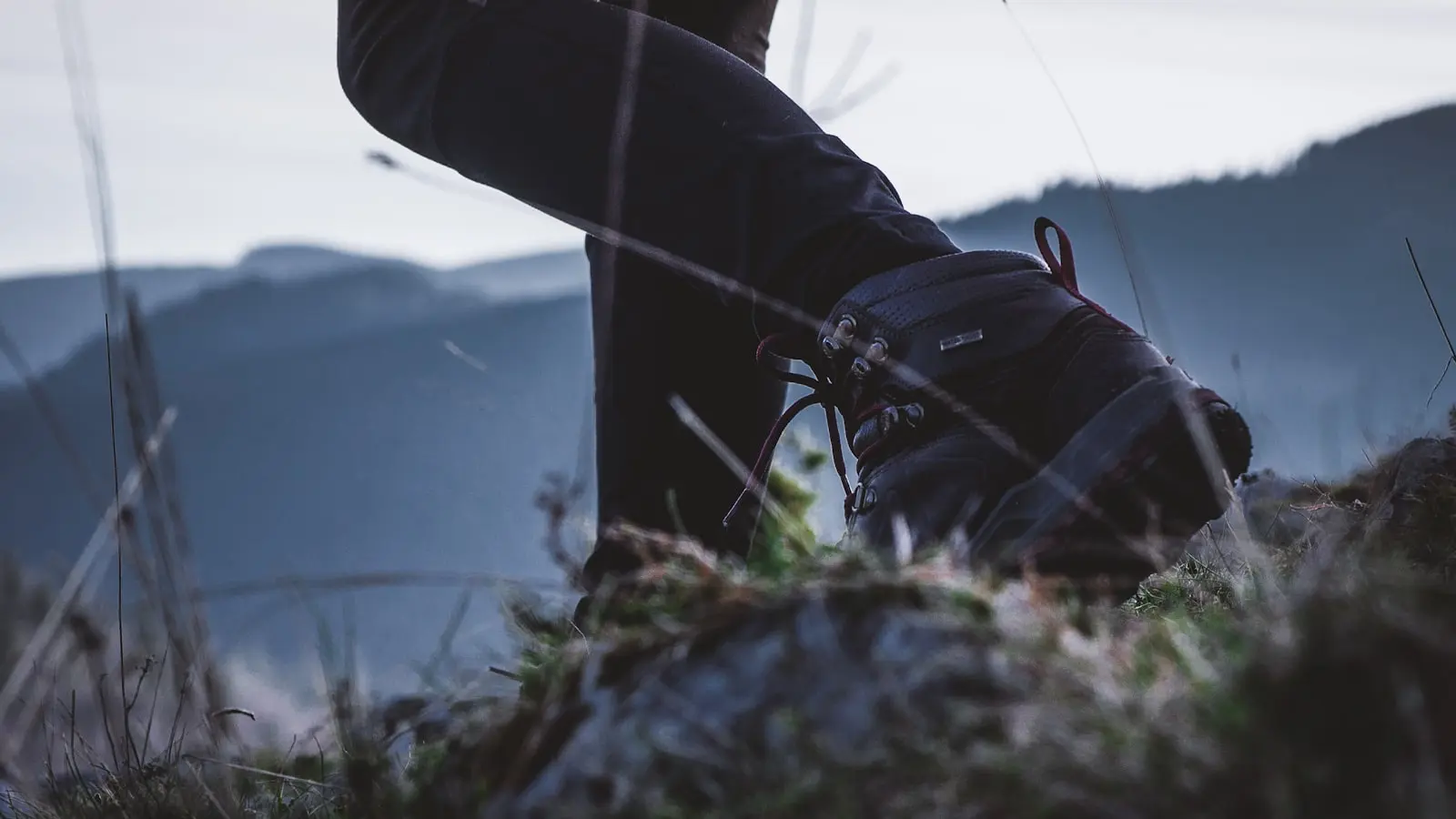
Blisters are a common reason trekkers stop early. Prevent them before they form. Choose boots or trail runners that are breathable and broken in over several weeks. A lightweight trail runner is adequate for Kalaw–Inle if you prefer less weight, but ensure they have enough tread for loose dirt and gravel. Ankle support is useful on uneven terrain, but not mandatory for moderate routes.
Wear merino wool or synthetic liners. Avoid cotton; it holds moisture and softens skin. Pack an extra pair of socks and change them during a long lunch stop. Blister management steps: Stop at the first hot spot. Apply moleskin or a blister pad. Do not pop a blister that has formed; instead, cushion it with a donut-shaped pad and tape. Carry a small blister kit with antiseptic wipes and medical tape.
Strengthen your feet with simple exercises: toe curls (pick up a towel with your toes), calf raises (slow, controlled), and single-leg balance holds. These improve stability on stones and roots, reducing the risk of rolled ankles.
Minimum Fitness Standards for a Moderate Myanmar Trek
A realistic benchmark: you should be able to hike 15 km with 500 m of elevation gain in 5–6 hours while carrying a 7–10 kg daypack, without stopping due to exhaustion. If you cannot do that, you may struggle on longer days.
Alternative tests for those without hills: walk 5 km on flat ground at a brisk pace (about 5 km/h) without a break, or climb 20 flights of stairs (or 200 step-ups) in one go without a rest. These give a rough idea of your baseline.
Can a non-hiker succeed? Yes. Many travelers with minimal hiking experience complete the Kalaw–Inle trek after 8–12 weeks of disciplined training. The key is consistency and specificity. If you follow the 8-week plan and simulate the conditions, your body will adapt. Even someone who rarely exercises can reach the benchmark with gradual progression.
Heart-rate wise, aim for 60–75% of your maximum heart rate during long hikes. That roughly corresponds to a pace where you are sweating but still able to talk. For short stair sections, your rate may spike to 80–85% – that is fine as long as you recover between pushes.
Frequently Asked Questions
How many weeks before my trip should I start training? 8–12 weeks is ideal. If you already exercise regularly, 6 weeks can work, but the injury risk is higher with shorter preparation. The 8-week plan above provides a safe progression.
What is the minimum fitness level to complete a Kalaw–Inle trek without injury? You should be able to comfortably walk 10 km on varied terrain and climb 200+ steps without stopping. Before departure, aim to hike 15 km with 500 m of elevation gain while carrying your trek pack.
Can I train effectively if I don’t have hills near me? Yes. Use step-ups on a sturdy box or stair climber machine. Set a treadmill to its maximum incline and walk at a steady pace. Gradually increase pack weight. Core and leg exercises like lunges, squats, and calf raises build the necessary muscle groups. The key is to mimic the vertical displacement and load of the actual trail.