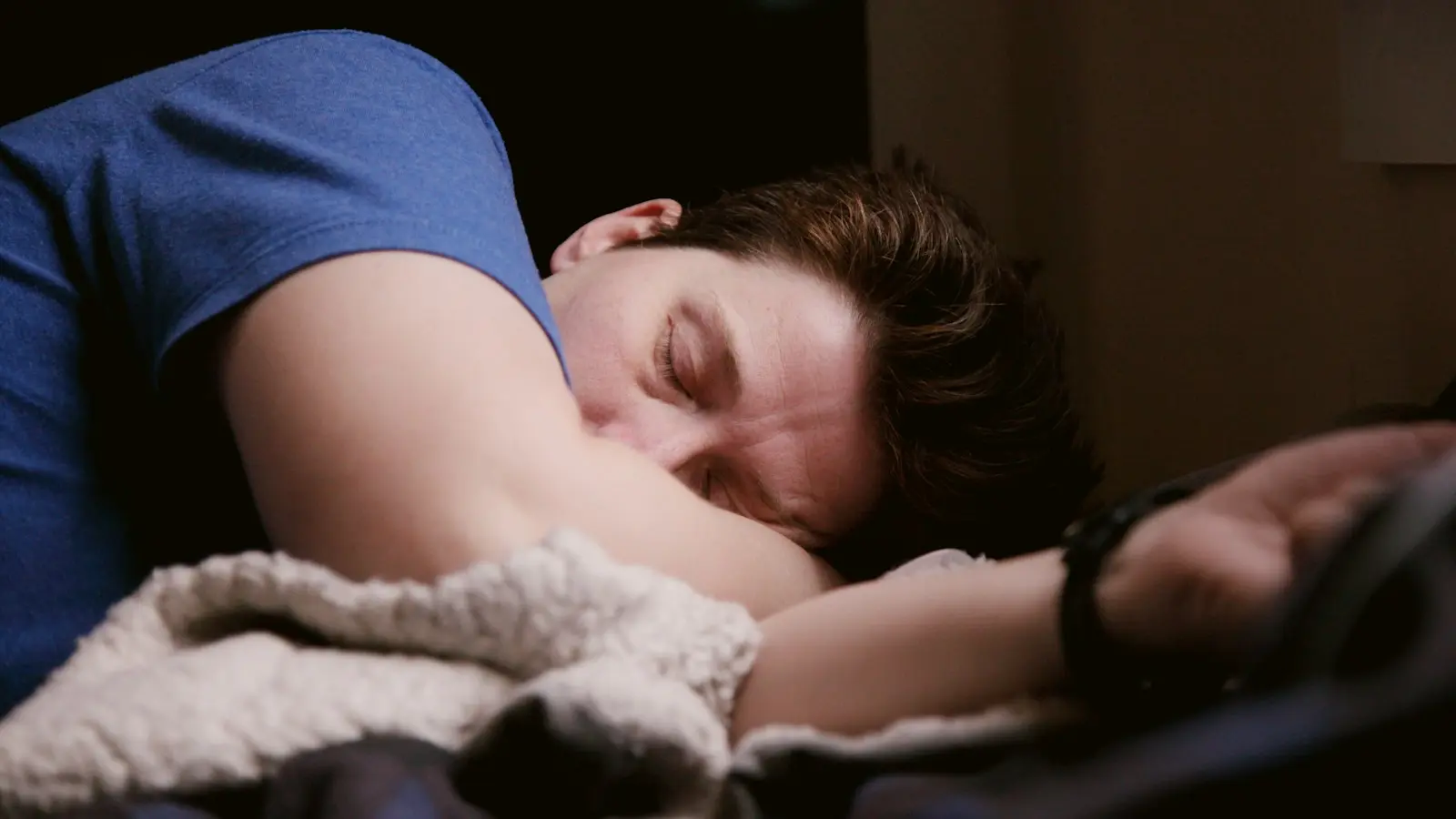
A hard workout does not automatically mean you need a fixed number of extra hours, but it can increase the value of a full night of restorative sleep. For most people, the best approach is to protect their usual healthy sleep range, allow additional time in bed when training load is unusually high, and adjust the next workout if fatigue, poor coordination, pain, or illness symptoms persist.
Key Takeaways
- Start with the sleep range that normally leaves you rested, then allow more time for sleep during unusually demanding training periods.
- One short night may affect alertness, coordination, mood, and perceived effort, but it does not automatically undo recovery.
- Sleep quality matters alongside total hours; pain, overheating, hunger, caffeine, stress, and late intense exercise can disrupt it.
- A nap or longer sleep opportunity may help after missed sleep, but neither replaces nutrition, rest days, sensible training, or medical care.
- Persistent fatigue, excessive daytime sleepiness, worsening pain, or declining performance warrants a training adjustment and possibly professional assessment.
Why sleep matters for workout recovery
During sleep, the body shifts toward processes that support restoration and adaptation. Muscle and connective tissues receive time away from mechanical loading, while the nervous system processes physical stress, movement patterns, and the demands of the day. Sleep also supports hormonal and metabolic regulation, although the exact effect varies with sleep stage, health, nutrition, and individual biology.
This does not mean that sleep works like an instant repair switch. Training adaptation depends on the combined effect of exercise, adequate food, hydration, rest periods, and gradual progression. Sleep provides an important setting for those processes, but it cannot compensate indefinitely for excessive training or inadequate energy intake.
Sleep loss can affect the brain as well as the muscles. Reduced sleep may impair concentration, reaction time, decision-making, mood, and coordination. It can also change how strenuous exercise feels, so a familiar workout may seem unusually difficult even when your strength has not changed dramatically.
Appetite and glucose regulation are relevant too. Poor sleep can make hunger and food choices harder to manage for some people, while fatigue may reduce motivation to prepare balanced meals. These effects are not identical in everyone, but they help explain why poor sleep after exercise can influence the following day’s recovery beyond simple tiredness.
The main practical point is that sleep needs are individual. Age, baseline sleep, training volume, work or school demands, illness, stress, and genetics all matter. A recreational exerciser, an endurance athlete in a heavy training block, and a teenager playing multiple sports should not assume that one universal sleep target fits them all.
How much sleep should you aim for after unusually hard training?
Start with the sleep range generally recommended for your age, then consider whether a demanding training period requires more opportunity for sleep. Adults commonly need at least seven hours, while many function better with more. Teenagers generally need more than adults, and younger children need more still. These are starting points, not guarantees of optimal recovery for every person.
After a normal workout, your usual sleep schedule may be sufficient if you wake refreshed, maintain normal performance, and do not develop accumulating soreness or fatigue. After an unusually hard session, competition, long endurance event, or series of intense training days, it is reasonable to give yourself more time in bed if your schedule allows.
“More time in bed” does not necessarily mean forcing yourself to sleep for a precise number of extra hours. An earlier bedtime, a later wake time, or a protected opportunity to sleep without an alarm may be more useful than watching the clock. If you naturally sleep longer after a heavy training day, that can be a sign that your body is responding to increased demand, although it is not the only explanation.
One short night can affect alertness, mood, coordination, reaction time, and perceived effort without automatically causing major harm. You may be able to complete the next workout, but it may be wise to lower the intensity, avoid technically demanding movements, or postpone maximal efforts if you feel unusually slow or unsteady.
A longer sleep opportunity on the following night can help restore alertness and reduce some effects of lost sleep. However, it cannot reliably erase all accumulated sleep debt, and it does not replace food, rest days, or sensible load management. Recovery is better viewed as a pattern across several days than as a single night that either fixes or ruins a workout.
A nap may also help, particularly when poor sleep was unusual and nighttime sleep is not likely to be disrupted. A shorter nap earlier in the afternoon is less likely to interfere with bedtime than a long or late nap. Individual responses differ, so use your nighttime sleep and next-day alertness as the guide rather than assuming that every nap is beneficial.
Sleep duration versus sleep quality after exercise
Total sleep time matters, but uninterrupted and reasonably regular sleep matters too. Eight hours in bed with repeated awakenings may not feel as restorative as a shorter but continuous night, although duration should not be dismissed simply because sleep quality is difficult to measure at home.
Hard training can interfere with sleep through several routes. Muscle soreness or joint pain may make it difficult to find a comfortable position. Sweating, a warm bedroom, dehydration, hunger, stimulants, alcohol, stress, and a late high-intensity session can all contribute to delayed sleep or nighttime awakenings.
A very large meal immediately before bed may be uncomfortable, while going to bed hungry after a demanding workout can also be disruptive. A balanced post-workout meal or snack that includes carbohydrates and protein may be practical when it fits your dietary needs and digestion. There is no single required recovery meal, and food choices should account for allergies, medical conditions, and personal tolerance.
Poor sleep after exercise may show up the next day as slower reactions, reduced concentration, irritability, stronger cravings, or a higher perceived effort during training. These effects do not prove that tissue damage has occurred, and one poor night should not be treated as an injury diagnosis. The more meaningful concern is a recurring pattern of inadequate or disrupted sleep combined with declining performance or persistent fatigue.
Injury risk also requires cautious interpretation. Poor sleep may be associated with factors that make training less safe, such as impaired attention, slower responses, altered movement control, or reduced willingness to modify a workout. But one short night does not directly predict that you will be injured, and sleep is only one part of injury prevention.
Can a late workout improve or disrupt sleep?
Exercise overall often supports sleep, but the response to late-evening training is personal. A moderate session may help some people feel relaxed, while vigorous exercise close to bedtime may leave others physically warm and mentally alert. The effect can depend on intensity, duration, workout type, caffeine use, stress, and how soon the session ends.
Body temperature and arousal are two plausible reasons timing can matter. Hard exercise temporarily raises body temperature and activates systems involved in effort and alertness. Some people settle quickly after a cool-down; others need more time before they feel ready to sleep.
Do not assume that late workouts are universally harmful. Test your own response over several comparable sessions. Note when you finish, how intense the workout was, when you got into bed, how long it seemed to take to fall asleep, whether you woke during the night, and how you felt the next day.
If late training repeatedly delays sleep, try ending vigorous exercise earlier, reducing intensity near bedtime, or replacing the final portion with easy movement and mobility work. A gradual cool-down, a comfortable and cool sleep environment, adequate fluids, and limiting late caffeine may improve the chance of restorative sleep. Avoid overhydrating immediately before bed if bathroom trips repeatedly interrupt your sleep.
A practical recovery decision framework
After a hard workout, assess more than the number of hours you slept. Ask:
- Was sleep long enough for your normal needs, and did it feel reasonably continuous?
- Do you have unusual soreness, sharp pain, swelling, or restricted movement?
- Do you feel alert and coordinated, or unusually slow, dizzy, or sleepy?
- Has your mood changed substantially, or does the workout feel harder than expected?
- Have you trained hard for several consecutive days?
- Are you experiencing fever, respiratory symptoms, gastrointestinal illness, or another sign of being unwell?
- Has your performance declined across several sessions rather than just one?
If sleep was slightly short but you feel normal, an ordinary workout may be reasonable, although a maximal effort may not be the best choice. If you slept poorly and feel sluggish, reduce the load, shorten the session, choose low-risk technique work, or take an easier day. Poor coordination, severe sleepiness, illness symptoms, or significant pain are reasons not to push through simply because a workout was planned.
A nap can be useful when it restores alertness without delaying bedtime. If naps leave you groggy, make it difficult to fall asleep at night, or become necessary every day to function, focus on the underlying sleep schedule and consider professional guidance.
Persistent fatigue deserves more attention than a single late night. Seek medical or sports-medicine assessment for ongoing excessive daytime sleepiness, unexplained performance decline, recurrent injuries, severe or worsening pain, or fatigue that does not improve with reduced training and adequate sleep opportunity. Loud snoring, witnessed pauses in breathing, gasping during sleep, or morning headaches may also indicate a sleep problem that warrants evaluation.
Sleep is one part of workout recovery, not a substitute for adequate nutrition, hydration, rest days, progressive training, and medical care. The most useful target is not a magic number after every hard workout. It is a sustainable sleep pattern that leaves you reasonably alert, coordinated, and able to train without repeatedly borrowing from your recovery.
FAQ
How much sleep do athletes need after a hard workout?
There is no universal athlete-specific number. Start with the age-appropriate sleep range recommended for the general population, then allow more sleep opportunity during unusually heavy training, competition, or repeated hard sessions. Your morning alertness, mood, soreness, performance, and need for naps can help show whether your current schedule is adequate.
Does sleeping longer the next night make up for one night of poor sleep after exercise?
It can help restore alertness and support recovery, but it may not completely erase the effects of lost sleep. A longer sleep opportunity is most useful when combined with sensible training, adequate food and fluids, and a return to a regular schedule. Avoid treating one long night as permission to ignore persistent fatigue.
Is it bad to work out late at night if I have trouble sleeping afterward?
Not necessarily, but the timing or intensity may not suit you. Track how different workout types and finish times affect sleep, then move vigorous sessions earlier or add a longer cool-down if needed. If sleep remains poor despite adjustments, examine caffeine, stress, pain, bedroom conditions, and possible sleep disorders with a clinician.