Full movement after a neck injury can be encouraging, especially when it refers to purposeful movement returning or remaining in the legs or arms. However, it does not automatically mean that the spinal cord, nerves, bones, ligaments, or surgical site have fully healed. It also does not establish that a person is ready to exercise, drive, lift, compete, or resume contact sports.
The meaning depends on what “full movement” describes, how movement was assessed, the type and location of the injury, neurological findings, imaging, treatment, symptoms, and changes over time. A brief update may describe one reassuring function without providing the complete medical picture.
Key Takeaways
- Movement in the legs or arms may indicate preserved or returning motor function, but it is only one part of recovery.
- Visible movement does not prove that the spinal cord, nerves, bones, ligaments, or surgical site have healed.
- Clinicians also assess strength, sensation, reflexes, coordination, balance, breathing, symptoms, and spinal stability.
- Returning to exercise, driving, work, or sports requires individualized medical clearance, not just restored movement.
- New or worsening weakness, numbness, difficulty walking, breathing problems, or loss of bladder or bowel control require urgent evaluation.
What lower-body movement can indicate
Motor function means the ability to produce purposeful movement. It depends on communication between the brain, spinal cord, peripheral nerves, and muscles. If a person can move both legs on command after a neck injury, that may suggest that important motor pathways are preserved or functioning better than feared.
That is meaningful information, but the phrase “full lower-body movement” can describe a range of clinical situations. It might refer to the ability to move the hips, knees, ankles, or toes. It may not describe how strong the movement is, whether both sides are equal, whether movement is controlled, or whether the person can stand and walk safely.
Movement in the legs is also different from normal neck movement. A person may have good leg movement while still having neck pain, restricted range of motion, muscle weakness, altered sensation, or an injury that requires protection and follow-up. Leg movement does not necessarily show whether the arms, hands, breathing muscles, or balance systems are functioning normally.
Clinicians may also assess sensation, including awareness of touch, pain, temperature, or limb position when relevant. Reflexes, coordination, balance, walking, fatigue, pain, and bladder or bowel changes can provide additional information. These findings may not be visible in a brief update, but they can substantially affect the assessment of spinal injury movement and recovery.
For that reason, restored movement should be understood as one neurological recovery sign, not as a complete prognosis. It can offer legitimate reassurance while leaving important questions unanswered.
Why movement alone cannot establish recovery
Visible movement does not prove that the spine is stable or that injured tissues have healed. Depending on the event, a neck injury may involve a fracture, disc, ligament, nerve root, spinal cord, muscle, or more than one structure. Some of these problems cannot be judged reliably by watching someone move a limb.
A person may have enough strength to move but still have reduced sensation, poor coordination, abnormal reflexes, or symptoms that appear with standing and walking. Pain and fatigue can also limit function even when basic movement is present. Neurological changes may evolve, which is one reason clinicians assess patterns over time rather than relying on a single observation.
It is useful to separate three different ideas:
- An encouraging movement update reports that a particular function is present or has returned.
- A complete medical assessment combines the history, examination, symptoms, imaging, treatment response, and observation.
- Clearance for normal activity means the treating team believes a specific activity is appropriate at that stage of recovery.
These statements are not interchangeable. Someone can have an encouraging movement update without completing the assessment needed for unrestricted activity. They may also be improving while still needing a brace, surgery, rehabilitation, activity restrictions, or additional imaging.
The injury level and structure involved matter as well. An injury affecting the spinal cord may produce different findings from one affecting a nerve root, vertebra, disc, or neck muscle. The same visible movement can have different implications in different patients. This is why generalized recovery timelines and comparisons with another person can be misleading.
How clinicians assess neurological recovery
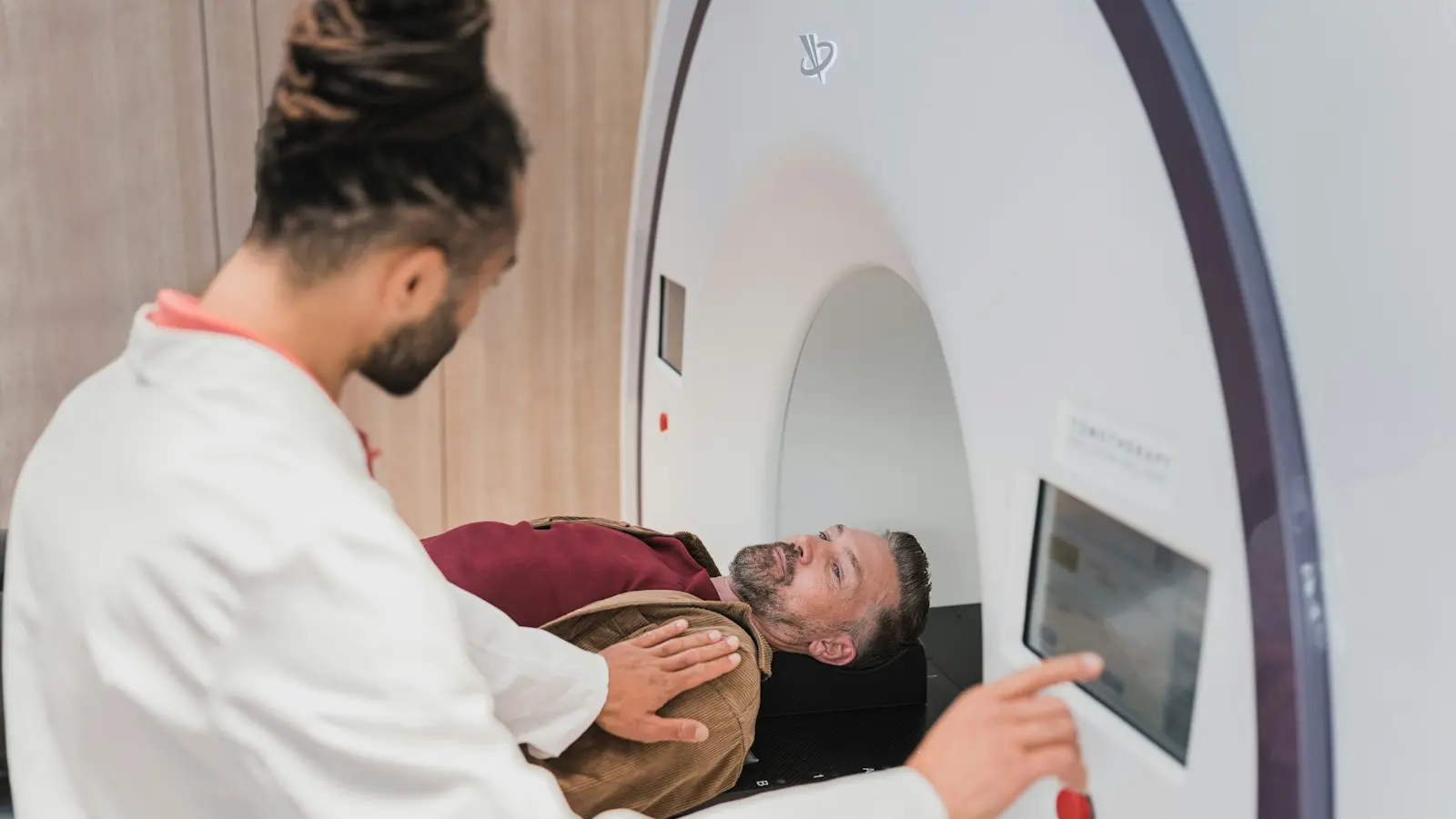
A neurological assessment is broader than asking whether someone can move. The clinician may test specific muscle groups, compare the right and left sides, and assess movement against resistance. This helps distinguish simple movement from meaningful strength and can identify patterns associated with a particular area of nerve or spinal cord involvement.
Sensation may be tested using appropriate clinical methods. The goal is to determine whether the person can detect and describe different sensations and whether there are differences between body regions or sides. A person who can move a leg but cannot feel it normally has a different clinical picture from someone with normal movement and sensation.
Reflexes may provide additional information about how nerve pathways are functioning. Clinicians may also observe coordination, balance, walking ability, transfers, and practical tasks. These observations help show whether movement is controlled and useful, rather than merely present for a brief examination.
Breathing is particularly important when an injury could affect the upper spinal cord or the muscles involved in respiration. Pain, swallowing difficulty, alertness, and other symptoms may also influence the evaluation. Bladder or bowel changes can be important neurological warning signs and should not be dismissed simply because a person can move their limbs.
Repeated examinations are common because recovery can change over time. A follow-up assessment can identify improvement, persistent deficits, or a new change that was not apparent earlier. Differences between examinations may be more informative than one isolated result, especially after a significant impact or procedure.
Imaging may also be needed, depending on the suspected injury and the clinician’s judgment. Different forms of imaging can help evaluate bones, alignment, narrowing, compression, soft tissues, or healing after treatment. Imaging does not answer every question, and a scan must be interpreted alongside the physical examination and symptoms. Conversely, reassuring movement does not replace imaging when structural stability needs to be assessed.
Only the treating team can interpret these findings together for an individual. General information can clarify terms, but it cannot determine whether a particular neck injury is stable or healed.
Why follow-up matters before returning to activity
Return to activity after an injury is usually a progression, not a single decision. A person may be allowed to perform selected daily activities before being cleared for running, heavy lifting, driving, resistance training, contact sports, or competition. Each activity places different demands on the neck, spine, balance, reaction time, and surrounding muscles.
Clinicians may consider neurological findings, spinal stability, imaging, pain control, strength, coordination, movement quality, endurance, and the risk of another impact. The demands of the person’s work or sport also matter. A recreational walker and a collision-sport athlete do not face the same mechanical or safety requirements.
Rehabilitation can help restore strength, mobility, balance, and confidence, but exercises should be selected and progressed according to the injury and treatment plan. This is especially important after a fracture, surgery, suspected spinal cord injury, or any situation in which the spine may need protection. A movement that is appropriate during supervised rehabilitation may not be appropriate as a self-test at home.
There is a practical trade-off. Appropriate movement can support function and reduce problems associated with prolonged inactivity, while advancing too quickly can aggravate symptoms or expose an incompletely healed injury to unnecessary stress. The safest plan is not automatically complete rest or rapid exercise; it is a staged plan directed by the treating clinician or rehabilitation professional.
Families can ask the care team:
- What exactly does “full movement” refer to in this assessment?
- Was strength tested in specific muscle groups, and was it equal on both sides?
- Were sensation, reflexes, coordination, balance, walking, and breathing assessed?
- What do the examination and imaging show about stability, healing, or compression?
- Which activities are safe now, and what findings would allow progression?
- Does the person need rehabilitation, additional imaging, or specialist follow-up?
- Which symptoms should prompt an urgent call or emergency evaluation?
These questions help turn a reassuring observation into a clearer recovery plan without overstating what it proves.
Neck injury warning signs that need urgent evaluation
After a significant neck injury, new or worsening neurological symptoms require prompt professional assessment. Important warning signs include weakness, numbness, loss of coordination, difficulty walking, severe or increasing neck pain, or a change in function after an impact.
Emergency symptoms can include trouble breathing, rapidly progressing weakness or numbness, inability to move an affected limb, loss of bladder or bowel control, or a major change in alertness. A person with these symptoms should not rely on general information or wait to see whether movement returns.
If an acute spinal injury is suspected, avoid unnecessary movement while emergency help is arranged. Do not bend, twist, or reposition the neck, and do not ask the person to test their range of motion. Emergency personnel can determine how to move and stabilize the person safely. If there is immediate danger, such as fire or another life-threatening situation, safety may require carefully moving the person; otherwise, keep them as still as possible and follow emergency-dispatch instructions.
Restored movement does not rule out a serious injury, and the absence of immediate symptoms does not always settle the question after a significant event. Professional assessment is especially important when symptoms are changing or when the person has not yet been evaluated.
FAQ
Does full movement after a neck injury mean the spinal cord is completely healed?
No. Full movement in one area can be reassuring, but it cannot establish that the spinal cord is healed or that the spine is stable. Strength, sensation, reflexes, coordination, symptoms, imaging, and follow-up findings all contribute to the assessment.
Can someone move their legs and still have a serious neck injury?
Yes. Preserved leg movement can coexist with structural injury, nerve symptoms, pain, instability, breathing problems, or other neurological changes. The movement must be interpreted in the context of a complete medical evaluation.
When is it safe to return to normal activity after a neck injury?
There is no universal timetable. Clearance is individualized and may depend on symptom improvement, neurological examination, imaging, strength, coordination, functional progress, and the demands of the activity. Do not use another person’s recovery or a brief movement update as permission to resume exercise or sports.
Full movement after a neck injury is best viewed as one potentially positive piece of information. It may indicate preserved or returning motor function, but it does not replace a neurological examination, imaging when indicated, follow-up, or individualized clearance. Encouragement and caution can both be appropriate: improvement matters, and the limits of what it proves matter just as much.