A safe beginner strength training plan does not need to be complicated. Start with two or three full-body sessions per week, use simple movement patterns, choose resistance you can control, and increase difficulty gradually. The goal is repeatable practice—not exhaustion, maximal lifts, or severe soreness.
For many generally healthy adults, muscle-strengthening activity on at least two days each week is a reasonable general target. However, the best schedule is the one you can perform consistently while allowing enough recovery and adapting to your health, equipment, and daily demands.
Key Takeaways
- Begin with two nonconsecutive full-body workouts per week; add a third only when recovery is manageable.
- Build sessions around squat, hinge, push, pull, and carry or bracing patterns.
- Choose a resistance that allows controlled repetitions with some effort left rather than training to failure.
- Progress gradually by improving consistency and technique before adding repetitions, load, or difficulty.
- Mild muscle soreness can be normal, but sharp pain, neurological symptoms, chest symptoms, or breathing difficulty are reasons to stop and seek appropriate guidance.
1. Set a realistic starting structure
A beginner plan should prioritize consistency, controlled technique, manageable effort, and recovery. These principles matter more than finding the perfect exercise or copying a demanding program designed for an experienced lifter.
Two nonconsecutive workouts per week are enough to establish a useful routine. For example, you might train on Monday and Thursday. If three sessions fit your schedule, Monday-Wednesday-Friday is a practical full-body workout schedule. Leave at least one day between demanding sessions when possible, especially during your first few weeks.
A session can often fit into 30 to 60 minutes, including a brief warm-up. If time is limited, perform one or two exercises from each major movement category rather than trying to complete a long list. A shorter workout that you repeat is more useful than an ambitious plan that you abandon.
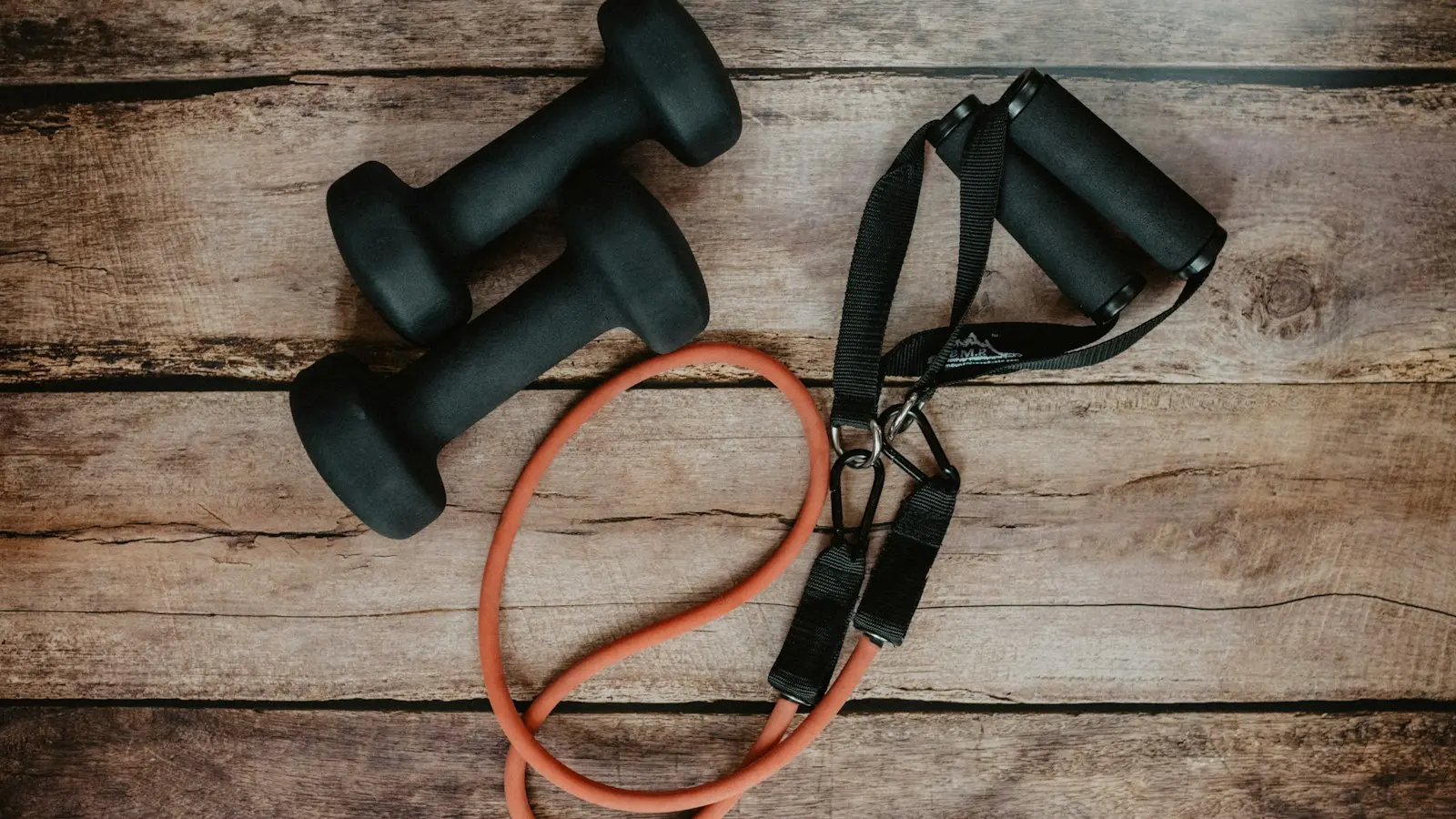
At home, resistance can come from body-weight exercises, resistance bands, dumbbells, a backpack with stable contents, or other household objects that are easy to grip and control. Equipment should not shift unexpectedly, break, or create a trip hazard. If an object is awkward or unstable, choose an easier variation.
Consider medical or qualified exercise-professional guidance before beginning if you have chest symptoms, unexplained dizziness, significant breathing difficulty, a diagnosed condition that affects exercise, recent surgery, a substantial physical limitation, or concerns related to pregnancy or medication. Individualized guidance can help you adapt training rather than guess.
2. Build each workout around fundamental movement patterns
A balanced beginner routine can be organized around five broad patterns:
- Squat or sit-to-stand: chair squats, body-weight squats, or supported squats
- Hinge: a hip hinge, light Romanian deadlift, or elevated deadlift variation
- Push: wall push-ups, incline push-ups, dumbbell presses, or overhead presses when appropriate
- Pull: resistance-band rows, cable rows, dumbbell rows, or a supported pulling exercise
- Carry, brace, or anti-rotation: a light suitcase carry, farmer carry, dead bug, plank variation, or controlled bracing drill
You do not need to perform every pattern in every workout, but your weekly plan should include a reasonable balance of pushing, pulling, lower-body work, and trunk control. A basic session might include one squat pattern, one hinge or lower-body pattern, one push, one pull, and one carry or bracing exercise.
Choose exercises using four criteria: a stable setup, a comfortable range of motion, a technique you can understand, and resistance that matches your current ability. The most advanced version of an exercise is not automatically the best choice for a beginner.
Useful substitutions make a plan easier to maintain. Try a chair sit-to-stand instead of a free squat, an incline push-up against a sturdy counter instead of a floor push-up, or a band row instead of a machine or barbell row. A loaded carry can use a light dumbbell, backpack, or household object if it can be held securely without leaning or losing control.
Begin each workout with several minutes of general movement, such as easy walking, cycling, or gentle mobility. Then perform one or more practice sets with little or no resistance. A warm-up can help you rehearse the movement and notice how your body feels, but it is not a guarantee against injury.
3. Choose sets, repetitions, and effort without training to failure
A conservative starting point is one to three working sets per exercise, using a moderate repetition range that you can complete with control. Many beginners can start with approximately 6 to 12 repetitions for resistance exercises, or a shorter timed interval for movements such as planks or carries. The exact number matters less than maintaining repeatable technique.
Select a load that allows you to finish the set while feeling that several technically sound repetitions remain available. You should be able to stop before your range of motion shortens, your posture changes substantially, or you begin using momentum. This approach is often described as leaving repetitions in reserve.
For example, if you can perform 10 controlled chair squats but the final two become unstable, the resistance or difficulty is probably too high for that set. If all 10 repetitions feel effortless and you could easily do many more, the exercise may be too easy, although an easy first session can be appropriate while you learn the movement.
Rest between sets according to the exercise, resistance, fitness level, and how quickly your breathing and control return. A short rest may be sufficient for an easy body-weight movement, while a more demanding lower-body exercise may require several minutes. Start the next set when you can perform it safely rather than using the clock as a test of toughness.
Common beginner lifting mistakes include starting too heavy, adding too many exercises, rushing repetitions, repeatedly training to failure, holding the breath unnecessarily, and copying an advanced program. Brief bracing during a challenging repetition can be useful, but avoid prolonged breath-holding or straining, particularly if you have a condition that makes this a concern.
4. Progress gradually while protecting recovery
Progression means giving your body a gradually greater challenge over time. It does not require adding weight every workout. A simple sequence is to establish consistency first, improve technique, add repetitions within your chosen range, and then make a small increase in resistance or exercise difficulty when performance is repeatable.
Suppose you perform two sets of eight repetitions with a dumbbell row. Over several sessions, you might build toward two sets of 10 or 12 with the same controlled technique. Only then might you use a slightly heavier dumbbell and return to the lower end of the repetition range. If the heavier load causes twisting or shortened repetitions, return to the easier resistance.
Progress can also mean improving range of motion, reducing assistance, using a slower controlled tempo, or completing the same work with better coordination. These options are useful when you have limited equipment or when increasing load is not appropriate.
A two-day sample schedule could look like this:
- Monday: squat or sit-to-stand, hip hinge, incline push-up, band row, and suitcase carry
- Thursday: split-squat or chair-squat variation, light deadlift variation, dumbbell press, band row or supported row, and dead bug
For three sessions, use a similar full-body structure on Monday, Wednesday, and Friday, but keep one or two exercises easier on the middle day. You could also repeat the same routine with fewer sets rather than adding more exercises. There is no need to make every session equally difficult.
Strength training recovery includes rest days, adequate food and fluids, sufficient sleep when possible, and avoiding abrupt increases in volume or intensity. Recovery is also affected by work demands, stress, illness, and other physical activity. If you slept poorly or feel unusually fatigued, reduce the load, perform fewer sets, or use an easier variation.
A simple progress log can record the date, exercise variation, resistance, sets, repetitions, perceived effort, and any symptoms. You can also note whether the movement felt stable and whether soreness affected daily activity. This helps you identify gradual progress without relying on memory or forcing a predetermined increase.
Missing a workout is not a reason to double the next session. Resume with the planned or slightly reduced workload, especially if the missed session was related to illness, excessive soreness, or poor recovery.
5. Distinguish expected soreness from warning signs
New training can cause temporary muscle soreness, stiffness, or fatigue, particularly after unfamiliar movements. This discomfort may appear later rather than during the workout and should become more manageable over time. Soreness is not required for an effective session, and deliberately maximizing it is not a useful goal.
Stop or modify an exercise if you experience sharp, sudden, worsening, or joint-specific pain. Unusual swelling, numbness, new weakness, dizziness, chest symptoms, significant breathing difficulty, or a feeling that something is seriously wrong also warrants stopping rather than pushing through.
Persistent, severe, worsening, or unusual symptoms should be assessed by an appropriate healthcare professional. Seek urgent care for potentially serious symptoms such as chest pressure, severe breathing difficulty, fainting, or sudden neurological changes. A general article cannot determine whether a particular symptom represents an injury or another medical problem.
If soreness is excessive, reduce the next workout’s resistance, volume, or range of motion. Use an easier variation, extend the recovery period, and return gradually when normal movement feels comfortable. Do not treat pain medication or the ability to tolerate discomfort as proof that an exercise is safe to continue.
Imperfect technique does not automatically make resistance training unsafe. Beginners are learning, and small adjustments are normal. The important safeguards are a suitable exercise variation, controlled and repeatable movement, reasonable resistance, and a willingness to stop when symptoms or fatigue make control unreliable.
FAQ
How often should a beginner lift weights?
Two nonconsecutive days per week are a practical starting point for many beginners. A third full-body session can work if recovery is adequate and the workload remains manageable. More days are not automatically better; consistency and recovery should guide the schedule.
How sore should I expect to be after beginner strength training?
Mild, temporary muscle soreness or stiffness can occur after unfamiliar training, but severe soreness is not required for progress. If soreness changes your normal movement, persists, or is accompanied by swelling, weakness, numbness, or sharp pain, reduce training and consider professional assessment.
When should I increase the weight or difficulty?
Increase resistance after you can complete the planned repetitions with stable, repeatable technique and controlled effort across repeated sessions. Make a small change, then return to the lower end of your repetition range. If form deteriorates or symptoms appear, use the previous variation or resistance.
A good beginner strength training plan is adjustable rather than rigid. Start with a small number of movements, practice consistently, recover between sessions, and progress only when your performance supports it. That approach leaves room for real-life schedules, limited equipment, changing energy levels, and the uncertainty that comes with learning a new skill.