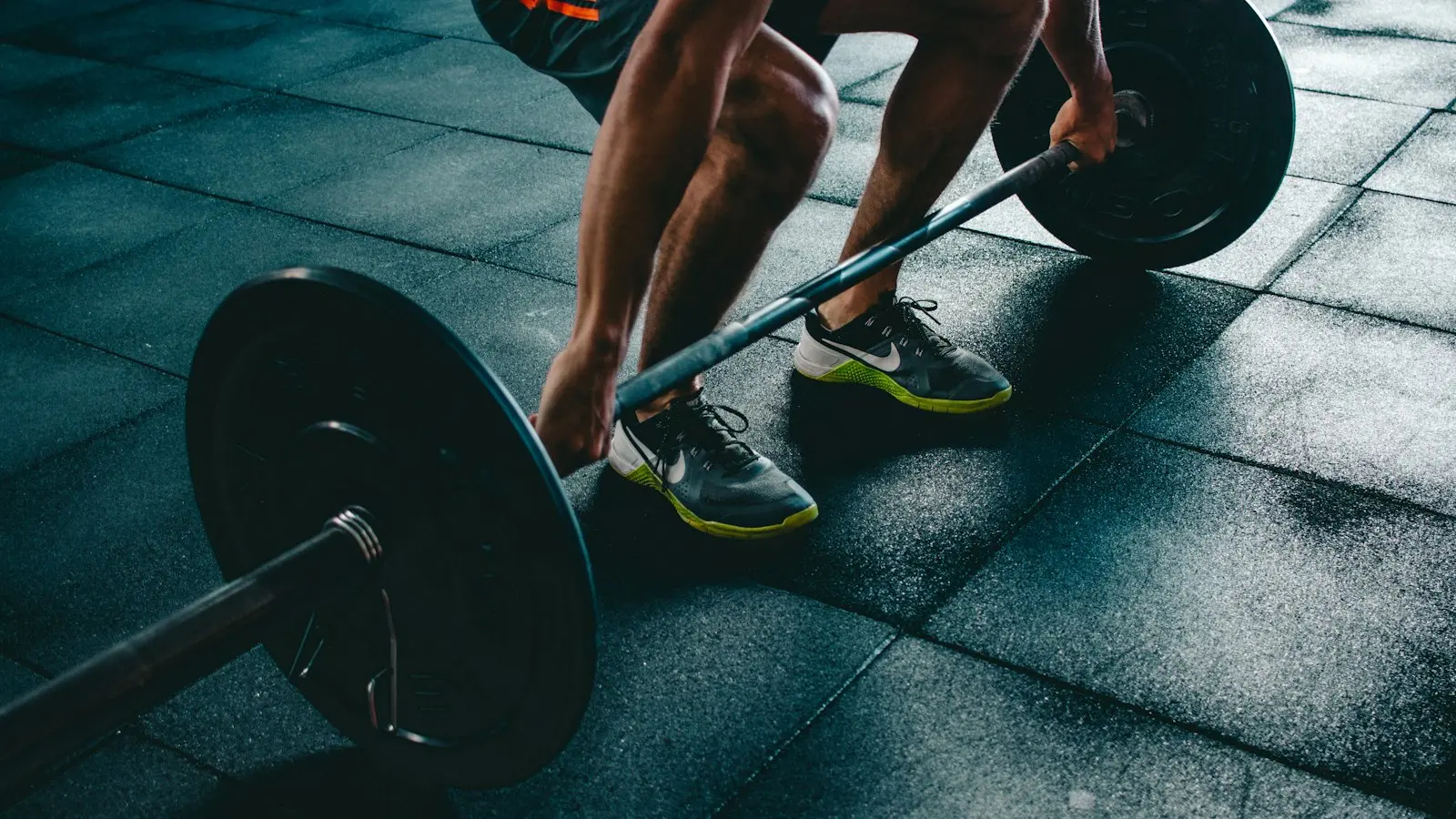
Soreness after starting or restarting strength training is often caused by delayed onset muscle soreness, or DOMS. The safest way to reduce workout soreness is usually a combination of gentle movement, adequate sleep, enough food and fluids, and temporarily adjusting training rather than pushing through severe pain. Comfort measures such as heat, cold, or massage may help some people, but they do not treat an underlying injury.
The first step is to decide whether the discomfort follows a typical soreness pattern. If pain is sharp, severe, one-sided, associated with swelling or weakness, or accompanied by dark urine or markedly reduced urination, stop exercising and seek medical care.
Key Takeaways
- DOMS commonly follows unfamiliar or unusually demanding exercise, but soreness does not prove that a workout was effective.
- Gentle movement may ease stiffness, but rest or modified activity is better when movement increases pain or changes how you move.
- Sleep, adequate food, protein, and fluids support normal recovery; no supplement or comfort measure is a guaranteed cure.
- Progress training gradually instead of chasing soreness or repeating hard sessions before normal movement returns.
- Severe, worsening, one-sided, swollen, weak, numb, or dark-urine-associated symptoms require medical assessment.
Understand why unfamiliar strength training causes soreness
DOMS is muscle discomfort and stiffness that develops after unfamiliar or unusually demanding exercise. It may not be obvious during the workout; symptoms often become more noticeable later and can be most troublesome during the following day or two. The timing and intensity vary between people.
New exercises, a sudden increase in sets or repetitions, heavier loads, and movements that emphasize the lowering phase can all increase the chance of soreness. For example, someone returning to exercise may feel substantial thigh soreness after squats or lunges, even if the workout seemed manageable at the time.
This response is related to temporary stress placed on muscle tissue and surrounding structures. It does not mean that the muscles are permanently damaged, and it is not a reliable measure of workout quality. A productive training session may cause little soreness, while an overly ambitious session may cause a great deal without producing better results.
Recovery time depends on several factors, including previous training experience, exercise selection, workout volume, sleep, nutrition, health conditions, and how quickly training demands were increased. Rather than expecting a fixed timeline, look for a gradual trend toward less discomfort and better movement.
Tell normal muscle soreness apart from an injury
Typical DOMS usually affects muscles that were used during training. It often feels like tenderness, stiffness, heaviness, or a dull ache on both sides of the body, such as soreness in both thighs after a lower-body workout. Movement may feel uncomfortable at first but can become easier as the muscles warm up, and symptoms should generally trend toward improvement.
An acute injury may have a different pattern. Be more cautious with pain that begins suddenly during a specific repetition, feels sharp or tearing, is concentrated in a joint or tendon, or is clearly worse on one side. Significant swelling, bruising, loss of normal movement, numbness, or substantial weakness also deserves professional assessment rather than routine DOMS care.
Pain that worsens instead of gradually improving is another reason to pause and reassess. So is discomfort that changes how you walk, lift, grip, or use the affected area. These symptoms do not prove that an injury has occurred, but they are less consistent with uncomplicated post-exercise soreness.
Do not use pain medication or other pain-relieving measures to ignore warning symptoms and continue demanding training. Reducing pain can make it harder to recognize that a muscle, tendon, joint, or other structure needs rest and evaluation.
Use low-risk recovery habits while soreness settles
For ordinary soreness, gentle movement is often more useful than remaining completely still. An easy walk, relaxed cycling, or comfortable range-of-motion movements can reduce the feeling of stiffness for some people. Keep the effort low enough that it does not significantly increase pain, alter your movement pattern, or cause new symptoms.
A simple test is whether you feel the same or better after the activity and later that day. If a walk or mobility session makes the area noticeably more painful, scale it back or rest instead. Active recovery is not a requirement; complete rest may be reasonable when movement is uncomfortable or soreness is severe.
Avoid hard training for a muscle group that is severely sore, weak, or difficult to move normally. You may be able to train another area or perform a modified session, but only if the change does not shift stress to the painful region. A lower-intensity workout is not automatically safe if it still reproduces significant pain.
Sleep is a foundation of strength-training recovery. During sleep, the body supports normal tissue repair and regulates processes involved in recovery. There is no guaranteed number of hours that makes soreness disappear, but protecting a consistent sleep routine is more sensible than relying on increasingly intense recovery tactics.
Food also matters. Adequate overall energy and protein provide building blocks for normal muscle repair, while regular meals can support training and recovery. A particular protein product, supplement, or meal-timing strategy is not a guaranteed DOMS treatment. If you have kidney disease, another medical condition, or dietary restrictions, discuss significant nutrition changes with a qualified clinician.
Fluids support normal body function, especially when you have been sweating. However, forcing a specific amount of water does not cure muscle soreness, and more is not always better. Drink regularly according to thirst, activity, climate, and individual medical advice. Replace fluids appropriately after substantial sweating without treating hydration as a substitute for rest.
Heat, cold, massage, and gentle self-massage are optional comfort measures. Heat may make stiff muscles feel more relaxed, while cold can temporarily reduce discomfort for some people. Massage may help short-term comfort and mobility, but vigorous pressure on a painful or swollen area can aggravate a problem. These approaches may change how you feel without addressing the underlying cause, so use them gently and stop if symptoms worsen.
Stretching can feel relieving when it is mild and comfortable, but aggressive stretching is not necessary and may irritate an already painful muscle or tendon. Avoid forcing a range of motion or treating discomfort as a signal to stretch harder.
Reduce future soreness through gradual progression
The most dependable way to reduce workout soreness over time is to make new training demands manageable. Beginners and people returning after a break should start with loads, sets, repetitions, exercise complexity, and frequency that allow good technique and controlled movement.
You do not need to make every set maximally challenging. Leave room to assess how your body responds over the next day or two, particularly when introducing an exercise that uses a lot of lowering, such as lunges, step-downs, or slow resistance movements.
When possible, change one major training demand at a time. For example, avoid increasing weight, adding several sets, introducing multiple new exercises, and adding extra training days in the same week. Gradual progression makes it easier to identify what caused a flare in soreness and adjust the plan without abandoning exercise altogether.
Use symptoms, movement quality, and recovery as feedback. Mild, improving soreness may not require stopping all exercise, whereas substantial pain, weakness, or reduced range of motion calls for a more conservative approach. Once the affected area moves normally and daily activities are comfortable, resume training gradually rather than immediately repeating the hardest session.
A warm-up can prepare you mentally and physically for exercise and may improve how the session feels, but it is not a guaranteed way to prevent DOMS. A warm-up cannot compensate for excessive training volume, poor technique, or an abrupt increase in workload.
A coach, physical therapist, sports-medicine clinician, or other qualified exercise professional may help if soreness repeatedly limits training, you are unsure how to modify exercises, or you have a previous injury or medical condition. The goal is not to eliminate every sensation after exercise; it is to build a program your body can tolerate and progress consistently.
Know when self-care is not enough
Contact a clinician for persistent, worsening, severe, or recurrent soreness, especially when it is one-sided or centered in a joint or tendon. Swelling, bruising, restricted movement, substantial weakness, numbness, or difficulty using the limb also warrant assessment.
Seek urgent medical care after unusually hard exercise if severe muscle pain occurs with dark or cola-colored urine, markedly reduced urination, profound weakness, confusion, or widespread swelling. This combination can signal a serious exercise-related condition, including rhabdomyolysis, that cannot be safely managed with stretching, massage, or extra water at home.
Stop the triggering exercise when red flags appear. Do not wait for a self-care deadline if symptoms are severe or rapidly worsening. Even when the problem is less urgent, a clinician should evaluate symptoms that do not follow a gradual improvement pattern or that keep returning after modest exercise.
FAQs
Is it better to rest completely or move when muscles are sore after strength training?
For mild, typical soreness, easy movement and comfortable range-of-motion work may reduce stiffness. Choose complete or relative rest when movement significantly increases pain, causes new symptoms, or changes how you move. You can often modify activity, but avoid heavily loading a severely sore muscle group.
Does stretching, massage, heat, or cold reduce DOMS?
These methods may provide temporary comfort for some people, but their effects vary and none is a guaranteed cure. Use gentle stretching, light massage, or moderate heat or cold only when they feel better rather than worse. Avoid aggressive pressure or stretching on painful, swollen, bruised, or injured areas.
How long should I wait before training a sore muscle again?
Do not use a universal number of hours or days. Consider training the muscle again when soreness is clearly improving, normal movement and technique have returned, and everyday activities are comfortable. Restart with less demanding work if needed. If pain remains severe, worsens, or is associated with weakness, swelling, bruising, or restricted movement, seek professional advice instead of testing the muscle with another hard workout.