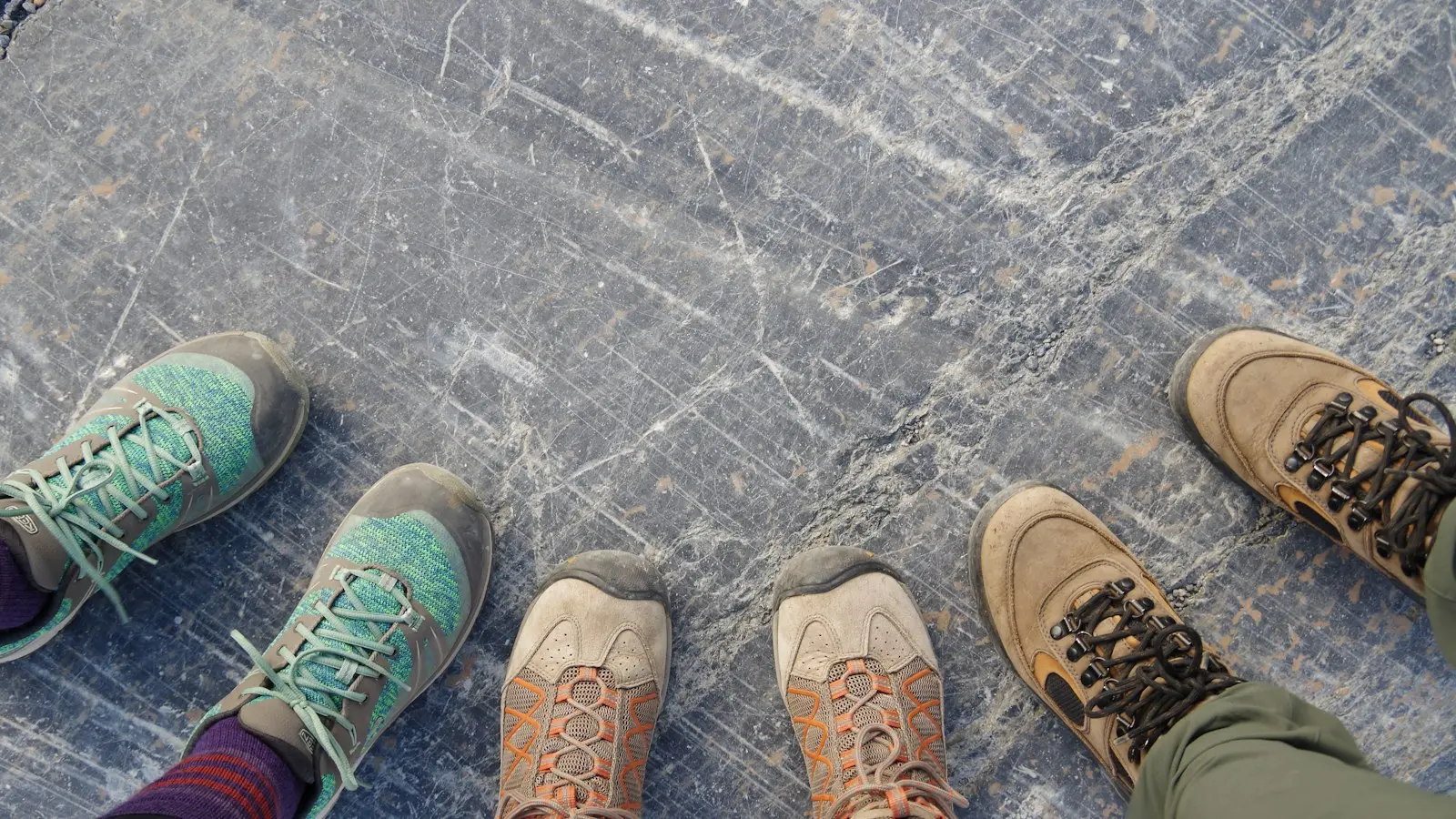
If you need to recover after walking all day, start with a simple sequence: remove tight or damp footwear, inspect your feet, protect any irritated skin, use comfortable gentle movement, elevate your legs if it relieves heaviness or swelling, drink according to thirst and conditions, eat normally if hungry, and sleep. Then decide whether tomorrow’s walking needs to be reduced.
The safest approach is symptom-based rather than mileage-based. Mild, diffuse tiredness that improves with rest is often different from sharply localized pain, significant swelling, numbness, an open wound, or pain that changes how you walk.
Key Takeaways
- Remove restrictive footwear, wash and dry your feet, and check for hot spots, blisters, cuts, swelling, and pressure marks.
- Use gentle movement, elevation, or a cool pack only when they feel comfortable; stretching is optional, not a cure-all.
- Replace fluids according to thirst and conditions, eat a normal meal or snack if hungry, and prioritize sleep.
- Reduce or stop next-day walking if you limp, develop worsening or focal pain, or cannot protect an injured area.
- Seek medical advice for severe or persistent pain, inability to bear weight, significant swelling, numbness, weakness, or signs of infection.
1. Tell Normal Post-Walk Fatigue From a Possible Injury
Sightseeing can place an unusual load on the feet and lower legs even when it does not feel like intense exercise. Travelers may walk farther than usual, spend hours standing in museums or queues, climb stairs, cross uneven streets, or move over hard pavement. Heat, dampness, unfamiliar shoes, and foot swelling later in the day can add to the strain.
Ordinary post-walk fatigue commonly feels like tired, mildly achy feet or calves on both sides. It should generally improve when you sit down, change footwear, rest, or sleep, and it should not substantially alter your walking pattern.
Pain deserves more caution when it is focal, worsening, severe, or associated with marked swelling, bruising, weakness, numbness, or an inability to bear weight. A limp is important information: it means the body is changing movement to protect an area, so continuing to walk through it may increase the load elsewhere.
Mileage alone cannot determine whether pain is harmless. A shorter walk in poorly fitting shoes can cause more trouble than a longer walk in comfortable, supportive footwear. Pay attention to location, function, skin changes, and whether symptoms are improving or escalating.
People with diabetes, circulation problems, reduced sensation, immunosuppression, delayed wound healing, or a previous foot injury should use a lower threshold for medical advice. Reduced sensation can make it harder to notice pressure or skin damage before it becomes more serious.
2. Use a Same-Evening Recovery Routine
When you return to your lodging, begin by removing restrictive shoes and socks. Wash your feet gently if they are sweaty or dirty, dry carefully—especially between the toes—and inspect the soles, heels, toes, and areas around the ankle.
Look for redness, hot spots, blisters, cuts, pressure marks, swelling, or skin that has become pale and softened from moisture. Early attention to a hot spot can prevent a small irritation from becoming a painful wound the next day.
Next, choose the position that feels best. Sitting or lying down with the legs slightly elevated may ease a sense of heaviness or visible swelling. Elevation is not required for every sore foot, and it should not replace assessment when swelling is substantial, one-sided, painful, or persistent.
Gentle movement can be useful if it feels comfortable. Try slow ankle circles, easy ankle pumps, or relaxed range-of-motion movements. A short, unhurried walk around the room may help stiffness, but do not force movement into sharp pain. Rest is more appropriate when even light movement increases symptoms.
Stretching is optional, not a cure-all. If your calves or the backs of your legs feel generally tight, a gentle stretch may feel pleasant. It should not cause sharp pain, tingling, or a stronger ache afterward. Stretching cannot correct an injured tendon, fracture, infected wound, or poorly fitting shoe.
For a sore or swollen area, a cool pack wrapped in cloth may provide temporary comfort. Keep it off bare skin and use it for a limited period rather than falling asleep with it in place. Avoid cooling areas with reduced sensation unless a clinician has specifically advised you how to do so, because skin injury may be harder to detect.
Replace fluids according to thirst, the heat, sweating, and your usual needs. Water is often appropriate after ordinary sightseeing. A normal meal or snack containing carbohydrates and protein can provide energy if you are hungry, but there is no need to follow a rigid recovery “window” or consume electrolyte products automatically. People with kidney, heart, or other medical conditions may need individualized fluid advice.
Finally, prioritize sleep. If your feet or legs are still noticeably painful in the evening, reduce the next day’s walking rather than assuming you can compensate with pain relief.
3. Treat Blisters and Prevent More Foot Damage
A hot spot is an area of burning or rubbing that may become a blister. Covering it early with a clean dressing or purpose-made blister covering can reduce friction. Keep the covering secure, dry, and compatible with the surrounding skin.
Avoid routinely popping an intact blister. The overlying skin can provide a natural protective barrier, while puncturing it creates an opening for contamination. A large, deep, blood-filled, or very painful blister may require professional assessment, particularly if you have diabetes, poor circulation, reduced sensation, or a history of slow wound healing.
If a blister has already opened, wash your hands and gently clean the area. Do not tear away attached skin unnecessarily. Protect it with a clean, non-stick dressing and change the dressing if it becomes wet or dirty.
Watch for increasing pain, spreading redness, warmth, pus or other drainage, fever, or redness extending away from the wound. These changes can indicate a problem that should be assessed rather than managed by repeatedly covering the area and continuing to walk.
To prevent walking blisters, choose dry, breathable socks without irritating seams and shoes that fit comfortably in both length and width. Feet often swell during a long day, so footwear that feels acceptable first thing in the morning may become restrictive later. Adjust laces to avoid pressure, but do not tighten them so much that they compress the forefoot or toes.
Do not test new shoes, unfamiliar insoles, or new socks on another demanding sightseeing day. Wear them for shorter periods first. If the shoe rubs in the lodging, it is unlikely to become safer after several more hours on pavement.
4. Decide Whether and How to Walk the Next Day
Before leaving, perform a practical check. Can you walk without limping? Is the pain mild and stable rather than increasing? Has swelling improved? Is any blister protected, and can your footwear accommodate it without rubbing?
If symptoms are mild but noticeable, reduce the load. Plan a shorter route, add seated breaks, choose flatter surfaces, combine walking with public transportation, and schedule time indoors. A slower day may allow you to continue your trip without turning vacation foot pain into a longer interruption.
Alternative activity is not automatically safer. A short, easy cycle or swim may reduce pressure on the feet for some people, but it can still aggravate an injured leg or joint. Use the same rule: the activity should be comfortable during and afterward, without increasing pain or swelling.
Recheck your socks, laces, hot spots, and dressings before setting out. Stop or change plans if pain escalates, your gait changes, a new area begins to swell, or a dressing no longer protects the skin.
Avoid using pain medication simply to mask symptoms and continue a demanding walking schedule. Over-the-counter medicines are not appropriate for everyone and can interact with other medicines or medical conditions. Ask a clinician or pharmacist for advice if you are unsure, especially while traveling.
5. Know When to Seek Medical Assessment
Seek prompt medical advice for severe or worsening pain, inability to bear weight, significant swelling, deformity, marked bruising, numbness, weakness, or pain sharply localized to one area. These symptoms do not identify a specific diagnosis by themselves, but they are reasons not to treat the problem as routine fatigue.
Persistent heel, midfoot, or forefoot pain also deserves attention if it does not improve with rest or repeatedly returns when walking resumes. Repeatedly self-treating the same focal pain can delay assessment of an underlying problem.
Obtain urgent evaluation for a wound or blister with spreading redness, increasing warmth, pus, fever, rapidly increasing pain, or other signs of infection. Be particularly cautious if you have diabetes, poor circulation, neuropathy, reduced sensation, immunosuppression, prior foot surgery, or a history of delayed healing.
A clinician may need to examine the foot or leg and decide whether further evaluation is necessary. Do not try to diagnose a stress injury, tendon problem, infection, or circulation disorder from symptoms alone.
Frequently Asked Questions
How long should sore feet after sightseeing take to feel better?
Mild, generalized fatigue often improves with rest and sleep, but recovery varies with walking volume, footwear, heat, age, and health conditions. Symptoms should trend in the right direction rather than becoming more focal or intense. Persistent, recurrent, or function-limiting pain warrants medical advice.
Should I stretch or rest after walking all day?
Use whichever is comfortable. Gentle ankle movement and a relaxed walk can reduce stiffness, while rest is appropriate when movement aggravates pain. Stretching may feel helpful for general tightness, but it should be gentle and should not be used to push through sharp pain, swelling, numbness, or a limp.
What should I do if I have a blister and still need to walk tomorrow?
Protect an intact blister or hot spot with a clean dressing or blister covering, and keep an opened blister clean and covered with a non-stick dressing. Wear dry, familiar shoes and socks that do not rub. If the blister is deep, blood-filled, very painful, infected-looking, or difficult to protect, reconsider the walking plan and seek medical advice.