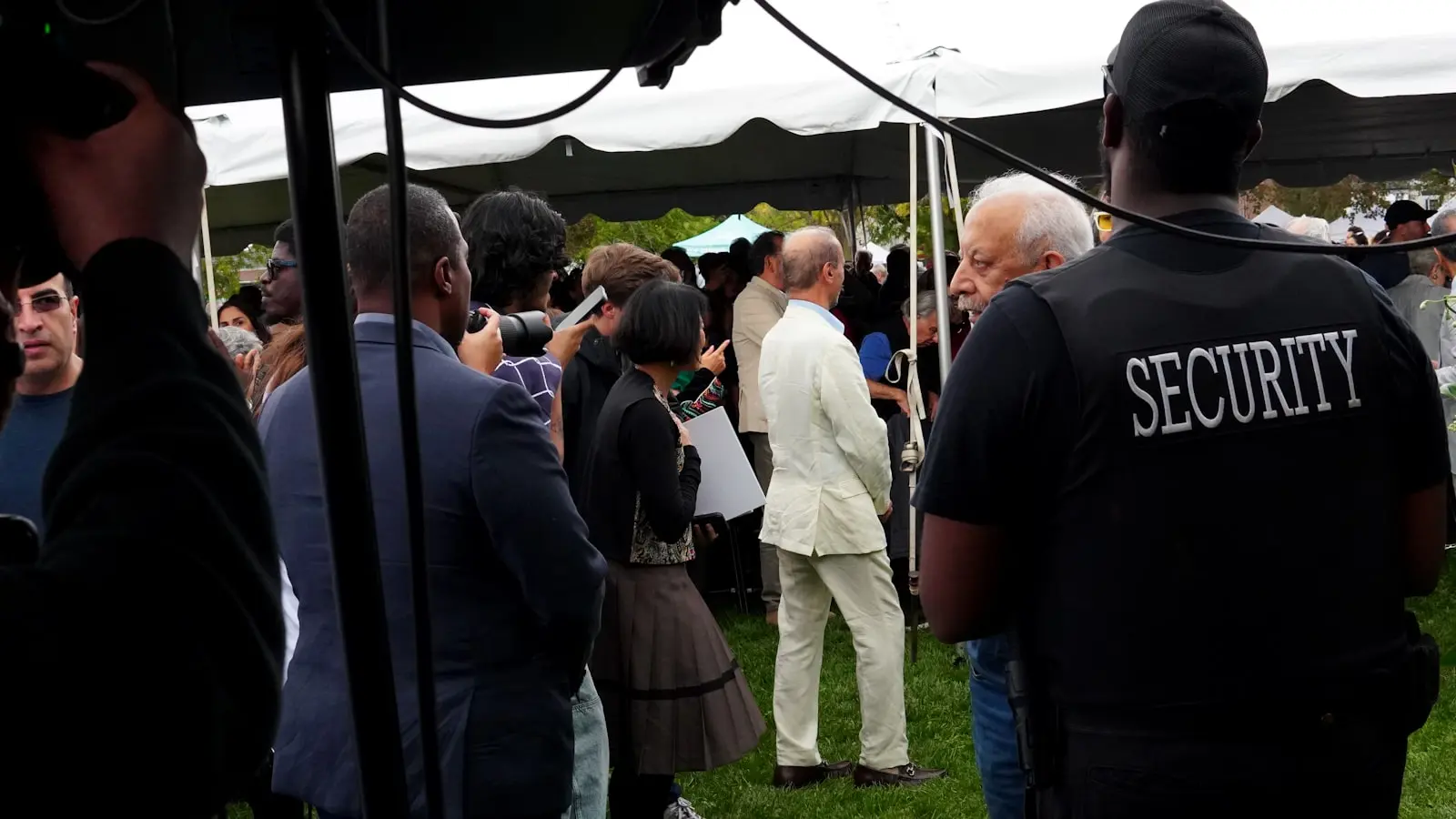
Event organizers can protect VIPs from crowd booing through pre-event intelligence, strategic staging, audio management, secure travel paths, and post-event media handling. Each tactic requires balancing physical safety with public perception.
Key Takeaways
- Conduct open-source intelligence and coordinate with security firms to assess hostility risk before the event.
- Time VIP entrance during high-energy moments (e.g., after a goal) to mask booing, or use staggered entry points.
- Decide on audio suppression based on the trade-off between controlling the atmosphere and respecting crowd authenticity.
- Design secure corridors, buffer zones, and separate evacuation routes to ensure physical safety without disrupting the event.
- Prepare pre-approved media statements and brief spokespeople to manage reputational fallout after an incident.
Pre-Event Threat Assessment and Intelligence Gathering
Conduct open-source intelligence (OSINT) to gauge crowd sentiment toward the VIP. Analyze past events with similar demographics to predict hostility patterns. This includes reviewing social media activity leading up to the event for signs of organized pushback, but without citing specific platforms—focus on general sentiment trends. Coordinate with local law enforcement and private security firms to establish a risk score based on factors such as the VIP’s public profile, the event’s political or cultural context, and the likely demographic mix of attendees. Set trigger thresholds that dictate when to escalate protection measures, such as increasing the security detail or changing the VIP’s entry route. For example, if intelligence indicates a high likelihood of protest or coordinated booing, organizers may decide to use a decoy vehicle or alter the arrival time. Additionally, gather data on venue layout and previous incidents at similar events; this can inform the placement of barriers and the positioning of plainclothes security within the crowd. The goal is to have a clear risk matrix before the VIP arrives, allowing for proactive rather than reactive decisions.
Staging and Timing: Controlling the Moment of VIP Exposure
Schedule the VIP entrance during high-energy moments—after a goal, during a loud musical performance, or immediately following a fan-favorite announcement—to mask any booing. Use staggered or multiple entry points to avoid predictable patterns. For high-risk individuals, consider a pre-recorded video appearance or a delayed walk-out from a hidden tunnel. A host acknowledging the booing can legitimize the noise and escalate tension; moving quickly denies the crowd a reaction. The choice depends on the VIP’s risk tolerance and the event’s cultural norms. Another technique is to use a distraction, such as a short video montage or a sudden pyrotechnic effect, that draws attention away from the VIP’s path. If the VIP must walk through a crowd, consider using a phalanx of security personnel who are trained to absorb both physical and verbal threats. Timing can also include announcing the VIP’s name only after they are already on stage, reducing the window for hostility. In some cases, organizers can use a false entrance—sending a decoy to a different location—to divert negative energy. All of these methods require close coordination with the event production team to ensure that the VIP’s movement is synchronized with audio and visual cues.
Audio Management and Crowd Psychology: Suppression vs. Natural Sound
Evaluate technical options: noise-canceling audio systems, crowd-noise suppression microphones, or simply allowing natural sound with strategic microphone placement. Suppressing booing may create an artificial atmosphere that fans resent, while allowing it signals that the event is not sanitized. Use directional speakers to focus audio on specific zones without amplifying crowd negativity. Prepare a public address script with neutral or redirective language in case the crowd becomes disruptive. For example, the announcer might say, “Let’s show respect for all our guests,” rather than directly addressing the noise. Another approach is to use ambient volume boosts—raising the background music or crowd noise from other sections—to mask isolated booing. This can be done in real-time by a sound engineer who monitors the audience. However, overuse of such tactics can degrade the overall experience for attendees. The decision should be based on the nature of the event: a formal ceremony may lean toward suppression, while a sports event may accept natural reactions. In all cases, the audio team must have a clear protocol for when to intervene and when to let the moment pass. Post-event, the same audio feeds can be reviewed to assess whether the chosen strategy was effective.
Secure Travel Paths and Zone-Based Protection
Designate VIP-only corridors with physical barriers such as stanchions or temporary walls, paired with strict credential checks. Maintain a buffer zone of at least 10–15 feet around the VIP at all times. Use remote monitoring tools like drones and cameras to detect approaching threats early. Pre-plan emergency evacuation routes that are separate from general crowd flow and coordinate with medical teams for immediate response. These measures protect physical safety but must be implemented discreetly to avoid drawing attention. For outdoor events, consider vehicle protocols: the VIP’s transport should have designated drop-off points that are shielded from direct view of the crowd, and a secondary exit route should be kept clear. In high-risk situations, use bomb-sniffing dogs and metal detectors at entry points to the VIP zone. The security team should also have a rapid extraction plan, including a panic room or secure area within the venue where the VIP can be moved if the crowd becomes physically threatening. All security personnel should be equipped with encrypted communication devices and be trained in crowd dynamics, knowing when to form a protective bubble and when to use non-lethal deterrents. The key is to layer protections so that the VIP is never exposed without multiple fallback options.
Post-Event Media Handling and Reputation Management
Draft pre-approved statements addressing potential booing incidents, focusing on safety and respect for all attendees. Brief VIP spokespeople on how to deflect questions about hostile reception—for instance, emphasizing the event’s positive moments rather than the disruption. Leverage social media monitoring to control the narrative and correct misinformation quickly. This involves tracking real-time mentions and having a rapid response team ready to post neutral or positive messaging. After the event, review security footage for lessons learned and update protocols accordingly. It is also important to conduct a debrief with the VIP and their team to assess emotional impact and adjust future plans. The media handling should avoid creating a spectacle out of the hostility; instead, frame the incident as isolated and not representative of the broader crowd. Spokespeople should stick to a script that acknowledges disappointment while highlighting the event’s success. In some cases, a short statement from the event organizer condemning disrespectful behavior can help manage public perception without escalating the story. All communications should be coordinated with the VIP’s public relations team to ensure consistency.
Frequently Asked Questions
Is it better to have a host acknowledge the booing or to ignore it and move quickly? Acknowledging can legitimize the noise and escalate tension; moving quickly denies the crowd a reaction. The choice depends on the specific VIP’s risk tolerance and the event’s cultural norms. In general, moving on quickly is safer unless the crowd is small and controllable.
How can event organizers evacuate a VIP if a crowd becomes physically threatening? Pre-established evacuation routes, a dedicated security detail trained in rapid extraction, and a designated safe room are essential. Communication should be via encrypted headsets to coordinate with local police. The evacuation plan must be rehearsed with all relevant parties before the event.
What legal considerations apply when suppressing crowd noise such as free speech concerns? While you cannot legally prevent booing, you can manage audio amplification and venue rules. Check local laws regarding noise ordinances and public assembly rights to avoid litigation. Always consult with a legal advisor before implementing any crowd-noise suppression technology that could be perceived as censorship.
Can pre-event intelligence be shared with the VIP in advance? Yes, but it should be done discreetly and without causing unnecessary alarm. The VIP should be informed of the risk level and the planned countermeasures so they can make an informed decision about their participation. Avoid over-emphasizing negative sentiment to prevent the VIP from feeling unwelcome.
Are there alternatives to in-person appearances for high-risk VIPs? Yes, pre-recorded video messages, holographic projections, or live video feeds can allow the VIP to participate without physical presence. This is increasingly common in events where crowd sentiment is highly polarized. The production team can ensure the message is delivered with the same impact while completely removing physical risk.