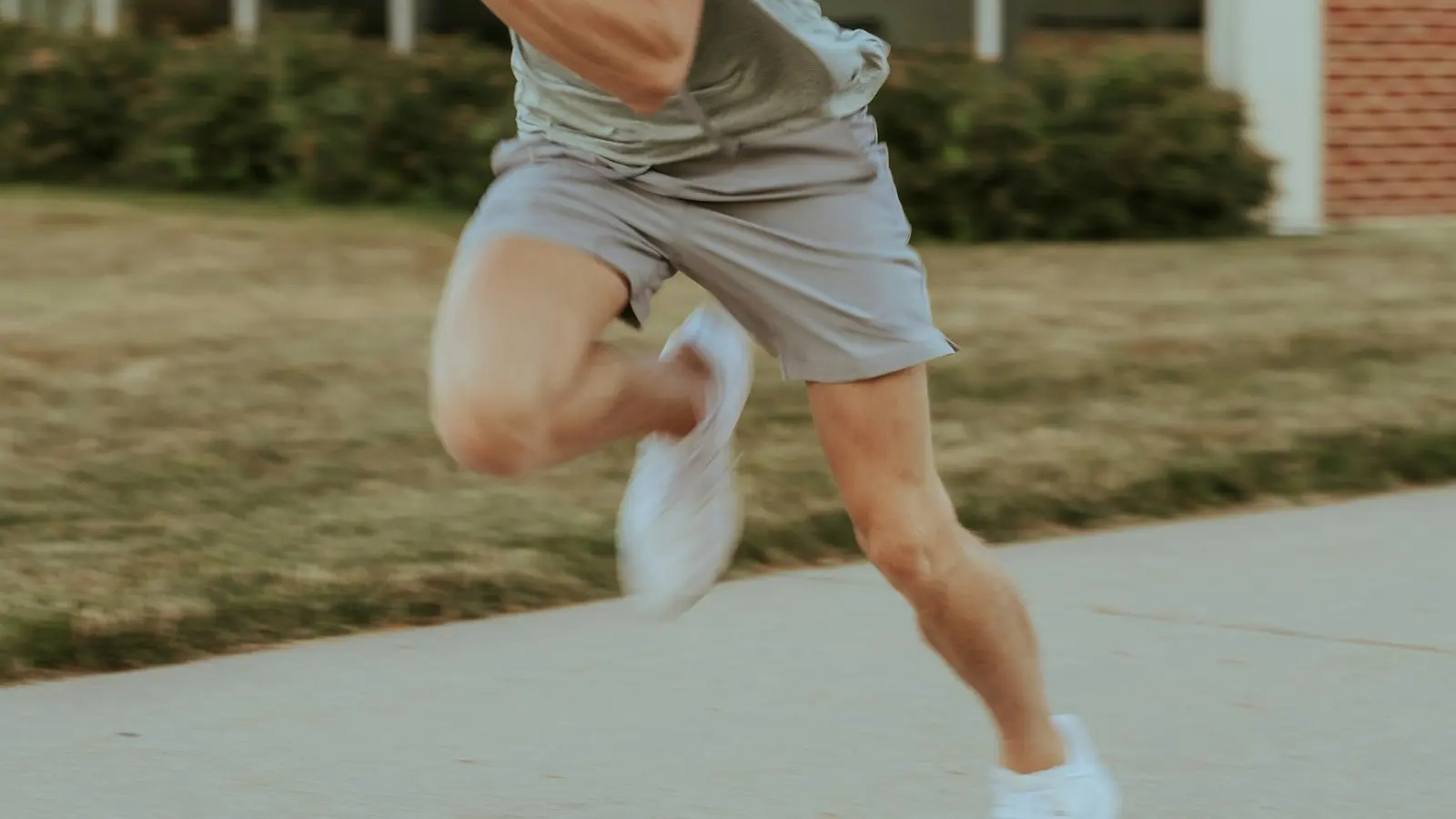
Hill-related calf cramps are often a sign that the workout exceeded your current capacity—not automatic proof of dehydration or low electrolytes. To prevent calf cramps running after hills, review the session’s load, pacing, recovery, heat exposure, and calf conditioning before reaching for a quick fix.
Key Takeaways
- Hill running sharply increases repeated calf demand, especially with steep grades, fast pacing, and fatigue.
- A single cramp after an unusually hard workout often calls for a training adjustment, not a self-diagnosis.
- Stop running during a cramp; return to flat, easy running only when walking and comfortable calf raises are pain-free.
- Build hill exposure and calf strength gradually, changing one training variable at a time.
- Seek medical assessment for severe, recurring, one-sided, or non-exercise-related symptoms, or for swelling, weakness, numbness, dark urine, or breathing symptoms.
Start by treating the cramp as a training signal, not proof of one deficiency
Exercise-associated muscle cramps are sudden, painful, involuntary muscle contractions that can occur during or after hard exercise. They often arise when a muscle is working near or beyond its current capacity, though heat, fluid losses, fueling, individual history, and recovery can also be relevant.
A cramp after one demanding hill session is often useful feedback: the combination of grade, pace, duration, and accumulated fatigue may have been more than your calves were prepared to handle that day. It is different from recurrent cramps during ordinary training, cramps at rest, or symptoms that leave ongoing pain or weakness.
Cramps do not automatically mean dehydration or a deficiency in sodium, potassium, magnesium, or another electrolyte. Those factors may deserve review in certain conditions, but they do not establish the cause of an individual episode.
Why hill sessions can overload the calves
Uphill running requires repeated force production from the calf complex as the ankle helps propel you upward and forward. Demand rises when you push hard from the forefoot, choose a steep grade, accelerate late in repeats, or continue once your form begins to break down.
Hills are not inherently harmful. They can build useful running-specific strength. The problem is more often a mismatch between the workout and your recent exposure to that type of demand.
Calf cramps after hills commonly follow abrupt changes, such as adding hill repeats to a mostly flat routine, selecting a steeper route, extending repeat duration, increasing the number of efforts, or combining hard hills with heat and a heavy training week.
After a cramp, perform a short training-load audit:
- Was the route steeper, faster, longer, or less familiar than recent workouts?
- Did the cramp start late in the session, when fatigue was highest?
- Were you recovering from a race, long run, travel, illness, poor sleep, or recent strength work?
- Did you change shoes, terrain, cadence, or running form?
- Did both calves cramp, or does the problem repeatedly affect one side?
A repeated one-sided problem does not confirm an injury, but it is a reason to be conservative. Persistent asymmetry may warrant assessment by a qualified clinician or sports professional.
For your next hill workout, start below maximal effort. Pick a manageable grade and a pace that allows controlled, stable steps rather than a sprinting push-off. If posture collapses, stride mechanics become forced, or the calf feels sharply overloaded, reduce the effort or stop the session.
What to do during a calf cramp and over the next 48 hours
Stop running when a calf cramps. Trying to run through a tightly contracted muscle can change your gait and may increase the risk of a fall or a secondary strain.
Gently lengthen the calf only as tolerated. Placing the heel down and gradually easing the knee toward straight may help some runners, but avoid bouncing, forceful stretching, or pushing through sharp pain. Walk only after the cramp has released and normal movement has returned.
End the workout if the cramp repeats, you cannot push off normally, your gait changes, or you notice sharp pain or meaningful weakness. Completing planned intervals is not worth escalating what may have begun as a fatigue-related event.
For hill workout recovery, keep the next day or two simple. Easy movement may be reasonable if comfortable, along with normal meals, usual fluid intake, and adequate sleep. Delay fast hills, sprints, and heavy calf-focused strength work until walking and easy movement feel normal.
Massage, compression, stretching, or recovery devices may feel helpful to some runners, but they cannot guarantee prevention of another cramp. Persistent focal tenderness, bruising, swelling, or pain with ordinary walking should not be treated as routine soreness to run through.
Prevent calf cramps running by adjusting load, pacing, and capacity
The most practical prevention strategy is progressive hill exposure. Return first to easy, flat running when walking is comfortable and easy calf raises do not reproduce pain. Reintroduce short, moderate hill efforts before longer, steeper, or faster repeats.
Change one variable at a time. For example, add a few short repeats while keeping pace and grade familiar, or use a slightly steeper hill without extending the efforts. Increasing speed, incline, volume, and frequency together makes overload more likely and makes it harder to identify the trigger.
Leave recovery between demanding hill sessions. If cramps return during a reduced session, step back again rather than assuming more exposure will solve the issue. A simple training log can reveal patterns involving terrain, weather, accumulated fatigue, and session design.
Calf strength for runners may improve tolerance for uphill force production, but it is not a guaranteed cure for exercise-associated muscle cramps. Controlled calf raises with a straight knee and a bent knee can be a useful general way to build capacity across the calf region.
Start at a comfortable level and progress repetitions, resistance, or frequency slowly according to how the calves feel during exercise and the following day. Stop and seek individualized guidance if strengthening causes sharp pain, marked side-to-side differences, or worsening symptoms.
Mobility may also support comfortable uphill mechanics, particularly when ankle movement feels restricted. An easy jog, gradual accelerations, and a gentle warm-up can prepare the calves for harder work. Stretching alone, however, is unlikely to overcome a training-load or fatigue problem.
Before a hill session, use a quick checklist:
- Are you rested enough to run controlled repeats?
- Are your shoes familiar and suitable for the surface?
- Is the hill grade manageable for your current training?
- Have you warmed up gradually?
- Do you have a stopping point before your mechanics deteriorate?
Review hydration and fueling without chasing an electrolyte fix
Running electrolyte cramps are often discussed as though cramping proves low sodium, potassium, magnesium, or dehydration. That explanation is too narrow. Heat, sweat losses, long duration, inadequate fueling, and an ill-suited fluid plan can add to exercise stress, but they do not prove why a particular cramp occurred.
Review patterns rather than reacting to one episode with supplements. Consider weather, run duration, thirst, access to fluids, meal timing, overall food intake, and whether symptoms occur mainly during long runs or hot conditions.
Maintain normal nutrition and use a fluid approach suited to the conditions and your personal tolerance. Runners with recurring symptoms during prolonged or hot training may benefit from discussing their habits with a sports-medicine clinician or registered dietitian, especially if they have a medical condition or take medications that affect fluid or electrolyte balance.
More is not always better. Excessive plain-water intake can be dangerous, and indiscriminate sodium, electrolyte, or supplement use may be unnecessary or inappropriate. There is no universal fluid volume, sodium dose, or supplement routine that reliably prevents calf cramps for every runner.
When calf cramps need medical evaluation instead of self-management
Seek urgent medical care for severe or escalating pain, marked one-sided swelling, redness or warmth, new numbness, inability to bear weight, pronounced weakness, chest pain, shortness of breath, fainting, or dark or cola-colored urine. These symptoms should not be managed as an ordinary workout cramp.
Arrange routine clinical assessment if cramps continue despite sensible training changes, occur at rest or overnight without exercise, or come with persistent weakness, sensory changes, or ongoing pain. It is also sensible to seek advice if symptoms begin after a medication change, illness, or alongside a known medical condition.
A clinician can assess whether symptoms are consistent with training-related cramping or whether an injury, nerve, circulation, medication, metabolic, or other medical contributor needs attention. This guide can support conservative training choices, but it cannot determine the cause of persistent or concerning symptoms.
FAQ
Are calf cramps after hills always caused by low electrolytes?
No. Fluid and electrolyte factors may be relevant during long or hot runs, but hill running also creates high local calf demand. Fatigue, unfamiliar terrain, pacing, recovery, heat exposure, prior cramp history, and conditioning can all contribute.
How soon can I run after a calf cramp?
Return to easy running only when walking and gentle calf raises are comfortable and you can move without limping or guarding. Start flat and easy, then rebuild hill exposure gradually. Seek assessment before returning to hard running if pain, swelling, bruising, weakness, or an altered gait persists.
Do calf raises help prevent exercise-associated muscle cramps?
They may help build calf capacity for uphill running when progressed gradually and tolerated well. They cannot guarantee prevention because cramps can involve workload, fatigue, heat, fueling, fluid strategy, and other factors. Use them as one part of a broader plan that includes sensible pacing and recovery.