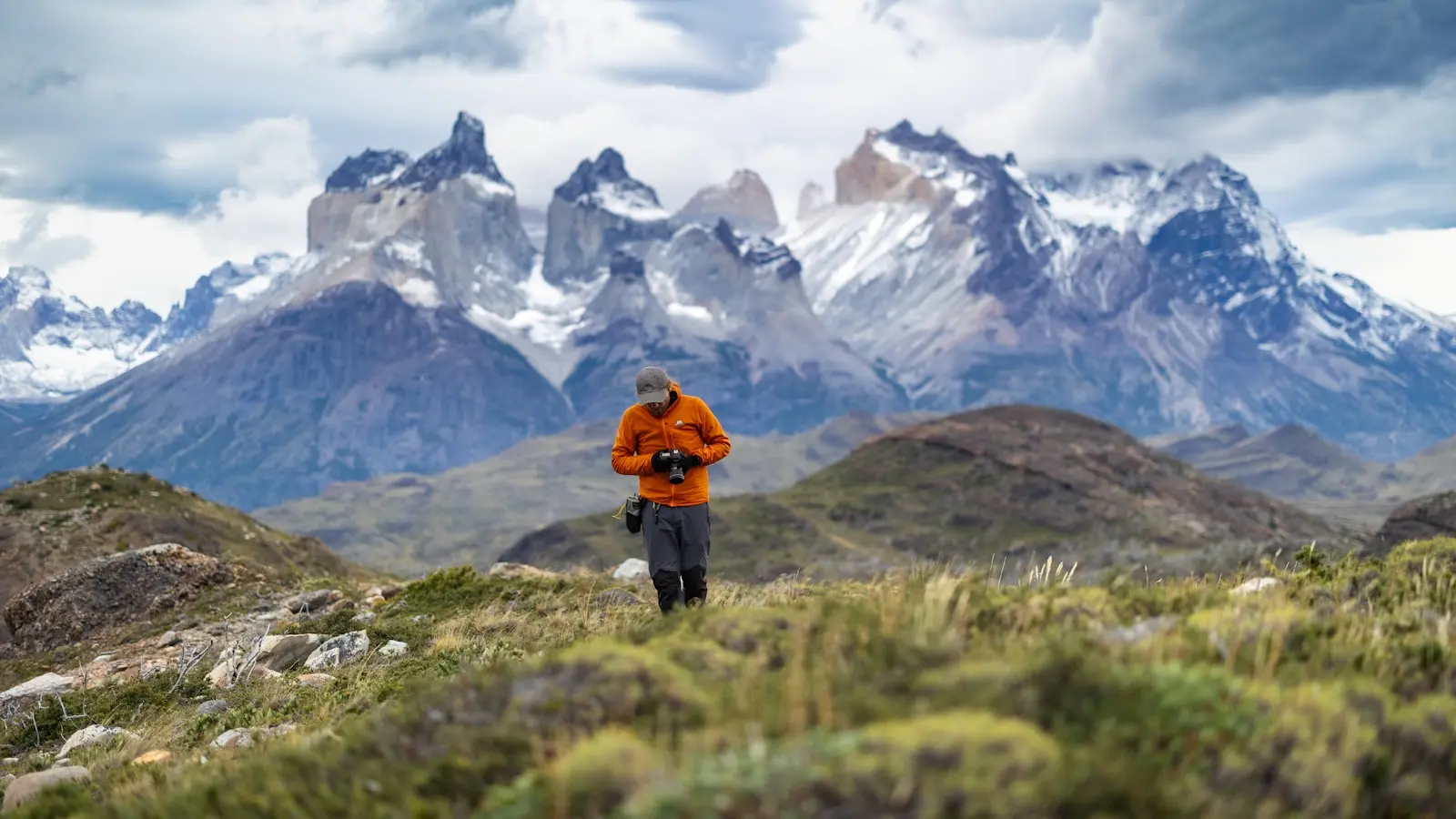
Strong wind can turn a scenic Patagonia day hike into an exposure and balance problem, even when the trailhead temperature seems moderate. The safest approach is not to rely on one wind-speed number. Instead, combine current official trail information, a route-specific forecast, adaptable layers, protected food and water, and turnaround rules agreed before departure.
Patagonia hiking wind safety is about managing rapid change. Routes near El Chaltén and Fitz Roy can move from sheltered forest into open ground, lakeshores, viewpoints, and steep exposed sections where gusts feel much stronger. Sun, rain, cold, and wind may all occur on the same outing, so prepare for the full route and return—not just the trailhead or a summit photo.
Key Takeaways
- Check official access notices and route advisories, then compare them with an hourly, location-specific forecast before leaving.
- Judge wind by gusts, direction, terrain exposure, visibility, precipitation, and your group’s experience—not a universal cutoff.
- Use adjustable layers: avoid sweating on climbs, then add insulation promptly when stopping or entering stronger wind.
- Turn around when gusts affect footing, weather worsens, clothing is wet and you cannot stay warm, or any group member is struggling.
- Carry food, water, offline navigation, and a communication plan that still works if the return takes longer than expected.
This guide supports independent day hikers but does not replace current instructions from park authorities, rangers, municipalities, or emergency services. Check the latest closures, access rules, route warnings, and emergency procedures immediately before hiking.
Treat Wind as an Exposure Hazard
Wind is more than an inconvenience because it strips away the warmed air held near your body and clothing. A hiker can feel comfortable while climbing, then become cold quickly during a food break, photo stop, or navigation pause—especially after sweating or getting wet.
Gusts also change how safely you move. They can disrupt balance on uneven or exposed ground, make trekking poles harder to place, blow grit into your eyes, and turn simple tasks such as eating or handling a map into distractions. Fatigue, a heavy pack, and loose gear can further reduce stability.
Ordinary discomfort may improve after a short stop, an extra layer, food, water, and a route adjustment. Persistent shivering, unusual clumsiness, slowed thinking, confusion, marked weakness, or failure to warm up after adding dry insulation are more concerning. Stop progressing, move out of the wind if possible, add dry layers, and seek help through the appropriate local emergency system if the person does not improve or deteriorates.
Wind can also make it easier to overlook fluid loss and sun exposure. Headache, dizziness, nausea, unusual fatigue, weakness, dark urine, or reduced coordination can have several causes, including dehydration, heat stress, illness, or cold exposure. Do not try to diagnose the cause on the trail; pause, reassess, and choose the conservative option rather than pressing on toward a viewpoint.
Immediate terrain hazards deserve even more weight than discomfort. Change plans if gusts compromise footing, visibility falls, a storm approaches, water crossings rise, ice creates a hazard, or the group no longer has the skills or equipment for the conditions.
Read the Forecast as a Route Decision
Before leaving El Chaltén or any other trailhead, start with official access notices and trail advisories. Weather forecasts cannot tell you whether a route has a closure, damaged section, local restriction, or other route-specific hazard. Recheck official information on the morning of the hike.
For a Fitz Roy wind forecast or another mountain-route forecast, the weather icon is only the beginning. Review sustained wind, gusts, wind direction, hourly changes, temperature, precipitation type and timing, cloud cover, visibility, and active weather warnings.
Gusts often matter most for balance and loose gear. Wind direction matters because a trail may feel manageable in forest or on one side of a slope, then become much harsher after it enters open terrain. Rain, sleet, or wet snow increase the consequences because wet clothing is harder to keep warm in strong wind.
Match the forecast to the route, not just the town. Identify where the trail leaves tree cover, crosses open ground, follows a lakeshore, climbs to a viewpoint, or enters terrain with limited shelter. Conditions at the trailhead may not reflect those higher up or farther along.
Estimate the entire round trip at your group’s slowest safe pace, including breaks, photos, route-finding, and the return. A forecast that looks acceptable early may be a poor match if stronger wind, precipitation, or low cloud is expected while you are still far from the trailhead.
Use a simple go, modify, or postpone framework:
- Go when forecast conditions, route exposure, daylight, experience, fitness, and equipment align.
- Modify when conditions are marginal by selecting a shorter or more sheltered route.
- Postpone when official guidance advises against travel or the forecast exceeds the group’s safety margin.
A same-morning recheck matters, but direct observation matters too. If wind is already stronger than expected, clouds are lowering, rain begins early, or the group feels less prepared than planned, change the route before committing to the most exposed section.
Use Patagonia Hiking Layers That Adapt
The main layering challenge is avoiding two opposite mistakes: overheating while climbing and chilling when stopped. Overdressing uphill can leave your base layer damp with sweat. Under-layering makes windy rests and slower sections much harder to manage.
A flexible system works better than a rigid packing list:
- A moisture-managing base layer suited to the expected temperature and effort.
- An insulating midlayer that can be added quickly when your pace slows.
- A windproof outer layer, plus waterproof-breathable protection when rain, sleet, or wet snow is plausible.
- Gloves, head coverage, and neck protection for exposed conditions.
- Spare dry insulation or socks when route length, weather uncertainty, or the chance of a delayed return justifies them.
Start slightly cool rather than heavily bundled. Vent a shell, loosen layers, or remove insulation before you sweat heavily. When you stop for food, photos, navigation, or to wait for others, add warmth immediately rather than waiting until you are already shivering.
Protect eyes and skin as deliberately as you protect warmth. Cold air and cloud cover do not eliminate sun exposure. Use sunglasses with dependable UV protection, secure them with a retainer or zipped storage, apply sunscreen to exposed skin, use lip protection, and choose a cap or brim that will not blow away.
Secure loose items before entering windy terrain. Close pack lids and pockets, keep maps and snacks contained, and store phones, glasses, and small tools in zipped pockets or attached systems. If a gust could take it, do not balance it on a rock or hold it loosely while reorganizing gear.
Carry Enough Food, Water, and Backup Navigation
Plan for a delayed return, not only the ideal finishing time. Carry food and water appropriate for the route, weather, duration, and group size. Thirst and appetite may be less noticeable in cold or windy conditions, so regular drinks and planned snack breaks can be more reliable than waiting until someone feels depleted.
Choose calorie-dense food that is easy to reach and eat with gloves on. Items that need lengthy preparation, delicate packaging, or bare hands are less useful in strong gusts. Keep water accessible but protected, and consider how cold conditions could affect bottles or hydration systems.
Do not assume water from streams or lakes is safe simply because it looks clear. Follow current local guidance on water availability and treatment for the specific area. Carry a backup supply or treatment method only when it fits local advice and you know how to use it.
Navigation and communication need redundancy. Download offline maps before leaving service, understand key junctions and terrain features, and protect batteries from cold. A backup power source may be useful on a long day, but do not assume phone coverage will be available across an exposed mountain route.
Tell a reliable contact the planned route, group members, departure time, and latest expected return. Verify local emergency procedures before hiking. A satellite communication device may be worth considering for some routes, but understand its operation and limitations before relying on it.
Carry basic first-aid supplies appropriate to the group and know the limits of self-care. If someone worsens, keep them as warm, dry, sheltered, and supervised as possible while arranging help through the appropriate emergency system.
Set Turnaround Rules Before You Start
The best turnaround decision is often made before anyone sees the destination. Fatigue, a tight itinerary, and the appeal of a famous lagoon or viewpoint can make hikers accept conditions they would have rejected at the trailhead. Pre-committed rules reduce that pressure.
Set a turnaround time that preserves enough daylight, energy, and margin for the return. If the group has not reached a sensible point by then, turn back regardless of how close the destination appears. The return may be colder, windier, and slower than expected.
Useful turnaround triggers include:
- Gusts that affect footing or make exposed terrain feel unsafe.
- Worsening visibility, incoming storms, or changing precipitation.
- Wet clothing combined with increasing wind or cold.
- Hands becoming too cold to function normally.
- Illness, injury, unusual fatigue, or a group member falling behind a safe pace.
- Official closures, ranger instructions, or route-specific warnings.
Use a group rule that favors the most conservative safety concern. If one person feels unstable, chilled, unwell, or uncertain, stop and reassess. The right response may be adding layers, eating and drinking, choosing a sheltered alternative, or turning around.
A successful Patagonia day hike is one in which everyone returns safely—not one that reaches a named viewpoint in every condition.
FAQ
How windy is too windy for a Patagonia day hike?
There is no universal cutoff for every hiker and trail. Gust strength, wind direction, footing, route exposure, pack weight, visibility, group experience, and official alerts all matter. If gusts destabilize anyone in the group or make an exposed section feel unsafe, change the plan.
What should I wear for a windy Fitz Roy or El Chaltén hike?
Use an adjustable system: a moisture-managing base layer, insulation for stops, and a windproof shell with rain protection when wet weather is possible. Add gloves, head and neck protection, secured sunglasses, and sun protection. The goal is to vent before sweating and add warmth quickly when you stop.
Can I rely on weather at the El Chaltén trailhead?
No. Trailhead conditions may differ substantially from open, higher, or more exposed parts of a route. Compare what you observe with hourly forecasts, route terrain, expected elevation changes, and the latest official trail advisories before committing to the day.