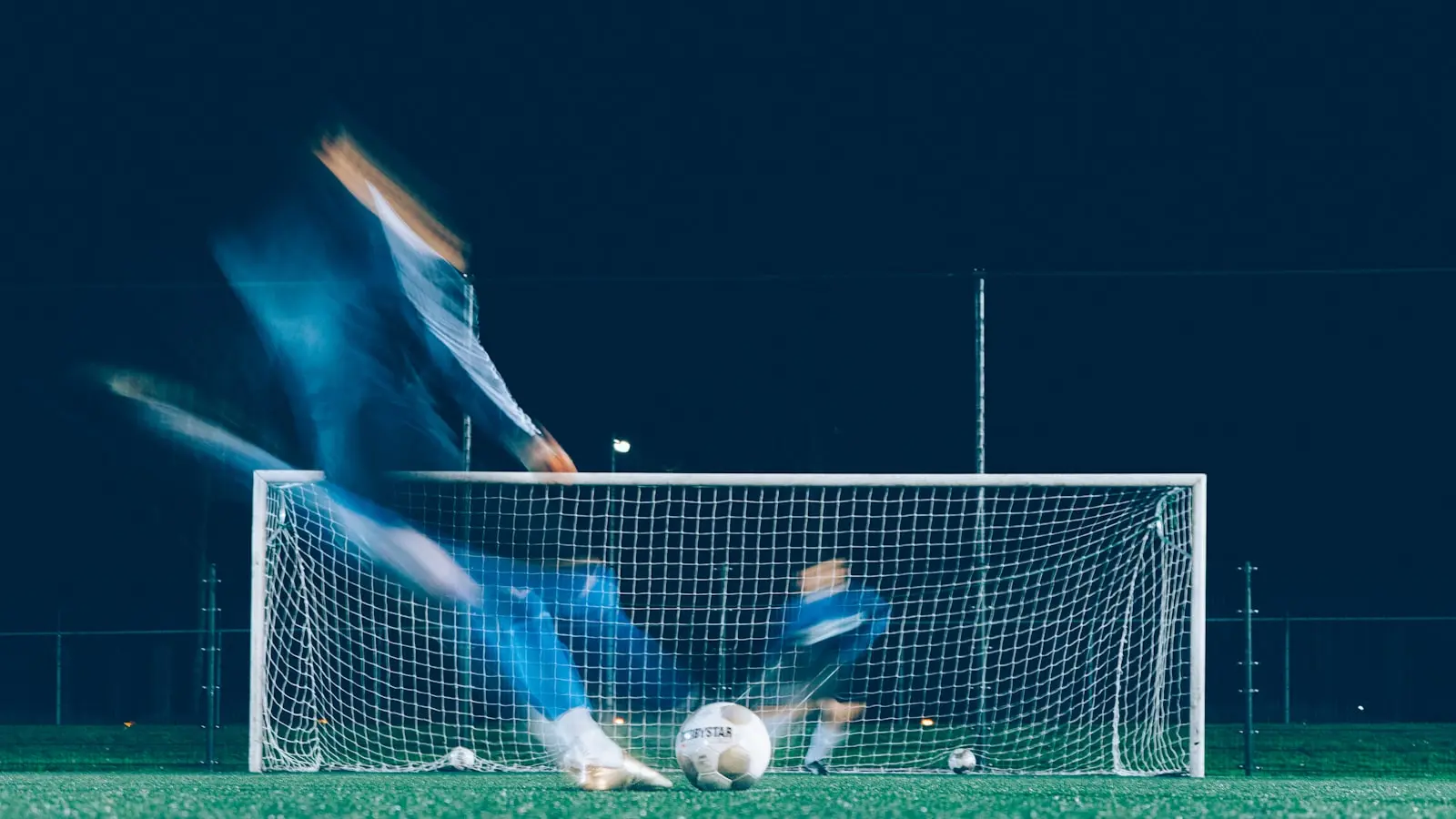
Teams play out from the back under pressure because a successful buildup can bypass several opponents and move the ball into space higher up the field. The danger is real: lose possession near your own penalty area and the opponent may have an immediate chance. But blindly clearing the ball can surrender possession and invite another attack before the team has reset.
Playing out is not short passing for its own sake. It is a coordinated attempt to draw opponents forward, create a free player, and progress through, around, or over the press. Whether it is the right choice depends on player quality, spacing, the opponent’s setup, match state, and the options available in that moment.
Key Takeaways
- Playing out from the back aims to make an opponent’s press create space elsewhere.
- The goalkeeper can provide an extra passing option and help create a numerical advantage in buildup.
- Short buildup depends on spacing, body shape, clean first touches, and planned escape routes.
- Turnovers near goal are costly, but routine clearances can also hand control straight back to the opponent.
- Direct play is often smarter when short options are covered or a team has a favorable aerial or second-ball matchup.
The Point of Playing Out From the Back Is to Make the Press Create Space
To play out from the back means using coordinated positioning and passing in the defensive third to begin an attack. It is not simply a center back passing five yards to a fullback. The objective is to move the opponent’s pressing shape, then exploit the space that movement leaves behind.
A high press tries to stop that process early. Opponents push players high up the pitch, restrict short options, and attempt to force a rushed pass, an inaccurate long ball, or a turnover.
That pressure creates its own weakness. If opponents commit three or four players toward the goalkeeper and defenders, those players cannot cover every area farther up the field. The team in possession is looking for the gap created by that commitment.
This is where numerical superiority matters. If the buildup team has more usable players than the opponent’s first line of pressure, one player should be available. A player only counts as usable, however, if they can receive with time, space, and a realistic next action. A teammate standing behind a presser or receiving with their back to danger is not truly free.
The first pass can therefore be a provocation rather than an attempt to advance immediately. A goalkeeper may pass to the right center back knowing the nearest forward will close them down. That movement can open a return pass to the goalkeeper, a switch to the other center back, or a route into midfield.
Playing through a high press does not always mean forcing a pass through the middle. It can mean playing around pressure through a fullback, switching to the far side, or playing over the first line after the press has committed forward. The important distinction is that the direct ball is then a purposeful response to space, not an uncontrolled clearance.
How the Goalkeeper Creates the Extra Player
The goalkeeper changes the arithmetic of buildup. In a simple shape, a team may use two center backs, two fullbacks, one or two midfielders, and the goalkeeper to create passing options against the first wave of pressure.
Imagine two opposing forwards pressing two center backs. Without the goalkeeper, each defender can be directly matched. Once the goalkeeper is involved, the team in possession has a three-versus-two at that first line. If distances and passing lanes are good, one player should become free.
A common sequence is goalkeeper to center back, center back back to goalkeeper, then goalkeeper to the other center back, fullback, or midfielder. This is not decorative circulation. Each pass asks a presser to move and forces the rest of the pressing unit to decide whether to step out, hold position, or cover another lane.
Goalkeeper distribution tactics matter because a goalkeeper can also switch play. If the press crowds one side, a composed goalkeeper can find the far center back or fullback, where there may be more time to advance. The goalkeeper’s value is not just passing range; it is calm decision-making when pressure closes quickly.
The goalkeeper is not always the correct option. An underhit return pass, a blocked lane, or an aggressive opponent closing down the goalkeeper can remove the extra-player advantage. In those moments, a quicker direct choice may be safer than persisting with a short pattern that no longer fits the situation.
What Makes Short Buildup Work and Why It Sometimes Fails
Short buildup succeeds through details that can look routine until one breaks down. The first is spacing. Center backs need enough width that one forward cannot easily screen both of them, while fullbacks and midfielders must be available at useful distances rather than clustering around the ball.
Body shape is equally important. A defender receiving side-on can see the ball, the nearest presser, and the next pass. A defender receiving square to their own goal may need an extra touch to turn. Against an organized high press, that extra touch can be enough for the trap to close.
The first touch is part of the tactical decision, not just a technical detail. A controlled first touch moves the ball away from pressure and prepares the next action. A loose touch toward the touchline, penalty area, or nearest opponent can turn a sensible buildup sequence into a dangerous turnover.
Support angles also determine whether options are real. If several teammates stand on the same passing line, one opponent may block access to all of them. Staggered positions create diagonal lanes and give the ball carrier choices forward, sideways, and backward.
The third-player option is especially useful in soccer buildup tactics. Rather than trying to beat pressure with one difficult pass, a player finds an obvious receiver who draws an opponent in. That receiver then lays the ball off to a teammate arriving in the space the presser has left. The third player is often the actual target.
Teams also need escape routes before the ball arrives. These may include a switch across the back line, a pass into midfield, a ball down the line, or an intentional direct pass. Changing the plan is not a failure; waiting until the player is trapped usually is.
Opponents build pressing traps around these habits. They may appear to allow a pass to a fullback, then close that player from the touchline, the inside channel, and behind. The sideline acts like an additional defender because it removes one possible exit.
Turnovers near goal are so damaging because the team in possession is often spread out for buildup. Center backs may be wide, midfielders may be moving forward, and the goalkeeper may be positioned away from their usual shot-stopping line. The opponent has little distance to travel and can attack before the defensive structure is restored.
That is the central soccer buildup risk-reward calculation. A team does not justify every dangerous pass simply because it values possession. It earns the right to play short when its positioning, technique, and recognition keep the risk manageable.
Why Teams Do Not Just Clear It Every Time
A clearance can be the right decision. If a defender is trapped, the ball is bouncing awkwardly, or no secure short option exists, forcing a pass for ideological reasons is poor game management.
Still, a clearance is not automatically safer over the next phase of play. If it goes directly to an opponent without pressure, possession is surrendered and another attack can begin. The defending team may remain pinned back instead of moving the game away from its goal.
A long ball can also isolate the forwards. If no teammate is close enough to contest the first contact or collect the second ball, the clearance is effectively a pass to the other team. The issue is not whether the ball travels far; it is whether there is a plan for what happens when it lands.
That is why panic clearances and intentional direct play should be separated. A panic clearance is a survival action with little control over its destination. Intentional direct distribution targets a forward, attacks space behind the defense, or creates a contest that supporting midfielders are ready to win.
A team with a strong aerial forward may benefit more from going long than from forcing short combinations against a well-drilled press. Fast runners can also attack the space behind a high defensive line, particularly after opponents have pushed fullbacks and midfielders forward to press.
The most difficult teams to press vary their responses. If opponents know every goal kick will be played short, they can commit aggressively with confidence. If they must also respect a measured ball over the top or into a target forward, they need more cover behind their press.
When Direct Play Is the Smarter Choice
Direct play is often the better option when the opponent has matched or overloaded the buildup players. If every center back, fullback, midfielder, and goalkeeper option is tightly covered, insisting on a short pass can turn a tactical plan into a dangerous technical contest near goal.
It also makes sense when the goalkeeper or defender receives under immediate pressure with no reliable outlet. A difficult ball, a poor first touch, or a blocked central lane can change the situation in an instant. Good decision-making means recognizing when the original buildup plan no longer fits the picture.
Matchups matter too. If a team has an aerial advantage, a capable target forward, or midfielders ready to collect second balls, direct distribution can be a constructive attacking choice. If the opponent holds a very high defensive line, a ball into the channel may be the quickest route to meaningful territory.
Conditions can alter the balance. A poor pitch makes short passing less predictable, while fatigue can reduce the sharp support movements needed to escape pressure. Game state matters as well: a team protecting a narrow lead may decide that a particular moment is not worth the risk of playing through pressure in front of its own goal.
The direct ball should still have a purpose. It should target a player, attack a space, or land in an area where teammates can compete for the second ball. Simply hitting the ball away may solve one second of pressure while creating the next attack.
Playing out from the back is neither inherently brave nor inherently foolish. It is a tactical tool for using pressure against the opponent. Its value depends on personnel, spacing, goalkeeper involvement, the pressing plan, match context, and the ability to recognize when going long is the smarter decision.
FAQ
Why do soccer teams play out from the back when they can lose the ball near goal?
They accept some short-term danger because beating the first line of pressure can open space farther upfield. A successful buildup can retain possession and bypass several opponents, while a routine clearance may simply restart the opponent’s attack.
How does a goalkeeper help a team beat a high press?
The goalkeeper provides an additional passing option, often creating a numerical advantage against the first line of pressers. They can receive a return pass, draw an opponent out, switch play, or find a free defender or midfielder.
When should a team stop playing short and go long?
A team should consider direct distribution when short options are tightly covered, the ball carrier is under immediate pressure, or a favorable long-ball matchup exists. Going long is most useful when it targets a forward, attacks space behind the defense, or gives teammates a clear chance to win the second ball.