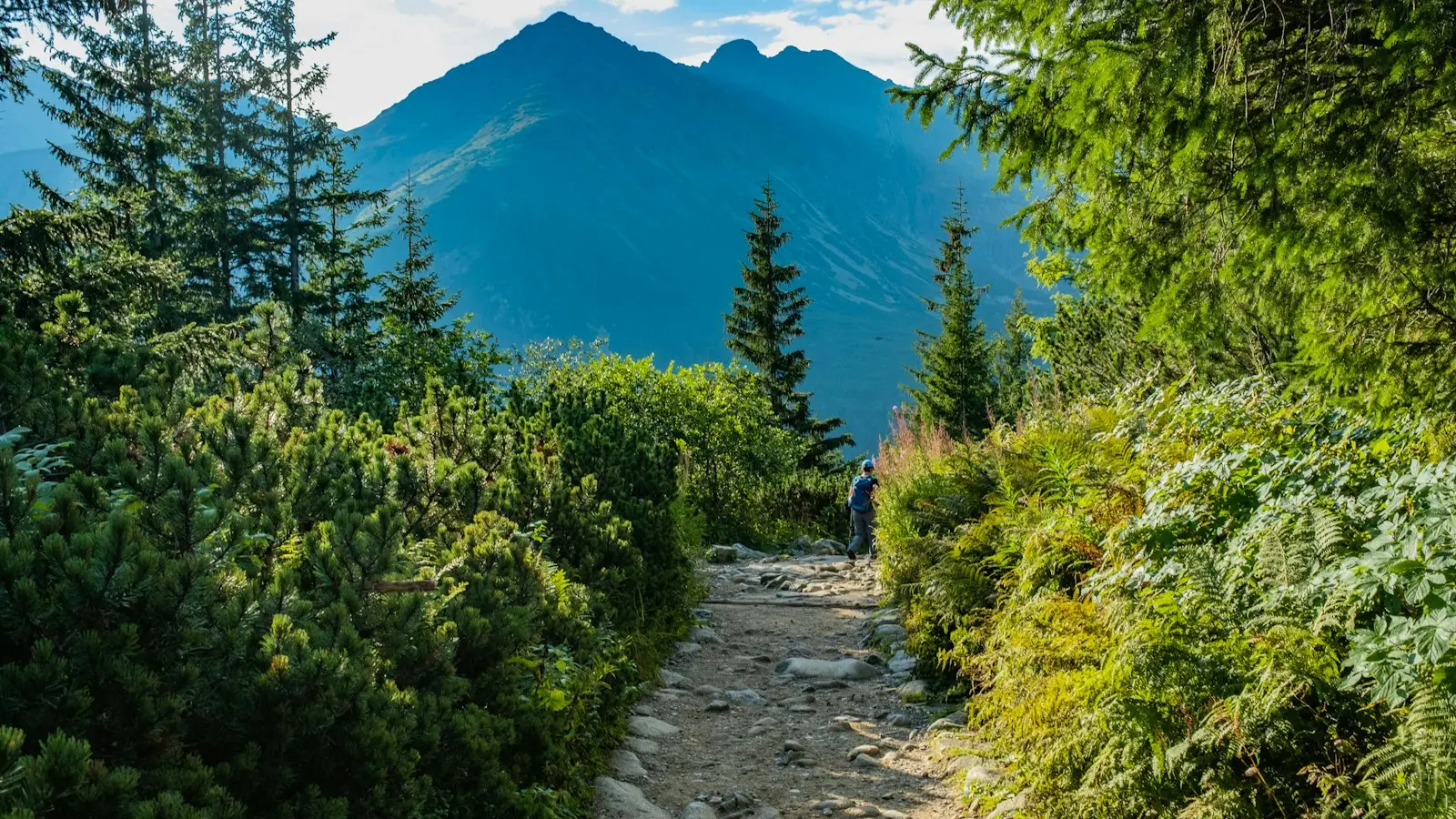
Altitude can make familiar exercise feel harder because atmospheric pressure falls as elevation rises, reducing the pressure that moves oxygen from the lungs into the bloodstream. The air still contains broadly the same proportion of oxygen, but each breath delivers less usable oxygen pressure. The result is often faster breathing, a higher heart rate, an earlier drop in pace, and longer recovery after effort.
That does not mean every tired visitor has altitude illness. Hiking at high altitude also involves steeper terrain, colder or drier air, wind, poor sleep, travel fatigue, unfamiliar equipment, and sometimes dehydration. The practical response to altitude exercise difficulty is to reduce intensity at first, monitor symptoms, and allow time to adjust rather than immediately trying to reproduce sea-level targets.
Key Takeaways
- Lower atmospheric pressure at elevation makes it harder for oxygen to move from the lungs into the blood.
- Breathing and heart rate often rise, while sustainable pace and recovery can decline, especially during endurance exercise.
- Sea-level pace, distance, and training targets may not transfer directly to hiking or sports at elevation.
- Start conservatively, take planned breaks, sleep well, and increase the workload gradually.
- Hydration supports normal function but cannot reliably prevent altitude illness; severe or worsening symptoms require medical help and may require descent.
What altitude changes in the air
Elevation is the height of a location above sea level. As elevation increases, atmospheric pressure decreases. Oxygen still makes up roughly the same share of the air, but lower total pressure means less pressure is available to move oxygen across the lungs and into the blood.
This is why altitude is not quite the same as simply “having less oxygen in the air.” The important change is oxygen pressure. At sea level, the body has more pressure helping oxygen enter the bloodstream. At elevation, the lungs and circulation must work harder to support the same muscles, even during an activity that looks easy on paper.
There is no single altitude at which exercise suddenly becomes difficult for everyone. The effect is gradual and depends on elevation, how quickly someone ascends, how long they stay, exercise intensity, fitness, health, sleep, and individual sensitivity. A person who arrives by air or drives rapidly upward may notice a larger change than someone who gains elevation gradually, although gradual travel does not eliminate risk.
The route itself also matters. A flat walk at elevation may be manageable while a steep climb at the same location is demanding. Cold, heat, wind, a heavy backpack, loose ground, and technical terrain can add substantial work. Separating these factors helps explain why a visitor may feel unusually tired without assuming altitude is the only cause.
Why breathing, heart rate, and recovery change
The body responds to reduced oxygen availability almost immediately. Breathing tends to become deeper or faster, and heart rate may rise so circulation can deliver more oxygen to working muscles. These responses are useful, but they also increase the effort required to maintain a familiar speed.
During a sustained climb, run, ride, or field-sport session, available aerobic reserve can shrink. A pace that was comfortable at sea level may produce heavy breathing sooner. Muscles may feel tired earlier, and repeated efforts can lose quality because there is less time to recover between them.
Endurance activities are usually affected most consistently because they depend on continuous oxygen delivery. A long ascent, distance run, cycling session, or extended game places a sustained demand on the cardiovascular system. Short, explosive efforts can be affected differently, particularly because reduced air resistance may offer a small advantage in some settings, but that does not remove the broader cardiovascular challenge of altitude.
Perceived exertion can also become difficult to interpret. A visitor may slow dramatically while trying to hold a familiar heart-rate zone or pace, then assume the slower speed means the session is easy. In reality, the body may be working harder to produce less external output. Conversely, someone may mistake ordinary exertional breathlessness for a dangerous condition. Context and symptoms matter.
Heat, cold, wind, steep terrain, poor sleep, illness, and recent travel can intensify the sensation. Dry air may increase fluid losses through breathing, while a long journey can leave someone under-rested before the first hike or match. Altitude should be treated as an added workload, not necessarily the complete explanation for every change in performance.
How much can sports performance vary at altitude?
Sports performance at altitude does not follow one universal percentage or cutoff. The change depends on the event and the person. A recreational hiker may simply need more breaks and extra time on climbs. A runner may need to slow the pace to keep breathing controlled. A cyclist may find sustained uphill power harder to maintain. In a team sport, repeated sprints may become less consistent as recovery between efforts takes longer.
Sea-level benchmarks are therefore useful as background information, not commands. A familiar split time, distance target, or heart-rate plan may not transfer directly to a new elevation. Trying to force the old target can turn an appropriate adjustment into excessive fatigue, especially during the first few days.
A mountain trail illustrates the issue clearly. At sea level, a steady uphill pace may feel aerobic and repeatable. At elevation, the same gradient can push breathing higher, requiring shorter steps, more frequent pauses, or a slower rhythm. The trail has not changed, but the oxygen-delivery cost of the work has.
The same principle applies to games and training sessions. A player may complete one hard run normally but struggle to repeat it at the same frequency. A coach who judges only distance or speed may miss the fact that the athlete is accumulating more physiological stress for each effort. Session quality may improve by reducing repetitions, lengthening recovery, or using technical and tactical work instead of demanding full-intensity conditioning.
High-altitude training is a separate issue from arriving at elevation for a holiday or competition. Some structured programs use carefully controlled exposure, monitoring, and lower-altitude training to seek physiological adaptations. Results vary, and living or exercising high does not automatically improve sea-level performance. If an athlete cannot maintain sufficient training quality or recovery, the altitude stimulus may offset its potential benefit.
A conservative first-day plan for hiking or playing sports
On the first day at elevation, start below normal sea-level intensity. A conversational pace is a useful practical guide for easy activity: if speaking in short sentences is already difficult, slow down or take a break. This is not a medical test, but it helps prevent the common mistake of treating a familiar route or workout as a familiar physiological task.
For hiking, choose a shorter or less committing route when possible. Start steadily, use planned pauses before exhaustion, and allow extra time for climbs, navigation, and changes in weather. Avoid combining an arrival-day hike with a heavy pack, a long summit attempt, or a race against daylight unless the plan has been assessed carefully.
For sports, extend the warm-up without turning it into a hard conditioning session. Reduce early repetitions, lengthen recovery between intense efforts, and judge the session by control and movement quality rather than sea-level speed. A lighter technical practice may be more productive than a full-intensity game immediately after arrival.
Evaluate the response later that day and the following morning. If sleep, headache, nausea, energy, breathing, or general function is worsening, increasing the workload is a poor choice. If symptoms are absent and the activity felt controlled, progression can still be gradual rather than an immediate return to personal-best efforts.
Eat and drink normally, protect sleep, and avoid assuming that more water solves the problem. Fluid replacement supports normal function, but excessive drinking does not replace acclimatization and can create its own health risks. Alcohol and other factors that disrupt sleep or judgment can also make it harder to assess symptoms accurately.
Acclimatization, hydration, and when to seek help
Altitude acclimatization is the gradual adjustment of breathing, circulation, fluid balance, and other body systems to reduced oxygen pressure. It begins after arrival but is not instant. The pace and completeness of adjustment vary with elevation, ascent speed, time at altitude, prior exposure, and individual response. Someone who has tolerated one mountain trip may not respond identically on another.
A conservative approach is to gain elevation gradually where practical, build in easier periods, and avoid rapidly escalating exercise during the early phase. Current medical guidance should take priority for a particular itinerary, especially when the route reaches substantial elevation or involves sleeping progressively higher.
Hydration is important, but it is not a guaranteed prevention for acute mountain sickness or other altitude illness. A headache after travel may reflect sleep loss, dehydration, sun exposure, or altitude, and symptoms can overlap. Do not use water intake as proof that a problem is harmless, and do not force fluids in an attempt to “flush out” symptoms.
Mild symptoms such as a new headache, nausea, unusual fatigue, dizziness, or poor sleep deserve rest, monitoring, and a pause in ascent or exercise. They should not be dismissed simply because the person expected to feel tired. If symptoms worsen, fail to improve, or interfere with normal activity, seek qualified medical advice rather than continuing upward.
Urgent help is needed for serious or rapidly worsening symptoms. These include confusion, inability to walk normally or coordinate movement, severe shortness of breath at rest, bluish discoloration, a worsening cough, marked weakness, or a significant change in alertness. Stop exercising, seek emergency services or qualified medical care, and follow medical advice about descent. Do not push through severe symptoms or try to manage a potentially serious condition with rest and water alone.
People with heart, lung, blood, or other relevant medical conditions should seek individualized advice before strenuous activity at elevation. Medication, previous altitude illness, pregnancy, and the planned elevation can change the appropriate precautions.
Frequently asked questions
Why does altitude make exercise harder even when the trail or sport feels familiar?
Atmospheric pressure is lower at elevation, so each breath provides less oxygen pressure for transfer into the bloodstream. The body compensates with faster breathing and a higher heart rate, making the same pace more demanding. Terrain, temperature, wind, poor sleep, and travel fatigue may add to that workload.
How long does it take to acclimatize before hiking or playing sports at altitude?
There is no schedule that works identically for everyone. Adjustment develops over time and depends on elevation, ascent speed, time spent there, and personal response. Begin with easier activity, avoid rapid escalation, and use current medical guidance for the specific destination and itinerary.
Should I stop exercising or descend if I develop a headache, nausea, or unusual shortness of breath?
Stop or reduce the activity and monitor the symptoms rather than trying to complete the workout. Mild symptoms warrant rest and caution, while worsening symptoms, symptoms at rest, confusion, poor coordination, severe weakness, or a worsening cough require prompt medical help and may require descent. Do not diagnose yourself based only on hydration or fitness.