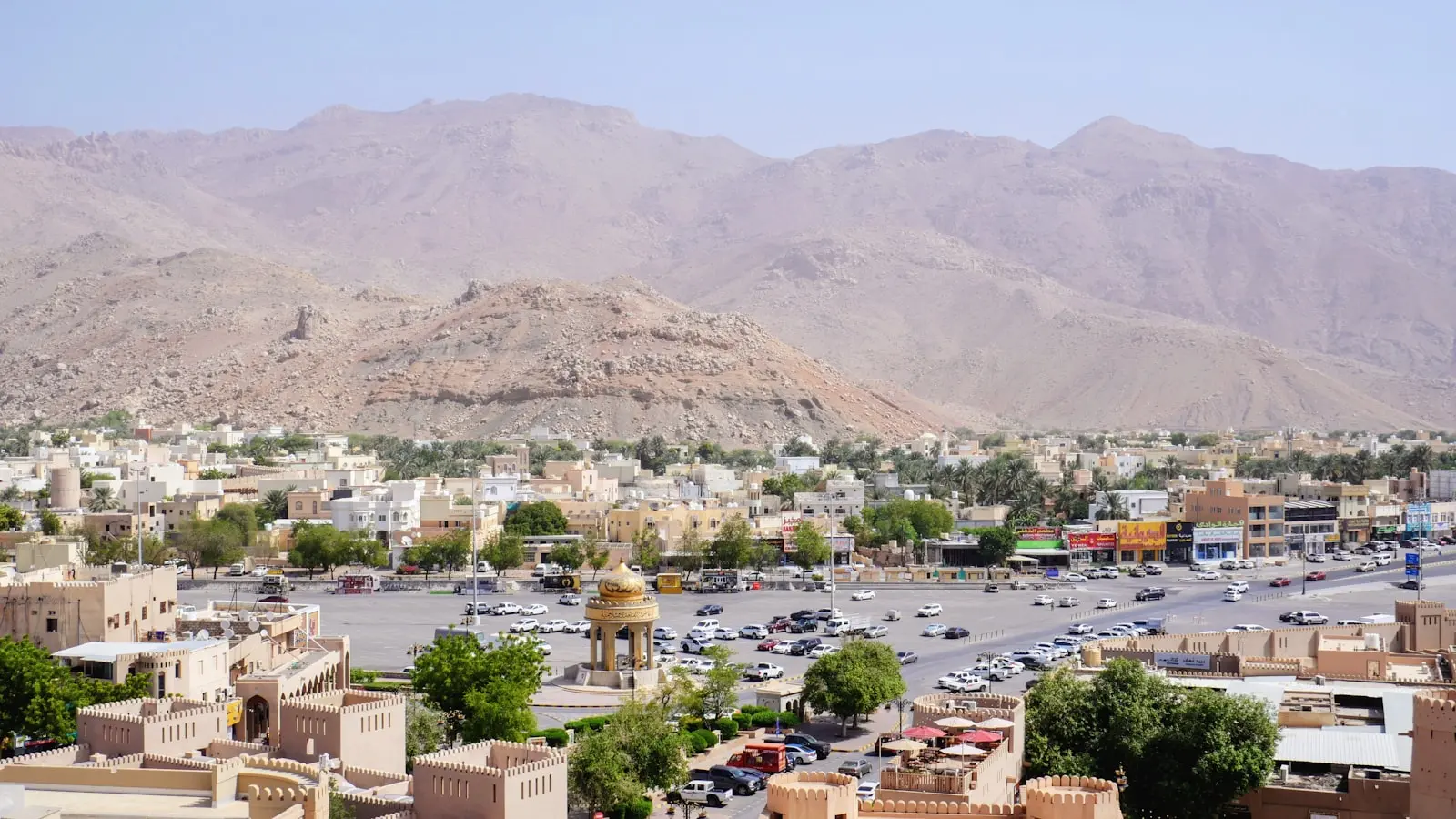
For most travelers, the best one week Oman itinerary uses two main hotel bases: Muscat first, then Nizwa or a nearby inland town. Add a mountain overnight only if the highlands are a central goal. This approach still leaves room for Muscat, souqs, forts, Bahla, and mountain scenery without turning every morning into a checkout deadline.
The trade-off is straightforward. A faster loop covers more distinct landscapes, but it creates less room for weather changes, venue closures, tired drivers, or the small delays that make road trips feel longer than they appear on a map. A base-focused Oman itinerary seven days long is usually the better choice for travelers who want the trip to feel like a holiday rather than a logistics exercise.
Key Takeaways
- Use two bases—Muscat and Nizwa or nearby—as the default for a relaxed week in Oman.
- Add a third mountain base only if hiking, sunrise, sunset, or a slower highland stay matters more than minimizing hotel changes.
- Treat arrival day and transfer days as lighter days; car collection, fuel, parking, check-in, and heat consume more time than maps suggest.
- Build fort visits, souqs, and mountain plans around confirmed opening hours, weather, road access, and daylight.
- Keep one flexible block in the week for delayed flights, closures, changing mountain conditions, or simple rest.
Road access, rental-car rules, attraction hours, ticketing, and mountain conditions should always be reconfirmed shortly before travel. Current details matter more than a perfectly arranged itinerary.
Start by choosing the right Oman hotel-base itinerary
A two-base plan is the sensible default for one week in Oman. Stay in Muscat for arrival and one full sightseeing day, then move inland to Nizwa or a nearby town for several nights. From there, you can visit fort towns, plan a Bahla Fort visit, explore markets, and decide whether the mountains work better as a day trip or an overnight.
Choose a compact loop if maximum geographic coverage is your priority. It suits travelers who are comfortable with regular hotel check-ins, early starts, and a schedule that may need to change quickly. It can work well for confident self-drivers traveling light, especially when a mountain sunrise or sunset is non-negotiable.
Choose two bases if you prefer slower mornings, are traveling with children, have mixed hiking ability in the group, or do not want every meal and viewpoint governed by the next checkout time. It also makes it easier to adapt if a fort has limited hours, mountain weather changes, or arrival fatigue lasts longer than expected.
Choose three bases if the mountains are a core part of the holiday rather than an optional scenic detour. A mountain overnight can make the highlands feel like a destination in their own right. The cost is another packing day and greater dependence on confirmed road conditions, weather, and rental-car suitability.
| Structure | Hotel changes | Flexibility | Mountain access | Best for |
|---|---|---|---|---|
| Compact loop | Frequent | Lower | Stronger with an overnight | Fast-paced couples and experienced road trippers |
| Two-base plan | Limited | High | Possible as a day trip | Most first-time visitors and families |
| Three-base plan | Moderate | Moderate | Best for a slower highland stay | Travelers prioritizing hiking and mountain scenery |
Do not judge the route by driving time alone. Car pickup, fuel stops, lunch, parking, hotel check-in, finding a fort entrance, and walking in warm conditions all take time. A day that looks comfortably spaced in navigation can become cramped once those transitions are included.
The best-paced one week Oman itinerary with Muscat and an inland base
Muscat is the right first-night base for most international arrivals. It gives you time to collect the car, sort mobile data or navigation, arrange cash if needed, and become familiar with the vehicle before an intercity drive.
Keep arrival day deliberately light. A nearby dinner or waterfront walk is enough after a long flight or a slow rental pickup. Trying to force a major cultural visit into a late-arrival day usually creates pressure without adding much value.
Use the following full day for Muscat’s major sights, the Mutrah area, and the souq. Start with the attraction that has the narrowest confirmed visitor window, then let the rest of the day work around heat, appetite, and energy. Check official venue guidance for dress expectations, entry procedures, photography rules, and current hours.
Friday, public holidays, religious observances, and seasonal changes can affect opening patterns. Treat them as reasons to verify each stop rather than assuming every site follows the same schedule.
After Muscat, move to Nizwa or a nearby town for the main inland stay. This is the practical center of a Muscat Nizwa Jebel Shams route because it lets you visit fort towns without making each one a separate overnight. It also leaves room for a market visit, a slow lunch, or an attraction that did not fit on the first attempt.
When choosing inland accommodation, prioritize reliable parking, an easy morning departure, and booking terms that allow some flexibility. That may matter more than chasing a perfect view, particularly if your mountain plans depend on changing conditions.
A seven-day base-focused route with fewer hotel changes
Day 1: Arrive in Muscat and stay in Muscat.
Collect the car, inspect it carefully, confirm the rental terms, and set up navigation. Keep valuables out of sight in the vehicle, and use the evening to recover rather than attempt a sightseeing sprint.
Day 2: Muscat sights and souq timing.
Start with the Muscat attraction that has the strictest confirmed visitor schedule, then plan a slower middle of the day. The Mutrah area and souq are better enjoyed when they are not the last task before a long drive. If jet lag lingers, replace an ambitious afternoon with a meal, waterfront pause, or another low-effort activity.
Day 3: Drive from Muscat to the Nizwa area.
Make this a transition day, not a contest to collect forts. Allow for checkout, fuel, breaks, and settling into the inland hotel. If you add a stop, choose one that remains worthwhile if you arrive later than expected and does not depend on a narrow closing time.
Day 4: Nizwa souq and fort-town day.
Plan the souq around its confirmed operating pattern. Fridays, holidays, market days, and seasonal schedules can change both its timing and atmosphere, so check before assigning the entire morning.
Pair the souq with one main historic site rather than several. Leave room for parking, ticketing, warm-weather walking, and lunch. A good inland day should have time for market stalls, shade, coffee, and a fort explored at a human pace.
Day 5: Bahla Fort visit plus one nearby inland stop.
Make Bahla the anchor of the day. Confirm current access, ticketing, visitor rules, photography policy, and closing time before leaving your hotel. Forts reward slow exploration; their appeal is in their scale and details, not simply checking them off.
A nearby second stop is reasonable only if the day still has breathing room. If the choice is between a relaxed Bahla Fort visit and another fort under time pressure, keep Bahla as the priority and leave the afternoon open.
Day 6: Mountain day from Nizwa or a mountain overnight.
For a two-base itinerary, make the mountains a day trip only if current road conditions, the rental agreement, the vehicle, the group’s confidence, and the weather all support it. Leave early, avoid treating a hike as a brief roadside stop, and plan to return before darkness.
For a three-base version, move to a mountain hotel or guesthouse and enjoy the highlands at a slower pace. This makes sense if you want sunrise, sunset, a longer walk, or a quieter evening in cooler air. Confirm the access route and whether the rental vehicle is permitted and appropriate before booking.
Not every traveler needs a demanding hike. A scenic drive on an appropriate route, a short walk near a viewpoint, or a relaxed mountain meal may be a better fit for anyone who does not enjoy steep, exposed, or lengthy trails.
Day 7: Return to Muscat or depart.
Treat the return as a travel day with consequences. Leave margin for traffic, fuel return, vehicle inspection, airport procedures, and route delays. If your flight is early or the schedule is tight, staying near Muscat or the airport on the previous night is often the calmer choice.
The faster Muscat Nizwa Jebel Shams route and what extra coverage costs
A quicker loop might run from Muscat to the Nizwa area, then to a mountain overnight, before returning toward Muscat. It can reduce backtracking and add the distinct pleasure of sleeping in a dramatically different landscape. For some travelers, that mountain evening justifies the extra move.
But the added coverage has a real cost: more packing, more luggage handling, and less ability to absorb disruption. A delayed check-in, changing weather, or a hike that takes longer than planned can quickly push driving into the evening.
Do not casually combine a substantial mountain hike, multiple forts with fixed hours, a long transfer, and a flight-day drive. Each can be enjoyable on its own. Put too many together and the day becomes a chain of deadlines.
Pack for the loop with a small, accessible day bag. Keep water, layers, chargers, documents, medication, and snacks easy to reach. Avoid leaving bags or valuables visible in the car when stopping at viewpoints, markets, or trailheads.
Oman road trip planning with buffers, weather checks and local etiquette
Good Oman road trip planning begins with a buffer, not another attraction. Keep one flexible block during the week for a delayed arrival, a closed site, poor mountain conditions, a rest morning, or a place that deserves more time.
Before each longer drive, compare navigation estimates with daylight, fuel availability, planned breaks, hotel check-in, and destination operating hours. Do not assume every scenic-looking route suits every rental car or driver.
Mountain temperatures and conditions can differ sharply from Muscat. Reconfirm weather, route access, trail conditions, and any flash-flood concerns shortly before going. If conditions are unclear, choose a lower-commitment alternative rather than trying to rescue a fixed plan.
Daylight driving is the conservative choice on unfamiliar intercity and mountain roads. It gives you more time to find fuel, correct a wrong turn, and arrive with enough energy to enjoy the destination.
At cultural and religious sites, follow current guidance on clothing and behavior. Ask before photographing people, and check venue-specific photography rules. Patience around prayer times, Fridays, holidays, and local routines will serve you better than a rigid timetable.
FAQ
Is Nizwa the best base for a one week Oman itinerary?
Nizwa or a nearby inland town is usually the most practical base for a week that includes forts, markets, Bahla, and a possible mountain day. It limits hotel changes while keeping key inland experiences within reach. The best exact location depends on your accommodation preferences, driving confidence, and whether you plan a mountain overnight.
Can you visit Bahla Fort and Jebel Shams on the same day?
It may be possible in favorable conditions, but it is rarely the relaxed choice. Bahla has visitor-hour considerations, while Jebel Shams depends on weather, road access, vehicle suitability, daylight, and hiking plans. Separate them if you want time to enjoy both rather than merely pass through.
Do you need a 4WD for an Oman itinerary seven days long?
Not necessarily for the overall Muscat and Nizwa itinerary, but mountain routes can have different requirements. Check the specific route, current conditions, rental-provider restrictions, insurance coverage, and your comfort level before deciding. Do not assume a vehicle is suitable simply because it is marketed as an SUV.