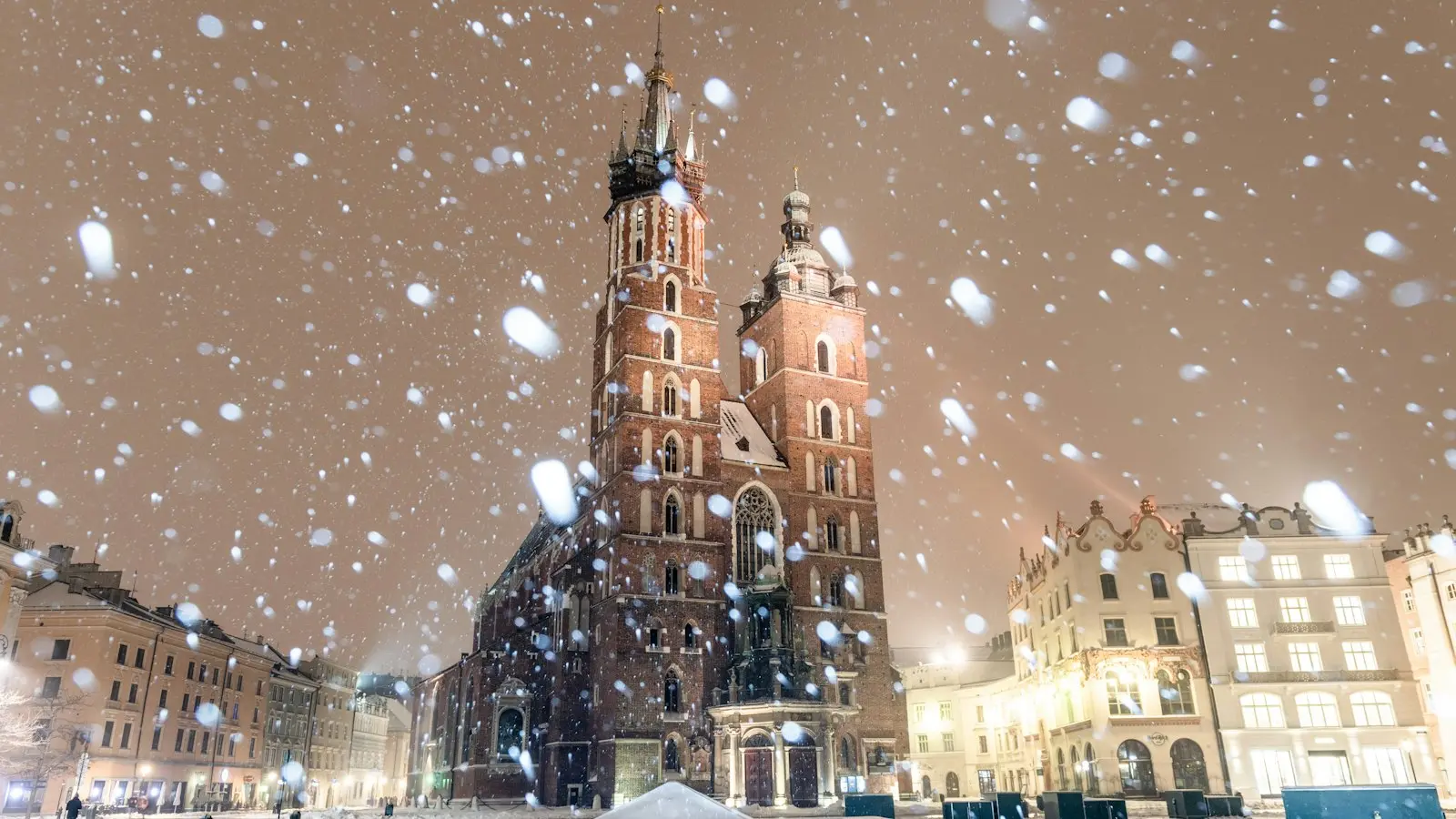
Krakow can be an excellent compact winter city break, especially if you like historic streets, substantial food, museums, and cafés that give a day a natural rhythm. Plan on two full days for the Old Town and Wawel area, or three days if you want Kazimierz, more indoor attractions, and room for weather delays. The important adjustment is not trying to reproduce a summer itinerary: shorter outdoor stretches, earlier sightseeing, warm layers, and a dependable indoor backup will make the trip feel much easier.
Winter conditions are variable, and attraction schedules and transport arrangements can change seasonally. Check official weather, attraction, airport, and public transport information close to your departure and again during the trip rather than relying on a plan made months ahead.
Key Takeaways
- Two full days can cover Krakow’s historic centre and Wawel; three days provide more flexibility for Kazimierz, museums, and weather delays.
- Plan outdoor sightseeing earlier in the day, when daylight is strongest, and keep indoor alternatives ready for rain, snow, ice, or wind.
- Pack versatile warm layers, weather protection, and shoes with reliable grip for wet or uneven historic streets.
- Confirm attraction hours, timed-entry rules, airport transfers, and public transport requirements using current official information.
- Book limited-capacity attractions and important restaurant reservations, but leave weather-dependent walks and casual meals flexible.
Decide How Many Days You Need for a First Winter Visit
Two full days can work for a first visit if your priorities are the historic centre, the Main Market Square, Wawel, a few food stops, and one or two carefully chosen indoor attractions. It will feel compact rather than leisurely, particularly if the weather is wet or icy and you need more time between stops.
A three-day Krakow winter itinerary is the more forgiving choice. It gives you one day for the Old Town and Wawel, another for museums and Kazimierz, and a third for anything postponed by poor weather, a late arrival, a long meal, or an attraction with limited entry times. It also reduces the temptation to treat every outdoor sight as a timed appointment.
A longer stay makes sense if you want a day trip, several museums, slower meals, or time beyond the central districts. Winter daylight and difficult walking conditions can make the same list of activities feel fuller than it would in warmer months. If your trip includes an excursion, avoid placing it on the first day unless the transport and timing are particularly flexible.
A useful decision rule is simple: choose two days for a focused Old Town and Wawel visit, and add a day when indoor attractions, Kazimierz, slower walking, or a day trip matter. A short visit is not automatically rushed, but it becomes rushed when every hour is assigned before you know the weather or opening hours.
Plan Around Krakow’s Winter Weather and Limited Daylight
Krakow winter travel requires preparation for changeable conditions rather than a promise of constant snow or deep cold. Depending on the time of year and the weather pattern, you may encounter cold rain, wet pavements, wind, snow, or occasional icy surfaces. A forecast for your actual dates is more useful than a seasonal stereotype.
Early darkness changes the order of a day. Put open-air sightseeing and longer walks toward the morning or early afternoon, when visibility is better and you are less likely to finish a route tired on unfamiliar, slippery streets. Save museums, churches, cafés, markets, and meals for the middle or later part of the day.
Check the forecast shortly before leaving home and each morning in Krakow. If rain or snow is expected, shorten the distances between stops rather than abandoning the day entirely. It is often more comfortable to visit one major outdoor area, take a warm indoor break, and then decide whether conditions justify continuing.
For Krakow weather packing, prioritise adaptable layers over a suitcase full of specialised clothing. A warm base layer, insulating middle layer, weather-resistant coat, gloves, hat, and warm socks are practical foundations. Shoes matter as much as the coat: choose footwear that is comfortable for several hours and has dependable grip on wet, uneven, or potentially icy paving.
Do not overpack simply because the forecast looks cold. One versatile coat, layers that can be removed indoors, and spare socks are generally more useful than multiple bulky outfits. A small bag that keeps gloves, tickets, a phone, and a portable charger accessible can also make transfers and outdoor stops easier.
Use a Flexible, Walkable Krakow Winter Itinerary
The central area is compact enough for a great deal of sightseeing on foot, but “walkable” does not mean every route will be comfortable in winter. Cold, luggage, snow, wet paving, mobility needs, and limited daylight all change the calculation. Treat walking as a useful option, not an obligation.
A practical day could begin with the Main Market Square and nearby historic streets while daylight is strongest. Continue toward Wawel if conditions are comfortable, then use a museum, church, café, or scheduled indoor attraction as a midday pause. In the afternoon, return to an outdoor area if the pavement and energy levels are cooperating; otherwise, make the rest of the day food-focused and indoors.
Old Town, the Main Market Square, and Wawel can reasonably be linked in one broad walking plan, but do not assume that every landmark, interior, and side street belongs in the same block. Kazimierz is another natural anchor for a separate half-day or evening, with restaurants and cafés helping break up the walking. Public transport or a taxi may be sensible when snow is falling, you are carrying luggage, or a route would otherwise leave you outside after dark.
For poor weather, keep the same shape but replace the longest outdoor segment. A museum followed by a café, a shorter historic walk followed by lunch, or two indoor attractions separated by a meal can still produce a satisfying day. Build only one or two fixed appointments around this structure and leave the gaps flexible.
Some stops are free-flowing, such as a square, neighbourhood walk, or café. Others may use timed entry, capacity limits, last-admission periods, or seasonal schedules. Check current information for major attractions before committing to a sequence, especially around public holidays and special events. Do not assume that a ticket guarantees an immediate visit at any time of day.
Prepare for Attractions, Transport, and Winter Disruptions
Attraction hours are one of the easiest ways for a winter itinerary to go wrong. Museums and historic sites may have different schedules by weekday, season, holiday, or event, and some may close individual sections even when the wider venue is open. Confirm opening hours, last admission, ticket rules, and timed-entry requirements directly with each attraction before your trip.
Reserve in advance when an attraction has limited capacity, timed entry, or a strong likelihood of selling out during your dates. The same applies to special seasonal events and restaurants that are central to your plans. By contrast, you usually gain more by leaving ordinary cafés, casual meals, and weather-dependent walks open.
For the airport journey, compare the current train, bus, taxi, and app-based options using Kraków Airport and relevant transport-operator information. Routes, operating arrangements, tickets, and prices can change, so avoid relying on an old travel post or an assumed journey time. If you arrive late, have heavy luggage, or face difficult weather, the cheapest option may not be the simplest choice.
In the city, check the current public transport network for routes, ticket types, validity periods, validation requirements, and any airport-specific rules. Keep tickets accessible and follow the instructions for the system you are using; buying a ticket and correctly validating or activating it may be separate steps. When information is unclear, use the current official network guidance rather than guessing from a previous visit.
Allow extra time for airport transfers and winter walking. Keep important reservations, accommodation details, and transport information available offline in case your phone battery or connection becomes unreliable. It is also wise not to schedule a non-refundable attraction immediately after landing, since arrival, luggage, weather, and transfers rarely behave with perfect precision.
Before departure, check current travel advisories and any weather-related transport notices relevant to your route. This is not a prediction that disruption will occur; it is a small planning step that can protect a short trip from avoidable stress.
Choose Food, Neighbourhoods, and Bookings That Fit the Trip
Food is not merely an evening activity in Krakow during winter. A café or restaurant stop can be the practical hinge between two outdoor sections, giving you time to warm up, dry off, and reassess the rest of the day. Planning meals near the next indoor or outdoor anchor is often more comfortable than crossing the city for every reservation.
Staying near the Old Town offers convenience for a first visit. Many headline sights, restaurants, and evening routes are close enough to reach without a complicated transfer, which matters when darkness comes early or the pavement is unpleasant. The trade-off can be higher accommodation prices or more evening activity nearby.
Staying in or near Kazimierz can provide a strong food and neighbourhood atmosphere, with the historic centre still reachable on foot or by public transport. It may suit travellers who want restaurants and bars close to their accommodation, but consider the return route in cold weather and the distance from your first morning appointment. Staying near Wawel or between the Old Town and Kazimierz can offer a useful compromise, though the best choice depends on the specific address rather than the district label alone.
Book timed-entry attractions, popular restaurants, and limited-capacity seasonal activities when they are important to the trip. Leave flexibility around outdoor sightseeing and casual meals, since a forecast can turn a long walk into a short one. For a two-day visit, reserve only the experiences you would genuinely regret missing; overbooking removes the flexibility that makes winter travel manageable.
Before leaving home, run through this Krakow travel planning checklist:
- Choose two or three full days according to whether you want a focused centre visit or a slower, broader trip.
- Confirm your accommodation location and the likely walking route from it.
- Check current attraction hours, closures, last admission, and timed-entry rules.
- Review airport-transfer and public transport information for your arrival time.
- Pack layers, weather protection, warm accessories, and grippy footwear.
- Check the forecast close to departure and each morning.
- Put outdoor highlights earlier in the day.
- Keep at least one indoor alternative available for every major sightseeing day.
- Avoid placing an inflexible booking immediately after arrival.
FAQ: Krakow Winter Travel Questions
How many days are enough for a winter trip to Krakow?
Two full days are enough for a focused first visit covering the Old Town, Main Market Square, Wawel, and selected indoor stops. Three days are preferable if you want Kazimierz, several museums, slower meals, or room for weather-related changes. Add more time if you plan a day trip or prefer not to move quickly.
What should I pack for Krakow in winter?
Pack versatile warm layers, a weather-resistant outer layer, gloves, a hat, warm socks, and comfortable shoes with reliable grip. Check the forecast immediately before packing, since winter may mean rain, snow, wind, or milder conditions rather than one fixed pattern. Prioritise footwear and layering over bringing too many bulky outfits.
Is Krakow easy to explore on foot in winter?
The historic centre is compact and many key areas can be linked on foot, particularly the Old Town, Main Market Square, and Wawel. Comfort depends on weather, pavement conditions, luggage, footwear, darkness, and mobility needs. Use public transport or a taxi when a route becomes impractical rather than treating walking as a test of the trip.