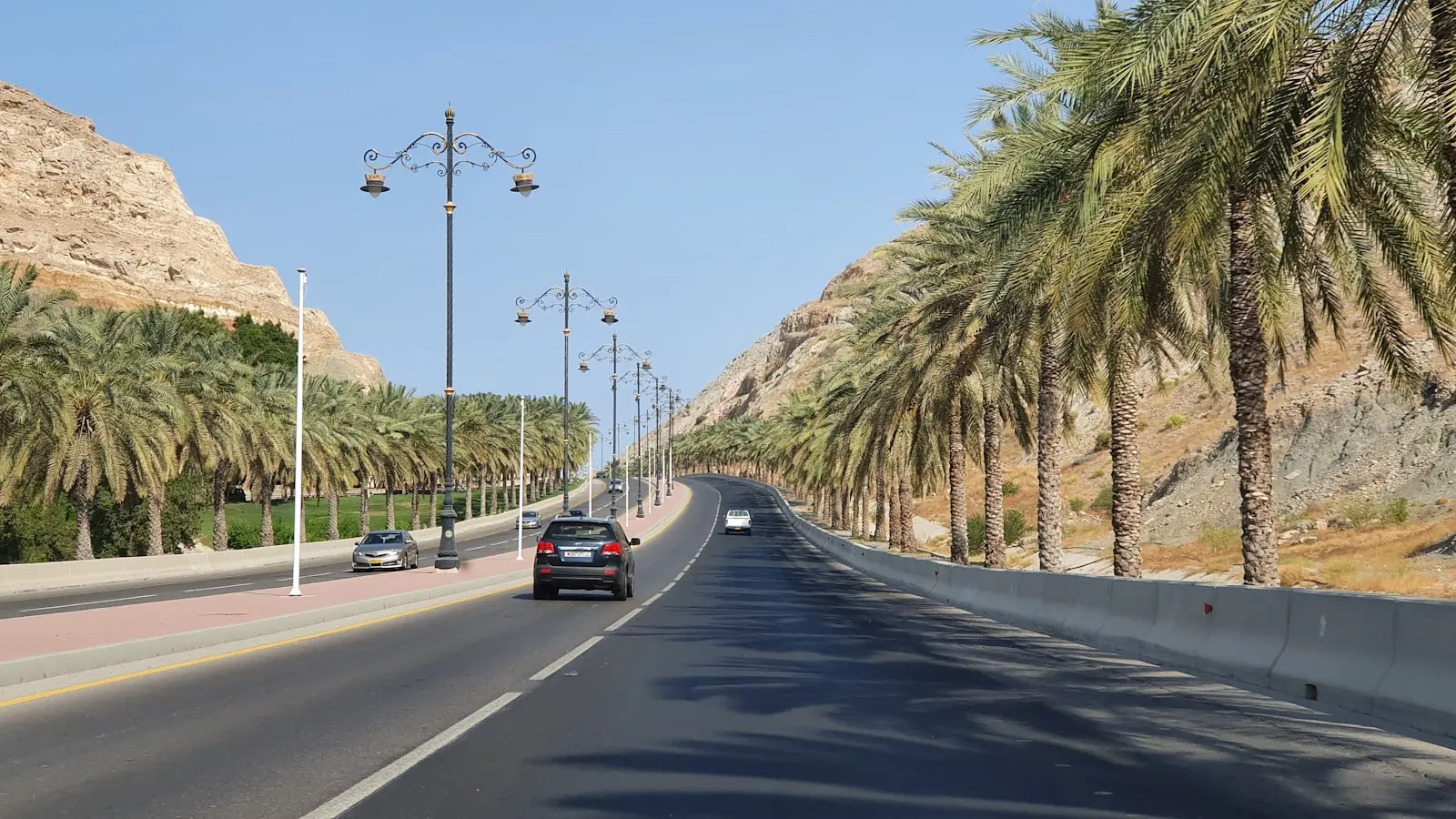
For a first-time visitor, Oman 4x4 mountain driving can be manageable when the route is maintained, confirmed open, permitted by the rental agreement, and completed in good daylight. A four-wheel-drive vehicle can add useful clearance and traction, but it cannot compensate for poor visibility, loose edges, floodwater, unfamiliar steep descents, or a driver who feels out of their depth.
The aim is not to reach every viewpoint. Choose a route with a comfortable margin for error, prepare the vehicle and plan before leaving town, and turn back early when conditions no longer match that plan.
Key Takeaways
- A 4x4 helps with traction and clearance, but it does not replace careful braking, route judgment, weather awareness, or experience.
- Confirm that your specific mountain route is open and permitted under your rental agreement; a 4x4 booking does not automatically allow off-road travel or wadi crossings.
- Start early, fill the tank, download offline maps, and plan to finish before dark.
- Do not enter flowing water or an uncertain wadi crossing, and turn back when weather, visibility, road conditions, or confidence deteriorate.
- Hiring a qualified local driver, joining a tour, or choosing a simpler route is often the better decision for first-time drivers.
Decide Whether You Are Driving a Mountain Road or Going Off-Road
The term “mountain driving” covers very different experiences. A maintained mountain road may be paved or regularly graded, yet still include sharp bends, steep gradients, narrow sections, loose debris at the edges, blind corners, and long stretches with few services. That can be demanding for anyone used to flat, well-lit roads.
Genuine off-road travel is another category. It may involve unsealed tracks, rough rock, deep ruts, soft ground, changing surfaces, uncertain turnarounds, and routes where recovery is difficult or expensive. Do not assume a route shown by a navigation app is suitable simply because it appears as a line on the map.
A 4x4 helps most with traction and ground clearance where the surface warrants it. It does not shorten braking distances on gravel, widen a narrow road, improve visibility around a bend, or make a water crossing predictable. On a steep, loose descent, smooth inputs, suitable speed, and sound judgment matter more than the badge on the tailgate.
Use a simple filter for every planned route: is it currently open, explicitly allowed by the rental contract, appropriate for the vehicle, and comfortably within your skills in daylight? If one answer is unclear, pause the plan and seek current local guidance. The Jebel Shams drive is a useful planning example because surface conditions, access arrangements, roadworks, weather, and the suitability of approach roads can change. Confirm the specific route rather than relying on an old itinerary or a broad description of the destination.
Book a Rental 4x4 Oman Vehicle With the Contract in Mind
The most important rental conversation happens before payment, not at the counter when bags are packed and daylight is slipping away. A booking labelled “4x4” describes a vehicle category; it does not automatically grant permission for unsealed tracks, remote routes, wadi crossings, or every mountain road.
Ask the rental company to clarify, preferably in writing, which roads and regions are permitted. Ask how the company defines off-road use, whether unsealed mountain roads are allowed, and whether named destinations or routes are excluded. The answer can differ between companies, vehicle classes, and insurance packages.
Read the insurance terms carefully. Clarify the excess you could be responsible for, plus exclusions for underbody damage, tires, wheels, water damage, towing, recovery, and travel outside approved roads. Also ask whether roadside assistance reaches remote mountain areas, what it covers, what recovery could cost, and what procedure applies if the vehicle becomes disabled.
Confirm rules for additional drivers, border travel, minimum age, licence history, and accepted licence formats. Visitor licensing requirements and rental acceptance policies may vary by nationality, residency, and licence format, so check current requirements with both the rental provider and relevant Oman authorities before booking.
At collection, inspect the vehicle slowly. Photograph existing marks, tire damage, and wheel scuffs so there is a clear record. Check tire tread visually, make sure a spare tire and the necessary tools are present, and locate the jack, warning equipment if supplied, and the rental company’s emergency instructions.
Before departure, identify the fuel gauge, lights, hazard lights, windscreen controls, temperature warning indicator, and any dashboard warnings. Ask how to engage available drive modes only if the company gives clear instruction. Do not alter tire pressure based on general advice; incorrect pressure can reduce control or create tire problems. Follow route-specific direction only from the rental company or a qualified local operator.
Build a Conservative Oman Mountain Road Safety Plan
A practical Oman road trip checklist is mostly about removing avoidable pressure. Start early, expect the drive to take longer than a map suggests, and aim to arrive before dark. Slow traffic, photo stops, missed turns, scenery, and changing road conditions all consume more time than visitors expect.
Fill the tank before entering mountain areas. Do not build a plan around finding fuel in a smaller settlement unless availability has been confirmed locally that day. A full tank preserves options if you need to reverse course, wait for conditions to improve, or take a longer maintained route.
Download offline maps before signal becomes unreliable. Save your accommodation, destination, and intended stops as pinned locations or coordinates, and keep a charged phone and power bank accessible. Tell a reliable contact where you expect to travel and when you expect to arrive.
Mobile service can be limited or inconsistent in remote terrain, so treat your phone as useful but not guaranteed. Navigation software can also suggest shortcuts that are unsuitable for your vehicle, confidence level, rental permission, or the day’s conditions. Compare app suggestions with road signs, local advice, rental restrictions, and current weather or road alerts.
Carry water, simple food, sun protection, a warm layer for higher elevations, a basic first-aid kit, and a flashlight. These items are a buffer against delays and can prevent rushed decisions when plans change.
Drive for Control and an Easy Exit
On mountain roads, drive for what you can see and control, not for the pace you might expect on an ordinary road. Reduce speed before entering a bend, leave more following distance than usual, and make braking and steering inputs gradual on loose or dusty sections. Where vehicle guidance and conditions support it, use lower gears to manage a descent rather than relying on repeated heavy braking.
Stay on the established road surface. Edges can be soft, crumbling, or deceptively narrow, particularly after weather changes. Pull over only in a stable, clearly safe space; a scenic shoulder beside a blind corner is not a parking bay.
Expect everyday hazards: loose rock, dust, livestock, stopped cars, pedestrians, oncoming traffic taking a wide line, and drivers who know the road better than you do. On narrow sections, patience is often the most useful driving skill. If you need to reverse or make room, do so only where you can see the surface and have enough room to act calmly.
Wadi driving advice should be especially conservative. Do not enter flowing water, a flooded crossing, or a wadi where the depth, current, roadbed, exit, or weather upstream is uncertain. Conditions beyond the visible stretch of road can affect water flow, and a dry-looking area can change quickly after rain elsewhere.
Make turning around part of the plan, not an admission of failure. Turn back if visibility worsens, rain begins near a wadi, the road becomes rougher than expected, a detour sends you onto an unknown track, or your confidence drops. Stop immediately for warning lights, overheating, tire damage, a barrier, active rainfall in a flood-prone area, or any local instruction to halt.
Let Weather and Experience Make the Final Decision
Mountain weather can quickly change the character of a route. Rain can affect visibility, surface grip, loose material, and watercourses, while low cloud or dust can make bends and road edges harder to read. Before departure, check current official Oman weather and road or travel alerts. If conditions look uncertain, ask your accommodation, rental provider, or local operators for practical updates.
Use an honest self-assessment. Are you comfortable with sustained steep descents? Could you reverse or turn around safely on a narrow road? Have you controlled a vehicle on loose surfaces before? Can you recognise when the route is no longer what you agreed to drive? Most importantly, can you abandon the plan without feeling pressured by a reservation, a view, or a schedule?
If the answer is no, there are good alternatives. Hire a qualified local driver or guide, join a tour, choose a maintained lower-risk route, or focus on inland towns and cultural stops that do not require remote mountain sections. These options can turn a tense day into a more enjoyable and observant one.
Closures, barriers, police instructions, rental-company restrictions, and current local safety advice always override a general guide. For a first-time driver, the right route is often the one that leaves enough energy to enjoy the mountain once you arrive.
FAQ
Do I need a 4x4 for the Jebel Shams drive?
That depends on the specific approach road, its current surface, weather, access rules, and your rental agreement. Confirm the route locally before departure rather than assuming all roads to the area have the same vehicle requirement. A 4x4 may be appropriate for some approaches, but it is not a substitute for checking current conditions.
Does rental car insurance in Oman cover mountain roads and wadi crossings?
Do not assume it does. Coverage can vary by company, vehicle, policy, road type, and the cause of damage. Ask specifically about mountain roads, unsealed routes, wadis, underbody damage, tires, towing, recovery, and roadside-assistance limits before driving.
Is it safe to drive Oman mountain roads after dark?
For an unfamiliar first-time driver, finishing before dark is the more cautious plan. Darkness reduces visibility of bends, loose edges, stopped vehicles, animals, and route changes, while making navigation and recovery more complicated. If delays threaten that plan, consider turning around, staying nearby, or choosing a safer alternative rather than pushing onward.