The short answer: choose by travel priorities
Choose Santorini if you want dramatic caldera views, cliffside villages, volcanic scenery, famous sunsets, and a compact romantic escape. Choose Naxos if you want broader beaches, easier swimming, village visits, local food, open landscapes, and a less compressed pace.
Neither island is universally better. Santorini offers a highly recognizable visual experience, while Naxos gives you more variety over a longer stay. The best choice depends on whether your ideal Greek island trip is built around landmark views or a wider mix of beaches, food, countryside, and everyday island life.
Key takeaways
- Choose Santorini for caldera scenery, architecture, sunset settings, volcanic landscapes, and a short romantic trip.
- Choose Naxos for beach variety, swimming, local food, mountain villages, family-friendly flexibility, and a longer stay.
- Naxos is often better value, but season, location, booking timing, and accommodation type matter more than the island name alone.
- Three days can work on either island; Santorini suits a concentrated visit, while Naxos generally rewards five to seven days.
- Combining both makes most sense on a longer trip, since ferry transfers and port logistics can consume valuable time.
| Priority | Better fit |
|---|---|
| Dramatic viewpoints and caldera architecture | Santorini |
| Broad choice of beaches and swimming | Naxos |
| Romantic short break | Santorini |
| Family-friendly variety | Naxos |
| Traditional villages and inland drives | Naxos |
| Famous sunsets and photography | Santorini |
| Relaxed waterfront evenings | Naxos |
| A week with flexible day plans | Naxos |
| First Greek-island trip centered on iconic scenery | Santorini |
It is also worth defining “aesthetic.” For one traveler, it means whitewashed buildings above a blue caldera. For another, it means a long sandy beach, mountain villages, farmland, stone lanes, or a photogenic harbor. That distinction explains much of the Naxos versus Santorini debate.
Scenery, viewpoints, beaches, and swimming
Santorini is the stronger choice for concentrated drama. Its settlements sit high above the caldera, creating layered views of white buildings, dark volcanic cliffs, blue water, and an exposed horizon. Oia, Fira, and the walking route between them are especially suited to viewpoints and photography.
The island’s volcanic character adds to its appeal. Dark beaches, unusual rock formations, caldera excursions, and exposed cliff scenery give Santorini a geological identity that differs from the softer, more agricultural feel of many Cycladic islands. If your itinerary is mainly about cliffside architecture and sunset locations, Santorini has the clearer advantage.
Naxos is less about one overwhelming panorama and more about changing scenery. It combines a lively waterfront capital, inland mountain villages, farmland, olive groves, elevated roads, and a long western coastline. That makes it a better fit for travelers who enjoy scenic drives or want the landscape to change from one day to the next.
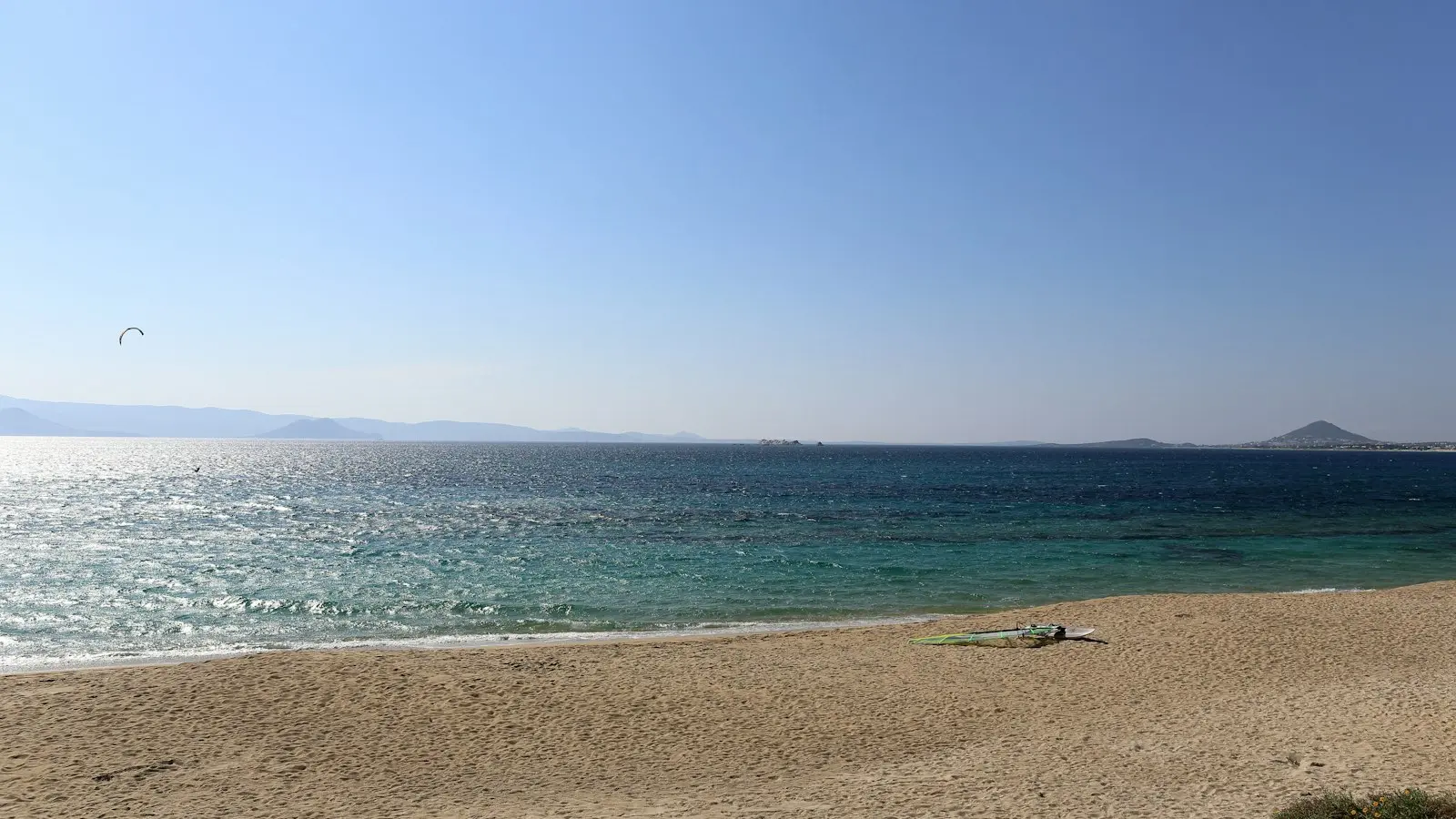
Naxos is generally the stronger choice for a beach-focused holiday. Its western beaches offer long stretches of sand and convenient access to the water, with several areas suitable for swimming, sunbathing, and spending most of a day outdoors. Facilities, shade, wind exposure, and water conditions vary, so check current local conditions rather than assuming every beach will feel the same.
Santorini has beaches, but they are usually chosen for their distinctive setting rather than for a classic, expansive beach holiday. Some have dark volcanic sand or pebbles, and access can involve steps, uneven ground, or a drive from the main caldera settlements. Swimming is possible, but the experience differs from settling into a broad sandy bay on Naxos.
For the best Greek island for beaches, Naxos is the safer recommendation. For iconic views, volcanic scenery, and photography, Santorini wins. Wind, sea conditions, seasonal facilities, and local access can change throughout the year.
Food, villages, atmosphere, and nightlife
Naxos has a strong agricultural identity, and that shapes the holiday in practical ways. Meals often involve local cheese, potatoes, vegetables, meat, seafood, and village tavernas rather than only destination restaurants. A day can combine a beach, an inland village, a scenic road, and a long dinner without feeling over-programmed.
The island’s villages are a major reason to stay beyond the coast. Mountain settlements offer a different rhythm from the waterfront, with narrow lanes, small squares, older houses, and tavernas that reward an inland detour. Naxos suits travelers who want local atmosphere to be part of the itinerary rather than simply a backdrop between major sights.
Santorini has a strong food and wine proposition, but it is more concentrated and often more expensive in areas with caldera views. The island works particularly well for travelers who enjoy destination dining, winery visits, polished bars, and meals attached to a specific view or occasion. The trade-off is that its most scenic locations can feel more like highly visited settings than ordinary island neighborhoods.
Nightlife depends on what “going out” means to you. Santorini offers sunset bars, stylish venues, hotel lounges, and restaurants clustered around its best-known settlements. It can feel lively and sophisticated, especially in peak periods, but it is not necessarily a nonstop club destination.
Naxos tends toward relaxed waterfront evenings, cocktail bars, tavernas, and village dining. There is activity around Chora and the beach areas, but the rhythm is generally less concentrated. Families, food-focused travelers, and couples who prefer conversation over a tightly scheduled nightlife scene may find Naxos easier to settle into.
Neither island should be reduced to a stereotype. Naxos is not empty or untouched, and Santorini is not crowded in every place at every hour. Location, season, cruise-ship activity, time of day, and the popularity of particular viewpoints all affect the atmosphere.
Costs, crowds, and value for different trip styles
Naxos is generally easier to make work across a range of budgets, especially for travelers staying several nights or choosing accommodation away from the most prominent waterfront locations. It often offers more choice among apartments, family-run rooms, self-catering properties, and conventional hotels. That does not make every Naxos stay inexpensive, particularly in peak summer.
Santorini can command a premium for caldera-facing rooms, private terraces, pools, sunset views, and central locations. The difference is not automatic: a simple room away from the caldera may compare favorably with a high-end Naxos property. However, the visual experience that attracts many visitors is often tied to the part of the island where accommodation and dining costs are highest.
When estimating Santorini trip costs, look beyond the room rate. Include airport or port transfers, meals, drinks, taxis, car hire, boat trips, winery visits, and the cost of staying in a convenient location. On Naxos, account for transport to beaches or villages, vehicle hire if needed, and travel between a coastal base and inland attractions.
Crowds are similarly location-dependent. Santorini’s famous viewpoints, narrow lanes, sunset locations, and cruise-ship arrival periods can become intensely busy in high season. The island can still offer quieter moments with early starts, careful base selection, and visits to less concentrated areas.
Naxos usually spreads visitors across more types of landscape and activity, which can make a full week feel less compressed. Popular beaches and Chora are not free from crowds, especially in summer, but the island generally gives you more alternatives when one place feels busy.
Shoulder seasons can improve value and comfort on both islands, although opening hours, transport frequency, weather, and beach facilities may be more limited than in high summer. Check availability and schedules for your actual travel dates.
Access, transport, and ideal itineraries
Both islands can be reached by ferry from mainland Greece and other Cycladic destinations. Santorini and Naxos also have airports, but flight routes and service frequency vary by season. Ferry routes, operating days, travel times, and flight connections should be treated as date-specific rather than permanent.
Santorini’s airport and port are separate from the main caldera settlements. A transfer may involve traffic, queues, luggage handling, and a walk or climb once you reach a hillside hotel. Walking works well in the main villages, but reaching beaches and other settlements requires buses, taxis, organized trips, or a rental vehicle.
Naxos has a more spread-out holiday geography. Chora is useful for waterfront evenings and some bus connections, but beach bases and inland villages are separate destinations. Public buses can be sufficient for a simple town-and-beach itinerary, while a car adds flexibility for villages, remote beaches, and scenic routes. Consider your comfort with narrow roads, parking, heat, and driving before renting.
For three days, Santorini can be effective if you plan around its main strengths. Allow time for a caldera village, a scenic walk or viewpoint, one coastal or volcanic activity, and a carefully timed sunset. Three days is enough for a strong introduction, but not enough to explore every side of the island without rushing.
A three-day Naxos itinerary could combine Chora, one or two beaches, an inland village route, and local dinners. It works best when you accept that you are sampling the island rather than covering it. Naxos may feel less immediately dramatic than Santorini, but it can provide a more balanced short break.
Over a week, Santorini rewards slower planning: several caldera settlements, a winery or food experience, different beaches, a boat excursion, and quieter periods away from the headline viewpoints. You will need to manage transfers and crowds thoughtfully.
Naxos is often better suited to a full week because its variety unfolds gradually. You can divide time between beaches, Chora, mountain villages, agricultural landscapes, archaeological sites, and long meals without repeating the same type of day. It also leaves more room for a weather change or an unplanned afternoon.
Visiting both islands can make sense on a longer Greek island itinerary, particularly if you want Santorini’s landmark scenery followed by Naxos’s beaches and slower pace. On a short trip, the transfer, port logistics, and check-in time can consume a meaningful part of the holiday. Combining them is most worthwhile when the contrast is central to your plans.
Who should choose Naxos and who should choose Santorini?
Choose Naxos if most of these statements sound like you:
- You want several good beach days and straightforward swimming.
- You enjoy local food, village tavernas, and inland landscapes.
- You are traveling with children and want variety rather than one concentrated sightseeing zone.
- You prefer a relaxed evening rhythm to a highly organized sunset scene.
- You are staying a week or longer.
- You want the option of exploring by car, bus, or a flexible mix of both.
- You value choice and a holiday that does not depend on one famous viewpoint.
Choose Santorini if these priorities matter more:
- You want caldera views, cliffside architecture, and volcanic scenery.
- A sunset setting is central to the trip.
- You are planning a romantic celebration or a compact first Greek-island visit.
- You prefer destination dining, wine experiences, and polished visitor infrastructure.
- You are comfortable paying more for a particular view or location.
- Three days may be enough, provided you plan your key experiences carefully.
The simplest decision rule is this: choose Naxos for beach variety, local atmosphere, flexibility, and a longer stay; choose Santorini for dramatic scenery, architecture, and a concentrated visual experience. The most useful answer to “Naxos or Santorini” is not which island is objectively superior, but which one matches the holiday you actually want.
FAQ
Is Naxos or Santorini better for beaches and swimming?
Naxos is generally better for a beach-focused holiday, with more choice of sandy coastal areas and easier opportunities to spend a full day by the water. Santorini’s beaches are distinctive and volcanic, but they are usually chosen for their setting rather than their breadth or classic swimming comfort.
Is Naxos cheaper than Santorini for a holiday?
Naxos is often easier to manage on a moderate budget, particularly for longer stays and flexible accommodation. Santorini can cost more when you choose caldera views, central locations, peak-season rooms, taxis, and destination dining. Season, booking timing, and property type can change the comparison.
How many days do you need in Naxos or Santorini?
Three days can give you a satisfying introduction to either island. Santorini suits a shorter, view-focused trip, while Naxos tends to reward five to seven days because its beaches, villages, food, and inland scenery are more spread out. Check current transport schedules before committing to a tight island-hopping plan.