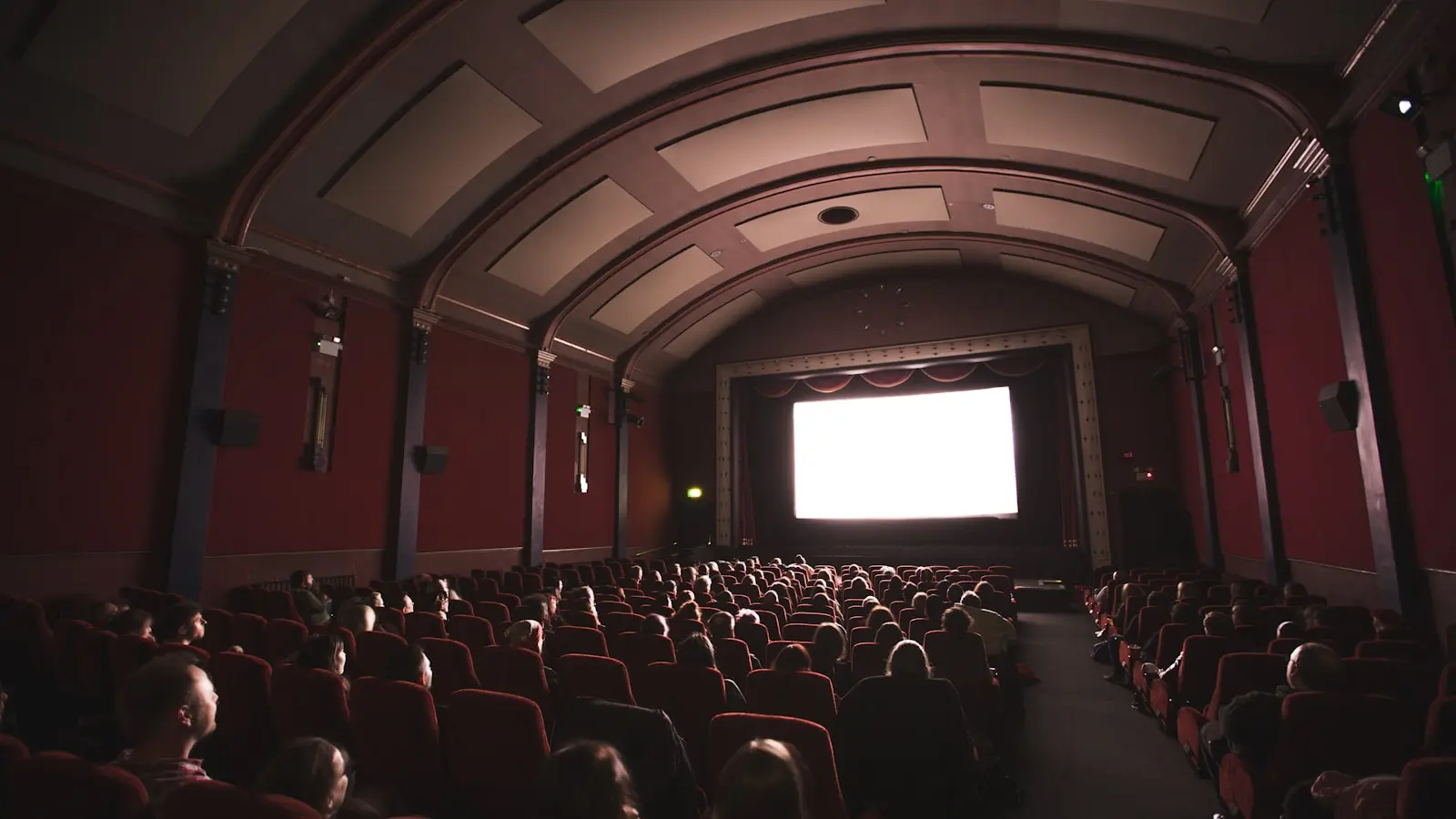
A live cinema simulcast lets multiple theaters present the same program at nearly the same time. But “simultaneous” usually means closely coordinated, not that every screen shows the identical frame at the identical instant. Small differences arise as video moves from production equipment through distribution systems and each theater’s local playback chain.
Key Takeaways
- Live cinema simulcast technology coordinates one program across many venues, but perfect frame-for-frame synchronization is not guaranteed.
- Delay can be introduced by production processing, encoding, transmission, buffering, decoding, and theater equipment.
- More buffering can make a feed more resilient, but it generally increases the gap between the source event and the screen.
- A disruption at one theater may be caused by that venue’s equipment, reception, power, or operations rather than the central broadcast.
- Authorized delivery and controlled playback can protect exclusive footage without making every theater’s setup identical.
What “simulcast” means at a movie theater
A live cinema simulcast is one program delivered for coordinated presentation at multiple theaters. The goal is a shared audience experience: viewers in different cities can watch the same performance, interview, concert, or special presentation within a closely aligned window.
That differs from a promise of perfectly identical real-time playback. Even when every venue receives the same source program, each location has its own connection, receiving equipment, buffering rules, playback system, projector, sound chain, and staff procedures. Those variables can create small timing differences.
“Live” can also describe several different formats. A near-live feed is captured at the event and reaches theaters shortly afterward. A scheduled shared presentation starts at an agreed time and may combine live elements with preloaded material. A delayed relay is shown after the original event has ended.
The distinction matters when a host refers to another city or reacts to something happening at the venue. One theater may receive that moment slightly before another. That does not automatically mean one location is watching a recording; it may simply be operating with a different amount of delay.
From cameras to projector: the live cinema simulcast technology chain
The process begins at the production site. Cameras capture video, microphones capture speech, music, and audience sound, and a production team selects shots, mixes audio, adds graphics where needed, and creates the finished program feed.
That feed is sent to an encoder. Encoding converts the production signal into a form that can be transported and decoded efficiently at distant locations. The encoded program is then distributed to theaters through a delivery path selected for the event.
A simplified live cinema simulcast technology chain looks like this:
Cameras and microphones → production switcher and audio mix → encoder → distribution path → theater receiver or playback system → projector and cinema sound system.
The distribution path is not universal. Event cinema may use managed IP connectivity, dedicated network arrangements, satellite cinema broadcast workflows, or internet-based delivery with local buffering. Some presentations also combine pre-positioned media files with a live segment or a timed playback cue.
Pre-positioned content can reduce the amount of material that must travel live. For example, trailers, introductions, or high-resolution prerecorded segments may already be available at the theater, while a live discussion or performance arrives through a separate feed. The theater system then plays the appropriate component at the scheduled time.
The key trade-off is between immediacy and resilience. Lower delay leaves less time for the system to absorb uneven data delivery. A larger buffer gives the theater more media to play while incoming data catches up, helping it ride through brief disruptions. The cost is that the audience sees the event farther behind the source.
Why theaters can be close together in time but not perfectly simultaneous
Cinema livestream synchronization involves several stages, and each stage can add a little time. Production switching, audio processing, graphics, encoding, packaging, transmission, decoding, and local playback all contribute to the total delay.
Once the signal leaves the production site, it may travel through different routes or encounter different reception conditions on its way to each venue. A theater using the same overall delivery method as another theater can still have different local network behavior, receiver settings, or buffer levels.
At the venue, a receiver or playback server may intentionally maintain a buffer. This temporary reserve helps avoid visible freezes or audio dropouts when the incoming feed fluctuates. The feed is then decoded and passed through local video and audio processing before reaching the projector and cinema sound system.
That is why live broadcast latency is not one universal number. It depends on the complete system design and current operating conditions, not simply on whether the event uses satellite, IP delivery, or a locally managed playback workflow.
A shared clock and coordinated playout instructions can help theaters start and operate in close alignment. They cannot remove every venue-specific variable. One theater may recover from a brief signal fluctuation differently, use a different buffer setting, or require local operator intervention at a different moment.
Consider a theater that briefly loses picture while other cities continue normally. The source production may still be operating correctly. The problem could be local reception, a receiver, a playback device, a projector connection, audio-video processing, power, or venue operations. The visible interruption does not, by itself, reveal which part of the chain failed.
How event cinema teams keep the show running
Reliable event cinema depends on preparation as much as transport technology. Before a presentation, technical teams may confirm signal arrival, picture framing, audio presence, playback readiness, and communication paths between the venue and central operations.
During the event, monitoring helps separate a central issue from a venue-specific one. Teams may check incoming signal status, playback state, projector output, sound routing, and system alerts. A missing image, for example, may require a different response from missing audio or a stalled playback device.
Depending on the event, resilient designs may include alternate delivery paths, redundant receivers, backup playback assets, spare hardware, and escalation procedures. Not every program needs the same level of redundancy. A smaller one-night presentation may be managed differently from a complex event delivered to many theaters.
Failover is useful, but it is not invisible in every case. Switching to a backup can preserve continuity while creating a short interruption. It can also place one theater on a slightly different delay if the backup uses another route, buffer, or playback method.
This is the practical meaning of theater live event delay. Operators generally aim to keep the presentation watchable and restore it quickly, rather than preserve perfect frame-level alignment through every possible fault. A brief mismatch can be preferable to a longer blackout.
Controlled access for exclusive live footage
When a program includes exclusive footage, organizers need a way to deliver approved content to authorized venues and keep playback within the intended event workflow. This supports both rights management and dependable exhibition.
Possible controls include authenticated delivery, systems limited to approved devices or accounts, encrypted media, timed permissions, and venue-side playback restrictions. These are broad approaches, not a claim that every event uses the same measures.
The specific method can vary with the distributor, platform, content agreement, and theater setup. A venue may receive a continuous live feed, a protected media file before the event, or a hybrid package that combines preloaded assets with live segments.
For audiences, these controls are usually invisible. They can help ensure content is played at the appropriate place and time, but they do not mean every theater has identical hardware, connectivity, or delay. Access control and synchronization may operate within the same workflow, yet they solve different problems.
FAQ
Are live cinema simulcasts truly live in every theater?
They can be live in the sense that venues receive the same ongoing program, but they may not be perfectly simultaneous. Encoding, transport, buffering, decoding, and local playback can leave each theater slightly behind the source and slightly apart from other venues.
Why does one theater lose the feed while another theater keeps playing?
A problem can occur at one venue without affecting the central production or other theaters. Possible causes include local reception, playback equipment, projector connections, audio processing, power, or venue operations. The symptom alone does not identify the cause.
Is satellite cinema broadcast faster than internet delivery?
Not automatically. The final delay depends on the whole system, including encoding, transport, buffering, decoding, and theater playback. Satellite and IP-based delivery can both support event cinema, but neither label alone determines which approach will have lower delay or stronger continuity for a particular event.