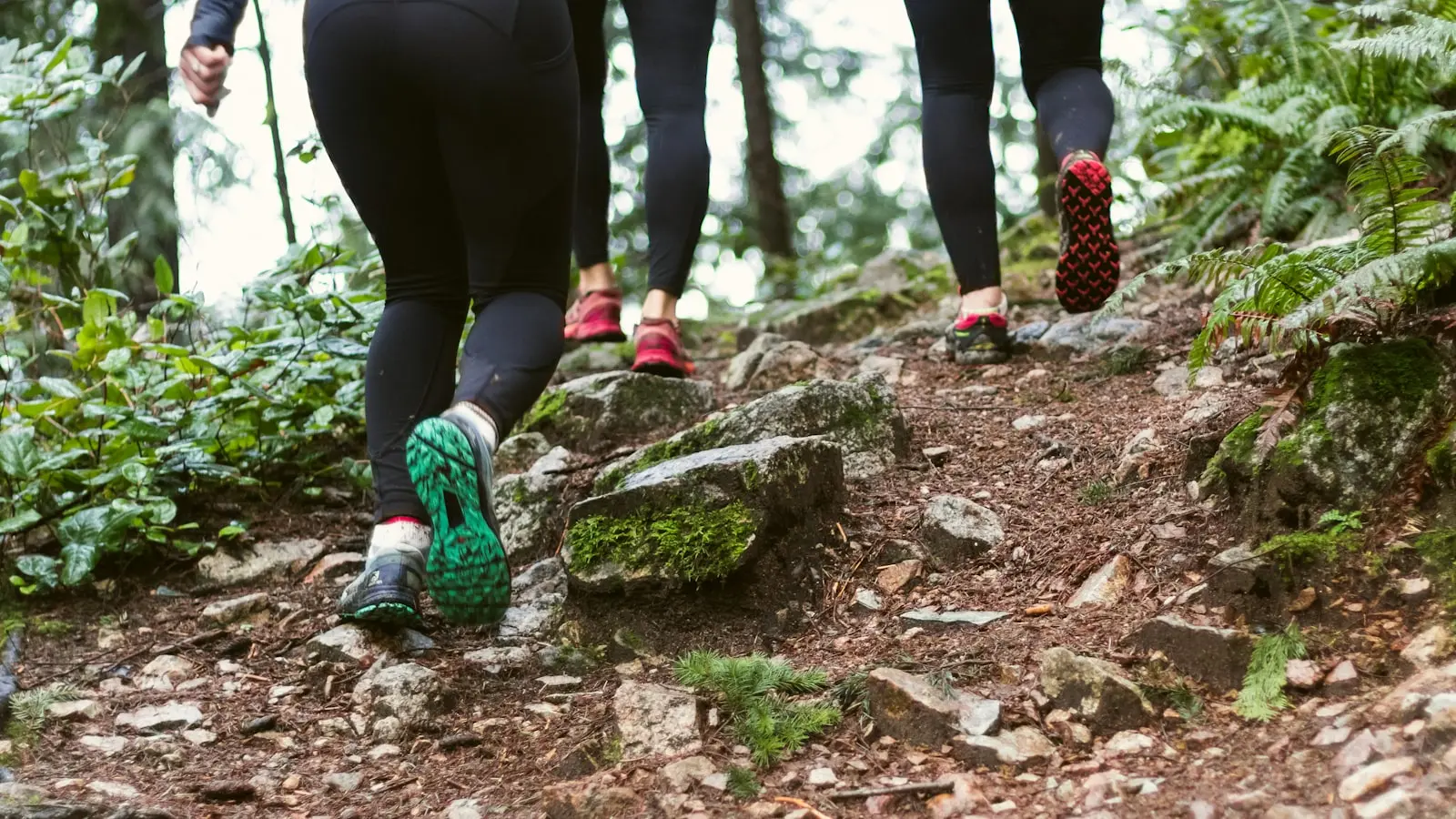
Trail runners often prefer lightweight shoes because they enhance ground feel, foot turnover, and agility on technical terrain. However, cushioned models offer clear benefits for long ultras and recovery. The right choice depends on your specific running conditions and biomechanics.
Key Takeaways
- Lightweight shoes improve proprioception and foot turnover, reducing tripping risk on technical trails.
- Every 100 grams saved per shoe may improve running economy by roughly 1-2%, though individual results vary.
- High-cushion shoes reduce muscle fatigue over ultra distances and on hard-packed surfaces but compromise stability.
- Stack height above 30 mm increases ankle rolling risk on uneven ground.
- No single shoe type is best; choose based on terrain, distance, injury history, and running style.
The Evolution from Heavy Boots to Light Trail Runners
Trail running footwear has undergone a dramatic transformation over the past few decades. Traditional leather boots weighing over 600 grams per shoe have given way to modern trail runners that often weigh under 300 grams. The shift accelerated as runners realized that heavy footwear slowed them down and increased fatigue on technical terrain. Early minimalist pioneers demonstrated that less shoe could mean more speed and agility. Today, the market offers everything from sub-200-gram racing flats to 350-gram cushioned models. The core driver of this evolution remains the pursuit of faster foot turnover and better ground connection on uneven ground.
Biomechanics of Shoe Weight: Faster Turnover, Lower Energy Cost
Every gram of shoe weight matters during a run because the foot must accelerate and decelerate it with each stride. Research suggests that reducing shoe weight by 100 grams per shoe can improve running economy by roughly 1-2%, though the exact figure depends on the runner’s speed, distance, and terrain. This efficiency gain comes from decreased oxygen consumption and a slightly higher stride frequency. Lighter shoes allow the foot to move more quickly, which helps in making rapid adjustments on rocky or root-covered paths. The downside is that minimal cushioning may increase impact forces, especially on hard surfaces or during very long efforts. The trade-off between weight savings and impact protection is central to the lightweight vs cushioned debate.
Ground Feel and Proprioception: Why Less Shoe Is Safer on Technical Trails
Ground feel refers to the sensory feedback transmitted from the foot’s mechanoreceptors to the brain, providing information about surface texture, slope, and stability. Lightweight, low-stack shoes maximize this feedback because the thin midsole does not dampen the signal. On technical terrain with loose rocks, slick roots, or steep cambers, this real-time information allows runners to micro-adjust foot placement and balance more quickly. Many experienced trail runners report fewer trips and falls after switching from high-cushion shoes to more minimalist designs. Biomechanically, thicker midsoles delay the reflexive muscle responses needed to correct for an unexpected rock or root. While ground feel is less critical on smooth fire roads, it becomes a primary safety asset on rugged singletrack.
When Cushioning Dominates: Ultra Distances, Hard-Packed Surfaces, and Recovery
Heavily cushioned shoes have clear advantages in certain scenarios. During ultramarathons exceeding 50 miles, the cumulative impact of thousands of foot strikes can lead to significant muscle fatigue and joint stress. High-stack shoes with soft foam absorb more shock, reducing the load on calves, knees, and hips over long hours. They also excel on hard-packed surfaces like gravel roads or packed dirt where there is little natural shock absorption. Recovery runs after strenuous workouts or races also benefit from extra cushioning, as it allows the legs to log miles with less pounding. Post-injury periods often call for maximum protection to avoid aggravating sensitive tissues. However, testers and reviewers consistently note that very cushioned shoes sacrifice stability and durability, especially when carrying a heavy pack or navigating uneven ground. Rock plates and deep outsole lugs can help protect the foot in lightweight shoes, but they cannot fully replace the shock attenuation of thick foam.
The Stability Trade-Off: Stack Height, Ankle Rolling, and the Drop Debate
Stack height—the amount of material between the foot and the ground—ranges from about 16 mm in minimalist shoes to over 40 mm in max-cushion models. The trade-off is straightforward: higher stack heights increase cushioning but also raise the center of gravity and leverage on the ankle joint. On technical terrain, this makes the ankle more susceptible to lateral rolling and sprains. Lighter, lower-stack shoes keep the foot closer to the ground, improving stability. Drop, or heel-to-toe offset, adds another layer of complexity. Zero-drop shoes encourage a more natural midfoot or forefoot strike but can strain the Achilles and calves in runners not accustomed to them. Traditional drops of 8-12 mm shift load toward the heel and may be more comfortable for heel-strikers. Sports medicine professionals emphasize that individual biomechanics—such as foot strike pattern, arch type, and Achilles flexibility—matter more than any single design feature. There is no universal best drop or stack height.
Individual Factors: Putting It All Together for Your Next Shoe Decision
Choosing between lightweight and cushioned trail shoes requires honest assessment of your typical running conditions and personal physiology. Ask yourself: What is the primary terrain? Technical, rocky trails favor lightweight, low-stack shoes for ground feel and stability. Smooth fire roads or long ultras favor more cushioning. How far do you typically run? Distances under 20 km are well served by lighter shoes; beyond 50 km, cushioning becomes more important for fatigue management. What is your injury history? Runners with chronic ankle instability should prioritize lower stack heights, while those with recurring stress fractures or plantar fasciitis may benefit from more impact protection. Your running style also matters: forefoot strikers can adapt to zero-drop lightweight shoes more easily than heel strikers. Consider consulting a running specialist for gait analysis and fit advice. Many experienced trail runners maintain a rotation—using lightweight shoes for short, technical days and cushioned models for long, smooth efforts. There is no one-size-fits-all answer; the right shoe is the one that matches your personal priorities and the demands of your most common runs.
FAQ
1. Do lightweight trail running shoes cause more injuries?
Research shows mixed results. Some studies find no significant difference in overall injury rates between lightweight and cushioned shoes, while others indicate that individual biomechanics—such as foot strike and pronation—play a larger role than shoe category alone. The claim that minimalist shoes inherently strengthen feet over time is not strongly supported by current evidence. Injury risk depends more on how the shoe interacts with your unique gait and the terrain you run on.
2. How much does “ground feel” actually matter for a recreational trail runner?
Ground feel becomes critical on technical trails with loose rocks, roots, or steep descents, where quick foot adjustments can prevent falls. For runners who stick to well-groomed paths or wide fire roads, moderate cushioning may still allow enough sensory feedback. The benefit is most pronounced for those who prioritize agility and downhill confidence. If you rarely run on rough singletrack, you may not need a minimalist shoe.
3. What stack height separates a “minimalist” from a “cushioned” trail shoe?
There is no industry-wide standard, but most classifications consider under 20 mm heel stack as minimalist, 20-30 mm as moderate, and above 30 mm as maximal cushioned. The average trail shoe sits around 32 mm heel stack. Keep in mind that stack height is only one parameter; foam density, rock plates, and outsole design also affect overall feel and protection.