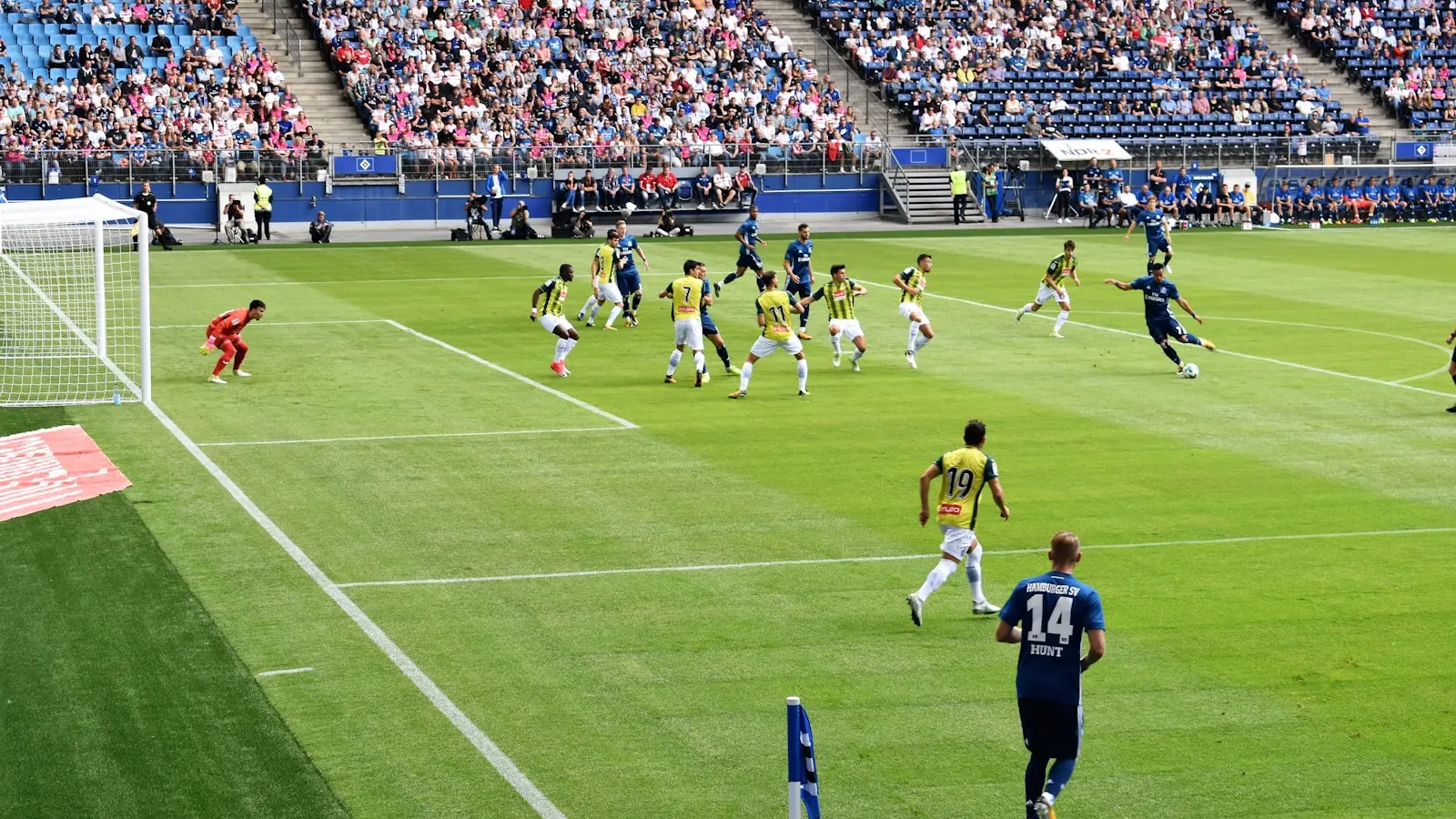
Teams often reduce late game soccer pressing because a high press works only when the entire side moves as one. In a close match, one late run, missed cover shadow, or mistimed step can open a route through midfield and expose the defense.
That does not automatically mean a team is playing timidly. The key issue is whether it has replaced constant pressure with an organized, selective plan—or simply surrendered territory and control.
Key Takeaways
- A high press is a coordinated risk-reward system, not just a test of effort.
- Fatigue can affect repeated sprinting, recovery runs, timing, and communication between teammates.
- Protecting a narrow lead often makes compactness and central protection more valuable than chasing every high turnover.
- A mid-block or low block can still be proactive when it uses clear pressing triggers and retains an outlet after regaining possession.
- Late-match defending becomes excessive caution when it allows repeated central access and offers no way to relieve pressure.
Pressing Is a Coordinated Risk, Not Simply Running Harder
A high press is collective pressure on the ball carrier and nearby passing options. Its purpose is not merely to win a tackle. It can force a rushed pass, guide play toward the touchline, create a turnover, or make the opponent play a less dangerous ball forward.
The first player to close down is only the visible part of the move. Teammates must screen passing lanes, cover likely receivers, push the midfield line forward, and leave enough protection behind the press in case the opponent plays through it. The back line must also decide whether to step up, hold position, or protect space behind it.
That is why one forward chasing a center-back is not necessarily a press. If the midfield stays deep, a full-back does not narrow, or another forward leaves the return pass open, the opponent can simply play around the first challenge. The chasing player has then left the defensive structure without creating meaningful pressure.
Earlier in a match, players may close space quickly enough to make the opponent’s next pass predictable. Later, even a slight loss of timing can change the picture. If a center-back gets an extra second to look up, they may find a midfielder beyond the first line, leaving defenders to run toward their own goal.
A high press always accepts some exposure in return for the chance to regain the ball in a valuable area. Late in a close match, the cost of that exposure can rise faster than the reward.
Why Soccer Pressing Fatigue Changes the Late-Match Calculation
Soccer pressing fatigue is about more than looking tired. Pressing involves repeated accelerations, decelerations, changes of direction, passing-lane screens, recovery runs, and quick decisions. The demanding part is repeating those actions while remaining connected to teammates.
As fatigue builds, players may arrive a fraction later to close the ball or recover more slowly after the opponent breaks the first challenge. Small delays can widen the gaps between the forward line and midfield, or between midfield and defense. An opponent does not need an exceptional pass if simple connections through those spaces are available.
Communication can become harder to maintain under late-match physical and mental stress. Two players may jump toward the same receiver while another opponent is left free. Or each player may expect someone else to press, allowing the ball carrier to turn and face forward.
Those are tactical errors rather than proof of poor effort. But they are more likely when players have already spent much of the match making high-intensity defensive actions.
Fatigue is not the only reason teams lower their press. Fitness, substitutions, match tempo, weather, travel, and the amount of defensive work already completed all matter. Some teams deliberately reduce their pressing height even when they still have the energy to press because the scoreline makes field position and defensive structure more valuable.
The important distinction is between conserving effort and preserving structure. A team may run less in the opponent’s half because it is saving its most intense actions for moments when a regain is more likely.
Why Score, Time and Opponent Shape the Plan
Protecting a lead tactics are shaped by asymmetric risk. A team leading by one goal late in the match may decide that preventing one clear chance matters more than forcing one additional turnover near the opponent’s penalty area.
If a failed press opens the center of the pitch, the downside can be severe. A midfield player who receives beyond the first line can turn, carry the ball forward, and draw defenders out of position. For a side protecting a narrow result, avoiding that sequence may be more important than pressing every buildup pass.
Time remaining also changes what territory is acceptable to concede. With only a few minutes left, allowing harmless circulation near halfway can be reasonable if the team protects central lanes, the penalty area, and cutback zones. Possession is not the same as danger.
Game state is not a universal instruction to defend deep, however. A team may continue late match pressing if it needs a second goal, struggles to withstand sustained pressure, or can counterpress effectively after losing the ball. It may also press higher against an opponent whose goalkeeper or center-backs are uncomfortable receiving under pressure.
Opponent qualities matter as much as the score. Quick attacking substitutes and accurate long passers can punish an advanced line once the press is broken. Against them, a lower block may reduce space behind the midfield and defense. Against a team producing poor touches or predictable buildup patterns, continued pressure may be the better option.
A defensive plan also depends on what happens after a regain. If every clearance or rushed pass comes straight back, a deep shape can become a siege. Finding a forward outlet, winning a foul, carrying the ball upfield, or completing a few calm passes can be as important as the initial block.
From High Press to a Football Low Block Strategy
The late-game adjustment is often not a complete end to pressure. It is a shift from pressing every first pass to defending in a mid-block or football low block strategy and attacking selected moments.
Common late match pressing triggers include:
- A backward pass that gives the defending side time to step forward.
- A poor first touch that leaves the ball briefly loose.
- A receiver facing their own goal with limited forward options.
- A pass toward the touchline, where the sideline removes an escape route.
- A predictable pass onto a weaker foot.
These triggers reduce the opponent’s options. A backward pass can allow the lines to advance together. A loose touch makes the ball contestable. Near the touchline, the defending team can compress space and use the boundary as an additional constraint.
A proactive low block remains compact and purposeful. It protects central space first, keeps manageable distances between the lines, guides play wide, and prepares to defend crosses and second balls. Its aim is not to allow the opponent forward freely, but to force progression through less dangerous areas.
The team also needs an outlet. Keeping one or two players higher can occupy opposing defenders and provide a target after a recovery. Even if the outlet does not launch a counterattack, it can discourage the opponent from committing every player forward.
The difference between organized compact defending and uncontrolled retreat is connection. A team can defend near its own box and still step forward together on a poor pass. Conversely, a team can stand higher yet remain passive if its lines are stretched and nobody can support the first challenge.
Substitutions Can Change the Pressing Equation
Substitutions are not only about replacing tired players. They can change who leads the press, which passing lane is protected, and how much risk a side can take.
A fresh forward may be asked to pressure center-backs while experienced midfielders preserve the structure behind them. A manager may also introduce a player who can carry the ball, receive under pressure, hold off defenders, or compete for long passes. Those qualities improve the team’s escape route after turnovers and can make a deeper plan more sustainable.
The trade-off is immediate coordination. A substitute who presses alone can create the same space as an exhausted starter. Fresh legs help only when the player understands the team’s pressing cues, cover responsibilities, and defensive distances.
How to Judge Smart Game Management or Excessive Caution
Start with the first defender. Does the team still close down after a poor touch, backward pass, or touchline reception? If it does, the side may be using selective pressure. If opponents routinely receive forward-facing passes with time to turn, the team may be retreating without a clear mechanism.
Then watch the gaps between the lines. A compact block gives midfielders a chance to support defenders and makes central passes difficult. Large gaps between forwards, midfielders, and defenders allow opponents to progress in stages, even when many players are behind the ball.
Field position is another useful clue. Smart protecting a lead tactics often steer possession wide and away from the penalty spot rather than merely conceding ground. Repeated central entries, cutbacks, and free shots near the edge of the box suggest the defensive shape is not protecting the right areas.
Also examine what happens after the ball is won. Can the defending team find a forward, retain possession, draw a foul, or move play away from its own penalty area? A block without an escape route can be organized in theory but unsustainable in practice.
Finally, judge the opponent’s actual progress rather than its possession total. Selective late game soccer pressing can be effective when it limits meaningful entries and forces low-value decisions. It becomes overly cautious when a team gives up territory, central access, and every route out at the same time.
FAQ
Why do soccer teams stop high pressing when they are winning?
They often do not stop completely; they become more selective. With a narrow lead, a team may value compactness and protection against one pass through the press more than the chance of winning the ball high up the field.
Is a low block always defensive or negative soccer?
No. A low block can be proactive if it stays compact, protects the center, forces play wide, recognizes pressing triggers, and provides an outlet after regaining possession. It becomes passive when it simply absorbs pressure without controlling space or keeping the ball.
What are the main pressing triggers in soccer?
Common triggers include a backward pass, a poor first touch, a receiver facing their own goal, a pass toward the touchline, and a predictable pass onto a weaker foot. The trigger works only if teammates move with the first presser and protect the next available pass.