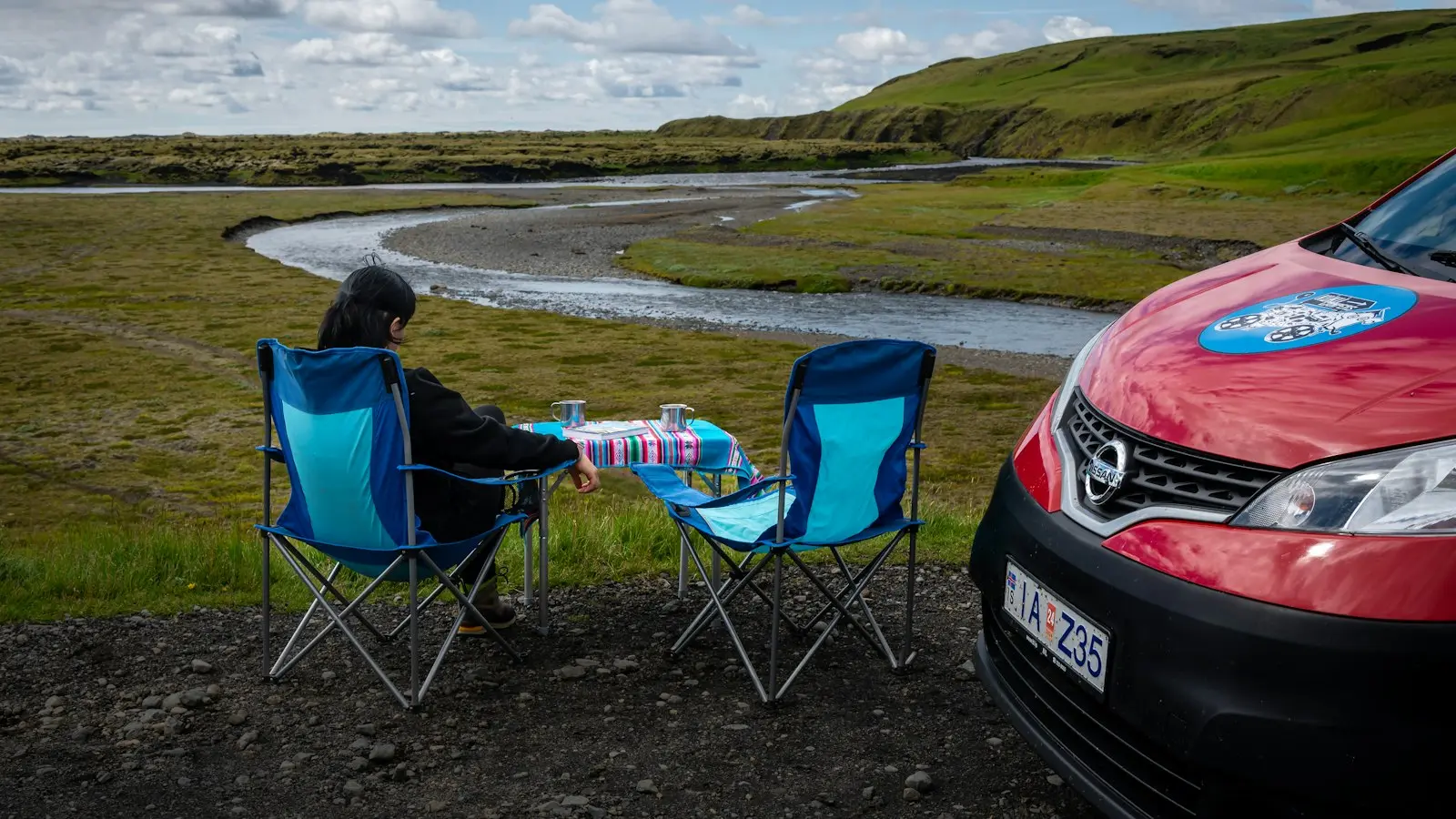
The most important Iceland camper van gear is not extra furniture or expensive gadgets. Start with waterproof layers, adaptable warm clothing, grippy footwear, a reliable sleep setup, offline navigation, charging equipment, and a compact food system.
These items protect the essentials: staying dry, warm, oriented, powered, and able to change plans when wind, rain, road conditions, or campsite availability shift. In a small van, every item should either solve a realistic problem or earn its space by replacing several less-useful items.
Key Takeaways
- Prioritize waterproof outer layers, warm layers, dry socks, and footwear with reliable grip before convenience accessories.
- Download offline maps and carry redundant charging gear, but use official weather and road alerts to make driving decisions.
- Confirm bedding, heating, cooking equipment, safety items, permitted roads, and insurance terms with the specific rental company.
- Manage wind carefully around large van doors: assess gusts, hold doors firmly, and open them slowly.
- Pack food and campground gear for limited storage, wet clothing, and changing plans rather than for a full kitchen setup.
1. Start With Gear That Handles Wind, Rain, and Cold
The first priority on a Ring Road camping checklist is personal weather protection. Scenic stops can be exposed, campground walks can be wet, and a calm departure does not guarantee comfortable conditions later in the day. Casual water-resistant clothing is useful around town, but it is not a substitute for a properly waterproof, windproof outer layer.
Bring a waterproof shell jacket with an adjustable hood and cuffs. It should fit over a base layer and insulating mid-layer without becoming restrictive across the shoulders. If a shell is uncomfortable over your normal layers, it is less likely to be worn when conditions deteriorate.
Waterproof trousers are nearly as valuable. They make rainy stops, walks to campground facilities, and packing the van in wet weather far more manageable. Choose a pair that can go over everyday trousers and footwear without requiring a difficult change in the van.
Use a layering system rather than packing several bulky sweaters. A moisture-managing base layer, fleece or light insulated mid-layer, shell, warm socks, hat, and gloves cover more situations while drying and storing more easily. Keep at least one spare pair of warm socks in a dry bag; wet feet can make even a brief stop uncomfortable.
Waterproof hiking footwear with dependable grip is another high-value item. You do not need technical mountaineering boots for every Ring Road viewpoint, but wet paths, uneven ground, loose gravel, and muddy campground areas are common enough to justify stable footwear. Choose shoes you can comfortably wear for driving as well as short walks.
If space permits, add lightweight camp shoes or shower sandals. The useful principle is separation: hiking footwear may be wet or muddy, while dry footwear makes evenings in the van, showers, and kitchen trips easier. A small microfiber towel and a bag for damp shoes help prevent moisture from spreading into bedding and clothes.
Sleep is the other half of weather protection. Before packing a sleeping bag, duvet, pillow, sheets, or blanket, confirm exactly what the rental provides. Bedding, heating arrangements, and linen quality vary by company and vehicle type, so duplicating bulky items can waste valuable storage.
A sleep liner, warm sleep clothes, eye mask, and earplugs are compact additions that often justify their space. Bright-season nights can disrupt sleep, while busy campgrounds and changing weather can create noise. For solo travelers, better sleep also supports safer next-day decisions.
2. Carry Safety Gear That Helps You Stop and Adapt
The best safety equipment does not make a questionable route suitable. It helps you identify changing conditions early, communicate, and make the safer choice to slow down, reroute, or remain at a campsite. Check official Icelandic weather and road-information services before setting out and again during the drive, particularly when the forecast or route feels uncertain.
Navigation apps are useful, but they do not replace current alerts about road closures, wind, surface conditions, or local restrictions. Download offline maps covering the Ring Road, planned detours, campsites, fuel stops, and walking routes before leaving reliable connectivity. Save rental-assistance instructions, campsite details, emergency contacts, and reservation information on your phone as well.
Your practical vehicle kit should include a charged phone, vehicle-compatible charging cables, a 12V charger, a multi-port USB charger, and a power bank. Add a headlamp, refillable water bottle, microfiber towel, small trash bags, and a basic first-aid kit. A reflective or high-visibility layer may be useful if it is not supplied, but confirm what warning and emergency equipment is already in the vehicle.
Camper van wind safety deserves particular attention. Large doors can catch gusts with considerable force, creating risk for people, nearby vehicles, and the door itself. When parking, consider wind direction and how exposed the space is. Before opening a door, assess the gusts, keep a firm grip, open it slowly, and never let wind take control of it.
That routine is more useful than another accessory. Damage responsibility, roadside support, and wind-related coverage differ between rental agreements, so do not assume an insurance package covers every scenario. Read the specific contract and ask the rental company to explain relevant exclusions before departure.
Extra gear is also not permission to enter closures, drive off-road, or use roads beyond the vehicle’s permitted category. Eligibility for rough roads, F-roads, river crossings, and seasonal routes depends on the vehicle, current road status, rental restrictions, and conditions on the day. Treat official alerts and the rental agreement as the final decision points.
3. Build a Compact Navigation and Power Setup
Offline navigation is a non-negotiable backup in Iceland camper van gear. It is not only for finding the main road; it helps when you need to identify the next fuel stop, choose a campsite after plans change, or locate a practical detour without continuous signal.
Keep a simple saved list alongside your maps: campground names, booking references, likely grocery stops, rental emergency contact details, and a flexible next-day route. This reduces decision pressure when rain, wind, or fatigue makes planning harder.
For power, distinguish between charging devices while driving and drawing electricity from the van’s leisure battery or a campsite hookup. A phone charger in the driving cabin does not mean you can run multiple appliances overnight. Ask the rental company about USB ports, 12V outlets, inverter availability, leisure-battery capacity, heating power draw, and any adapters required for electrical hookups.
Short, durable cables are usually better than a tangle of long leads. A compact power bank adds redundancy for a phone, headlamp, or small device, but it does not replace reliable charging habits. Charge while driving or when legitimate campsite power is available instead of waiting for every device to reach a low-battery warning.
Solo travelers should also create a basic communication plan. Share a flexible itinerary and an agreed check-in rhythm with a trusted contact, while recognizing that this is not a substitute for emergency services or local alerts. If weather, connectivity, or road conditions change, update the plan rather than trying to preserve an original timetable.
A satellite communicator or large portable power station can be useful for more remote routes, extended time away from services, or specific work requirements. They are not universal Ring Road essentials. Decide based on season, route, group size, expected time between services, and the confirmed van setup.
4. Pack Food and Campground Gear for a Small Van
Food systems fail in camper vans when travelers pack as if they have a home kitchen. Storage is limited, counter space disappears quickly, damp clothing competes with groceries, and refrigerator capacity may be modest or absent. The goal is not gourmet variety; it is easy meals with low cleanup demands.
Bring a reusable water bottle, insulated mug, a few small food containers, dish soap, sponge, quick-dry towel, and reusable shopping bags. A lighter or matches may be relevant only if they are permitted and needed for your confirmed cooking setup. Do not assume the rental stove, fuel type, cookware, cooler, or refrigerator works the same way across every van.
For a solo route, buy enough food for the first day, then rely on shelf-stable backup meals, easy breakfasts, snacks, and planned grocery refills. This limits clutter and waste while giving you a fallback if weather makes shopping or outdoor cooking inconvenient. Choose foods that require minimal equipment and fit the van’s real storage capacity.
Before departure, verify whether the rental includes cookware, utensils, plates, mugs, a stove, fuel arrangements, a cooler or refrigerator, cleaning supplies, camp chairs, a table, Wi-Fi, and electrical hookup equipment. These may be offered, but they are not guaranteed inclusions. Clarify deposits, replacement charges, and what must be returned clean.
Useful campground travel gear includes shower sandals, a compact toiletry caddy, laundry bag, headlamp, and a secure wet-gear bag. Keep wet clothing separate from dry bedding. Even a basic division of the van into dry sleep space, food storage, and wet equipment storage makes the cabin easier to manage.
Campground etiquette is part of the kit. Use designated facilities, follow local rubbish and wastewater instructions, keep noise low, and respect each site’s check-in, payment, kitchen, shower, and overnight rules. Campsite opening periods and facilities can vary by location and season, so check directly before arrival rather than relying on an old itinerary.
5. Adjust the Checklist by Season
There is no single perfect Iceland camping equipment list because daylight, road status, weather, and campsite operations change with the season. Summer can bring long usable days, but it does not remove the need for rain protection, warm layers, weather checks, or careful door handling in wind.
For summer and shoulder seasons, retain the full waterproof clothing system, add an eye mask for bright nights, and leave room in the itinerary for altered plans. Do not pack only for the postcard version of summer. Being able to spend a wet afternoon comfortably, rather than forcing an exposed stop, is a better measure of preparedness.
In colder periods, place greater emphasis on insulation, traction-aware footwear, dependable charging, and more conservative daily distances. Confirm that the vehicle, heating arrangement, campsites, and intended roads are operating for the relevant season. Current official weather and road alerts should govern the day’s decision, not a pre-booked route plan.
The final pack-or-rent test is straightforward. Bring personal items that must fit you and work immediately: waterproof clothing, base layers, footwear, medications, offline maps, charging gear, and compact comfort items. Confirm bedding, heating, cooking equipment, safety gear, outlets, cleaning supplies, roadside assistance, permitted roads, and insurance terms with the rental company.
Buy basic groceries and consumables locally after you understand the van’s storage and cooking setup. Leave behind anything that duplicates a confirmed inclusion or serves only as a luxury in a space-constrained vehicle. If an item keeps you dry, warm, navigable, powered, or able to stop safely, it belongs near the top of the list.
FAQ
What Iceland camper van gear should I bring instead of renting?
Bring gear that is personal, fit-sensitive, and difficult to verify at the last minute: a waterproof jacket and trousers, layered clothing, waterproof footwear, medications, phone cables, a power bank, and offline maps. Confirm rental bedding and cooking equipment before packing duplicates.
Do I need waterproof trousers and hiking boots for Iceland’s Ring Road?
Waterproof trousers are a high-value choice for wet, windy stops and campground tasks. Waterproof footwear with grip is sensible for many paths and uneven surfaces, although not every stop requires highly technical hiking boots. Choose footwear that works comfortably for daily driving and short walks.
How should I prepare for strong wind when driving and camping in an Iceland camper van?
Check official weather and road alerts, reduce or alter travel plans when conditions warrant it, and park with door opening in mind. Hold doors firmly, open them slowly, and never let a gust catch a large van door. Review the rental agreement for vehicle restrictions, assistance procedures, and coverage details before the trip.