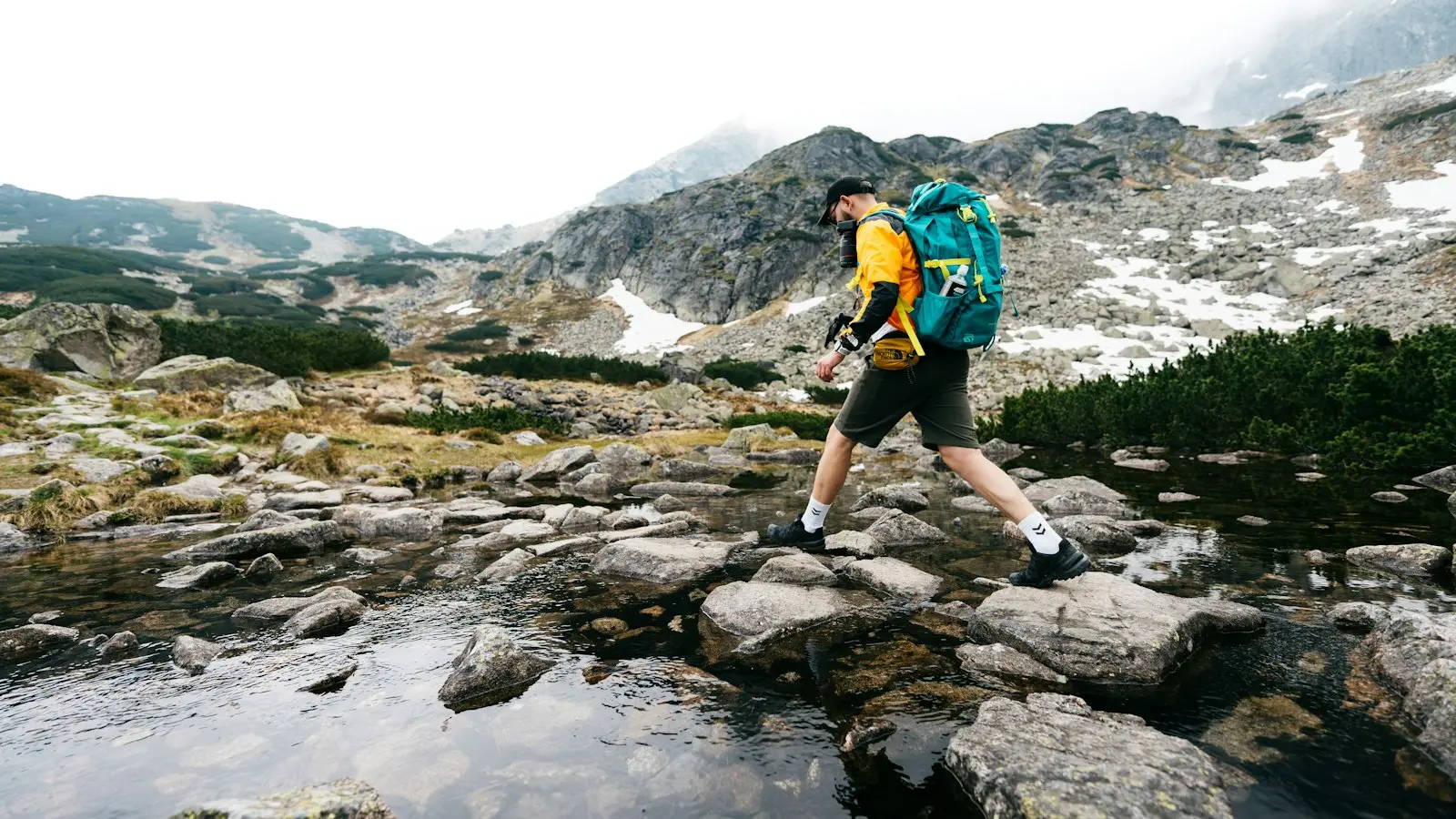
A good way to recover after hiking is to progress through five stages: stabilize your body, replace fluids and food, restore comfortable movement, sleep well, and reassess before resuming demanding activity. The first few hours matter, but recovery also depends on what you do the following morning and during your next training cycle.
Key Takeaways
- Move gradually into recovery, cool down, check for concerning symptoms, and inspect your feet during the first 30 minutes.
- Replace fluids according to thirst and conditions, and combine carbohydrates, protein, and ordinary foods rather than relying on specialized products.
- Use gentle movement for ordinary stiffness, but reduce loading when you have pain, swelling, instability, or a limp.
- Treat confusion, fainting, severe weakness, dark urine, chest pain, or inability to bear weight as reasons to seek medical attention.
This approach is intended for recreational hikers who have dealt with long distances, steep climbs, uneven ground, heat, altitude, a heavy pack, or continued sightseeing after reaching the trailhead. Recovery needs vary with pace, weather, fitness, body size, food and fluid intake, health conditions, and medications. There is no single recovery formula that fits every hike.
1. What to Do in the First 30 Minutes After a Long Hike
Do not stop abruptly and immediately collapse if you have just finished a steep climb, fast descent, or hot-weather effort. Walk slowly for a few minutes if you feel steady, then move to shade, a cool indoor space, or another comfortable location. Loosen restrictive clothing and allow your breathing and body temperature to settle.
Use this first period as a safety check. Dizziness, confusion, faintness, worsening nausea, chills, unusual weakness, or rapidly increasing pain should not be treated as ordinary fatigue. Sit or lie down somewhere safe, ask for help, and seek medical advice if symptoms are severe or do not improve promptly.
Remove wet socks and tight or poorly fitting footwear. Inspect your feet for hot spots, blisters, cuts, bleeding, swelling, and pressure areas. Early attention can prevent a small friction injury from becoming a problem during the next day of travel.
Begin drinking according to thirst and the conditions rather than forcing a predetermined volume. Sweat loss varies considerably, and drinking far more than you need can also be unsafe. If you sweated heavily for a prolonged period, an electrolyte-containing drink or ordinary salty food may be useful, particularly with a meal. This is not a reason to consume concentrated electrolyte products indiscriminately.
A few minutes of easy walking or comfortable ankle, knee, and hip movement may reduce stiffness. Keep the range gentle. Stretching or massage should not cause sharp pain, increase swelling, or require you to push through a restricted joint.
2. Fluids and Food for Hiking Recovery
Recovery nutrition has several jobs. Fluids help replace water losses, carbohydrates help restore energy availability, protein supplies building blocks for muscle repair, and sodium and other electrolytes may matter when sweating has been substantial. These needs are influenced by heat, altitude, exertion, sweat rate, body size, and medical history.
A practical strategy is to drink regularly with meals and snacks, using thirst, urine trends, symptoms, and surrounding conditions as guides. Very dark urine can occur with dehydration, but urine color alone is not a precise measurement. Clear urine does not necessarily mean that more water is needed, and repeatedly forcing fluids can create a different health risk.
People with kidney, heart, or liver conditions, or those taking medicines that affect fluid balance, may need individualized advice. High altitude, vomiting, diarrhea, and intense heat also change the situation. Alcohol is not a rehydration strategy; it can interfere with sleep and may worsen fluid-related symptoms.
When deciding what to eat after hiking, choose food that is familiar, tolerable, and available. A useful meal or snack pattern includes a carbohydrate source, a protein source, and fluids. Examples include yogurt with fruit and oats, a sandwich with eggs, chicken, tofu, or another protein filling, rice or potatoes with beans or eggs, soup with bread, or a balanced hotel or guesthouse meal.
You do not need a specialized recovery product to support most recreational hiking recovery. A regular meal may be more practical than a supplement, especially when appetite is low. If you feel nauseated, begin with small portions and simpler foods rather than forcing a large meal immediately.
Persistent vomiting, inability to keep fluids down, confusion, severe weakness, or a worsening headache after exertion warrants medical attention rather than more food or water experimentation.
3. Evening Recovery for Feet, Joints, Mobility, and Sleep
Clean and dry your feet after the hike. For an intact hot spot or blister, reduce friction with a clean protective covering and wear dry, comfortable socks. Avoid deliberately popping a blister as routine care, because opening the skin can increase the risk of contamination and infection. A large, painful, blood-filled, or complicated blister may need professional assessment.
A low-equipment hotel recovery plan can be simple: take a comfortable shower, change into clean socks, use loose footwear or sandals if safe, and position pillows to support a comfortable sleeping posture. If a joint is swollen, painful, or difficult to move, avoid aggressive stretching or improvised pressure to force it back to normal.
Gentle movement and complete rest are not opposites. Light walking around a room or down a quiet hallway may help ordinary stiffness, while a painful joint, limp, instability, or notable swelling calls for reduced loading. The right choice depends on symptoms, not on a rule that movement is always better or that staying completely still is always best.
Stretch only within a comfortable range. A mild pulling sensation may be acceptable, but sharp, localized, or worsening pain is a reason to stop. Deep massage, percussion tools, compression products, cold plunges, and similar methods are not guaranteed to accelerate recovery and may be inappropriate over an injury or irritated skin.
Sleep is an active part of recovery, not an optional extra. Eat and drink enough to avoid going to bed depleted, keep the room cool if possible, and allow more time for sleep after an unusually demanding day. Avoid relying on alcohol as a sedative or recovery aid. If pain is interfering with sleep, medication choices should take account of your health history, hydration status, other medicines, and local professional guidance rather than following a one-size-fits-all routine.
4. The Following Morning: Should You Walk, Sightsee, or Rest?
Before returning to a full day of activity, perform a short self-check. Consider your energy, thirst, ability to walk normally, joint range of motion, swelling, skin condition, and whether symptoms are improving or worsening compared with the night before.
Post-hike muscle soreness often feels more noticeable several hours after activity or the next day, particularly after unfamiliar descents or a hike that placed unusual demands on the legs. It is generally more diffuse and muscle-based than an injury, but symptoms alone cannot establish a diagnosis. Focal pain, bruising, instability, marked swelling, or pain that changes your walking pattern deserves more caution.
Choose activity according to function. If you can walk comfortably and symptoms are mild and improving, a shorter easy walk or gentle sightseeing may be reasonable. If stairs are unusually difficult, you are limping, fatigue is disproportionate, or pain is increasing, reduce the day’s load and consider rest or medical advice.
For a traveler, this may mean replacing another full-day excursion with a short accessible route, frequent sitting breaks, and transport between locations. Comfortable shoes, a lighter bag, and fewer stairs can make the difference between useful active recovery and repeatedly irritating a sore area.
Return to training gradually. First restore comfortable daily movement, then increase one demand at a time: duration, elevation, pace, or pack weight. Avoid testing all four at once. If symptoms recur or worsen when a particular demand increases, step back and seek guidance, especially if you have a significant medical condition or repeated exertional symptoms.
5. When Post-Hike Symptoms Need Medical Attention
Some symptoms require urgent help rather than a home recovery routine. Confusion, fainting, seizure, severe difficulty staying awake, very abnormal behavior, inability to drink, or rapidly worsening symptoms after heat exposure can indicate a serious heat-related illness. Move to a safer environment and seek emergency care; do not rely on self-treatment when severe symptoms are present.
Severe muscle pain or weakness, major swelling, or unusually dark, tea-colored, or cola-colored urine after extreme exertion can be warning signs of rhabdomyolysis. This requires prompt medical evaluation because it can affect the kidneys and cannot be assessed reliably through an online checklist.
Possible sprains, fractures, or other significant injuries need assessment when there is deformity, inability to bear weight, severe focal pain, instability, numbness, or rapidly increasing swelling. A mild ache after a long descent is different from pain that prevents normal walking or becomes progressively worse.
Check wounds and blisters over the following days. Spreading redness, increasing warmth or swelling, pus, red streaking, fever, or worsening tenderness can indicate infection and should be evaluated. Chest pain, severe shortness of breath, collapse, or symptoms that do not fit ordinary exertion-related fatigue also require urgent medical attention.
Online guidance cannot determine the cause of severe or persistent symptoms. When in doubt, especially after heat exposure, an injury, or extreme exertion, it is safer to obtain professional advice than to mask the problem and continue hiking.
FAQ
How long does post-hike muscle soreness usually last?
The timing varies with terrain, effort, training history, and whether the activity was unfamiliar. Soreness may become more noticeable later that day or the next day and then gradually improve. Persistent, severe, focal, or worsening pain; swelling; bruising; weakness; or altered walking is not something to dismiss as routine soreness.
Should I stretch or rest after a long hike?
Use gentle movement if it feels comfortable, and reduce loading when movement causes pain, limping, instability, or swelling. Stretching should be mild and symptom-guided. It should not be used to force a painful joint or push through sharp pain.
What should I eat and drink after hiking?
Drink according to thirst and the conditions, and consider ordinary salty food or an electrolyte-containing drink after prolonged heavy sweating. Eat a combination of carbohydrate-rich foods and protein, such as yogurt with fruit and oats, a protein-filled sandwich, or rice and beans. Avoid forcing fluids or relying on alcohol, energy drinks, or miracle recovery products.
When can I return to normal activity?
Return when you can walk comfortably, move the affected joints through a normal comfortable range, and manage daily activity without worsening symptoms. Begin with easier activity and increase only one training demand at a time. If you are limping, unusually weak, or unsure whether symptoms reflect an injury, postpone strenuous activity and seek advice.