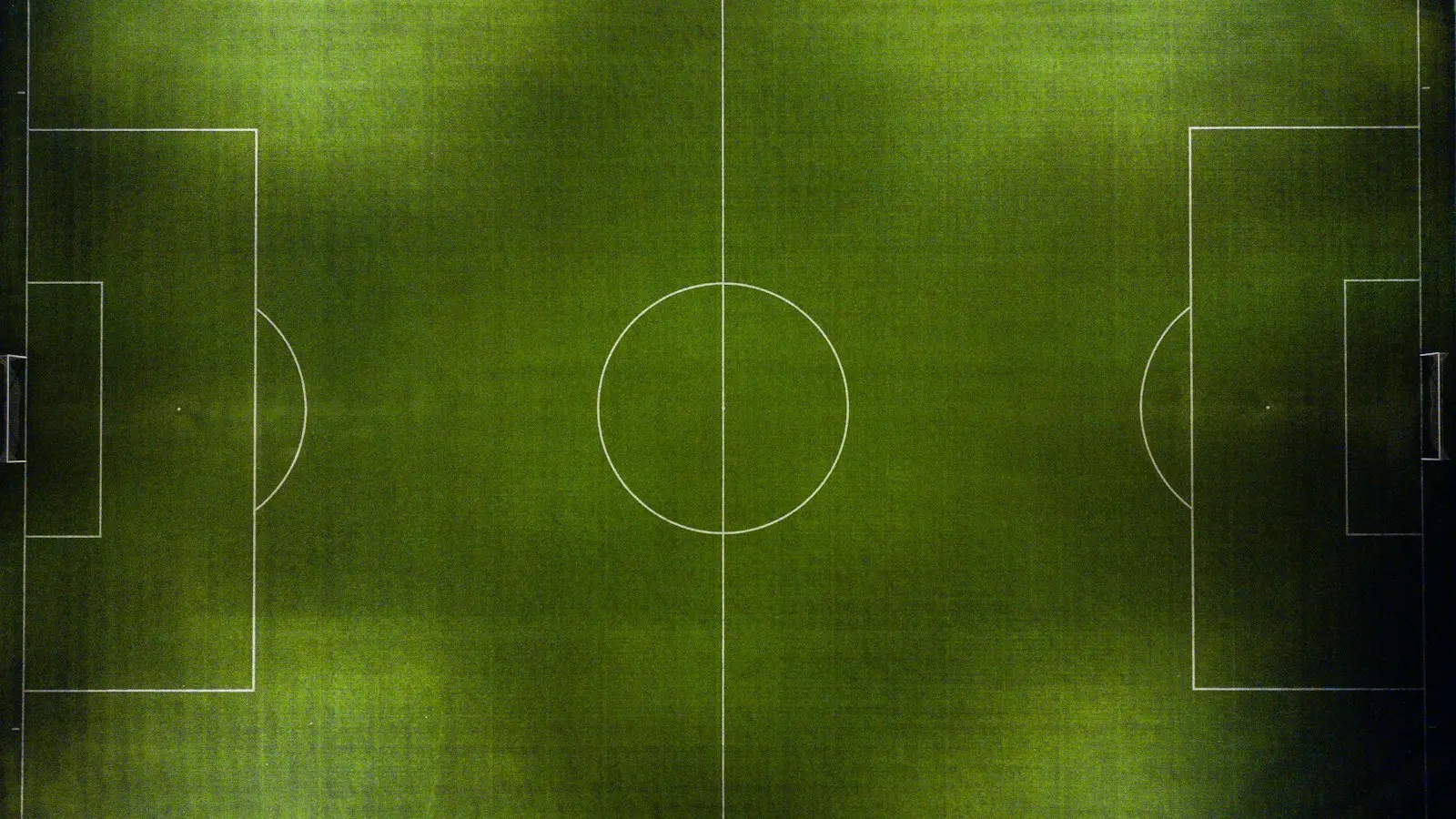
Teams break low blocks by moving defenders before trying to move the ball through them. The main tools are width, quick circulation, between-the-lines movement, rotations, overloads, and well-timed runs into the penalty area. Possession only becomes dangerous when it changes the defensive structure or creates a better angle for the next pass.
That is why a team can dominate the ball and territory yet create very few clear chances. A deep defence is not necessarily being outplayed simply because it spends long periods without possession. Its objective is to protect the most valuable spaces and force the attacking team into lower-quality decisions.
Key Takeaways
- Width stretches a low block and can open central or wide passing lanes.
- Quick circulation matters because slow passing allows defenders to shift together.
- Overloads, rotations, and third-man runs work when they move or distract defenders rather than simply adding more attackers to one area.
- Cutbacks can offer a clearer route to goal than high crosses when the box is crowded, but the best choice depends on timing and positioning.
- Attacks need defensive rest so that creating chances does not expose the team to a dangerous counterattack.
What a Low Block Is—and Why It Shrinks the Pitch
A low block is a defensive approach in which a team protects deep areas, usually close to its own penalty box, rather than trying to win the ball high up the pitch. The defenders may form a back four, back five, or another structure, but the defining features are the location and compactness of the defensive unit.
Low blocks are not all identical. One team may defend deep but remain aggressive when the ball enters a particular wide area. Another may retreat into a narrow shape and wait for a counterattack. Line height, formation, pressing intensity, and willingness to send players forward after regaining possession can all vary.
The common principle is compactness. Defenders reduce the distance between the back line and midfield, while nearby players narrow their positions around the ball. This makes the pitch feel smaller in the areas that matter most: the space directly in front of goal and the lanes leading into it.
The attacking team may still have plenty of room outside the block. Centre-backs can pass to full-backs, midfielders can circulate the ball from side to side, and wingers can receive near the touchline. But those passes do not automatically open a route towards goal. The defence is content for the ball to move in less dangerous areas if the central lanes remain protected.
Why Central Access Disappears
The space between the lines is the area between a defending team’s midfield and defensive lines. It is valuable because a player receiving there can face goal, turn, combine with forwards, or play a pass behind the defence. Against a low block, that space is often crowded or carefully screened.
A central midfielder may stand in front of the centre-backs, while a forward drops into the same zone from the other direction. If the distances are short, a defender can track the movement without creating a large gap. The receiving player may technically be open but still have no time or angle to play forward.
This is why predictable passing helps a low block. If the ball travels slowly from one stationary player to another, defenders can shift together. They do not need to make difficult decisions because the next pass is visible and the attacking players are not threatening different depths at the same time.
Attackers also make the defence’s job easier when they occupy the same lane. A winger moving inside, a number 10 dropping centrally, and a striker checking towards the ball can all appear involved while actually bringing more players into one crowded zone. The result is activity without separation.
Breaking defensive blocks therefore involves moving defenders, not merely moving the ball. A forward may drop to draw out a centre-back. A winger may stay wide to hold the full-back. A midfielder may then attack the space created by those two movements. The pass becomes possible because the defensive relationships have changed.
Width, Switches, and Vertical Stretching
Width forces a low block to cover more of the pitch. When a winger or full-back holds a position close to the touchline, the opposing full-back must decide whether to stay narrow and protect the centre or move out to engage. Either choice can create a potential attacking opportunity, although the opportunity still depends on timing and support.
A switch of play moves the ball quickly from a crowded side to a less crowded one. The purpose is not simply to complete a long pass. It is to exploit the short period before the defensive block can shift across and rebuild its shape.
If the switch arrives quickly and the receiving player has support, the attack may produce a one-versus-one, a forward pass, or a crossing lane. If it travels slowly or the receiving player is isolated, the defence may have enough time to slide across. The same switch can therefore be useful in one moment and harmless in another.
An overlap occurs when a player, usually a full-back, runs outside a teammate in possession. This can force the wide defender to choose between the ball carrier and the runner. An underlap is a run inside the teammate, often through a half-space between the wide defender and a central defender. It attacks a different lane and can create uncertainty without requiring the ball to go all the way to the touchline.
Width works best alongside vertical stretching. A forward dropping between the lines can tempt a centre-back or midfielder to follow. At the same time, another attacker threatens the space behind the defence. The defenders must then decide whether to protect the area in front of them or track the run beyond them.
There is a trade-off. Excessive width can leave the winger far from the striker and make combinations difficult. Excessive depth can isolate the forward. Good attacking structure keeps enough distance to stretch the defence but not so much that the ball carrier has no nearby options.
Overloads, Rotations, and Third-Man Runs
An overload is a deliberate attempt to create a numerical or positional advantage in one area. Three attackers might combine against two defenders, or two players might move in ways that give one of them a positional advantage over a defender who is unsure whom to follow.
An overload does not guarantee progression. If all three attackers stand in front of the defensive line, the defenders may simply remain compact. The overload becomes useful when it helps one player receive facing forward, draws a defender away, or creates a pass into a different lane.
Rotations involve players exchanging positions or moving through one another’s zones. A winger may move inside, a full-back may overlap, and a midfielder may drift towards the flank. A striker may drop briefly while a wide forward runs beyond. These movements can disrupt defensive references, particularly when they happen at different speeds rather than as a group moving aimlessly.
A third-man run is a combination in which one player receives or sets the ball while a different teammate uses the movement to enter the space created. For example, a midfielder passes into a forward’s feet. The forward lays the ball back, and a winger or another midfielder runs beyond the original receiver. The player making the final run is the third man.
This pattern is effective because the first receiver may attract a defender without being the player who attacks the opening. The defender reacts to the ball, while the third player attacks the space behind that reaction.
Consider a forward dropping between the lines. If a centre-back follows, a midfielder can run into the vacated channel. If the centre-back holds position, the forward may receive between the lines. Neither decision necessarily loses the duel immediately, but the movement creates a choice that the defence must solve.
Timing is crucial. The runner must move as the defender is being attracted, not several seconds before. The receiver needs an open body shape so the ball can be redirected quickly. Circulation must also be fast enough to exploit the temporary gap. A rotation performed slowly can simply allow the defence to pass on its assignments.
Cutbacks, Crosses, and the Risk of Losing the Ball
Crosses and cutbacks attack different defensive problems. An early cross is delivered before the ball reaches the byline, often towards a striker or runner attacking the space between defenders. It can be useful when the defensive line is moving backwards or when an attacker has a clear aerial advantage, but a packed box can make floated deliveries easier to defend.
A cutback is a pass played backwards from the byline or from inside the penalty area towards teammates arriving around the edge or centre of the box. Instead of challenging a set line of defenders with a high ball, it targets players arriving with a clearer view of goal and a different angle to the defence.
Neither option is automatically better. A cutback requires the attacker to reach a dangerous wide position and needs teammates to arrive at the right moment. An early cross may be the better choice if the defence has been pulled towards the ball and a runner is already attacking the space behind it. The decision depends on the ball’s location, the number of defenders in the box, and the positions of the attackers.
Teams must also decide when to recycle possession. A pass backwards can look conservative, but it may move the defence and create a better next angle. By contrast, a forced pass into a crowded box risks a turnover while many attackers are ahead of the ball.
That risk makes defensive rest important. Defensive rest means keeping enough players behind or around the ball to slow a counterattack if possession is lost. The exact arrangement varies, but the principle is consistent: an attack should create threats without leaving the centre of the pitch completely unprotected.
A useful imagined sequence looks like this:
- A centre-back passes wide to a full-back.
- The winger holds the touchline, preventing the opposing full-back from narrowing too early.
- A midfielder moves into the space between the defensive and midfield lines.
- The forward makes a movement towards the ball, drawing attention from a centre-back without necessarily receiving it.
- The midfielder combines with the wide player, and a third attacker runs beyond the defensive line.
- If the runner reaches the byline, the best option may be a cutback to a teammate arriving near the penalty spot rather than a hopeful cross into a crowded area.
The sequence works only if the movements are connected. If the winger moves inside too soon, the full-back can narrow. If the midfielder receives with a closed body shape, the defender has time to recover. If the forward and third runner occupy the same lane, the defence can protect both with one line.
This also explains why breaking a low block is a repeated process rather than a single trick. Teams circulate to move the block, use width to stretch it, rotate to create uncertainty, and then accelerate when a defender is displaced. They must balance that ambition with enough structure to prevent a harmless attack from becoming a dangerous counterattack.
Frequently Asked Questions
What is the most effective way to break a low block?
There is no universal solution because effectiveness depends on the defensive structure and the quality of execution. Coordinated width, quick circulation, rotations, between-the-lines movement, and well-timed runs are recurring principles. The key is to create a new angle or force a defender to choose, rather than simply accumulating passes.
Why does possession often fail against a low block?
Possession remains harmless when the ball moves slowly, defenders are not displaced, and attackers do not threaten different spaces simultaneously. A team can control the match territorially while allowing the defending side to keep its preferred compact shape.
Are crosses or cutbacks better against a low block?
It depends on the situation. Cutbacks can be valuable when an attacker has reached the byline and teammates are arriving behind the defensive line. Crosses may be appropriate when a runner has a clear path or the defence is retreating. The best choice depends on the delivery point, defensive numbers, and timing of the attackers’ movements.
Ultimately, how teams break low blocks comes down to manipulating space and managing risk. The strongest attacks do not rely on one formation or one type of delivery. They repeatedly create better angles, move defenders away from their preferred positions, and preserve enough defensive cover to survive the moment when the ball does not reach its target.