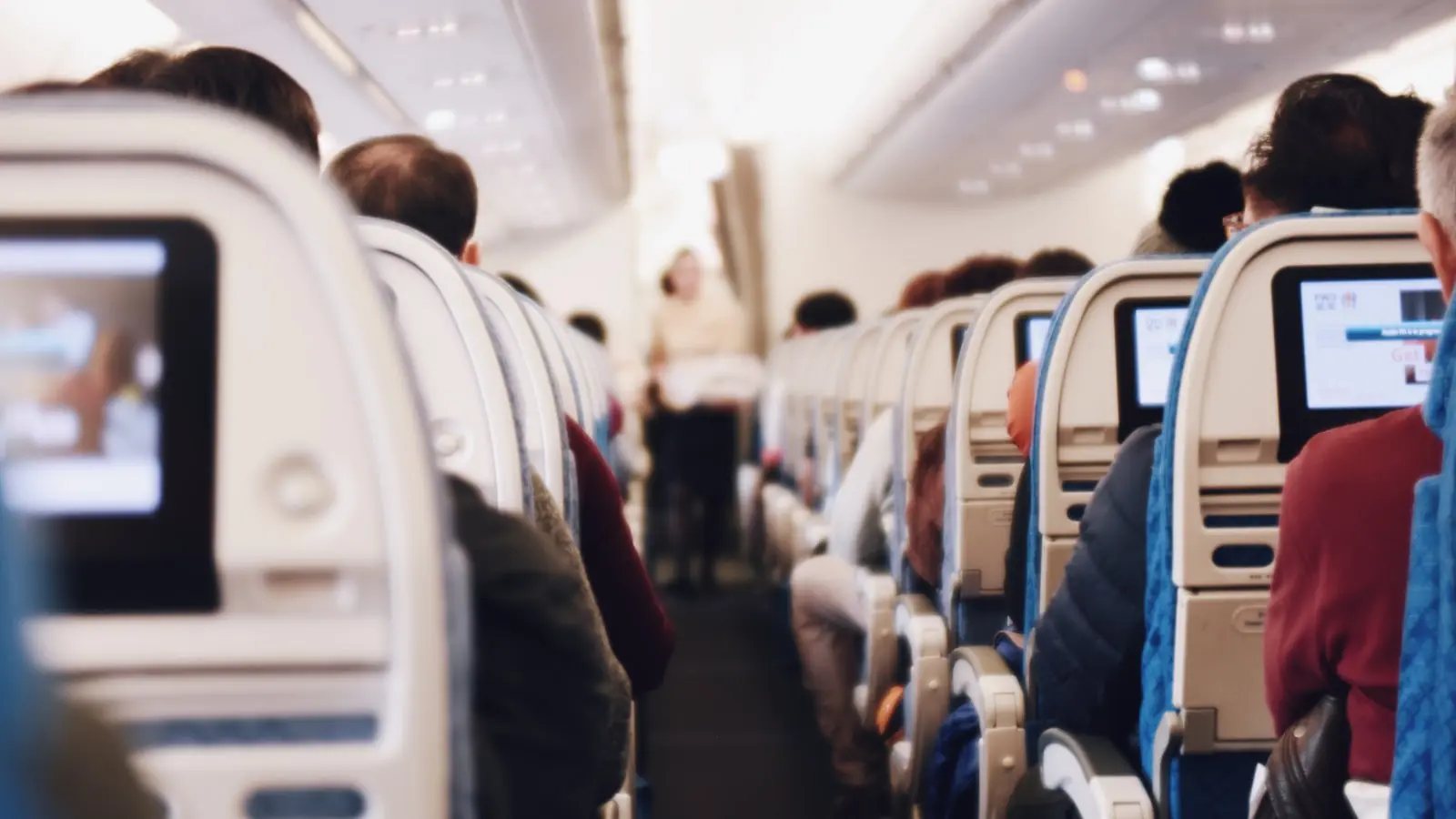
Long-haul economy flights expose passengers to a combination of physical strain, environmental stress, and infection risk. While most travelers experience only temporary discomfort, understanding which risks are most serious and how to reduce them can make a meaningful difference to your wellbeing.
Key Takeaways
- Deep vein thrombosis (DVT) is the most serious risk; prevent it with regular movement and properly fitted compression socks.
- Musculoskeletal strain from fixed seats can be reduced with simple in-seat exercises and posture changes.
- Cabin air is filtered but low humidity and proximity to others increase infection risk; stay hydrated and consider a mask.
- Engine noise can cause auditory fatigue over ultra-long flights; earplugs or noise-canceling headphones are a low-effort precaution.
Deep Vein Thrombosis: The Highest Severity Risk
Deep vein thrombosis (DVT) is the most clinically significant health risk associated with long-haul flights. It occurs when a blood clot forms in a deep vein, usually in the leg, due to prolonged immobility in a cramped seat. The condition is sometimes called economy class syndrome, although it can affect anyone seated for many hours.
For a healthy person with no additional risk factors, the absolute probability of developing DVT during a single long flight is low. However, the risk rises with flight duration and is substantially higher for certain groups. According to general medical guidance, passengers over 40, those with obesity, a history of blood clots, varicose veins, recent surgery or injury, pregnant women (especially beyond 28 weeks), and individuals taking hormonal therapy or birth control pills are more vulnerable.
A common misconception is that standing up once during the flight is enough to prevent DVT. In reality, blood flow must be maintained continuously. Single standing does not significantly reduce clot risk. The key is regular movement throughout the flight: performing ankle pumps, calf stretches, and taking short walks up the aisle every two to three hours, as recommended by the World Health Organization.
Compression socks are clinically proven to reduce DVT risk when properly fitted. They work by supporting venous return from the legs. However, ill-fitting socks can be ineffective or even harmful. To benefit, you must choose the correct size according to the manufacturer’s measurement guide (usually around the ankle and calf) and ensure they are not too tight. Individuals with peripheral artery disease or certain circulatory conditions should consult a doctor before using compression garments.
Musculoskeletal Strain: Neck, Back, and Leg Pain from Cramped Seats
Economy seats are designed for space efficiency, not long-term comfort. Fixed seat angles, limited lumbar support, and minimal legroom force the body into a static position for hours. This leads to common complaints such as lower back tightness, neck stiffness, and leg numbness.
Sitting for eight or more hours without changing posture places sustained pressure on spinal discs and compresses the sciatic nerve. The neck often strains forward to watch a screen, while the shoulders hunch in a narrow seat width. Over time, this can trigger muscle spasms and joint stiffness that may persist after landing.
Simple corrective actions can reduce strain. Adjust your seat cushion if possible, use a rolled-up jacket or travel pillow to support the lower back, and change your posture frequently. In-seat stretches like torso twists, shoulder rolls, and gentle side bends help maintain mobility. Avoid crossing your legs, as this impedes circulation and can worsen hip discomfort.
Cabin Air, Humidity, and Infection Exposure
Cabin air on modern aircraft is filtered through HEPA systems that remove 99.97% of airborne particles, including viruses and bacteria. This makes the air itself very clean. However, droplet transmission from a nearby coughing or sneezing passenger is still possible, especially within a few rows.
The cabin is pressurized to an altitude equivalent of about 6,000–8,000 feet. This lower oxygen level, combined with humidity often below 20%, can dry out mucous membranes in the nose and throat, reducing the body’s first-line immune defense. Dehydration worsens this effect, making it easier for pathogens to take hold.
Practical mitigation includes wearing a mask in crowded boarding areas or if seated near someone who is ill, practicing hand hygiene frequently, and using saline nasal spray to keep passages moist. Drinking water regularly is essential; aim for about 250 ml per hour of flight, but avoid alcohol and caffeine, which promote dehydration.
Hearing Damage from Prolonged Engine Noise
Cabin noise levels in economy class typically range from 80 to 85 decibels, comparable to a busy city street or a vacuum cleaner. While this level is unlikely to cause immediate hearing loss, prolonged exposure over ultra-long-haul flights (12+ hours) can contribute to cumulative auditory fatigue and potentially subtle hearing changes over many flights.
Travelers who are particularly sensitive or who fly frequently should consider wearing earplugs or noise-canceling headphones. These devices reduce noise exposure and also help lower overall stress, making it easier to rest. There is no need for medical-grade protection on a single flight, but it is a low-effort precaution worth taking.
A Realistic Prevention Plan: Exercises, Hydration, and Compression Socks
A practical prevention plan does not require special equipment. Here are evidence-informed steps that fit into the constraints of an economy seat.
Seated exercise routine (repeat every hour):
- Ankle pumps: flex and point both feet for 10 repetitions.
- Knee lifts: lift one knee toward your chest, hold for 5 seconds, alternate, repeat 10 times.
- Calf raises: press your toes into the floor to raise your heels, hold 5 seconds, repeat 10 times.
- Torso twists: gently rotate your upper body left and right, 10 repetitions.
- Shoulder rolls: roll shoulders backward 10 times.
Hydration schedule: Drink 250–300 ml of water before boarding and 150–200 ml per hour during the flight. Avoid alcohol and limit caffeine to one serving. Carry an empty reusable bottle to fill after security.
Compression socks: If you choose to use them, purchase socks with a graduated compression level of 15–20 mmHg or 20–30 mmHg, depending on your risk profile. Measure your ankle and calf circumference according to the product sizing chart. Put them on before your flight and remove them after arrival.
Movement timing: Walk to the lavatory or stand in the galley every two to three hours. Even a few minutes of walking restores blood flow. Do not store bags under the seat that restrict foot movement.
When to See a Doctor: Red Flag Symptoms After a Flight
Most post-flight symptoms—stiffness, fatigue, mild headache—resolve within a day or two. However, certain signs warrant prompt medical attention.
DVT warning signs: Unilateral leg swelling, pain, warmth, or redness in the calf or thigh. If you notice these symptoms within two weeks of flying, seek evaluation.
Pulmonary embolism (PE) symptoms: Sudden shortness of breath, sharp chest pain that worsens with deep breathing, coughing up blood, or unexplained rapid heart rate. PE is a medical emergency.
Other persistent issues: Prolonged headache, sinus pain that does not improve, hearing changes or ear fullness lasting more than a few days, or any symptom that causes concern.
Early detection is critical for DVT and PE. If in doubt, consult a healthcare professional rather than waiting.
Frequently Asked Questions
Does standing up once during a long flight prevent DVT? No. Blood flow must be maintained throughout the flight. Single standing does not significantly reduce clot risk. Regular movement (ankle pumps, calf stretches, short walks) is necessary.
Is the cabin air on planes safe to breathe? Yes, modern aircraft use HEPA filters that remove 99.97% of airborne particles, including viruses. However, droplet transmission from a nearby coughing passenger is still possible, especially within a few rows.
Do compression socks really help, or are they just a marketing gimmick? Compression socks are clinically proven to reduce DVT risk when properly fitted. They work by promoting venous return. Ill-fitting socks can be ineffective or harmful, so size according to manufacturer guidelines and consider medical advice if you have circulation issues.